
Key takeaways
What's inside
Best exercise cycle bike shortlists get decided by two things listings rarely explain: what drives the flywheel and what slows it down. This guide compares six indoor cycles on drivetrain, resistance type, flywheel weight in lb and kg, seat and handlebar adjustability, and the footprint each frame occupies once it is assembled at home.
As an Amazon Associate we earn from qualifying purchases at no extra cost to you. Product prices and availability are accurate as of the date shown and are subject to change.

#1 Pick

#2 Pick

#3 Pick

#4 Pick

#5 Pick

#6 Pick

#7 Pick

As an Amazon Associate we earn from qualifying purchases at no extra cost to you. Product prices and availability are accurate as of the date shown and are subject to change.
By Chris Parker
🛒 Best Price Today on Amazon
Prime members get fast, free shipping on everything above, plus member-only deals. New members get a 30-day free trial — cancel anytime.
How to Choose the Best Exercise Cycle Bike for Home
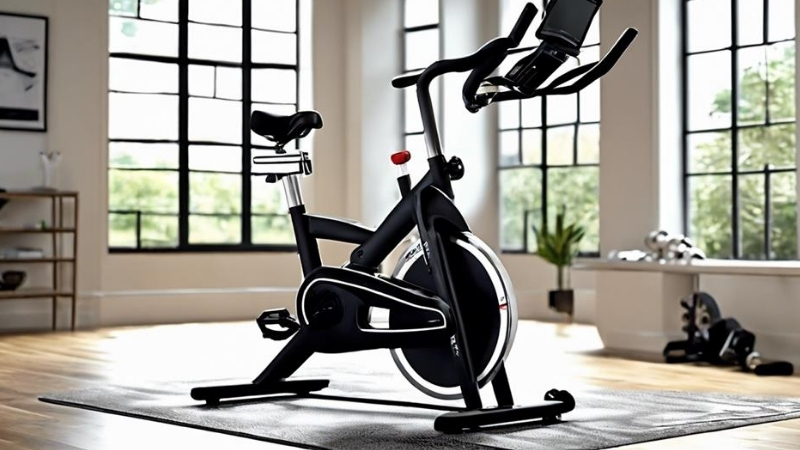
An indoor cycle puts you in a forward, road-bike position over a weighted flywheel, which is what makes standing efforts and hard intervals possible. Three filters decide how the best exercise cycle bike for you actually feels: the drivetrain, the resistance system, and whether the frame adjusts to fit your body.
Drivetrain and Resistance: Belt or Chain, Magnet or Felt
Belt drive is quiet, needs no lubrication and does not stretch over time, which is why almost every modern indoor cycle uses one. Chain drive gives a more mechanical road feel and is cheaper to build, but it needs occasional lubrication and becomes noticeably louder as the chain wears through regular use.
Resistance splits the same way. Magnetic systems are non-contact, close to silent and usually numbered so efforts repeat exactly, while felt-pad friction gives a heavier feel for less money but wears down over time, squeaks as it dries out, and provides no reliable way to reproduce yesterday’s session next week.
Flywheel Weight, Adjustability and Fit
Flywheel weight runs from about 35 lb (16 kg) up to 49 lb (22 kg) on home cycles. Heavier wheels smooth the pedal stroke at low cadence, but a lighter wheel paired with fine magnetic control feels just as steady in practice, so treat flywheel mass as one factor among several rather than the headline number.
Fit matters more than either of those figures. Look for four-way adjustment, meaning the seat and handlebars both move up and down as well as fore and aft, since two-way adjustment leaves taller and shorter riders reaching awkwardly for the bars. Pedals matter too, and dual-sided designs take cleats or ordinary trainers.
Footprint, Noise and Where the Bike Lives
Indoor cycles occupy roughly 40 to 49 in long by 21 to 24 in wide (102 to 124 cm by 53 to 61 cm) of floor, plus about 12 in (30 cm) of clearance on each side for mounting and dismounting. Standing efforts add another 10 to 12 in (25 to 30 cm) above seated height, so check the ceiling clearance as well as the floor area before committing.
In flats, vibration through the building structure carries much further than airborne noise, so a rubber mat 3/8 in (10 mm) or thicker under the frame does more than anything else you can buy. Measure the space and the doorway before ordering the best exercise cycle bike for your room, since assembled frames rarely fit back through.
Top Picks: Best Exercise Cycle Bike Options Compared
Six cycles covering budget friction bikes through connected magnetic ones, so the best exercise cycle bike for structured training is not confused with a simple entry frame. Specifications are manufacturer figures, and cost is described as a tier rather than a number here.
| Bike | Drive | Resistance | Flywheel or levels |
|---|---|---|---|
| Schwinn IC4 | Belt | Magnetic | 40 lb (18 kg), 100 levels |
| Echelon Connect Sport | Belt | Magnetic | 32 levels |
| Sunny Health SF-B1805 | Belt | Magnetic | Rated to 300 lb (136 kg) |
| Sunny Health SF-B1002 | Belt | Felt-pad friction | 49 lb (22 kg) flywheel |
| Sunny Health SF-B901 | Chain | Felt-pad friction | 40 lb (18 kg) flywheel |
| YOSUDA YB007 | Belt | Felt-pad friction | 35 lb (16 kg) flywheel |
Schwinn IC4: Best Overall Home Cycle
A 40 lb (18 kg) flywheel with 100 micro-adjustable magnetic levels, a 330 lb (150 kg) user capacity and Bluetooth broadcasting that feeds cadence and speed into third-party apps. Dual-sided pedals take either cycling cleats or ordinary trainers, and the same bike is sold as the Bowflex C6 under its sister brand, which is worth knowing when comparing prices.
There is no built-in screen, so a tablet and a holder are part of the real cost, and the stock saddle is firm enough that a good number of riders replace it early on. At roughly 106 lb (48 kg) assembled it is reassuringly stable but genuinely awkward to reposition on your own.
Echelon Connect Sport: Best for Guided Classes
A belt-driven magnetic cycle with 32 resistance levels, built around a device holder rather than a fixed screen, so your own tablet supplies the display during a session. For riders who want instructor-led sessions rather than self-directed intervals, that arrangement is the whole reason to choose this bike over a plainer frame.
The class library sits behind a membership, so confirm exactly what remains usable if you stop paying before treating any of it as value. Resistance is also not presented on a numbered dial in the way some rivals manage, which makes repeating a precise effort offline noticeably less straightforward.
Sunny Health SF-B1805: Best Quiet Magnetic Budget Bike
A belt-driven magnetic cycle rated to 300 lb (136 kg) of user weight, aimed at riders who want near-silent operation without paying for connectivity. Non-contact resistance means there is no felt pad to replace and no squeak developing after a few months, which matters a great deal for evening sessions in a shared building.
The console is basic and there is no app broadcasting, so structured training needs a separate cadence sensor. Adjustment covers average heights well but is tighter at the extremes, so check the stated inseam range if you are notably tall or short before buying.
Sunny Health SF-B1002: Best Heavy Flywheel Feel
A 49 lb (22 kg) flywheel, the heaviest here, on a belt-driven frame rated to 275 lb (125 kg). That mass smooths the pedal stroke at low cadence and gives the closest sensation to riding outdoors among the budget options, which is exactly what some riders want.
It is deliberately stripped back: friction resistance with no marked levels, minimal electronics and a saddle that most riders end up swapping. The felt pad needs periodic adjustment and eventual replacement, and the assembled weight makes moving it between rooms very much a two-person job.
Sunny Health SF-B901: Best Traditional Chain Drive
A chain-driven cycle with a 40 lb (18 kg) flywheel and felt-pad friction resistance, built for riders who prefer the mechanical feel of a chain under load. The drivetrain is simple, cheap to service, and behaves predictably as resistance increases through a longer seated effort.
Chains are louder than belts from the start and get louder as they wear, and they need occasional lubrication that belt-driven bikes never require. The user capacity is also lower than most bikes here at 220 lb (100 kg), so check that figure carefully before ordering this particular frame.
YOSUDA YB007: Best Entry-Level Cycle
A 35 lb (16 kg) flywheel with belt drive and felt-pad friction, rated to 270 lb (122 kg), with four-way adjustable seat and handlebars covering a wide range of rider heights. As a first cycle bought to test whether the habit sticks, it does the job at the lowest cost here.
Friction resistance has no numbered levels at all, so repeating a specific effort depends entirely on feel and memory, and the felt pad is a consumable part you will eventually replace. There is no Bluetooth broadcasting either, so app-based training needs a separate cadence sensor added to the total cost.
Frequently Asked Questions
These four questions settle most indoor cycle purchases, and the answers usually narrow a best exercise cycle bike shortlist down to two frames before anyone starts comparing prices or star ratings between listings.
Belt or chain drive: which should I buy?
Belt drive for almost every home situation, because it is quieter, needs no lubrication and does not stretch over the life of the bike. Chain drive suits riders who specifically want that mechanical feel and do not mind the extra noise and the occasional maintenance that comes with it.
How heavy should the flywheel be?
Anywhere from 35 to 49 lb (16 to 22 kg) works perfectly well at home. Heavier wheels smooth out low-cadence pedalling, but resistance quality matters more overall, so a 40 lb flywheel with fine magnetic control beats a heavier wheel behind an unmarked friction knob for any structured training.
Do I need cycling shoes and cleats?
No, not to get started. Cage pedals with ordinary trainers work for most home riding, and stiff-soled cycling shoes are an upgrade rather than a requirement. Dual-sided pedals give you the option later without committing now, which is why they are worth having on a bike you plan to keep for years.
How long should a session be?
The World Health Organization’s 2020 guidance of 150 to 300 minutes of moderate activity weekly works out at roughly 22 to 43 minutes a day spread across five days. Shorter sessions still count toward that weekly total, so consistency beats length. Check with a doctor before starting a new programme.
See More:
- Hot yoga mat best
- Best dumbbells exercises
- Best workout dumbbells
- Best back exercises using dumbbells
- Best exercise upright bike
- Best exercise stationary bike
Final Thoughts
The best exercise cycle bike for a home is decided by drivetrain and resistance before anything else: belt and magnetic for quiet repeatable training, belt and friction for a heavier feel at lower cost. Confirm four-way adjustment fits you, and measure the floor space and doorway before ordering.


Write Your Review
No reviews yet. Be the first to share your experience!