
Key takeaways
What's inside
Best exercise bike small spaces searches usually end with a folding bike, but that is only one of three answers. This guide compares folding uprights, compact spin bikes and under-desk pedal units on footprint, flywheel weight and noise, with measurements in in, cm, lb and kg. Type decides everything else.
As an Amazon Associate we earn from qualifying purchases at no extra cost to you. Product prices and availability are accurate as of the date shown and are subject to change.
As an Amazon Associate we earn from qualifying purchases at no extra cost to you. Product prices and availability are accurate as of the date shown and are subject to change.


By Chris Parker
🛒 Best Price Today on Amazon
Prime members get fast, free shipping on everything above, plus member-only deals. New members get a 30-day free trial — cancel anytime.
Start 30-Day Prime Free Trial →See Today’s Amazon DealsHow to Choose the Best Exercise Bike Small Spaces Allow
Three bike types fit the best exercise bike small spaces brief, and they are not interchangeable. Folding uprights disappear into a cupboard but ride lightly; spin bikes ride properly but never move once assembled; under-desk pedals fit anywhere but train very little. Pick the type first and the model second, in that order.
Footprint, Folded Size and Floor Protection
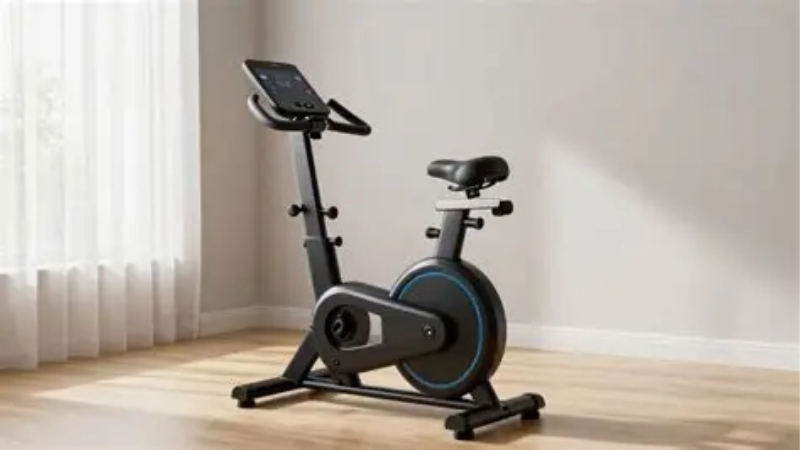
Footprint is the deciding number here. A compact spin bike occupies roughly 40 x 20 in (102 x 51 cm) and needs about 2 ft (60 cm) of clearance to mount and dismount safely, while a folding upright drops to something near 18 x 20 in (46 x 51 cm) when stored away. Mounting clearance is easy to forget.
Measure the riding area and the storage spot separately before ordering, including the door swing. A mat underneath protects laminate from the feet and catches sweat, which is the thing that quietly corrodes bolts and frame paint on any bike kept in a warm room over a long winter. A mat costs less than a frame.
Flywheel Weight, Resistance and Ride Feel
Flywheel weight decides how smooth the pedal stroke feels. Spin bikes commonly run 30 to 49 lb (14 to 22 kg), which gives momentum through the dead spot, while folding uprights use much lighter wheels with magnetic resistance and feel noticeably lighter at higher cadences as a result. Momentum is what a heavy wheel buys.
Magnetic resistance is quiet and contact-free, so nothing wears; felt pad resistance is cheaper and wears out, though pads are replaceable on better bikes. Belt drives run quieter than chains and need less maintenance, which matters more in a flat than any difference in the resistance range itself. Belt drives suit shared buildings.
User Limits, Adjustment and Who Fits
Stated user weight limits typically run from 220 lb (100 kg) on folding bikes to 300 lb (136 kg) or more on spin frames, and the figure tracks how solid the bike feels out of the saddle. Lighter frames also move on smooth floors, which a mat largely solves. Limits track how solid a bike feels standing up.
Adjustment range is what decides whether a household can share the bike. Seat height on most models covers a wide range, but handlebar reach is often fixed on budget frames, so check the stated rider height range if two people of noticeably different sizes will use the same bike. Shared use makes adjustment range the deciding spec.
Top Picks: Bikes That Fit a Small Room
The best exercise bike small spaces picks below cover all three types, from a folding cupboard bike to a compact spin frame. Fewer than one in four US adults meets both the aerobic and muscle-strengthening guidelines (CDC, 2020), and removing the trip to a gym is the point of buying one. Pick the type that suits your room.
| Bike | Type | Storage | Best for |
|---|---|---|---|
| Exerpeutic Folding Bike | Folding upright | Folds and rolls | Cupboard storage |
| XTERRA FB150 | Folding upright | Folds narrow | Tightest rooms |
| Sunny SF-B1002 | Spin bike | Stays in place | Proper ride feel |
| YOSUDA Indoor Cycling Bike | Spin bike | Rolls on wheels | Value spin |
| Marcy Foldable Upright | Folding upright | Folds upright | Shared households |
| DeskCycle 2 | Under-desk pedals | Slides anywhere | Desk use |
Exerpeutic Folding Magnetic Upright Bike
This is the classic small-room answer: eight magnetic resistance levels, a padded seat and a frame that folds down and rolls into a cupboard. For steady pedalling while watching something, it does the job quietly and takes up no permanent floor area in a flat or a spare bedroom. It is the best exercise bike small spaces answer for cupboard storage.
The ride is light compared with a spin bike, the console is minimal, and the folding hinge is the part that develops play over years. Check the stated user weight and height limits before ordering, since this frame is built for compactness rather than for heavy out-of-saddle work. Hinges are the part that ages.
XTERRA Fitness FB150 Folding Bike
The FB150 folds narrower than most, which is the whole point when the storage space is a gap beside a wardrobe rather than a cupboard. Assembly is quick, the magnetic resistance is quiet enough for evening use, and the bike rolls into position without needing to be carried. It stores in a gap beside furniture.
It has a lower user weight limit than the spin bikes here and a light frame that benefits from a mat underneath. The seat suits shorter sessions better than long ones. Treat it as a machine for steady work rather than for hard intervals out of the saddle. Lighter frames benefit from a mat underneath them.
Sunny Health & Fitness SF-B1002
This is the compact spin answer to the best exercise bike small spaces question, with a heavy flywheel that gives a smooth, weighted stroke and a frame that stays put. In a room where the bike can live permanently in a corner, it rides far better than any folding upright at a similar price. Permanent corners suit it best.
It does not fold, it is heavy to move upstairs, and felt pad resistance wears and needs occasional replacement. There is no console on the basic version either. Buy it if the space is permanent, and buy a folding bike if the room has to serve another purpose daily. Felt pads are a replaceable wear part.
YOSUDA Indoor Cycling Bike
YOSUDA covers the value end of the spin category with a belt drive, a reasonable flywheel and transport wheels so the bike moves aside between sessions. It suits someone who wants a proper riding position without the price of a connected bike or a monthly subscription attached. Transport wheels make it movable.
The saddle is the usual first upgrade, the console is basic, and assembly takes an hour or so with the supplied tools. It still weighs enough that moving it between floors is a two-person job, so decide where it lives before it arrives rather than afterwards. The saddle is the usual first upgrade to plan for.
Marcy Foldable Upright Exercise Bike
Marcy’s folding upright sits between the budget folders and the spin bikes, with a sturdier frame than the lightest models and a straightforward magnetic resistance dial. It suits households where two people of different sizes share the bike and it has to disappear between sessions. It is the best exercise bike small spaces option for two riders.
The ride is still lighter than a spin bike, and the folding mechanism adds parts that loosen over time and need checking. Console features are minimal. Check the stated rider height range if the bike will be shared, since handlebar reach is fixed on most frames at this price. Check the bolts every few months.
DeskCycle 2 Under Desk Bike
An under-desk pedal unit is the only option that needs no dedicated space at all, sliding under a desk or in front of a sofa and weighing little enough to move with one hand. The low profile is the key specification, since most desks will not clear a taller unit. Nothing else needs zero floor space.
It trains far less than a real bike, the resistance range is limited, and it is not a substitute for structured cardio. Measure your desk clearance before ordering. Buy it as a way to add gentle movement to a long working day, not as a replacement for a proper bike. Measure your desk clearance first.
Frequently Asked Questions
These questions come up whenever the room, rather than the budget, is the real constraint. They cover space, noise, storage and who the bike suits, since those decide whether a compact bike stays in daily use or gets folded away in February and forgotten until the following year. Space answers most of them.
How much space does a compact exercise bike need?
A folding upright needs roughly 30 x 18 in (76 x 46 cm) in use and around 18 x 20 in (46 x 51 cm) folded, while a spin bike occupies about 40 x 20 in (102 x 51 cm) permanently. Add 2 ft (60 cm) of clearance to get on and off safely, and measure the storage spot separately from the riding area itself.
Is a folding bike as good as a spin bike?
Not for ride quality. A heavier flywheel gives a smoother stroke and handles out-of-saddle work far better. A folding bike wins on storage alone, which is the right trade when the room has to serve another purpose for most of the day and week. Ride feel is what folding costs you, and a mat helps either way.
Will a bike disturb the neighbours below?
Much less than skipping or running, since nothing impacts the floor. Magnetic resistance and a belt drive are the quiet combination, and a rubber mat under the frame handles the rest. Chain drives and felt pads are the noisier options in a flat with thin floors. Cycling is the quietest cardio option for shared buildings.
How much should I ride each week?
Public guidance is 150 to 300 minutes of moderate activity per week plus two muscle-strengthening days (WHO, 2020), which is roughly 22 minutes a day. Cycling covers the aerobic half. Speak to a doctor before starting a new programme, particularly with existing knee or heart concerns. Saddle height matters more than resistance early on.
See More:
Final Thoughts
The best exercise bike small spaces can take is decided by whether the room is permanent or shared. A spin bike rides better and never moves; a folding upright disappears between sessions; under-desk pedals add movement rather than training. Measure both footprints, then pick the type before the model.


Write Your Review
No reviews yet. Be the first to share your experience!