
Comparing a weighted jump rope vs alternatives involves more than choosing the heaviest rope. Standard, speed, weighted-handle, and cordless designs distribute mass differently and create distinct movement demands. This guide explains rotational loading, comfort, technique, durability, and space requirements to help you choose the right exercise equipment.
Quick Verdict: Is a Weighted Jump Rope Worth Buying?
A weighted jump rope adds mass to the rotating cable, the handles, or both. That additional mass changes how the equipment accelerates and how much effort is needed to control its movement.
However, weight distribution is more important than a single advertised total-weight figure.
A thick cable weighing one pound behaves differently from a lightweight cable attached to handles that collectively weigh one pound. Both may be marketed as weighted ropes, but the rotational forces are not identical.
For buyers seeking traditional skipping with additional cable resistance, a properly sized heavy-cable rope may be appropriate. For fast technical skipping, a lightweight speed rope is usually more directly relevant. For basic coordination, a regular PVC rope may be sufficient.
Cordless weighted ropes can reduce the clearance needed for a full cable rotation, but they do not reproduce the complete timing requirements of conventional rope skipping.
The correct choice is therefore determined by training preference, available space, and the ability to control the selected rope.
Choose a weighted cable when you specifically want increased rotating mass.
Choose a standard rope when simplicity and ordinary skipping mechanics are priorities.
Choose a speed rope when fast rotations and techniques such as double unders are central to the workout.
Choose weighted handles when additional hand-held mass is preferred without necessarily using a heavy cable.
Choose cordless equipment when the exercise area cannot safely accommodate full-length rope rotation.
Choose interchangeable weights when several configurations will actually be used.
Heavier is not inherently better. The right equipment allows consistent, controlled movement.
Weighted Jump Rope vs. Alternatives: Comparison Table
| Equipment | Main resistance characteristic | Best reason to choose | Principal limitation |
|---|---|---|---|
| Heavy-cable rope | Mass distributed around rotating cable | Deliberate weighted rotation | Increased handling demands |
| Standard PVC rope | Relatively light flexible cable | General-purpose skipping | Less added rotational load |
| Speed rope | Thin cable optimized for fast rotation | Double unders and technical skipping | Different tactile feedback |
| Weighted-handle rope | Mass concentrated in grips | Added handle loading | Not mechanically equivalent to heavy cable |
| Cordless weighted rope | Short rotating attachments | Reduced cable clearance | Different timing and coordination |
| Interchangeable-weight set | Multiple cable masses | Training configuration flexibility | Higher complexity and cost |
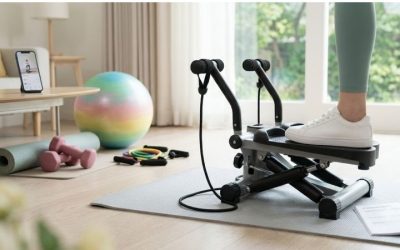
| Mini stair stepper | Hydraulic or other stepping resistance | Compact standing exercise without rope | Different movement |
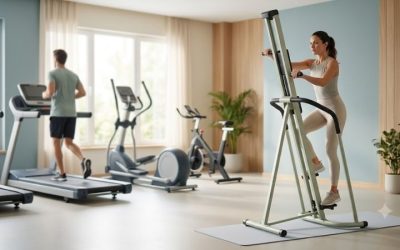
| Exercise bike | Pedaling resistance | Supported seated cardio | Much larger equipment footprint |
Why Rope Weight Distribution Changes the Exercise
Rotational Inertia Explains the Difference
Rotational inertia describes how mass distribution affects resistance to changes in rotational speed.
In practical terms, the position of mass within a jump rope influences how much effort is needed to accelerate and control it.
A heavy cable places substantial mass away from the hands as it rotates around the body.
Weighted handles place additional mass much closer to the user’s grip.
Those arrangements are not mechanically equivalent, even if the complete products weigh the same.
This is why comparing weighted ropes by total weight alone can be misleading.
Buyers should identify the cable’s mass, handle mass, rope length, and construction whenever those specifications are available.
A product advertised as a two-pound rope may describe a different weight distribution from another product using the same number.

Cable Mass and Rotation Feel
A heavier cable can provide more noticeable feedback as it moves through the air.
Some users find this helpful because they can sense the rope’s movement during each rotation.
However, that additional inertia also creates greater control demands.
Starting, accelerating, and stopping the cable may require more deliberate movement than with a lightweight rope.
If the chosen cable is too heavy, the user may begin making exaggerated shoulder motions or lose the ability to maintain consistent timing.
The appropriate rope should permit controlled rotation throughout the workout.
More cable mass is useful only when it matches the user’s technique and intended exercise.
Handle Mass and Grip Loading
Weighted handles change the mass held in the hands.
They can influence grip and arm movement, but the cable itself may remain light.
This means weighted handles are not a direct substitute for a heavy cable.
A buyer who wants the feel of moving a substantial cable around the body should examine cable weight specifically.
Conversely, someone who prefers a lightweight rotating rope may find a weighted-handle configuration more appropriate.
The key is understanding the location of the load before comparing products.
Rope Length Changes Rotational Behavior
Rope length affects the path traveled by the cable.
An excessively long weighted rope can require wider arm movement and create more floor contact.
A rope that is too short can catch the feet or force awkward positioning.
Because cable mass influences rotation, correct sizing becomes particularly important with heavier ropes.
Follow the manufacturer’s sizing guidance and use approved adjustments.
Do not assume that cutting a heavy cable is safe unless the design specifically permits it.
Weighted Rope vs. Standard Jump Rope
Skipping Mechanics
Both conventional weighted ropes and regular ropes require the user to coordinate cable rotation with jumping.
The rope must pass beneath the feet during each successful skip.
The difference is the rotational loading.
A lighter rope generally requires less force to accelerate, although its exact feel depends on material and design.
A heavier rope may require more deliberate control.
Neither movement is inherently better.
Someone learning basic timing may prefer the simplicity of a regular rope. Another person may enjoy the tactile feedback of a modestly weighted cable.
Exercise Intensity
A weighted cable can increase the effort required to control the rope.
However, it does not guarantee a higher total workout expenditure.
A person might perform a longer session with a standard rope or a shorter session with a heavy rope.
The physiological demands depend on pace, body mass, movement efficiency, exercise duration, and other variables.
Therefore, claims that weighted ropes always burn a fixed percentage more calories should be treated cautiously.
The buyer should focus on whether the rope provides a manageable and repeatable movement.
Learning and Coordination
A regular rope can be a practical choice for people who are still learning to jump consistently.
There is less additional rotating mass to manage.
A weighted rope may make cable position more noticeable but also increase the consequences of poor control.
A heavy cable striking the body may be more uncomfortable than contact from a light rope.
For beginners, consistent movement and appropriate equipment weight are more important than maximizing resistance.
Durability and Surface Wear
A standard rope may use PVC, coated steel, beaded segments, or other materials.
Weighted ropes can use thicker flexible cables or braided constructions.
Neither is automatically more durable.
Wear depends on the contact surface, cable construction, and maintenance.
A heavy rope dragged over abrasive concrete can still deteriorate.
Check whether replacement cables are available and whether the manufacturer approves the intended surface.
Which Is Better?
Choose a standard rope when basic skipping and simplicity matter most.
Choose a weighted rope when the heavier rotating cable is a deliberate part of your workout preference.
Weighted Rope vs. Speed Rope
Rotation Speed and Cable Geometry
Speed ropes are designed around efficient cable movement.
Many use thin coated cables connected to handles through bearings or swivel mechanisms.
Their construction can support rapid rotation when appropriately sized.
Weighted ropes emphasize additional mass, often through thicker cables.
This changes rotational inertia and timing.
A speed rope may be preferable for technical movements requiring rapid cable turnover. A weighted rope may be preferable for deliberate rhythmic movement with additional load.
The categories can overlap, but the design priorities differ.
Double-Under Performance
Double unders require the rope to pass beneath the feet twice during a single jump.
This places substantial demands on timing and rotation speed.
Some speed ropes are specifically configured for these movements.
A heavy cable can make the task more demanding, but added difficulty does not automatically improve technique.
Someone learning or refining double unders should choose a rope whose length, cable, and handles support the intended movement.
A weighted rope may be useful for a different training purpose, but it should not be selected simply because it is harder to rotate.
Handle Bearings and Swivels
Both speed and weighted ropes may use bearings or rotating joints.
However, bearing count is not a standardized measure of quality.
Alignment, material durability, connector security, and compatibility with cable mass are more important.
A weighted rope’s connection must tolerate repeated force from a heavier cable.
A speed rope’s mechanism should permit controlled fast rotation.
Inspect these components regularly and avoid using equipment with loose or damaged connections.
Surface Compatibility
Thin coated steel cables may wear rapidly on rough surfaces.
Weighted cables also experience abrasion.
The appropriate training surface depends on the manufacturer’s recommendations.
Indoor flooring, specialized exercise mats, and outdoor surfaces may affect cable wear differently.
Which Is Better?
Choose a speed rope when rapid technical skipping is the goal.
Choose a weighted cable when additional rotating mass and its distinct handling characteristics are the priority.
Weighted Cable vs. Weighted Handles
Why Equal Total Weight Does Not Mean Equal Resistance
Consider two hypothetical products with the same assembled mass.
One distributes much of its mass along a rotating cable.
The other concentrates mass inside the handles while using a lighter rope.
The first changes the rotational inertia of the cable more directly.
The second increases the mass held in the hands.
These designs can feel very different during skipping.
The buyer should not compare them simply by total pounds or ounces.
Component-specific specifications are more informative.
Wrist and Shoulder Movement
Heavier handles may influence grip fatigue and arm movement.
A heavy cable may demand greater rotational control.
However, the effect depends on handle shape, cable length, technique, and user capability.
Neither configuration should force excessive shoulder movement.
If a product makes consistent rotation difficult, the load may be poorly matched to the user.
Handle Comfort
A weighted handle may be larger than a conventional handle.
Grip diameter and contour can influence comfort.
For people with smaller hands, a bulky handle may feel awkward.
A slimmer handle may offer a more secure grip for certain users, even when attached to a substantial cable.
Buying Recommendation
Choose weighted handles only when that specific loading arrangement is desired.
If the goal is moving a heavier cable through the full skipping path, choose a product that specifies the actual cable weight.
Weighted Rope vs. Cordless Weighted Rope
Full Cable Timing
Traditional weighted skipping requires the rope to travel over the head and beneath the feet.
The user must jump at the correct moment.
This coordination is part of the activity.
A cordless weighted rope does not require the feet to clear a complete cable.
Therefore, the exercise is related but mechanically different.
Space Requirements
A heavy full-length rope needs clear space around the entire rotation path.
Ceiling fans, hanging lights, shelves, and nearby people must remain outside the cable’s movement area.
A cordless design reduces that requirement.
However, short weighted attachments still rotate near the hands.
The user also needs enough space to jump safely.
Cordless equipment is not automatically suitable for every small room.
Apartment Noise
A full-length weighted cable may strike the floor during rotation.
Cordless equipment removes that full cable contact.
However, the user still creates landing impact when jumping.
Those forces can transmit noise through apartment floors.
A suitable mat may reduce some vibration, but it cannot guarantee silence.
Exercise Skill Differences
A cordless rope can support rhythmic movement without the cable-clearing requirement.
That makes it less directly relevant for learning traditional rope timing.
Someone who wants to develop double unders or other technical rope skills should practice with an appropriate full-length rope in a suitable space.
Which Is Better?
Choose cordless when full cable rotation is impractical and its different exercise mechanics are acceptable.
Choose corded weighted equipment when traditional skipping is part of the goal.
Fixed-Weight vs. Interchangeable-Weight Systems
Flexibility Across Workouts
An interchangeable system allows different compatible cable weights to be attached to the same handles.
This can provide useful flexibility for people who want several rotational loads.
However, the benefit depends on whether those different cables will actually be used.
A fixed-weight rope may be simpler and less expensive for someone with consistent preferences.
Real Product Configurations
Crossrope’s Get Lean set uses 1/4-pound and 1/2-pound rope options.
Its Get Strong set includes 1-pound and 2-pound configurations.
These provide examples of how manufacturers distinguish cable weights.
However, the company’s marketing recommendations for particular training outcomes should not be treated as universal rules.
A one-pound rope may be manageable for one experienced user and unnecessarily demanding for another.
Connector Security
Interchangeable systems rely on cable-to-handle connectors.
The connection must remain secure during repeated rotations.
Inspect it before use.
Do not combine unrelated handles and cables unless compatibility is established.
Ownership Cost
An interchangeable system can cost more initially.
Additional cables may also need replacement.
However, it can be practical for a user who regularly changes configurations.
A fixed rope is often the better value when only one suitable weight is needed.
Weighted Rope vs. Compact Cardio Equipment
Mini Stair Stepper
A mini stepper provides repeated standing stepping without a cable rotating around the body.
It can occupy very little floor space.
However, it uses a different movement pattern and may have hydraulic operating limits.
Choose it when compact standing movement is preferable to skipping.
Walking Pad
A walking pad allows walking on a moving belt.
It requires greater floor length and generally electrical power.
However, it does not require overhead rope clearance.
For someone whose preferred activity is walking, a weighted rope is not an equivalent substitute.
Exercise Bike
An exercise bike provides seated circular pedaling.
It offers a different support arrangement and may be preferable for users who dislike repeated jumping.
However, it occupies much more storage space than a rope.
Shadow Skipping
Some people perform skipping-like movement without a rope.
This eliminates cable clearance and equipment cost.
However, it does not reproduce the timing or rotating mass of weighted skipping.
It is a different activity rather than an identical alternative.
Choosing Rope Weight and Length
Identify Which Component Is Weighted
Before buying, check whether the advertised figure refers to the cable, handles, or complete rope.
If the manufacturer does not explain this, direct product comparison becomes difficult.
Choose a Manageable Load
The correct rope permits controlled rotation without exaggerated movement.
If the user repeatedly loses control or cannot maintain a comfortable rhythm, the configuration may be too demanding.
Consider Experience Without Relying on Universal Weight Rules
Beginners may prefer lighter configurations.
Experienced users may have more specific preferences.
However, experience alone does not determine the best rope weight.
Body proportions, technique, and intended workout matter.
Adjust Rope Length Correctly
Use the manufacturer’s sizing guidance.
Excessive length can increase floor contact and make rotation awkward.
Insufficient length can cause frequent catches.
Avoid Unsupported Modifications
Some ropes allow trimming or interchangeable cables.
Others do not.
Do not cut or alter a weighted cable without following approved instructions.
Materials, Maintenance, and Replacement Parts
Cable Construction
Weighted ropes may use PVC, rubber-like materials, braided fibers, or other constructions.
Material influences stiffness, flexibility, and abrasion behavior.
Handle Materials
Handles may contain plastic, metal, rubberized coverings, or weighted inserts.
Comfort and connector quality matter more than appearance alone.
Bearings and Rotating Joints
These components should move smoothly without excessive play.
Unexpected grinding or looseness may indicate wear.
Cable Abrasion
Inspect the rope where it contacts the floor.
Cracks, exposed internal material, or fraying may indicate that replacement is needed.
Storage
Avoid sharp bends and excessive tension.
Follow the manufacturer’s storage instructions to reduce deformation.
Cleaning
Use approved cleaning methods.
Harsh chemicals may damage coatings or grip materials.
Who Should Choose Each Option?
Beginner Learning Skipping
A regular rope or modestly weighted configuration may be appropriate.
Prioritize timing and control.
Experienced User Seeking Heavier Rotation
A heavy-cable rope can provide the desired feel.
Choose weight based on control rather than maximum available mass.
Double-Under Athlete
A speed rope is generally the more directly relevant tool.
Apartment Resident With Limited Clearance
A cordless weighted rope may help when a full cable cannot rotate safely.
Floor impact still matters.
User Who Wants Multiple Rope Weights
An interchangeable system may justify its cost when several configurations are used regularly.
User Who Dislikes Jumping
A mini stepper, walking pad, or exercise bike may be more appropriate.
Common Buying Mistakes
Comparing Only Total Product Weight
Weight distribution matters.
Choosing the Heaviest Available Rope
Additional difficulty does not guarantee better exercise.
Ignoring Rope Length
Improper sizing affects timing and control.
Confusing Weighted Handles With Heavy Cables
They create different loading characteristics.
Assuming Cordless Skipping Is Identical
It removes the full cable-clearing requirement.
Overlooking Surface Wear
Abrasive floors can damage cables.
Frequently Asked Questions
Is a Weighted Jump Rope Better Than a Regular Rope?
Not universally. Weighted ropes provide additional rotational load, while regular ropes may be preferable for simple or faster skipping.
Are Weighted Handles Equivalent to Heavy Cables?
No. The location of the mass changes rotational behavior.
Is a Weighted Rope Better Than a Speed Rope?
They suit different purposes. Speed ropes emphasize rapid rotation, while weighted ropes emphasize additional cable or handle mass.
Can Beginners Use Weighted Ropes?
Some manageable configurations may be appropriate, but comfortable control and technique should come first.
Are Cordless Weighted Ropes Suitable for Apartments?
They can reduce cable clearance requirements, but jumping still produces floor impact.
Are Interchangeable-Weight Systems Worth Buying?
They can be useful when different cable weights are needed. A fixed-weight rope may offer better value for simpler use.
Conclusion
The best weighted jump rope vs alternatives decision depends on cable mass, handle design, movement preference, and available exercise space. Weighted cables provide distinct rotational loading, speed ropes favor technical skipping, standard ropes offer simplicity, and cordless designs reduce clearance demands. Prioritize manageable weight, correct sizing, secure connections, and consistent movement rather than choosing the heaviest equipment.








Write Your Review
No reviews yet. Be the first to share your experience!