
Key takeaways
-
Choose a mini stair stepper when a very small equipment footprint and standing stepping movement are the priorities.
-
Choose a compact elliptical when you want a longer guided pedal movement and potentially additional hand support.
-
Choose an under-desk elliptical when seated exercise is preferable.
-
Choose a walking pad when walking is your preferred activity.
-
Choose an exercise bike when seated cycling and more integrated workout controls matter.
-
Choose a full-size stair climber when you want a larger dedicated climbing mechanism and have enough room.
Comparing a mini stair stepper vs alternatives means evaluating more than footprint. Compact ellipticals, walking pads, exercise bikes, and stair climbers use different movement patterns, resistance systems, and support arrangements. This comparison explains their practical differences so you can choose equipment that fits your space, balance, and exercise goals.
Quick Verdict: Is a Mini Stair Stepper the Best Compact Cardio Machine?
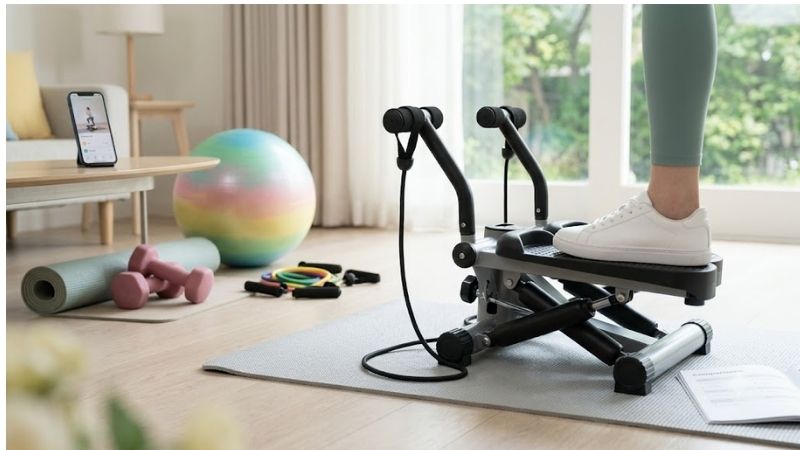
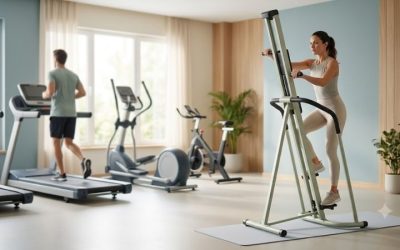
A mini stair stepper uses two foot platforms that move through a repeated stepping pattern.
Most basic designs rely on hydraulic cylinders, although other mechanisms exist.
Mini steppers are attractive because they occupy very little floor area compared with full-size cardio machines.
However, compactness introduces trade-offs.
A basic stepper often provides no integrated hand support. Its pedal travel is shorter than climbing a conventional staircase, and certain hydraulic models specify continuous-use limitations.
For a person who wants a compact standing exercise device and can maintain stable balance, a mini stepper may be useful.
However, the alternatives may better match other preferences.
An under-desk elliptical provides seated movement. A walking pad offers walking. An exercise bike supports cycling, while a full-size stair climber provides a different climbing mechanism.
The main recommendations are:
-
Choose a mini stair stepper when a very small equipment footprint and standing stepping movement are the priorities.
-
Choose a compact elliptical when you want a longer guided pedal movement and potentially additional hand support.
-
Choose an under-desk elliptical when seated exercise is preferable.
-
Choose a walking pad when walking is your preferred activity.
-
Choose an exercise bike when seated cycling and more integrated workout controls matter.
-
Choose a full-size stair climber when you want a larger dedicated climbing mechanism and have enough room.
A mini stepper should be selected because its movement and operating characteristics suit the user, not simply because it is inexpensive or small.
Quick Comparison Table
| Feature | Mini stair stepper | Compact elliptical | Under-desk elliptical | Walking pad | Exercise bike | Full-size stair climber |
|---|---|---|---|---|---|---|
| Movement | Alternating steps | Guided elliptical | Seated elliptical | Walking | Cycling | Continuous or repeated climbing |
| Position | Standing | Standing | Seated | Standing | Seated | Standing |
| Resistance | Often hydraulic | Commonly magnetic | Varies | Motorized belt | Magnetic, air, friction | Varies |
| Integrated seat | No | No | No | No | Yes | No |
| Hand support | Often absent | Model-dependent | Separate chair | Model-dependent | Handlebars | Common on some designs |
| Floor space | Very small | Small to moderate | Very small | Long and narrow | Model-dependent | Large |
| Operating limits | Cylinder restrictions may apply | Model-dependent | Model-dependent | Motor and belt limits | Model-dependent | Model-dependent |
| Main advantage | Compact standing exercise | Elliptical movement | Seated convenience | Walking | Supported pedaling | Dedicated stair-climbing movement |
Understanding How Mini Stair Steppers Work
Mini steppers differ mechanically from many alternative cardio machines.
Hydraulic Stepping Mechanism
Many mini steppers use hydraulic cylinders connected to the pedals.
When the user presses a pedal downward, the mechanism creates resistance through fluid movement.
This allows resistance to be generated within a compact structure.
However, cylinder temperature, stroke speed, and mechanical geometry influence how the resistance feels.
Hydraulic resistance should not be assumed identical across manufacturers.
Linked Pedal Movement
Some mini steppers mechanically link the pedals.
Pressing one pedal can influence the position of the other.
This creates an alternating movement pattern.
However, not all machines use the same linkage.
The specific pedal movement should be evaluated before purchasing.
Step Height and Pedal Travel
Pedal travel affects the range of movement.
Some models allow adjustment.
However, an adjustment knob may change the pedal stroke rather than directly changing hydraulic resistance.
The manufacturer should explain what the control actually changes.
Why a Mini Stepper Is Not a Full Staircase
A mini stepper provides short repeated pedal movement.
It does not reproduce every aspect of climbing actual stairs.
There may be differences in step height, support, and body movement.
For a buyer seeking a specific stair-climbing experience, this distinction matters.
Mini Stair Stepper vs. Compact Elliptical
Both machines support standing exercise in conventional configurations, but their pedal mechanisms differ.
Movement Geometry
A mini stepper primarily guides the feet through short vertical or angled movement.
A compact elliptical guides the feet through an elongated elliptical path.
This influences how the knees, hips, and ankles move.
Neither motion is inherently better for everyone.
The preference depends on comfort and intended exercise.
Stride Length
Compact ellipticals may provide a longer horizontal movement.
Mini steppers generally use shorter stepping travel.
A user seeking an extended stride may prefer an elliptical.
Someone wanting a small repetitive stepping motion may prefer a mini stepper.
Upper-Body Support
Some compact ellipticals include stationary or moving handlebars.
Basic mini steppers often lack an integrated support structure.
This difference matters for users who want additional hand contact during exercise.
However, the presence of handlebars does not guarantee suitability for someone with balance limitations.
Resistance
Mini steppers commonly use hydraulic cylinders.
Compact ellipticals may use magnetic or other systems.
The operating feel and maintenance requirements differ.
Noise
Hydraulic steppers can produce cylinder and linkage sounds.
Ellipticals can produce drivetrain, roller, and pedal sounds.
The quietest choice depends on the model rather than the category.
Space
Mini steppers generally occupy less floor area than conventional full-frame ellipticals.
However, user movement and safe entry clearance must still be included.
Which Should You Buy?
Choose a compact elliptical if the guided elliptical stride and available hand support matter.
Choose a mini stepper if minimal equipment footprint and short stepping motion are preferable.
Mini Stair Stepper vs. Under-Desk Elliptical
This comparison is primarily about exercise position.
Standing vs. Seated Operation
A mini stepper is normally used while standing.
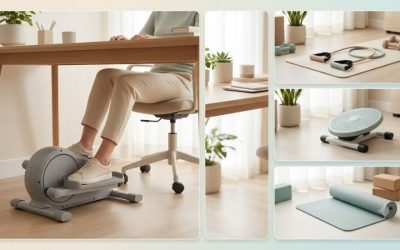
An under-desk elliptical is designed primarily for seated movement.
This creates fundamentally different balance requirements.
Body Support
The mini stepper must support the standing user.
An under-desk elliptical relies on a separate chair.
The chair’s stability therefore becomes part of the exercise setup.
Resistance Mechanism
Hydraulic resistance is common in mini steppers.
Under-desk ellipticals may use magnetic, friction, or motorized systems.
Exercise Space
Both can have small equipment footprints.
However, a mini stepper requires sufficient standing and overhead clearance.
An under-desk elliptical requires appropriate chair and knee clearance.
Portability
Both may be portable.
Equipment weight, handles, and storage orientation should be checked.
Which Should You Buy?
Choose the mini stepper for standing movement.
Choose the under-desk elliptical for seated pedaling.
Mini Stair Stepper vs. Walking Pad
The most important difference is movement specificity.
Repeated Stepping vs. Walking
A mini stepper uses guided pedal movement.
A walking pad provides a moving belt for walking.
These are not equivalent movement patterns.
Floor Space
Mini steppers often require much less floor length.
Walking pads need enough belt length for safe walking.
Balance
Both require standing balance.
However, walking on a moving belt introduces different movement and safety considerations.
Electrical Power
Many hydraulic mini steppers operate mechanically without household electricity.
Walking pads generally require a motor and electrical power.
Noise
Walking pads can generate motor, belt, and foot-contact noise.
Mini steppers may create mechanical and floor-transmitted vibration.
Exercise Duration
Walking pads and mini steppers have different operating limits.
Certain hydraulic steppers require cooling intervals.
The exact machine’s manual determines permissible use.
Which Should You Buy?
Choose a walking pad when walking is the intended exercise.
Choose a mini stepper when a compact guided stepping movement better suits your needs.
Mini Stair Stepper vs. Exercise Bike
An exercise bike provides seated cycling, while a mini stepper requires standing.
Seated vs. Standing Support
Bikes include seats and handlebars.
Mini steppers generally do not provide an integrated seat.
Movement Pattern
Cycling uses circular crank rotation.
Stepping uses alternating vertical or angled movement.
Resistance
Exercise bikes commonly use magnetic, friction, or air resistance.
Mini steppers often use hydraulic resistance.
Workout Controls
Some exercise bikes provide sophisticated consoles and preset workouts.
Basic mini steppers may only track time and step count.
However, electronics are not necessarily required for useful exercise.
Footprint
A mini stepper usually occupies less floor area.
An exercise bike may be more practical for someone who wants a supported seated position.
Which Should You Buy?
Choose an exercise bike for seated cycling.
Choose a mini stepper for compact standing stepping.
Mini Stair Stepper vs. Full-Size Stair Climber
These machines share a broad climbing theme but differ mechanically.
Mechanism
A mini stepper uses short pedal movements.
A full-size stair climber may use rotating steps or another substantial climbing mechanism.
Step Height
Full-size equipment may provide a more extensive stair-climbing movement.
Mini steppers typically have limited travel.
Hand Support
Full-size stair climbers commonly include handrails or handles.
Mini steppers may not.
Footprint
A full-size machine usually occupies substantially more space.
Electrical Requirements
Some full-size stair climbers use powered mechanisms and advanced consoles.
Basic hydraulic mini steppers often do not require wall power.
Cost
Full-size climbing machines generally involve greater equipment and ownership requirements.
However, precise price comparisons should use current verified products.
Which Should You Buy?
Choose a full-size stair climber when a larger dedicated climbing system is important and space permits.
Choose a mini stepper when compact size is essential.
Traditional Mini Stepper vs. Twist Stepper
Not every mini stepper provides the same movement.
Traditional Up-and-Down Stepping
A conventional stepper primarily emphasizes alternating vertical movement.
Twist Movement
A twist stepper adds a lateral or rotating element.
Balance Requirements
Twisting can change how the user maintains balance.
Pedal Comfort
The appropriate movement depends on individual preference and comfort.
Resistance
Both designs may use hydraulic systems.
Choosing the Better Type
A traditional stepper may be preferable when straightforward stepping is desired.
A twist model may appeal to someone who enjoys its particular movement, provided it can be controlled safely.
Resistance Systems Compared
Hydraulic Resistance
Hydraulic cylinders are compact and require no large flywheel.
However, their behavior can depend on temperature and movement speed.
Magnetic Resistance
Magnetic systems are common in exercise bikes and ellipticals.
They may permit convenient adjustment.
Air Resistance
Air systems respond dynamically to fan speed.
They may generate noticeable airflow noise.
Motorized Belt Movement
Walking pads use powered belts.
This provides a fundamentally different exercise mechanism.
Resistance-Level Counts
Settings are not standardized.
Do not assume that more levels means greater maximum workload.
Real-World Footprint and Product Example
The Sunny Health & Fitness Total Body Step Machine SF-S0978 offers a documented example of a compact hydraulic stepper.
The manufacturer lists dimensions of approximately 16.3 inches long, 12.8 inches wide, and 13.6 inches high.
It weighs approximately 16.2 pounds and has a stated maximum user weight of 220 pounds.
The machine provides hydraulic resistance and adjustable step height.
What the Dimensions Mean
The base occupies approximately 1.45 square feet.
That is the equipment footprint, not the full operating area.
The user still needs space for standing, moving, mounting, and dismounting.
What Weight Capacity Means
The published weight rating is an operating limit.
It does not automatically indicate frame durability relative to every competing product.
What Adjustable Step Height Means
The presence of an adjustment control does not guarantee standardized workload changes.
Buyers should review how the specific adjustment works.
What the Example Does Not Establish
The dimensions and specifications of one product do not describe every mini stepper.
Other models may differ substantially.
Hydraulic Heat and Continuous-Use Limits
Hydraulic heat is one of the most important reasons to compare mini steppers carefully with alternatives.
Why Cylinders Become Warm
Mechanical work is dissipated through the hydraulic resistance mechanism.
This can generate heat.
Temperature and Resistance Feel
Hydraulic fluid behavior can change with temperature.
The stepping sensation may therefore differ during extended use.
Cooling Intervals
Some manufacturers specify continuous-use limits and cooling requirements.
These vary by model.
Avoiding Hot Surfaces
Hydraulic cylinders may become hot during exercise.
Do not touch them immediately after use when the manufacturer warns against it.
When This Matters Most
A buyer planning long, uninterrupted sessions should examine hydraulic operating restrictions carefully.
A different cardio machine may be more appropriate if the intended workout exceeds a stepper’s permitted usage.
Stability and Balance Requirements
Base Construction
A stepper must remain stable during normal stepping.
Floor Contact
Non-slip feet may help prevent movement.
Pedal Dimensions
Pedals should accommodate the user’s footwear.
User Position
Maintain a controlled stance and follow the manufacturer’s technique instructions.
Resistance Bands
Some mini steppers include bands.
These may add upper-body movements but also change balance demands.
Users With Mobility Concerns
A basic stepper may be unsuitable for someone who cannot safely maintain standing balance.
Alternative seated equipment may deserve consideration.
Noise and Apartment Compatibility
Mechanical Noise
Hydraulic cylinders, pivots, and pedals can generate sound.
Floor Vibration
Repeated stepping transfers forces into the floor.
Exercise Mats
A compatible mat may protect the floor and reduce some vibration.
Shared Housing
Consider neighboring rooms and exercise times.
Walking Pad Comparison
Walking pads produce motor and belt sound, along with foot-contact noise.
Neither type is universally quieter.
Storage, Portability, and Maintenance
Carrying Weight
A compact stepper may be easy to move, but actual weight matters.
Storage Orientation
Follow manufacturer instructions.
Do not assume every hydraulic device can be stored vertically.
Pedal Inspection
Check for wear, damage, and secure connections.
Hydraulic Components
Inspect for leaks or unusual operation.
Lubrication
Only use manufacturer-approved methods.
Replacement Parts
Confirm service availability.
Warranty
Check coverage for the frame and mechanical components.
Choosing by Budget and Training Needs
Budget Buyers
A basic mini stepper may provide straightforward exercise without advanced electronics.
However, stability and operating limits remain essential.
Apartment Users
A compact footprint is valuable, but floor noise and standing clearance must be considered.
Beginners
Start with controlled movement and become familiar with the machine.
Experienced Users
Consider whether the resistance and operating duration meet the intended workout requirements.
Users Seeking Seated Exercise
A compact exercise bike or under-desk elliptical may be more appropriate.
Users Who Prefer Walking
A walking pad better matches the preferred movement.
Three Practical Buying Scenarios
Scenario 1: Very Limited Floor Space
A mini stepper may be preferable if no larger machine fits and the user can maintain balance comfortably.
The buyer should still confirm overhead clearance and operating space.
Scenario 2: A Home Office With a Seated Workstation
An under-desk elliptical may be more practical.
A mini stepper requires standing and is not a direct substitute for seated desk exercise.
Scenario 3: Long Cardio Sessions
A compact elliptical, walking pad, or exercise bike may deserve consideration if a hydraulic mini stepper has operating restrictions incompatible with the planned sessions.
The decision should follow documented usage limits rather than broad assumptions about workout duration.
Frequently Asked Questions
Is a Mini Stair Stepper Better Than a Walking Pad?
Neither is universally better. A mini stepper offers guided stepping in a compact footprint, while a walking pad provides walking movement.
Can a Mini Stepper Replace a Full-Size Stair Climber?
It can provide a different form of stepping exercise, but it does not reproduce every aspect of a full-sized climbing mechanism.
Are Mini Steppers Good for Small Apartments?
They can be practical because of their small footprint. However, noise, stability, floor suitability, and clearance remain important.
Can You Use a Mini Stepper Every Day?
Usage depends on individual capability and manufacturer operating limits. Some hydraulic designs require cooling periods.
Are Twist Steppers Better Than Traditional Steppers?
Neither is universally better. They provide different movement patterns and balance demands.
Do Mini Steppers Need Electricity?
Many basic hydraulic designs operate without household power. Electronic counters may use batteries.
Conclusion
When comparing a mini stair stepper vs alternatives, compactness is its strongest advantage, but movement quality, balance, resistance behavior, and operating limits determine whether it is the right purchase. Compact ellipticals provide guided strides, under-desk devices support seated movement, walking pads offer walking, and exercise bikes provide cycling. Choose the equipment that matches your preferred activity and available space.
Write Your Review
No reviews yet. Be the first to share your experience!