
Choosing a vertical climber machine vs alternatives requires comparing movement mechanics, workout intensity, stability, and space requirements. Ellipticals, stair steppers, rowing machines, and SkiErgs offer different advantages. This guide explains the practical trade-offs so you can choose equipment that fits your body, home, and training goals.
Quick Verdict: Is a Vertical Climber Better Than Other Cardio Equipment?
A vertical climber is most appealing when you want coordinated arm-and-leg movement in an upright machine that generally occupies less floor length than a traditional rowing machine or treadmill. Its guided climbing motion differs from the continuous pedaling of an exercise bike, the elongated stride of an elliptical, and the repeated pulling movements of a SkiErg.
However, a vertical climber is not automatically the most effective cardio machine simply because it involves multiple body regions. The actual training experience depends on resistance, technique, movement range, exercise duration, and the user’s ability to maintain controlled movement.
For a compact home gym, the most important limitation may be ceiling height rather than floor space. Many vertical climbers have relatively narrow bases, but the user stands above the floor and reaches upward throughout the exercise. A machine that fits between two pieces of furniture may still be unusable beneath a low ceiling.
The alternatives have their own advantages. A compact elliptical can offer more familiar guided stepping. A mini stair stepper occupies very little floor area. A rowing machine provides seated, coordinated movement with several resistance options. A SkiErg emphasizes pulling and can be wall-mounted. An exercise bike may be easier to accommodate when supported seated cycling is preferred.
Our buying recommendation: Choose a vertical climber when you specifically want climbing-style movement, can accommodate its full height and motion, and find the machine comfortable. Choose an alternative when seated support, a different movement pattern, simpler resistance control, or established performance tracking matters more.
Vertical Climber vs. Alternatives: At-a-Glance Comparison
| Equipment | Primary movement | Resistance characteristics | Space considerations | Best reason to choose it |
|---|---|---|---|---|
| Vertical climber | Coordinated upright climbing | Bodyweight-driven or adjustable, depending on model | Tall frame, relatively narrow footprint | Climbing-style full-body coordination |
| Compact elliptical | Guided elliptical stepping | Often magnetic | Moderate floor footprint and body clearance | Smooth, continuous standing motion |
| Mini stair stepper | Short alternating steps | Often hydraulic | Very small equipment base | Minimal storage requirements |
| Full-size stair climber | Continuous or repeated stair climbing | Machine-specific mechanical or powered system | Large equipment and height requirements | Dedicated stair-climbing exercise |
| SkiErg | Repeated downward pulling | Air resistance on conventional ergometers | Tall; wall or floor-stand installation | Pulling-focused intervals and workout data |
| Rowing machine | Seated leg drive and pulling | Air, magnetic, water, or hydraulic | Often long operating footprint | Seated coordinated conditioning |
| Upright exercise bike | Seated circular pedaling | Often magnetic | Relatively compact, model-dependent | Familiar cycling movement |
| Walking pad | Walking on a moving belt | Motor-controlled speed | Long, narrow floor area | Walking-specific exercise |
The most useful comparison is not how many muscles a machine claims to engage. It is whether the movement, resistance, and equipment design match what you intend to do consistently.
How a Vertical Climber Actually Works
Coordinated Arm-and-Leg Movement
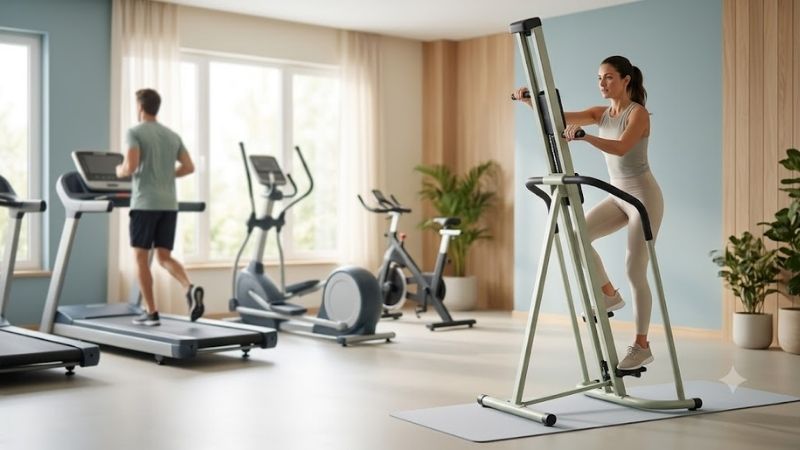
A conventional vertical climber uses foot platforms and moving handles connected through a mechanical structure. As the user steps and moves the arms, the mechanism produces a climbing-like sequence that may resemble ascending a ladder or steep incline.
The exact movement depends on the machine’s linkage geometry. On some models, handle and pedal positions are directly coordinated; on others, resistance and motion are arranged differently. This can change how naturally the machine accommodates users with different arm lengths, inseams, and shoulder mobility.
The practical advantage is that the user performs a repeated movement involving more than simple lower-body pedaling. The limitation is that the machine may impose a relatively fixed path. If the handles require excessive reaching or the pedals move through an uncomfortable range, adjusting workout intensity will not solve the fit problem.
For buyers, the movement should feel controlled throughout the entire cycle. A machine that looks impressive in a demonstration video may not feel comfortable for every body type.
Bodyweight Loading vs. Adjustable Resistance
Many basic vertical climbers rely largely on bodyweight, mechanical leverage, and the speed of movement to determine perceived effort. These designs may not include a conventional resistance knob.
Other climbers incorporate adjustable resistance mechanisms, including magnetic or other systems. This can provide additional ways to manage workload, but resistance-level counts are not standardized between brands.
A machine advertising ten resistance levels is not necessarily capable of providing more mechanical workload than one advertising five. It is also important to distinguish between a control that changes resistance and one that changes stride travel or another geometric characteristic.
Before buying, identify exactly how the machine creates resistance. For simple climbing workouts, a bodyweight-driven design may be sufficient. For training that requires specific workload progression, a documented adjustable-resistance system may be more appropriate.
Balance and Stability Requirements
Vertical climbers support a standing user through moving pedals. The rider must maintain coordination while applying force through both the upper and lower body.
This creates different stability requirements from a seated exercise bike or rowing machine. The climber’s frame must resist unwanted rocking, and its foot platforms must provide secure contact throughout the motion.
Moving handles should not be assumed to function as full body-weight support rails unless the manufacturer states that they are designed for that purpose. Their primary role may be transmitting movement through the climbing mechanism.
Buyers with limited balance should consider whether a seated alternative would be easier to use. A vertical climber can be suitable for many people, but its upright coordination demands should be understood before purchase.
Vertical Climber vs. Compact Elliptical
Climbing Motion vs. Elliptical Stride
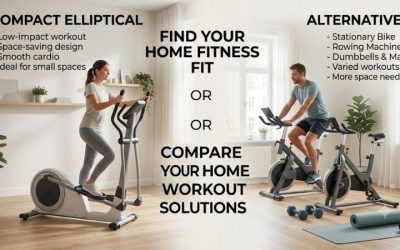
A compact elliptical guides the feet along an elongated path, usually combining horizontal and vertical movement. A vertical climber instead emphasizes climbing-style movement with a substantial vertical component.
These differences affect the timing of the hips, knees, ankles, and arms. An elliptical may feel more familiar to users accustomed to walking-like cardio, particularly when the machine provides a comfortable stride length.
A vertical climber may feel more engaging to someone who prefers pulling and stepping in a coordinated sequence. However, neither movement is inherently superior for everyone.
The deciding factor is whether the equipment allows consistent motion without uncomfortable compensation. A compact elliptical with an excessively short stride can feel restrictive, just as a vertical climber with inadequate handle adjustment can force awkward reaching.
Upper-Body Involvement and Handle Design
Many full-size and compact ellipticals offer moving handlebars, so it would be inaccurate to describe the vertical climber as the only option involving the arms.
The difference lies in how those handles move. Elliptical handlebars generally follow a guided push-and-pull pattern associated with the pedal cycle. Vertical climber handles follow a climbing-oriented path.
Comfortable shoulder movement matters more than promotional claims about muscle activation. A user who experiences awkward reaching on one machine may prefer the other, even when both involve upper- and lower-body movement.
When several family members will share the equipment, handle adjustability becomes especially important. Check the documented range instead of assuming a single setup fits everyone.
Resistance and Workout Progression
Compact ellipticals commonly use magnetic resistance with manual or electronic adjustments. This can make it convenient to select a nominal workload setting and repeat it during later workouts.
Vertical climbers vary more widely. Some are primarily bodyweight-driven, while others offer adjustable loading.
For someone who likes programmed resistance changes, the elliptical may provide a more straightforward experience. For someone who enjoys regulating effort through climbing rhythm and movement, a basic vertical climber may be sufficient.
Neither machine guarantees a particular calorie expenditure. Actual workload depends on resistance characteristics, exercise intensity, and the individual.
Space and Ceiling Clearance
A compact elliptical often uses more floor length than a vertical climber, while a vertical climber may require considerably more overhead room.
That trade-off is important in bedrooms, basement gyms, and apartments with low ceilings.
A buyer should measure the complete operating envelope: the frame, moving pedals, handlebars, the user’s height above the pedals, and safe entry space.
Choose the elliptical when continuous elliptical movement, familiar resistance settings, or lower overhead requirements better match your needs. Choose the climber when you prefer its climbing motion and have adequate ceiling clearance.
Vertical Climber vs. Mini Stair Stepper
Movement Pattern and Muscle Coordination
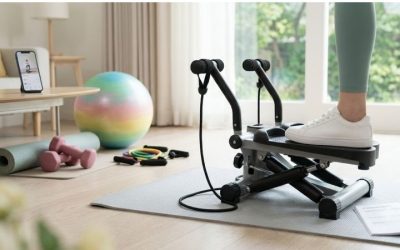
A mini stair stepper typically provides two small foot platforms that move through a short alternating stepping path. Many use hydraulic cylinders, although resistance systems differ.
A vertical climber incorporates a larger structure coordinating arm and leg movement. That creates a more integrated climbing pattern than a basic stepper.
Some mini steppers include resistance bands for optional upper-body movements. However, bands do not make the machine mechanically equivalent to a vertical climber. They introduce separate resistance movements rather than the same linked climbing motion.
If the goal is compact stepping, a mini stepper may provide everything needed. If coordinated handle-and-pedal movement is central to the desired exercise, a vertical climber is more directly relevant.
Resistance Consistency and Hydraulic Limits
Hydraulic mini steppers can be convenient because the resistance mechanism is compact. However, cylinder behavior may change with temperature and movement speed.
Certain models also specify continuous-use limits and cooling requirements. These restrictions can matter for users planning long, uninterrupted workouts.
Vertical climbers have their own operating limits, but a bodyweight-driven or magnetic mechanism does not function identically to hydraulic cylinders.
A buyer who wants extended sessions should examine the exact machine’s rated use, not assume every compact stepper is designed for continuous exercise.
Stability and User Support
Both machines require standing balance. A mini stepper often has no integrated hand support, while a vertical climber includes moving handles.
Those handles may help the user coordinate movement, but their intended structural function must be verified. They should not automatically be treated as safety handrails.
Pedal size and grip also matter. A compact platform that does not comfortably accommodate the user’s shoes can make stepping difficult.
For users who prefer a straightforward movement without coordinated arm actions, a mini stepper may be simpler. Others may prefer the additional contact points and guided movement of a climber.
Storage and Apartment Convenience
A basic mini stepper is usually much easier to store than a tall vertical climber. Some models fit on a closet floor or beside furniture, while many climbers remain relatively long or tall even when folded.
However, storage convenience should be assessed alongside exercise preferences. A tiny machine has little value if the buyer dislikes its movement or cannot use it within the manufacturer’s operating limits.
Choose the mini stepper when minimal equipment size matters most. Choose the vertical climber when the extra frame and storage requirements are justified by the coordinated climbing experience.
Vertical Climber vs. Full-Size Stair Climber
Simulated Climbing vs. Stair-Climbing Mechanics
A vertical climber uses guided foot platforms and handles to simulate climbing. A full-size stair climber may use a rotating staircase or another substantial stepping mechanism.
That difference changes foot placement, body movement, and the training experience. A rotating staircase can reproduce certain aspects of repeated stair ascent more directly than a compact climber, although it is still a stationary exercise machine.
Someone who specifically enjoys climbing stairs may prefer a dedicated stair climber. Someone who wants synchronized arm-and-leg movement may find the vertical climber more engaging.
The buyer should compare actual movement rather than assuming that all equipment using the word climbing performs the same exercise.
Control and Workout Programming
Larger stair-climbing machines may provide electronically controlled speed, programmed intervals, and substantial workout monitors.
Basic vertical climbers can offer simpler controls. Premium climbing trainers may provide adjustable resistance or connected features, but functionality varies.
A structured training user should identify which measurements matter. If precise cadence or programmed climbing speed is essential, a dedicated stair machine may be more appropriate.
A simple vertical climber can still support interval exercise, but its capabilities should be evaluated according to the exact resistance system.
Space, Delivery, and Ownership
A full-size stair climber generally requires more floor space, greater equipment height, and potentially more complicated delivery or installation.
A vertical climber may be easier to accommodate in a compact home gym, although ceiling height remains important.
Large stair machines can also contain motors and complex moving mechanisms. Service requirements may be greater, depending on design.
Choose a full-size stair climber for a dedicated stair-climbing experience in a permanent exercise area. Choose a vertical climber when a narrower climbing trainer better matches available space and preferred movement.
Vertical Climber vs. Ski Erg Machine
Climbing vs. Downward Pulling
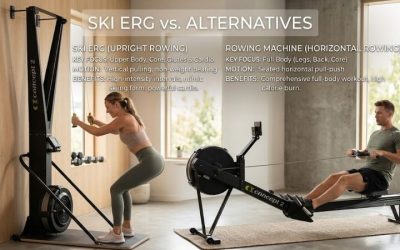
A SkiErg uses handles connected to a resistance mechanism, allowing repeated downward pulling movements. The Concept2 SkiErg supports double-poling and alternating-arm techniques.
A vertical climber instead guides the user through linked arm-and-leg climbing motion.
The distinction is important because a SkiErg does not require standing on moving foot platforms. The lower body can contribute through appropriate movement, but the machine’s resistance is driven by the pulling mechanism.
Someone interested in ski-poling-style conditioning may prefer a SkiErg. Someone who wants ladder-like coordination may prefer a climber.
Resistance and Training Data
The Concept2 SkiErg uses an air flywheel. Stronger pulls accelerate the flywheel and create greater aerodynamic drag.
Its PM5 monitor provides performance-related workout data. This can be useful for people who want repeatable intervals or structured training.
Basic vertical climbers may display only time and repetition counts. More advanced models can offer additional features, but the monitoring system should be evaluated individually.
If consistent ergometer data is essential, the SkiErg may provide a more suitable measurement ecosystem. If a particular climbing movement matters more than numerical performance metrics, a climber may be preferable.
Space and Installation
Concept2 specifies an 85-inch height for the SkiErg. Its wall-mounted equipment depth is approximately 16 inches, while the standard floor stand measures approximately 23.5 by 50 inches.
Wall mounting can reduce the equipment footprint, but it requires an appropriate structural attachment and room in front for the pulling movement.
A vertical climber typically avoids permanent wall installation but occupies its own standing frame area.
For renters, the available mounting options may determine whether a SkiErg is practical. For low-ceiling rooms, neither machine should be selected without checking the full operating requirements.
Noise and Maintenance
The SkiErg’s fan creates airflow sound. It also contains cords, pulleys, and moving components that require inspection.
A vertical climber produces different mechanical sounds through linkages and frame connections.
Neither is inherently silent. Buyers in shared housing should evaluate specific equipment and room placement.
Choose the SkiErg for pulling-focused conditioning and performance tracking. Choose the climber for coordinated climbing movement.
Vertical Climber vs. Rowing Machine
Seated Rowing vs. Upright Climbing
A rowing machine uses a seated sliding movement coordinated with leg drive, torso motion, and handle pulling.
A vertical climber positions the user upright while the handles and pedals move through climbing patterns.
This changes the body’s support arrangement.
For someone who prefers seated exercise, rowing may be more appealing. For someone who likes standing movement, a vertical climber can offer a different experience.
Neither should be selected solely because marketing materials describe it as full-body exercise. Comfort and technique determine how usable the equipment will be.
Resistance System Choices
Rowers are available with air, water, magnetic, and hydraulic resistance. These systems differ in how workload responds to user movement.
Vertical climbers can be bodyweight-driven or use additional resistance mechanisms, depending on the model.
That gives rowers a broad range of buying options for users with specific resistance preferences.
An air rower may suit effort-responsive intervals, while a magnetic rower may be attractive for adjustable nominal resistance.
A buyer seeking a particular training metric should also compare monitor quality rather than resistance type alone.
Operating Footprint
Conventional rowing machines often require substantial floor length because the seat travels along a rail.
Some models separate into sections, fold, or store upright. However, those storage features do not reduce the full operating area needed during exercise.
A vertical climber uses a taller frame and may occupy less horizontal length.
Which machine fits better depends on the room’s geometry.
Long-Term Practicality
Rowers contain rails, seats, resistance assemblies, and drive components that require maintenance.
Vertical climbers contain their own linkages and pedal mechanisms.
A buyer should consider access to replacement parts and manufacturer service instructions.
Choose a rower for seated rowing mechanics and the desired resistance system. Choose a climber for upright climbing coordination.
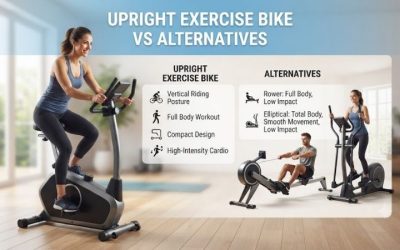
Vertical Climber vs. Upright Exercise Bike
Movement and Body Position
An upright exercise bike provides circular pedaling while seated. A vertical climber requires standing coordination through the handles and pedals.
This distinction may matter more than resistance or display features.
Someone who enjoys cycling may find a bike easier to incorporate into a routine. Someone who dislikes seated exercise may prefer the climber.
Personal preference is a legitimate buying criterion because equipment is useful only when it supports workouts the owner is willing to perform.
Resistance Adjustment
Upright exercise bikes commonly offer magnetic resistance with manual or electronic controls.
This can make workload adjustment straightforward.
A basic vertical climber may rely more on bodyweight loading and movement speed.
For users who prefer clear resistance settings, an exercise bike may be more convenient.
However, the number of settings should not be treated as a standardized measure of total workload.
Space and Accessibility
Upright bikes can have compact floor footprints and generally require less overhead clearance than vertical climbers.
They also provide an integrated seat.
However, mounting the saddle and maintaining a comfortable riding posture remain important.
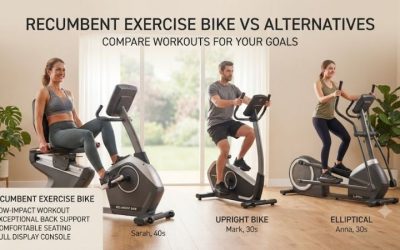
A recumbent bike may be worth considering when back support is essential.
Choose the bike when seated cycling, adjustable resistance, and potentially simpler setup matter. Choose the climber when upright coordinated movement is the primary goal.
Space and Fit: The Buying Factors That Can Change the Decision
Ceiling Clearance Must Include the User
The advertised height of a vertical climber is not necessarily the highest point reached during exercise.
The user’s feet are elevated on moving pedals, and the arms may reach upward.
Measure the ceiling at the exact equipment location, including beams, fans, lighting, and sloped areas.
Also check the manufacturer’s user-height recommendations and overhead-clearance instructions.
A machine that fits its floor location but forces the user to restrict arm movement is not suitable.
Handle Reach and Pedal Travel
Handle adjustment can determine whether a climber fits a particular user.
A shorter rider may struggle with fixed long movements, while a taller rider may find a limited range uncomfortable.
Pedal travel also affects the feel of the climbing cycle.
If the equipment has adjustable settings, check exactly what changes and how securely the mechanism locks.
For shared households, adjustment range and ease of switching settings can be more useful than advanced workout electronics.
Frame Stability and Weight Capacity
The machine should remain stable during its intended exercise pattern.
Check the published maximum user weight, floor requirements, and frame assembly instructions.
A higher weight limit should not automatically be interpreted as superior durability.
Inspect folding locks and structural connections before use.
If the frame shifts, rocks unexpectedly, or develops unusual noise, stop rather than compensating through body movement.
Noise and Floor Protection
Linkages, bearings, and foot-platform movement can create sound.
A suitable equipment mat may protect the floor and reduce some vibration, but it cannot guarantee silence.
In apartments, building construction and neighboring rooms can influence the experience.
Avoid assuming that a mechanically simple climber is silent or that every air-resistance alternative is unsuitable for shared housing.
Folding and Storage
A folding vertical climber can save room between workouts, but the folded shape may still be tall or awkward.
Measure the complete stored dimensions and consider how the equipment will be moved.
A machine requiring daily lifting and multiple locking steps may be inconvenient for frequent use.
Permanent setup is preferable when it fits the home and encourages regular exercise.
Choosing by Budget and Long-Term Value
Budget Vertical Climbers vs. Compact Steppers
Basic climbers may offer relatively simple mechanical arrangements.
A mini stepper can sometimes cost less and occupy less storage space, but it provides a different movement.
Choose according to the exercise you actually want rather than the smallest initial purchase price.
Midrange Climbers vs. Compact Ellipticals
Midrange equipment may offer more adjustments, sturdier frames, or improved controls.
A compact elliptical may provide better value if you prefer its movement and resistance options.
The correct comparison includes comfort, intended use, and support availability.
Premium Climbers vs. SkiErgs and Rowers
Premium climbing trainers can compete with more specialized cardio equipment.
At that level, performance monitoring, service support, and resistance characteristics become especially important.
An established ergometer may be a better purchase for users who value standardized workout records.
A premium climber is worthwhile only when its climbing mechanics justify the cost.
Ownership Expenses
Consider equipment mats, replacement parts, maintenance, optional connected services, and potential installation needs.
A cheap machine with unavailable spare parts may offer poor long-term value.
An expensive machine with features you never use can also be poor value.
Practical Buying Scenarios
Small Apartment With a High Ceiling
A vertical climber can be appropriate when there is enough vertical space but limited floor length.
Check full body clearance and storage practicality.
If the room has a low ceiling, a compact bike or stepper may fit better.
Home Gym Focused on Measurable Intervals
A SkiErg or air rower with a documented performance monitor may be more relevant when repeatable workload data is the priority.
A climber can still support intervals, but its tracking capabilities should be verified.
Beginner Who Prefers Simple Movement
An exercise bike or elliptical may feel more familiar to some beginners.
A climber can still be appropriate when its coordinated motion is comfortable and controllable.
The correct choice should reflect individual ability.
Buyer With Balance Concerns
A seated bike or rowing machine may deserve consideration when standing coordination is difficult.
Moving climber handles should not be relied upon as safety rails without manufacturer approval.
Buyer Who Specifically Enjoys Climbing
A vertical climber may provide the most engaging experience.
The important question is whether the machine offers adequate fit, resistance, and stability for regular use.
Common Buying Mistakes
Choosing Based on Muscle-Activation Claims
Marketing statements about full-body exercise do not establish overall superiority.
Evaluate the movement and intended workload.
Measuring Only the Base
Include overhead clearance, moving limbs, and entry space.
Confusing Resistance Adjustments With Stride Adjustments
A control may alter mechanical geometry rather than workload.
Check the manufacturer’s explanation.
Ignoring User Fit
A narrow footprint does not compensate for uncomfortable reach or pedal travel.
Treating Folding as Automatically Better
Folding saves storage space but introduces handling and locking requirements.
Overlooking Replacement Parts
Mechanical linkages and handles can require service.
Manufacturer support matters.
Frequently Asked Questions
Is a Vertical Climber Better Than an Elliptical?
Neither is universally better. Vertical climbers provide coordinated climbing movement, while ellipticals offer a guided elongated stride. Comfort and intended use determine the better choice.
Is a Vertical Climber Better Than a Stair Stepper?
A vertical climber generally involves coordinated handle-and-pedal movement. A mini stepper usually focuses on compact lower-body stepping. Choose the pattern you prefer.
Can a Vertical Climber Replace a Rowing Machine?
It can provide an alternative cardio workout, but it does not reproduce seated rowing mechanics or the same performance measurements.
Are Vertical Climbers Good for Small Apartments?
Some are, provided ceiling clearance, operating space, frame stability, and noise are suitable.
Do Vertical Climbers Have Adjustable Resistance?
Some models do. Others primarily use bodyweight-driven movement. Verify the specific mechanism.
Which Alternative Is Best for Seated Exercise?
An exercise bike or rowing machine may be more appropriate when seated support is important.
Conclusion
The best vertical climber machine vs alternatives choice depends on movement preference, ceiling clearance, user fit, and training requirements. Vertical climbers suit coordinated upright climbing, while ellipticals, steppers, SkiErgs, rowers, and bikes offer different advantages. Prioritize comfortable mechanics, stable construction, and practical ownership over broad claims of superior exercise results.


Write Your Review
No reviews yet. Be the first to share your experience!