
Key takeaways
-
Assembled footprint: The actual floor area occupied during exercise.
-
Ceiling clearance: Space above the machine and moving user.
-
Frame stability: A secure base that resists unwanted rocking.
-
User-height compatibility: Adjustment options suitable for the rider’s proportions.
-
Climbing mechanism: Coordinated arm-and-leg movement with comfortable travel.
-
Resistance system: Appropriate effort characteristics for the intended workouts.
-
Folding mechanism: Convenient storage without compromising operating safety.
-
Weight capacity: A manufacturer-approved limit appropriate for the user.
-
Noise and maintenance: Mechanical characteristics suitable for home use.
Finding a vertical climber machine for small spaces requires balancing a narrow footprint with adequate ceiling clearance, stable construction, and comfortable movement. The best design should fit your room without limiting your climbing motion. This guide explains how to compare compact climbers, evaluate folding features, and choose a machine suited to home workouts.
Quick Verdict: What Makes a Vertical Climber Suitable for Small Spaces?
A vertical climber is a standing exercise machine that coordinates movements of the arms and legs to simulate aspects of climbing. Many designs feature two foot pedals, moving handles, and an upright frame that guides the user’s movement.
Unlike treadmills and rowing machines, vertical climbers generally emphasize height rather than floor length. This can make them attractive for apartments, bedrooms, and home gyms where horizontal space is limited.
However, a small footprint does not guarantee compatibility with every room.
The machine must provide sufficient space for the user’s body, the full travel of the handles and pedals, and safe entry and exit. Ceiling height, particularly for taller users, may become a more restrictive factor than floor area.
The most important buying considerations include:
-
Assembled footprint: The actual floor area occupied during exercise.
-
Ceiling clearance: Space above the machine and moving user.
-
Frame stability: A secure base that resists unwanted rocking.
-
User-height compatibility: Adjustment options suitable for the rider’s proportions.
-
Climbing mechanism: Coordinated arm-and-leg movement with comfortable travel.
-
Resistance system: Appropriate effort characteristics for the intended workouts.
-
Folding mechanism: Convenient storage without compromising operating safety.
-
Weight capacity: A manufacturer-approved limit appropriate for the user.
-
Noise and maintenance: Mechanical characteristics suitable for home use.
For buyers with a permanent exercise corner, a stable fixed-frame vertical climber may be the most convenient option.
A folding model becomes especially appealing when the exercise space must be cleared after each session.
The best choice is not necessarily the smallest or most complicated machine. It is the one that fits the room, accommodates the user, and provides controlled, repeatable movement.
Understanding Different Vertical Climber Machine Designs
Vertical climbing machines are not all mechanically identical.
Some use the user’s body weight and mechanically linked pedals, while others incorporate adjustable resistance or additional exercise features.
Understanding the differences helps identify which type suits a compact home gym.
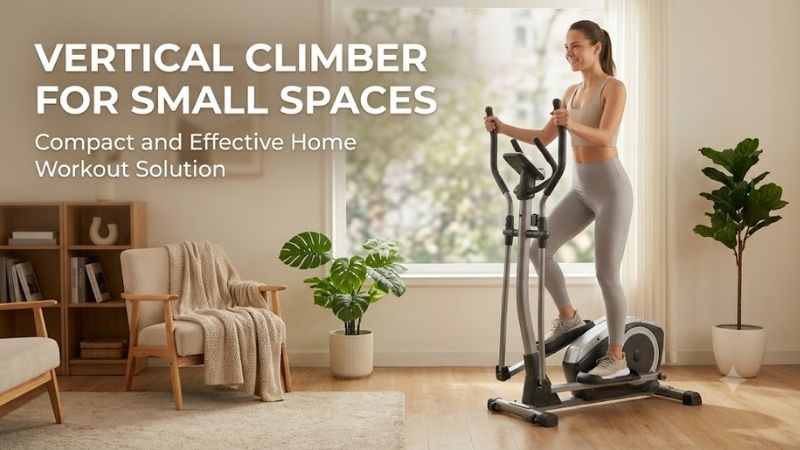
Traditional Bodyweight Vertical Climbers
Traditional vertical climbers use a coordinated climbing mechanism in which the arms and legs move along guided paths.
The rider typically stands on two pedals and holds moving handles.
Many basic models rely substantially on the user’s body weight, mechanical leverage, and movement speed to determine exercise effort.
These machines may not include a conventional resistance adjustment system.
Their primary advantage is mechanical simplicity. Without extensive electronics or large resistance assemblies, some models can maintain relatively compact dimensions.
However, the amount of exercise effort is not necessarily adjustable in the same way as a magnetic exercise bike.
Buyers should examine the actual movement pattern and avoid assuming that every bodyweight climber offers independent resistance settings.
Adjustable-Resistance Vertical Climbers
Some vertical climbers incorporate mechanisms that allow users to change the effort required during climbing.
The adjustment system varies by manufacturer and may involve magnetic, mechanical, or other resistance arrangements.
Adjustable resistance can be useful for households with different exercise preferences.
However, the presence of resistance levels does not automatically indicate greater exercise capability.
A machine with several labeled settings may still have a limited workload range.
The most useful approach is to determine what the control changes, how the resistance is generated, and whether the range is suitable for the intended workouts.
Folding Vertical Climber Machines
Folding climbers are designed to reduce storage requirements when not in use.
Depending on their construction, they may have collapsible supports, adjustable frame sections, or other mechanisms that allow the equipment to occupy less space.
This design is particularly attractive in studio apartments and multipurpose rooms.
However, folding machines introduce additional connections and locking mechanisms.
These components must be properly secured before exercise.
When comparing folding models, verify both assembled and folded dimensions. A machine may become narrower in storage while remaining relatively tall.
Do not assume that folding equipment can stand independently or lean against a wall safely unless the manufacturer expressly permits that arrangement.
Vertical Climbers With Fixed Handles
Some machines include stationary handles alongside, or instead of, moving handles.
Fixed handles may allow a different exercise configuration or provide hand placement while using the lower-body stepping mechanism.
However, the exact functionality depends on the model.
A fixed handle should not be assumed to provide full body-weight support or replace a properly designed safety handrail.
Before purchasing, check the manufacturer’s intended use for each grip position.
Multifunctional Climbing Machines
Certain vertical climbers include additional exercise features, such as resistance bands, alternate grip positions, or integrated workout displays.
These features can broaden the machine’s appeal, but they may also increase its dimensions or mechanical complexity.
For small spaces, multifunctionality is useful only when the additional features do not interfere with safe operation or storage.
A simple climbing mechanism may be more practical than a large combination machine that occupies significantly more space.
How Much Space Does a Vertical Climber Machine Need?
A vertical climber’s tall, narrow design can be useful in a compact room, but its true operating space includes more than its base.
Typical Vertical Climber Footprint
Dimensions vary considerably among models.
For initial planning, a compact climber might occupy approximately 24–36 inches in width and 30–45 inches in depth. These are illustrative planning ranges, not verified specifications for a particular product.
Some machines occupy more floor area, especially when their stabilizers extend outward or their frame is angled.
A hypothetical climber measuring 30 × 36 inches has a base footprint of 7.5 square feet.
That footprint may appear manageable in a small apartment, but the user also needs clearance around the moving machine.
| Configuration | Space consideration | Main advantage | Potential limitation |
|---|---|---|---|
| Compact fixed-frame climber | Upright operating footprint | Ready for regular use | Permanent storage requirement |
| Folding vertical climber | Separate use and storage dimensions | Frees room between workouts | Requires locking and setup |
| Adjustable-resistance climber | Model-dependent frame size | Greater workout control | Added mechanical components |
| Multifunctional climber | May require extra movement area | Multiple exercise options | More complicated placement |
| Large climbing trainer | Wider or taller construction | Specialized climbing operation | Harder to fit in small rooms |
The exact product’s assembled dimensions must be verified before ordering.
Why Ceiling Height Matters
Vertical climbers involve movement above the normal standing position.
The user stands on elevated foot pedals, while the arms may reach upward during the climbing cycle.
Consequently, a room with enough floor space may still be unsuitable because of limited ceiling height.
When measuring, account for the height of the machine, the rider’s body position, full arm travel, and any movement above the frame.
Tall users may need considerably more clearance than shorter users.
Ceiling fans, hanging lights, shelving, and sloped ceilings create additional restrictions.
Do not assume that an eight-foot ceiling automatically accommodates every vertical climber.
Use the manufacturer’s ceiling-clearance guidance whenever it is available.
Understanding the Operating Footprint
The base footprint is not the entire exercise footprint.
Your elbows, shoulders, and legs move while climbing. Depending on the machine’s geometry, parts of the body may extend beyond the frame.
Therefore, clearance is necessary around the sides and front.
The user must also have room to approach, mount, dismount, and step away from the machine.
Positioning a climber directly between large pieces of furniture may leave too little room for these actions.
For preliminary planning, mark the equipment dimensions on the floor, then consider the full movement envelope before deciding whether the location is practical.
Measuring a Small Exercise Area
Start by identifying an unobstructed portion of the room.
Measure the available floor length and width.
Next, measure the ceiling height at the exact location. This is particularly important for rooms with beams or sloped ceilings.
Check nearby doors, cabinets, desks, and other furniture that might enter the operating area.
If the climber folds, measure the intended storage location separately.
Finally, consider the path required to move the equipment into the room.
A climber may fit when assembled but arrive in packaging that is difficult to maneuver through a narrow staircase or doorway.
Example: Fitting a Vertical Climber Into a Home Office
Imagine a home office with an available floor area measuring 5 feet by 6 feet.
A hypothetical climber with a 30 × 36-inch base would physically fit within that rectangle.
However, the remaining floor space must provide sufficient access and body clearance.
If the office contains a rolling chair, desk drawers, or storage cabinets, their normal movement may interfere with the climber.
Ceiling height must also accommodate the rider’s full climbing motion.
The setup is only suitable if both the floor and vertical clearance requirements are satisfied.
A machine that blocks access to office furniture may be inconvenient even when its footprint fits mathematically.
Choosing the Right Climbing Motion and Handle Design
The climbing mechanism determines the character of the workout.
Two vertical climbers may have similar exterior dimensions but feel substantially different during use.
Coordinated Arm-and-Leg Movement
Many vertical climbers coordinate upper- and lower-body movement through mechanical linkages.
As one leg moves, the corresponding or opposite handle may move according to the machine’s design.
This arrangement creates a repeated climbing pattern.
However, manufacturers use different linkage geometries and movement paths.
The exact arm-to-leg relationship should be verified for the selected model.
A suitable machine should permit comfortable movement without requiring the user to reach excessively or twist awkwardly.
Climbing Stride Length
Climbing stride describes the extent of the repeated pedal movement, although manufacturers may define it differently.
A longer stride can produce a greater movement range but may increase the space or reach required.
A shorter stride may feel more manageable for some users but restrictive for others.
Stride length should be assessed alongside handle travel and adjustment range.
Do not compare isolated stride measurements unless they describe equivalent mechanical movements.
Adjustable Handle Height
Adjustable handles can help accommodate users with different body proportions.
The correct position should allow comfortable arm movement without forcing the shoulders into an awkward range.
Some machines offer telescoping handles or multiple height settings.
Others have relatively fixed geometry.
If several household members will use the machine, adjustment flexibility becomes particularly important.
Grip Comfort and Hand Position
Handles should provide secure hand contact throughout the movement.
Grip diameter, surface texture, and available positions can influence comfort.
However, thick padding or rubberized surfaces do not automatically guarantee a better grip.
Sweat, hand size, and movement mechanics also matter.
Follow the manufacturer’s recommended grip positions and avoid holding moving structural components that are not designed as handles.
Movement Smoothness
Smooth climbing depends on the complete mechanism.
Pedal linkages, bearings, frame rigidity, and resistance systems can all influence how the machine feels.
A well-functioning climber should operate within its documented movement characteristics.
Unexpected catching, severe unevenness, or excessive rocking may indicate incorrect assembly or mechanical problems.
Do not continue using a machine that behaves abnormally.
Resistance Systems and Workout Performance
Resistance determines part of the effort required during climbing, but not every vertical climber uses an adjustable resistance mechanism.
Bodyweight-Driven Climbing
Basic climbers may rely largely on bodyweight loading and mechanical leverage.
In these machines, changing movement speed or body position may influence perceived effort.
However, this is not equivalent to selecting a calibrated resistance level.
Buyers should understand the actual mechanism before assuming that a bodyweight-driven climber offers measurable workload settings.
Adjustable Mechanical Resistance
Some climbers include adjustment controls that modify resistance or movement geometry.
The exact mechanism matters.
A setting that changes stride travel should not be mistaken for one that directly changes resistance.
Review the manufacturer’s explanation of each adjustment.
For regular home use, predictable operation and a suitable movement range are more useful than an impressive number of settings.
Magnetic Resistance
Certain climbing trainers incorporate magnetic resistance systems.
These may allow controlled adjustment through manual or electronic mechanisms.
Magnetic resistance can avoid some friction-contact wear associated with alternative resistance arrangements.
However, a magnetic system does not make the entire machine silent.
Linkages, pedals, and other mechanical components still generate movement and potential noise.
Choosing Appropriate Workout Intensity
Vertical climbing can engage multiple muscle groups because it involves coordinated arm-and-leg movement.
However, actual exercise intensity varies with the rider, movement speed, resistance design, and workout duration.
Do not assume that every compact climber provides the same workload.
For beginners, a controlled movement pattern is more important than immediately increasing speed.
Experienced users should examine resistance capabilities and movement limitations before deciding whether a compact machine matches their training goals.
Frame Stability, Weight Capacity, and Safety
Stability is particularly important for vertical climbers because the rider moves while standing above the base.
Why a Stable Base Matters
As the user climbs, forces move through the frame and stabilizers.
The base must resist unwanted rocking or shifting under the manufacturer’s intended operating conditions.
A narrow design can save space, but construction quality and stabilizer geometry remain essential.
Do not assume that a compact machine is stable solely because it has a metal frame.
The complete structural arrangement matters.
Understanding Maximum User Weight
Manufacturers may provide a maximum user weight rating.
This is an operating limit, not an independent measure of overall equipment quality.
A machine with a higher rating is not necessarily more comfortable, quieter, or more durable than every lower-rated alternative.
Choose a model whose specified capacity accommodates the intended user and never exceed that limit.
Frame Materials and Mechanical Connections
Climber frames may use steel, aluminum, or combinations of structural materials.
Material labels alone cannot establish durability.
Joint design, manufacturing tolerances, hardware quality, and assembly all influence performance.
Look for clear assembly instructions and guidance for inspecting the frame.
Stability During Faster Movement
Higher climbing speeds can introduce greater movement forces.
A climber should remain stable throughout its intended operating range.
If the frame begins moving across the floor or rocking excessively, stop rather than attempting to compensate through body movement.
Verify assembly, floor suitability, and manufacturer instructions before resuming.
Safe Entry and Exit
Mounting and dismounting require careful attention because the pedals are elevated.
The user should follow the manufacturer’s intended entry procedure.
Avoid stepping onto unsupported frame components.
A nearby wall or piece of furniture should not be used as an improvised support unless appropriate and safe.
Users with significant balance limitations may need a different form of exercise equipment or individualized professional guidance.
Folding Mechanisms and Storage Convenience
A folding vertical climber can be particularly useful in a small home, but its convenience depends on more than the folded size.
How Folding Frames Save Space
Some climbers fold by bringing support structures closer to the main frame.
Others collapse or adjust frame sections.
The resulting shape varies.
A folded machine may be narrower or shallower but still relatively tall.
Measure all three stored dimensions.
Locking Pins and Frame Security
Folding mechanisms typically rely on hardware that secures the frame in its operating position.
Every required lock must be engaged correctly before exercise.
Never operate a folding climber with incomplete locking or damaged mechanisms.
Storage Against a Wall
Do not assume a folded climber can be leaned against a wall.
Some designs may be unstable in that orientation.
Use only the storage configurations approved by the manufacturer.
Moving the Equipment Between Rooms
A compact climber may still be awkward to move because of its height and weight distribution.
Check for transport wheels, designated lifting points, or movement instructions.
Frequent relocation may be inconvenient when the machine requires significant lifting.
Permanent Setup vs. Daily Folding
A permanent setup eliminates the need to unfold and secure the machine before every workout.
However, it consumes floor space continuously.
Daily folding preserves room flexibility but introduces additional setup steps.
Choose according to how often you intend to exercise and whether you have sufficient permanent space.
Noise, Maintenance, and Apartment-Friendly Operation
Mechanical sound is an important consideration for apartment users.
Vertical climbers can generate noise through linkages, bearings, resistance mechanisms, and floor contact.
Common Sources of Noise
Repeated climbing places movement forces through several mechanical connections.
Poorly adjusted or worn components can create knocking, squeaking, or grinding.
The type and amount of noise depend on the machine.
Avoid accepting unsupported claims of silent operation.
Reducing Floor Vibration
Place the climber on a suitable, level floor.
A manufacturer-compatible equipment mat may protect the surface and reduce some vibration.
However, a mat cannot compensate for an unstable frame or defective assembly.
Routine Maintenance
Maintenance may include checking fasteners, inspecting moving components, cleaning contact surfaces, and following lubrication instructions.
Do not apply lubricant to sealed or unspecified components without authorization.
Recognizing Mechanical Problems
Unexpected frame movement, loose handles, damaged pedals, or unusual resistance behavior require attention.
Stop using the equipment until the issue is corrected according to the manufacturer’s guidance.
Console Features and Workout Tracking
Some compact climbers provide basic workout monitors, while others have no electronics.
Step and Movement Counters
A movement counter can help track repetition volume.
However, manufacturers may define a counted movement differently.
Determine whether a display records individual pedal movements or full cycles.
Workout Duration
Tracking time can help organize training sessions.
A simple timer may provide sufficient information for many home workouts.
Estimated Calories
Calorie estimates are generally calculated using assumptions.
They should not be treated as precise measurements of energy expenditure.
Heart Rate and Connectivity
Advanced models may support heart rate monitoring or connected features.
Check actual compatibility before paying extra.
Technology should supplement a suitable mechanical design, not substitute for one.
Choosing a Vertical Climber for Your Budget
Entry-Level Vertical Climbers
Basic models often emphasize a simple climbing mechanism and limited electronic functionality.
They may be suitable for straightforward workouts if the frame fits the user and operates securely.
Midrange Models
Midrange climbers may provide additional adjustment options, more substantial frames, or convenient storage features.
Evaluate each upgrade according to actual needs.
Premium Climbing Machines
Higher-priced climbing trainers may offer advanced resistance controls, sophisticated monitoring, or larger structures.
These features may be useful for dedicated training but can increase space and maintenance requirements.
Warranty and Long-Term Value
Review coverage for the frame, pedals, moving linkages, and resistance components.
Replacement-part availability can be important for machines with multiple moving joints.
A low purchase price is less attractive if a small mechanical failure makes the machine unusable.
Buying for Specific Small-Space Situations
Studio Apartments
Look for a compact footprint and practical storage system.
Check that the machine does not obstruct normal movement through the apartment.
Bedrooms
Consider ceiling height, nearby furniture, and floor vibration.
A folding design may be useful when the bedroom cannot permanently accommodate fitness equipment.
Home Offices
A climber can occupy a narrow unused area, but it should not interfere with desk chairs, drawers, or work equipment.
Small Home Gyms
Measure operating clearances around existing machines.
A vertical climber should not share space needed for the safe movement of weights, benches, or racks.
Taller Users
Confirm handle adjustment, pedal travel, and ceiling clearance.
Do not assume every compact climber fits taller adults.
Beginners
Prioritize controlled movement, secure grips, and a stable base.
A simple machine may be easier to learn than one with additional movement options.
Vertical Climber vs. Other Compact Cardio Equipment
| Equipment | Main movement | Space advantage | Key limitation |
|---|---|---|---|
| Vertical climber | Coordinated climbing | Narrow floor footprint | Height and balance requirements |
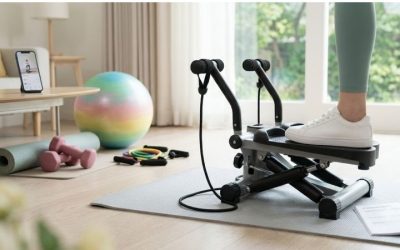
| Mini stair stepper | Standing stepping | Very small base | Limited upper-body involvement |
| Compact elliptical | Elliptical stepping | Familiar movement | Longer frame on many models |
| Folding exercise bike | Seated cycling | Compact storage possible | Larger operating footprint |
| Walking pad | Walking | Slim profile | Requires considerable floor length |
| Ski erg | Repeated pulling | Wall mounting possible | Requires installation or floor stand |
Vertical Climber vs. Mini Stair Stepper
A mini stepper primarily emphasizes lower-body stepping.
A vertical climber generally coordinates arm and leg movement.
Choose based on the preferred exercise pattern, body control requirements, and room dimensions.
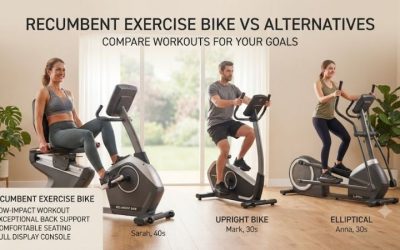
Vertical Climber vs. Compact Elliptical
Both machines can involve repeated standing movement.
However, the motion paths differ.
A climber emphasizes vertical arm-and-leg coordination, while an elliptical uses a guided elliptical foot path.
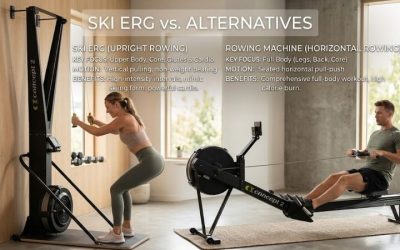
Vertical Climber vs. Ski Erg
A ski erg uses repeated pulling movements, often through a flywheel-driven resistance system.
A vertical climber uses a guided climbing mechanism.
The preferred choice depends on exercise style, available mounting options, and user comfort.
Setting Up a Vertical Climber Correctly
Choose a Suitable Location
Select a level floor with sufficient clearance on every required side.
Verify ceiling height before assembly.
Assemble the Frame
Follow the exact instructions for the model.
Use the specified hardware and ensure all required connections are secure.
Check Folding Locks
If the frame folds, confirm every operating lock is properly engaged.
Adjust the Handles
Set the handle positions within the manufacturer’s approved adjustment range.
Mount the Machine Carefully
Use the specified entry procedure and establish secure hand and foot contact.
Begin With Controlled Movement
Start slowly and verify that the machine remains stable.
Avoid excessive speed or awkward reaching.
Inspect After Use
Check for unusual noise, damaged components, or loosened hardware.
Store the climber only in an approved configuration.
Common Mistakes When Buying a Vertical Climber
Measuring Only the Floor Footprint
Ceiling height and full body movement are equally important.
Assuming Every Model Has Adjustable Resistance
Some machines rely primarily on bodyweight-driven mechanisms.
Ignoring Height Compatibility
A climber that is too short or too tall for the rider may create awkward movement.
Choosing Folding Convenience Over Stability
A folding frame must still provide secure support when assembled.
Overlooking Apartment Noise
Repeated climbing may transmit vibration through the floor.
Comparing Machines by Weight Capacity Alone
The manufacturer’s rating is a loading limit, not a comprehensive durability score.
Frequently Asked Questions
Are Vertical Climbers Good for Small Apartments?
They can be practical because many models have narrow footprints. However, the available ceiling height, operating clearance, stability, and noise must be considered.
Can You Use a Vertical Climber With an Eight-Foot Ceiling?
Possibly, but compatibility depends on the machine’s dimensions, handle travel, and the user’s height. Confirm the manufacturer’s clearance requirements before purchasing.
Do Vertical Climbers Need Electricity?
Some mechanically operated models do not require electricity for climbing. Electronic monitors or advanced resistance systems may have separate power requirements.
Are Folding Vertical Climbers Stable?
Stability depends on the frame design, locking system, assembly, and operating conditions. Folding capability alone does not establish stability.
Can Beginners Use Vertical Climbing Machines?
Some models may be suitable for beginners who can maintain balance and perform the intended climbing movement. Start with controlled motion and follow the manufacturer’s guidance.
How Much Maintenance Does a Vertical Climber Need?
Requirements vary. Common considerations include checking fasteners, inspecting linkages, and cleaning moving components according to the manual.
Conclusion
The right vertical climber machine for small spaces should fit the full exercise area, not just an unused patch of floor. Prioritize ceiling clearance, secure construction, appropriate handle adjustment, controlled movement, and documented operating limits. A compact fixed-frame climber may be convenient for regular workouts, while a folding model makes sense when its storage design genuinely improves room flexibility.




Write Your Review
No reviews yet. Be the first to share your experience!