
Key takeaways
-
Rope configuration: Traditional weighted cable or cordless weighted attachments.
-
Weight distribution: Cable weight, handle weight, or a combination.
-
Adjustable length: Compatibility with the user’s height and technique.
-
Rotation clearance: Enough space around and above the body.
-
Handle comfort: Secure grip under increased rotational forces.
-
Connection strength: Reliable cable-to-handle attachments.
-
Floor compatibility: Suitable surfaces for repeated jumping and rope contact.
-
Noise: Consider both landing impact and cable strikes.
-
Portability: Manageable storage and transportation.
-
Durability: Materials appropriate for the intended exercise surface.
Choosing a weighted jump rope for small spaces requires balancing rope resistance, rotation clearance, and controlled movement. A heavier rope can demand more effort to swing, but it also needs sufficient room for safe operation. This guide explains how to compare weighted cables, cordless designs, handles, and storage options for compact home workouts.
Quick Verdict: What Makes a Weighted Jump Rope Suitable for Small Spaces?
A weighted jump rope increases the rotational load of skipping by adding mass to the rope, the handles, or both.
However, the location of that weight significantly influences how the equipment behaves.
A heavy cable requires force to rotate the rope around the body. Weighted handles primarily increase the mass held in the hands, producing a different loading experience.
For limited spaces, a traditional heavy rope may be inconvenient because its cable needs enough room to travel around the entire body.
A cordless weighted rope can reduce the required cable-swing area, but it does not reproduce every aspect of conventional skipping.
The most suitable choice depends on available clearance, preferred movement, experience, and the intended exercise environment.
Prioritize these factors:
-
Rope configuration: Traditional weighted cable or cordless weighted attachments.
-
Weight distribution: Cable weight, handle weight, or a combination.
-
Adjustable length: Compatibility with the user’s height and technique.
-
Rotation clearance: Enough space around and above the body.
-
Handle comfort: Secure grip under increased rotational forces.
-
Connection strength: Reliable cable-to-handle attachments.
-
Floor compatibility: Suitable surfaces for repeated jumping and rope contact.
-
Noise: Consider both landing impact and cable strikes.
-
Portability: Manageable storage and transportation.
-
Durability: Materials appropriate for the intended exercise surface.
For a small room without enough clearance for a full cable, a cordless weighted configuration may be the practical choice.
If a room provides sufficient open space, a traditional weighted rope offers the actual cable timing and resistance characteristics associated with heavier rope skipping.
Understanding Different Weighted Jump Rope Designs
Weighted jump ropes are available in several configurations, and the term weighted can describe mechanically different products.
Heavy-Cable Weighted Jump Ropes
Heavy-cable ropes place a substantial portion of their additional mass in the rotating cable.
The user must accelerate and control that mass during each rope rotation.
This creates a different sensation from skipping with a thin speed rope.
Cable thickness and material influence rotational behavior, durability, and the effort required to maintain movement.
However, heavier is not automatically better.
A cable that demands more force than the user can comfortably control may interfere with technique.

Weighted-Handle Jump Ropes
Some ropes use weighted handles attached to relatively lightweight cables.
This configuration changes the load held in the hands while preserving some characteristics of a lighter rotating cable.
It should not be treated as equivalent to a heavy-cable rope of the same total weight.
The distribution of mass affects rotational inertia and the forces experienced during movement.
Buyers should check whether advertised weight refers to each handle, both handles, the cable, or the complete assembled rope.
Cordless Weighted Jump Ropes
Cordless weighted ropes generally use short cords with weighted attachments, or handles designed for weighted rotational movement.
They can be practical where a complete cable cannot rotate safely.
However, the lack of a full-length rope changes both timing and coordination.
A cordless configuration does not require the user to clear a rope beneath the feet.
The exercise should therefore be understood as a rope-inspired movement rather than mechanically identical traditional skipping.
Adjustable-Weight Jump Ropes
Some weighted ropes support removable handle weights or interchangeable cables.
This allows the user to select different configurations.
An adjustable system can be useful for households with different preferences or people who want flexibility.
However, every weight component must be secured according to the manufacturer’s instructions.
Do not add homemade weights or substitute incompatible accessories.
Convertible Weighted Jump Ropes
Convertible designs may support both full-length and cordless operation.
These are useful for buyers who sometimes train indoors and sometimes use a larger outdoor area.
The key considerations are attachment security, comfort, and whether the weight distribution changes substantially between configurations.
How Much Space Does a Weighted Jump Rope Need?
Weighted ropes are easy to store, but their operating clearance can be significant.
Traditional Rope Rotation Clearance
A traditional weighted rope must rotate completely around the user’s body.
This requires space in front, behind, and to the sides.
The actual dimensions depend on rope length, arm position, user height, and technique.
A heavy cable may also be less forgiving when it strikes nearby furniture or objects.
Choose a clear area where the rope can rotate without contacting anything other than the intended floor surface.
Overhead Clearance
The rope must pass over the user’s head.
This makes ceiling height and overhead obstacles important.
Ceiling fans, hanging lights, exposed beams, and low shelves can prevent safe operation.
A heavy rope striking an obstruction may create greater forces than a lightweight rope.
Do not attempt full-length weighted skipping when overhead clearance is insufficient.
Cordless Weighted Rope Clearance
Cordless designs remove the long cable arc.
However, short weighted attachments still rotate near the body.
The user also needs a suitable area for jumping and arm movement.
Furniture should remain outside the attachment path.
Cordless equipment can reduce clearance demands but does not eliminate them.
Small-Space Comparison
| Rope configuration | Operating space | Main advantage | Important limitation |
|---|---|---|---|
| Heavy-cable rope | Full body rotation area | Traditional weighted skipping | Requires substantial clearance |
| Weighted-handle rope | Full cable rotation area | Added handle load | Cable still needs space |
| Cordless weighted rope | Body and short-attachment movement area | Reduced cable clearance | Different movement mechanics |
| Convertible weighted rope | Depends on selected mode | Indoor and outdoor flexibility | Attachment complexity |
| Adjustable-weight rope | Depends on cable configuration | Multiple loading options | Secure weight installation required |
Measuring the Exercise Area
Select a level, unobstructed floor.
Identify the full intended path of the rope or weighted attachments.
Check nearby furniture and overhead objects.
Do not assume that a room is suitable merely because the user can jump in place.
The equipment must complete its full intended movement without striking obstacles.
Choosing the Right Rope Weight
Rope weight is one of the most important buying considerations, but advertised figures can be misleading.
Understanding Total Rope Weight
Some manufacturers publish the mass of the entire product.
Others describe cable weight or individual handle weight.
These values are not interchangeable.
For example, a rope with heavy handles and a light cable may behave differently from a rope with the same total weight concentrated in the cable.
When comparing models, identify the weight of each component whenever possible.
Lightly Weighted Ropes
Relatively light weighted ropes may offer a modest increase in rotational effort compared with conventional speed ropes.
These can be appropriate for users who want additional cable feedback without moving to a substantially heavier system.
However, the correct starting load depends on experience and physical capability.
Moderately Weighted Ropes
A moderately heavy rope can require more deliberate rotation and grip control.
The exact meaning of moderate depends on the equipment category and the user.
Avoid treating manufacturer weight categories as standardized fitness levels.
Heavy Weighted Ropes
Heavy ropes require greater control of rotational mass.
They may be unsuitable for someone who has not developed consistent skipping technique.
High rope mass can also make accidental contact more consequential.
Buyers should select a load they can control comfortably rather than choosing the heaviest available option.
Progression and Interchangeable Weights
A system with interchangeable cables or removable weights can allow different configurations.
However, changes should follow the manufacturer’s approved setup.
Increasing weight should not require sacrificing movement control.
Rope Length and User Height Compatibility
Why Proper Length Matters
A heavy rope that is too long may strike the floor aggressively and require excessive arm movement.
A rope that is too short can catch the feet or force awkward rotation.
Correct sizing supports a controlled movement path.
Adjustable Cable Systems
Some weighted ropes include adjustable cable mechanisms.
Others use fixed-length heavy cables.
Check whether the selected product can accommodate your height.
Fixed-Length Heavy Ropes
A fixed-length rope may be convenient when correctly sized for one user.
However, it can be less practical for shared household use.
Rope Length and Rotational Effort
Changing rope length affects rotational geometry and the way the cable moves.
An unnecessarily long weighted rope can be harder to control.
However, shortening a rope excessively may make skipping difficult.
Use the manufacturer’s sizing recommendations.
Multiple Users
For multiple users, interchangeable or adjustable rope lengths may be preferable.
Each person should establish an appropriate fit.
Handle Design and Grip Comfort
Weighted ropes can place additional demands on grip and wrist control.
Handle Diameter
Handle diameter influences how securely the user can hold the rope.
The preferred size depends on hand dimensions and comfort.
Grip Texture
Textured or rubberized surfaces may help maintain grip.
However, grip performance also depends on moisture, wear, and user technique.
Handle Length
Longer handles may offer additional grip positioning.
Shorter handles can feel different during rotation.
The best choice depends on the complete rope design.
Handle Weight Distribution
Some products concentrate additional mass inside the handles.
This changes the load held in the hands.
Do not assume heavier handles produce the same training experience as a heavy cable.
Secure Grip During Rotation
A weighted rope should remain securely controlled throughout exercise.
Stop if grip fatigue causes repeated loss of control.
Bearings, Connections, and Rotation Quality
Bearing Mechanisms
Some weighted ropes use bearings to support cable rotation.
Their design must accommodate the forces generated by the cable.
A bearing label alone does not establish quality.
Swivel Joints
Swivel joints can help allow movement between the handles and cable.
They should remain secure during operation.
Cable Attachment Strength
Cable attachments are important because the rotating rope applies repeated forces.
Inspect screws, clamps, and connectors as specified.
Replaceable Cables
Replaceable cables can improve long-term usability.
However, only compatible components should be installed.
Signs of Mechanical Wear
Visible cable damage, loose connectors, or abnormal rotation should be addressed before further use.
Floor Protection and Apartment Noise
Repeated Jumping Impact
Jumping transfers force into the floor.
This occurs whether the rope is corded or cordless.
Heavy Rope Contact
Heavy cables may strike the floor during rotation.
Repeated contact can create noise and contribute to cable wear.
Choosing a Suitable Mat
An appropriate exercise mat may protect the floor and provide a suitable contact surface.
However, soft or unstable mats can interfere with balance.
Hardwood and Laminate Floors
Check whether the floor finish is suitable for the intended exercise and equipment.
Use manufacturer-approved protective surfaces where necessary.
Apartment Noise Considerations
A weighted rope does not automatically create excessive noise, but cable strikes and repeated landings may transmit sound.
Cordless designs reduce cable-floor contact but not landing impact.
Durability, Materials, and Maintenance
Cable Materials
Weighted ropes may use PVC, rubber-like compounds, braided constructions, or other materials.
Material selection affects flexibility and wear.
Abrasion Resistance
Rope wear depends heavily on the exercise surface.
Rough surfaces can accelerate damage.
Handle Construction
Handles should remain secure and free from cracks or excessive looseness.
Cleaning
Follow the manufacturer’s care recommendations.
Avoid chemical cleaners that may damage cable coatings or grip materials.
Storage
Store the rope without sharp bends or excessive cable tension.
Some heavier ropes may need larger loops to avoid deformation.
Replacement Components
Check whether compatible cables, handles, or connectors can be purchased separately.
Choosing a Weighted Jump Rope for Your Budget
Budget Weighted Ropes
Basic heavy-cable or weighted-handle ropes can provide straightforward exercise.
Check the actual weight distribution and cable construction.
Midrange Weighted Ropes
Midrange models may offer improved handles, replaceable cables, or adjustment options.
These features can be useful for regular training.
Premium Weighted Systems
Premium products may provide interchangeable cable weights or more elaborate hardware.
They can offer flexibility but may be unnecessary for casual users.
Long-Term Ownership Cost
Consider replacement cables and accessories.
A durable, serviceable system may justify a higher purchase price.
Buying for Different Small-Space Situations
Studio Apartments
A cordless weighted rope may be practical when the room cannot accommodate a complete cable rotation.
Bedrooms
Check ceiling height and nearby furniture before choosing traditional skipping.
Home Offices
Storage is usually easy, but a separate clear exercise area is still necessary.
Garage Gyms
Garages may provide more room, but the floor surface must be appropriate for the rope.
Beginners
Start with a manageable load and prioritize technique.
Experienced Skippers
Experienced users may value interchangeable cable masses and consistent rotation characteristics.
Weighted Jump Rope vs. Other Compact Equipment
| Equipment | Main movement | Space consideration | Trade-off |
|---|---|---|---|
| Weighted jump rope | Skipping with added rotating mass | Full cable arc | Greater control demands |
| Cordless weighted rope | Skipping-like movement | Reduced cable clearance | Different timing |
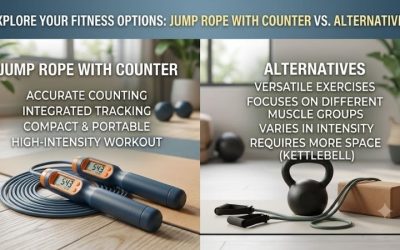
| Standard jump rope | Traditional skipping | Full rope arc | Less rotational load |
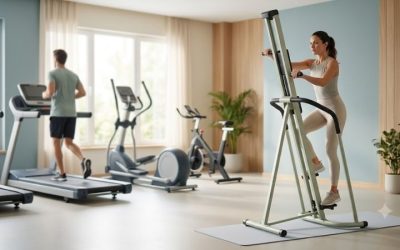
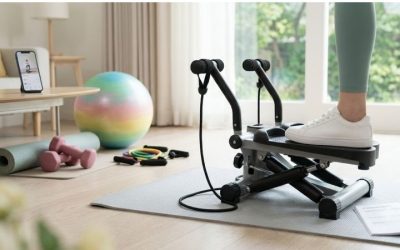
| Mini stair stepper | Guided standing stepping | Small floor footprint | Different movement |
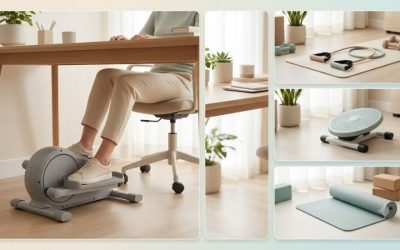
| Under-desk elliptical | Seated leg movement | Compact equipment area | Requires chair compatibility |
Weighted Rope vs. Standard Rope
A weighted rope changes the rotational load.
A standard rope may be easier to control for fast or basic skipping.
Weighted Rope vs. Cordless Weighted Rope
Cordless equipment reduces cable-swing requirements but does not recreate the same cable mechanics.
Weighted Rope vs. Mini Stair Stepper
A mini stepper provides guided stepping without rope rotation.
It may be more practical where overhead clearance is limited.
Setting Up a Weighted Jump Rope Correctly
Choose a Clear Exercise Area
Check the full rotation path and floor conditions.
Confirm Rope Length
Use the manufacturer’s fitting instructions.
Inspect Connectors
Ensure cables and handles are secured properly.
Check the Weight Configuration
Install only approved weights and attachments.
Begin With Controlled Rotations
Start slowly and establish consistent movement.
Maintain Appropriate Clearance
Stop if the rope contacts nearby objects.
Inspect and Store After Use
Check for wear and store the equipment according to the manufacturer’s instructions.
Common Mistakes When Buying a Weighted Jump Rope
Choosing the Heaviest Rope Automatically
More mass is not always appropriate.
Confusing Handle Weight With Cable Weight
Weight distribution changes exercise mechanics.
Ignoring Ceiling Clearance
A heavy rope requires a complete rotation path.
Assuming Cordless Ropes Are Identical to Traditional Ropes
They provide different timing demands.
Overlooking Cable Wear
Repeated surface contact can damage heavy cables.
Selecting an Incompatible Rope Length
Improper sizing can make weighted skipping unnecessarily difficult.
Frequently Asked Questions
Are Weighted Jump Ropes Suitable for Small Apartments?
They can be, provided sufficient clearance and suitable flooring are available. Cordless weighted designs may work where full-length ropes cannot rotate safely.
Is a Heavy-Cable Rope Better Than Weighted Handles?
Neither is universally better. Heavy cables and weighted handles distribute mass differently and produce different movement characteristics.
Can Beginners Use Weighted Jump Ropes?
Some beginners may use manageable weighted configurations, but technique and control should come before heavier loads.
Do Weighted Ropes Damage Floors?
Repeated cable contact can contribute to floor wear, depending on material and surface. Appropriate flooring and protective equipment matter.
Are Cordless Weighted Ropes as Effective as Traditional Ones?
They offer a different exercise experience. Without a full-length cable, the coordination and timing requirements are not identical.
Should You Buy an Adjustable-Weight Jump Rope?
Adjustable systems can be useful when you want multiple weight configurations. They are not essential for every buyer.
Conclusion
The right weighted jump rope for small spaces should match your available rotation clearance, floor conditions, and preferred loading style. Choose a traditional heavy-cable rope when there is enough room for complete skipping movement, or consider a cordless weighted design where cable clearance is restricted. Prioritize manageable weight, secure attachments, appropriate length, and comfortable control over unnecessary accessories.





Write Your Review
No reviews yet. Be the first to share your experience!