
An upright exercise bike for small spaces can provide convenient indoor cardio without the long footprint of a rowing machine or treadmill. However, compact bikes vary in seat adjustment, resistance, balance, and storage. This guide explains how to find a comfortable model that fits your room without sacrificing essential exercise features.
Quick Verdict: What Should You Look For?
For most small-home users, a compact upright bike with magnetic resistance, an adjustable saddle, stable pedals, and transport wheels is a practical starting point.
If the bike must be stored after every workout, a manufacturer-approved folding model may be more convenient.
However, folding bikes often have different riding geometry from conventional upright bikes. Some use a more relaxed, semi-recumbent seating position rather than the more vertical pedaling arrangement associated with traditional stationary bikes.
Buyers should prioritize comfortable leg extension, appropriate saddle height, secure frame construction, and manageable equipment size.
A bike that fits in a corner but causes discomfort during every workout is unlikely to provide good long-term value.
Understanding Upright Exercise Bikes
What Makes an Exercise Bike Upright?
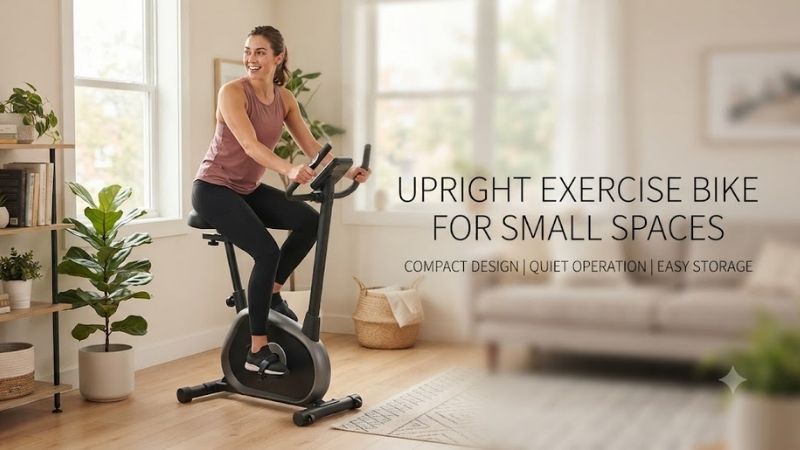
An upright exercise bike places the rider above a pedal assembly in a generally vertical seated position.
The feet rotate beneath or somewhat forward of the body, depending on the frame geometry.
A conventional upright bike typically includes a relatively compact seat, stationary handlebars, and adjustable pedaling resistance.
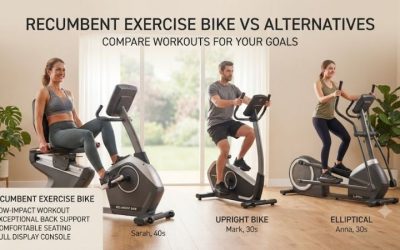
This differs from a recumbent bike, which provides a backrest and places the pedals farther in front of the rider.
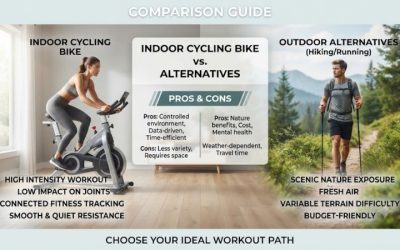
Upright Bikes Versus Indoor Cycling Bikes
Indoor cycling bikes often use a road-style saddle and a more forward-leaning riding position.
They may support standing efforts and studio-style workouts when designed for that purpose.
Conventional upright exercise bikes usually emphasize comfortable seated cardio and console-controlled resistance.
Some product descriptions use the categories interchangeably, so buyers should examine the actual frame geometry.
Why Upright Bikes Suit Small Rooms
Upright bikes generally require less floor length than rowing machines or treadmills.
The rider remains in one position rather than moving backward along a rail.
Many residential models can fit in a bedroom corner, home office, or small exercise area.
However, compactness does not eliminate the need for safe entry, exit, and pedal clearance.
Compact Versus Folding Bikes
A compact upright bike has a relatively small assembled footprint.
A folding bike uses a hinge or adjustable frame arrangement to reduce stored dimensions.
These designs can be useful for different households.
A conventional compact bike may offer greater riding stability and adjustment flexibility.
A folding bike may be easier to store but can compromise on saddle geometry, resistance features, or maximum user capacity.
Main Small-Space Bike Types Compared
| Bike Type | Main Advantage | Main Limitation | Best For |
|---|---|---|---|
| Compact conventional upright | Familiar seated cycling position | Permanent floor footprint | Regular home workouts |
| X-frame folding bike | Reduced stored footprint | Different riding geometry | Multipurpose rooms |
| Semi-recumbent folding bike | More relaxed body position | Not a conventional upright posture | Casual exercise |
| Connected upright bike | Structured workouts and tracking | Cost and power requirements | Guided fitness |
| Budget magnetic upright | Quiet operation and simple controls | Basic console | Apartments |
| Studio-style indoor cycle | Performance-oriented riding | May require more forward lean | Cycling-focused workouts |
Measuring Your Exercise Space
Start With Length and Width
Measure the available floor area before comparing products.
Identify the location where the bike will remain during exercise.
Leave enough space around it to mount, dismount, and adjust the seat.
A machine that fits tightly between furniture may be inconvenient to use.
Consider Pedal Clearance
Although the pedals rotate within the frame’s general footprint, the user’s feet extend outward.
Check that nearby objects do not interfere with the pedal motion.
Furniture placed too close to the crank area may create a collision hazard.
Allow Entry and Exit Space
Users need space beside the bike to step onto and off the frame.
Some bikes have a relatively low step-through design, while others require lifting a leg over a central section.
Entry clearance matters especially when the bike is placed between a bed and a wall.
Check Ceiling Height
Most upright bikes require less ceiling planning than tall vertical climbers.
However, riders are elevated by the saddle and frame.
Very low or sloped ceilings may still present problems.
Measure the full rider height while seated, including headroom above the saddle.
Think About Door Swings
Do not position the bike where it blocks a door or emergency exit.
Also check whether a nearby closet or cabinet can open fully.
Measure the Storage Configuration
For folding models, measure the stored height, width, and depth.
A bike may become narrower while becoming taller.
Some folding bikes cannot be stored beneath a bed despite being marketed as space-saving.
Choosing Between Folding and Nonfolding Bikes
Advantages of a Folding Exercise Bike
A folding model can free floor space after a workout.
This is valuable in apartments where a bedroom also serves as an office or exercise area.
Some folding bikes can be moved into a closet or stored beside furniture.
However, storage convenience depends on actual dimensions and machine weight.
Potential Limitations
Folding models often have a different frame geometry from conventional upright bikes.
The saddle may sit behind the pedals, creating a more relaxed pedaling position.
Some offer fewer adjustment options or a shorter suitable inseam range.
The folding joint also requires secure locking and regular inspection.
Advantages of a Conventional Compact Bike
A nonfolding upright model may provide more substantial construction, additional console functions, and broader seat adjustment.
It can also be convenient for households where exercise equipment remains in one location.
Which Is Better?
Choose folding equipment when daily storage is essential.
Choose a conventional compact bike when riding comfort, stability, and easy access matter more than minimizing stored dimensions.
Understanding Magnetic Resistance
How Magnetic Resistance Works
Magnetic exercise bikes use magnetic braking to resist flywheel rotation.
The pedals transfer mechanical energy through the bike’s drivetrain.
Adjusting the resistance changes how much effort is required to continue pedaling.
Manual Magnetic Resistance
Manual systems often use a dial or knob.
They are simple to operate and common on budget upright bikes.
For users who prefer steady cardio, manual controls may be sufficient.
Electronic Magnetic Resistance
Electronically controlled systems change resistance through buttons or programmed workouts.
They may provide more adjustment settings and automated changes.
However, they introduce electronic components and often require an outlet.
Eight Versus Sixteen Resistance Levels
A machine with sixteen levels provides more selectable positions than one with eight.
However, resistance ranges are not standardized.
The highest setting on an eight-level model may not be easier than the highest setting on a sixteen-level model.
Compare the actual machine’s capabilities rather than the level count alone.
Is Magnetic Resistance Quiet?
The braking mechanism generally produces relatively little sound because it does not rely on a friction pad pressing continuously against the flywheel.
However, pedals, bearings, belts, and frame movement remain potential noise sources.
Magnetic does not mean completely silent.
Saddle Height and Bike Fit
Why Saddle Height Matters
Saddle height affects knee extension during the pedal stroke.
A seat that is too low can cause excessive knee flexion.
A seat that is too high may lead to overreaching or rocking of the hips.
The appropriate position allows comfortable pedaling without locking the knee at the lowest point.
Inseam Compatibility
Inseam is useful for determining whether the bike’s adjustment range will accommodate your legs.
Manufacturers may publish minimum and maximum rider heights or inseam ranges.
These specifications should be verified for the exact bike.
Fore-Aft Seat Adjustment
Some upright bikes allow the seat to move forward and backward.
This can help refine the rider’s relationship to the pedals.
Budget folding bikes may provide only vertical seat adjustment.
Buyers who are particularly sensitive to fit may benefit from a more adjustable frame.
Saddle Width and Shape
Upright bikes commonly use broader saddles than aggressive road-style indoor cycles.
A wider saddle may feel comfortable to some riders, but width alone does not guarantee support.
Body proportions, seating angle, padding, and exercise duration all influence comfort.
Seat Padding
Very soft padding can feel comfortable initially but may not suit longer sessions.
A stable saddle that distributes pressure appropriately is often more important than maximum cushion thickness.
Can You Replace the Saddle?
Some bikes use common saddle-attachment systems, while others use proprietary hardware.
Before purchasing a replacement saddle, confirm compatibility.
Handlebar Position and Upper-Body Comfort
Why Handlebar Height Matters
Handlebar height influences torso position.
Higher handlebars can support a more upright seated posture.
Lower or farther handlebars may increase forward lean.
Reach
The rider should be able to hold the handlebars without excessive shoulder extension.
An uncomfortable reach can create unnecessary pressure through the wrists and arms.
Fixed Versus Adjustable Handlebars
Many compact upright bikes use fixed handlebars.
Premium models may offer additional adjustment.
If several users will share the bike, adjustable handlebars may improve fit.
Grip Comfort
Handlebar shape and padding affect how comfortably users can maintain contact.
The grips should remain secure without requiring excessive squeezing.
Pulse Sensors
Some handlebars include contact-based pulse sensors.
These can provide convenient estimates, but their readings may be affected by grip and movement.
Users requiring more consistent exercise heart-rate tracking may prefer a compatible chest strap.
Frame Stability and Weight Capacity
Compact Does Not Mean Unstable
A compact frame can be stable when properly designed.
However, very narrow equipment may be more sensitive to uneven floors or vigorous movement.
Stabilizer Width
Front and rear stabilizers help support the machine.
Their design and contact points influence stability.
User-Weight Rating
The manufacturer-stated maximum weight is a critical constraint.
Choose a bike that accommodates the intended user.
Never exceed the published limit.
Frame Materials
Steel is common in residential exercise bikes.
Aluminum and mixed-material designs also exist.
The material alone does not establish durability.
Folding Joints
A folding bike’s central hinge and locking arrangement must remain secure during use.
Inspect them according to the manufacturer’s instructions.
Floor Leveling
Some bikes provide adjustable leveling feet.
Use these when appropriate to reduce rocking on uneven flooring.
Pedals and Crank Systems
Standard Pedals
Many upright bikes use flat pedals with adjustable straps.
These are suitable for typical athletic footwear.
Toe Straps
Foot straps help keep the feet positioned on the pedals.
They should be secure without excessive pressure.
Pedal Thread Compatibility
Replacement pedals may use standard bicycle threads or proprietary hardware.
Do not assume compatibility without checking.
Crank Quality
The crank converts the rider’s pedal force into rotational movement.
It should operate smoothly without unusual wobbling.
Why Smooth Pedaling Matters
Jerky or inconsistent pedal movement can interfere with workout rhythm.
Resistance quality, drivetrain design, and bearing condition all contribute.
Flywheel Weight and Exercise Feel
What the Flywheel Does
A flywheel stores rotational energy.
Its inertia influences how the pedaling system responds when the rider accelerates or slows down.
Is a Heavy Flywheel Better?
Not necessarily.
A heavier flywheel can affect momentum, but overall ride quality depends on the drivetrain, resistance mechanism, bearings, and gearing.
Folding Bikes and Lightweight Flywheels
Some folding bikes use relatively light internal flywheels.
This can help reduce total equipment weight.
However, the design may feel different from a substantial studio-style indoor cycle.
Resistance Control Matters More Than Weight Alone
For many recreational users, a stable, smooth pedaling motion is more useful than a particular flywheel-weight figure.
Workout Consoles and Tracking Features
Essential Metrics
Useful basic metrics include elapsed time, estimated distance, cadence, and resistance level.
A display should be readable from the riding position.
Speed and Distance Estimates
Stationary exercise bikes estimate speed and distance.
These values do not necessarily correspond directly to outdoor cycling.
Use them primarily for tracking progress on the same equipment.
RPM and Cadence
Cadence describes pedal rotations per minute.
It helps users monitor pedaling rhythm.
Heart-Rate Monitoring
Some consoles receive compatible wireless heart-rate information.
Others rely on handlebar sensors.
Check the supported method before buying accessories.
Built-In Programs
Preset programs can organize workouts through scheduled resistance changes.
This may be useful for users who enjoy interval training.
Bluetooth Compatibility
Bluetooth can enable activity tracking and connected workouts.
However, Bluetooth support alone does not guarantee automatic resistance control.
Subscription Costs
Some connected systems require memberships for advanced classes or entertainment.
Check what remains available without a paid subscription.
Noise Considerations in Small Homes
Magnetic Braking
Magnetic resistance generally produces relatively little sound.
This is a major attraction for apartment residents.
Belt Drive Noise
Belt-driven systems can be relatively quiet, but bearings and other components may still create sound.
Pedal Noise
Loose pedals or worn bearings can generate clicking or grinding noises.
These should be investigated rather than ignored.
Frame Vibration
Pedaling creates repeated mechanical forces.
A stable equipment mat may reduce some floor vibration.
Placement
Keep the bike away from furniture where movement could cause contact noise.
Avoid unstable or overly soft flooring.
Storage and Portability
Transport Wheels
Built-in wheels can make repositioning more convenient.
However, the machine may need to be tilted to use them.
Machine Weight
A lighter machine is often easier to store after exercise.
Nevertheless, frame stability and capacity should not be sacrificed simply to minimize weight.
Folding Procedure
A good folding system should be straightforward and safe.
Follow the manufacturer’s instructions.
Storage Behind Furniture
Some buyers plan to store a bike behind a sofa or cabinet.
Measure the full stored shape before purchasing.
Storage in a Closet
Check the closet’s usable depth, width, and height.
Also ensure the doorway is wide enough for moving the equipment.
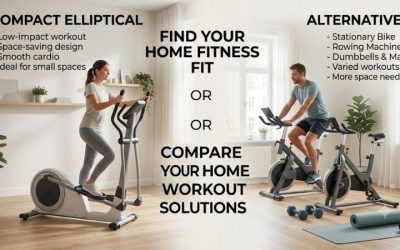
Comparing Upright Bikes With Other Compact Cardio Machines
| Equipment | Main Advantage | Main Trade-Off |
|---|---|---|
| Upright exercise bike | Compact seated cardio | Primarily lower-body movement |
| Folding exercise bike | Reduced stored footprint | Fit and stability compromises may occur |
| Recumbent bike | Back-supported seating | Longer footprint |
| Indoor cycling bike | Studio-style exercise | More aggressive riding posture |
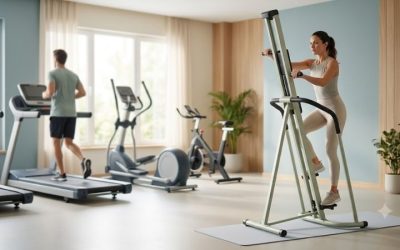
| Compact elliptical | Standing cardio | Short stride on some models |
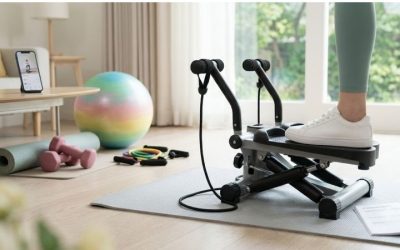
| Mini stepper | Minimal floor space | Different movement and hydraulic limits |
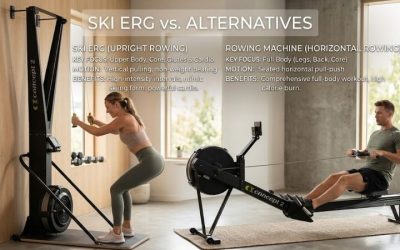
| Rowing machine | Coordinated full-body stroke | Longer operating footprint |
Choosing a Bike for Different Living Situations
Studio Apartment
A folding magnetic bike may be suitable if it fits the rider and can be stored safely.
Bedroom
A conventional compact upright bike may fit beside a wall or in a corner.
Check door clearance and noise.
Home Office
Choose equipment that does not interfere with desk access.
Consider whether the bike can remain assembled permanently.
Shared Living Room
Appearance and ease of moving the bike may be important.
A manageable weight and transport wheels can improve practicality.
Small Dedicated Gym
A stable nonfolding upright model may be preferable when storage is not a major issue.
Multi-User Home
Prioritize saddle adjustment range, user-weight capacity, and handlebar comfort for all intended riders.
Common Buying Mistakes
Choosing the Smallest Bike Regardless of Fit
A machine that does not accommodate your legs comfortably is not good value.
Assuming Folding Bikes Have Conventional Geometry
Some folding models use semi-recumbent positions.
Buying Based Only on Resistance Levels
The numbers are not standardized.
Ignoring Seat Comfort
Saddle fit is central to regular cycling.
Overlooking Storage Dimensions
A folded machine may still be too tall or wide for the proposed location.
Paying for Unused Apps
Connected features are helpful only when they match your habits.
Neglecting Replacement Parts
Check whether pedals, straps, saddles, and electronic components can be serviced.
Small-Space Upright Bike Buying Checklist
Before purchasing, verify the following:
-
The bike fits the exercise area with safe clearance.
-
The saddle accommodates your inseam.
-
The user-weight rating is appropriate.
-
The pedals and straps fit your footwear.
-
The handlebars support a comfortable posture.
-
The resistance system suits your noise requirements.
-
The bike can be stored safely.
-
The machine weight is manageable.
-
The console provides useful information.
-
Warranty and replacement-part support meet your expectations.
Frequently Asked Questions
What Is the Best Upright Exercise Bike for a Small Apartment?
A compact magnetic bike with an adjustable saddle, stable frame, and manageable footprint is generally a strong choice. A folding model can be preferable when storage is essential.
Are Folding Exercise Bikes Worth Buying?
They can be useful for multipurpose rooms, but their riding geometry and adjustment range should be examined carefully.
How Much Room Does an Upright Bike Need?
Measure the exact machine and allow enough room to mount, dismount, and pedal safely. Dimensions vary significantly.
Are Upright Bikes Quieter Than Treadmills?
Magnetic upright bikes generally produce less resistance-system noise than motorized treadmills, though pedals and frames can still create sound.
Can Tall People Use Compact Upright Bikes?
Some can. The seat adjustment and published inseam range are more important than the compact label.
Are Upright Bikes Good for Beginners?
Yes. They provide controllable seated cardio and can support gradual training progression.
Is a Heavier Flywheel Always Better?
No. Ride quality depends on multiple mechanical factors, including drivetrain design and resistance behavior.
Should I Choose Manual or Electronic Resistance?
Manual resistance is straightforward. Electronic resistance can support programmed workouts but may require additional power and cost.
Are Upright Bikes Better Than Recumbent Bikes?
Neither is universally better. Upright bikes are often more compact, while recumbent models provide back-supported seating.
Can I Exercise Daily on an Upright Bike?
Regular cycling can be appropriate when intensity, comfort, and recovery are managed sensibly.
Conclusion
An upright exercise bike for small spaces should fit your body as carefully as it fits your room. Prioritize saddle adjustment, stable construction, quiet resistance, and safe clearance. Choose folding storage only when it adds meaningful convenience, and avoid paying extra for features you will rarely use.
Write Your Review
No reviews yet. Be the first to share your experience!