
Choosing a folding rower means evaluating much more than its folded size. A reliable machine should support comfortable leg extension, stable exercise, secure locking hardware, and practical maintenance. This foldable rowing machine buying guide explains resistance systems, storage designs, fit, monitoring, and long-term value.
Quick Verdict: How to Choose the Right Folding Rowing Machine
The most important characteristic of a folding rowing machine is its ability to support a comfortable rowing stroke while remaining stable during exercise.
The second priority is whether its storage system is genuinely useful in your home.
For many recreational users, a folding magnetic rowing machine offers a practical combination of low resistance-system noise, adjustable intensity, and convenient storage.
However, some buyers will prefer the responsive loading of air resistance or the distinctive experience of a water rower.
Your purchasing decision should account for body proportions, exercise frequency, room dimensions, equipment weight, monitor quality, and maintenance support.
A well-built machine with simple electronics is often a more sensible investment than an inexpensive model with a large feature list but insufficient rail travel or unreliable folding hardware.
Understanding How Folding Rowing Machines Work
The Role of the Sliding Rail
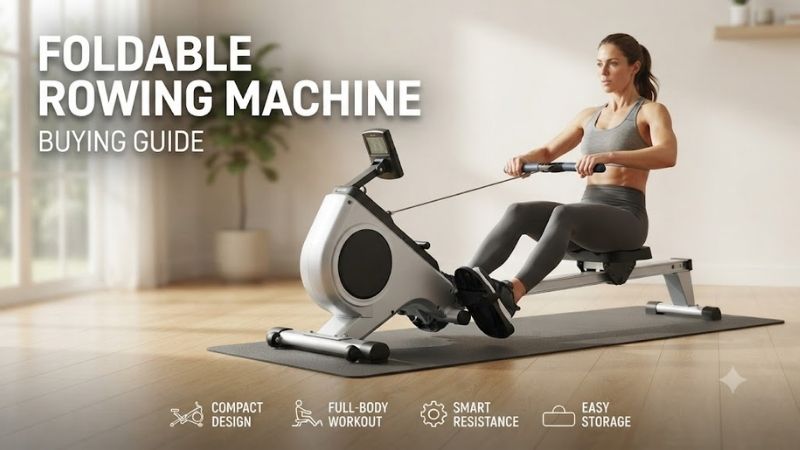
A conventional rowing machine includes a seat that moves along a rail.
During the stroke, the legs extend and push the seat backward.
The user then returns toward the front of the machine during recovery.
The sliding system must remain properly aligned to support smooth movement.
On a folding rower, that rail may also form part of the storage mechanism.
Some designs place a hinge near the front of the rail so it can be raised when the machine is not in use.
How the Folding Mechanism Changes the Frame
The machine’s normal operating configuration should create a stable, rigid structure.
When the rower is folded, the relationship between the rail and front frame changes.
The exact method varies.
Some machines use one large hinge, while others incorporate multiple joints or removable locking hardware.
A well-designed mechanism should be straightforward to operate without allowing accidental movement during exercise.
Why Folding Quality Matters
Folding is not merely a convenience feature.
The hinge and locking assembly form part of the machine’s structural system.
They experience repeated handling and must remain secure.
Poorly aligned or damaged joints can interfere with frame stability.
For this reason, buyers should evaluate the folding hardware as carefully as the resistance mechanism.
Folding Is Not the Same as Splitting
Some rowing machines separate into two pieces.
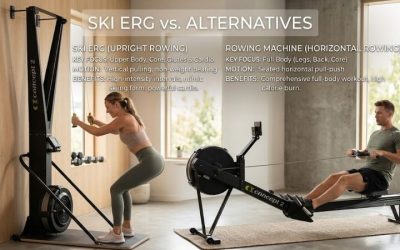
The Concept2 RowErg, for example, uses an approved two-section storage arrangement rather than a conventional folding rail.
Other machines stand upright without folding.
These methods can all save space, but they require different handling procedures.
A good purchasing decision begins by identifying exactly how the proposed machine will be stored.
Main Storage Systems Compared
| Storage System | Operating Configuration | Storage Advantage | Main Concern |
|---|---|---|---|
| Hinged rail | Full-length rowing frame | Reduced horizontal footprint | Locking mechanism |
| Multi-hinge frame | Full-length assembled structure | Potentially compact stored shape | Multiple joints |
| Detachable frame | Connected rowing sections | Separate components for storage | Reconnection procedure |
| Upright storage | Fully assembled rower | Small floor footprint | Tip stability |
| Permanent compact frame | Short nonfolding structure | No storage procedure | Seat-travel limitations |
The best system depends on how frequently the machine must be moved and how much storage space is available.
Resistance Types Explained
Magnetic Resistance
Magnetic rowing machines use a magnetic braking system to create resistance against flywheel rotation.
Many residential folding rowers use this arrangement because it provides straightforward adjustment and relatively low braking noise.
A manually controlled magnetic rower generally allows users to select resistance through a dial or lever.
Some advanced machines use electronic adjustment.
The main advantage is controlled resistance selection without a fan creating substantial airflow noise.
However, the number of levels is not standardized between brands.
Eight settings on one machine may represent a completely different resistance range from sixteen settings on another.
Air Resistance
Air rowers generate resistance through a rotating fan.
When the user accelerates the flywheel more forcefully, aerodynamic resistance increases.
This creates responsive loading across different rowing intensities.
Air resistance is attractive for users who want to perform both steady cardio and demanding intervals.
However, the fan produces audible sound, especially at higher effort levels.
Buyers should also remember that many performance-oriented air rowers use split-frame storage rather than folding rails.
Water Resistance
Water rowers use an impeller rotating through water inside a tank.
The movement of water generates fluid resistance.
These machines produce a different sound and exercise sensation from magnetic and air rowers.
Some folding water models offer convenient storage.
However, tank weight, water maintenance, and the manufacturer’s approved handling procedures deserve particular attention.
A folding water rower should not be lifted or positioned in ways that could damage the tank or cause leaks.
Hydraulic Resistance
Hydraulic rowers use cylinders or pistons to resist movement.
Some are very compact and may have folding components.
However, their handle paths can differ significantly from conventional central-pull rowing machines.
Buyers seeking the familiar sliding-seat rowing stroke should compare the actual movement mechanism before choosing a hydraulic model.
Hydraulic systems may also have manufacturer-specified operating limits related to heat.
Hybrid Resistance
Some machines combine two resistance technologies.
An air-magnetic hybrid may provide both responsive fan resistance and selectable magnetic braking.
This can increase training flexibility, but it also introduces additional components.
A hybrid rower should be purchased because its specific functions are useful, not because combining technologies automatically makes it superior.
Which Resistance Type Is Best for Your Home?
For an apartment, magnetic resistance is often attractive because it generally produces less resistance-system noise.
For a performance-focused gym, air resistance may be preferred because of its responsive loading and established training formats.
For users who enjoy the sensation and sound of moving water, a water rower may be appealing.
For very limited budgets or specialized compact exercise arrangements, hydraulic equipment can be considered.
None of these choices eliminates the importance of comfortable body positioning and stable construction.
A good resistance system cannot compensate for a machine that does not fit the intended user.
Rail Length and Body Fit
Why Rail Travel Matters
The sliding seat must provide enough movement for a comfortable rowing stroke.
At the catch, the user bends the knees while reaching forward.
During the drive, the legs extend and the seat moves backward.
Insufficient rail travel can interrupt this sequence.
Users may compensate by shortening the stroke or changing body position.
Therefore, usable seat travel is one of the most important technical specifications.
Overall Length Can Be Misleading
The machine’s exterior length includes components that do not contribute to seat travel.
A large flywheel housing can increase overall length without creating more legroom.
The most useful measurements are usable seat movement and supported inseam.
Choosing for Tall Users
Taller users frequently require more rail travel.
However, inseam is usually more informative than overall height because body proportions differ.
Buyers with long legs should confirm that the seat can travel far enough without contacting the rear stop during a normal stroke.
A model described as suitable for tall people should still provide clear sizing guidance.
Choosing for Shorter Users
Shorter users can experience fit problems too.
If the handle is too far from the seated position, the user may overreach at the catch.
Poor footplate placement may also interfere with comfortable movement.
Check the complete rowing geometry rather than focusing exclusively on rail length.
Shared Household Fit
A rowing machine used by several people must accommodate all intended users.
Consider the longest inseam, highest body weight, preferred seat height, and footplate adjustment requirements.
The smallest or lightest household member should also be able to use the machine comfortably.
Frame Construction and Structural Design
Steel Frames
Steel is commonly used in home exercise equipment because it can provide substantial structural strength.
However, durability depends on tubing dimensions, welds, joints, corrosion protection, and overall design.
A steel frame is not automatically suitable for commercial use.
Aluminum Frames
Aluminum can help reduce equipment weight.
Properly engineered aluminum structures can be strong and durable.
The material alone does not determine whether a machine is stable.
Mixed-Material Frames
Some manufacturers combine steel and aluminum in different parts of the rower.
This allows designers to balance weight, rigidity, manufacturing cost, and durability.
Evaluate the complete machine rather than assuming a single material is superior.
Frame Rigidity
During rowing, repeated force transfers through the footrests, rail, and front structure.
The machine should remain secure during normal use.
Unexpected rocking, twisting, or movement may indicate a leveling or assembly problem.
Manufacturer Weight Limits
Every machine has a maximum user-weight rating.
This must accommodate the intended user.
Do not exceed it.
Also check whether the warranty covers the frequency and type of use you expect.
Folding Hardware and Safety
Hinges
A folding hinge allows one portion of the frame to move relative to another.
During normal exercise, it should remain secured in the approved operating position.
Look for clear manufacturer instructions and robust locking arrangements.
Locking Pins
Some models use removable or spring-loaded pins.
These components must be fully engaged before exercise.
A partially inserted pin may not secure the frame properly.
Locking Levers
Other machines use integrated levers or catches.
They should move into the specified locked position without excessive force or unusual looseness.
Why Regular Inspection Matters
Folding mechanisms experience repeated handling.
Inspect them for damage, unusual movement, and loose components.
Never continue rowing if a locking mechanism does not engage correctly.
Children and Stored Equipment
Folded equipment may create pinch points or tipping hazards.
Store the rower according to the manufacturer’s instructions.
Keep moving mechanisms away from unsupervised children.
Operating and Folded Dimensions
Measure Before Buying
Begin with the location where the machine will be used.
Record available floor length and width.
Then measure the intended storage area.
Include nearby furniture and possible obstructions.
Operating Clearance
The frame may fit inside a room while leaving insufficient space to mount or dismount.
Check the manufacturer’s recommended clearance.
Also consider the movement of other household members through the room.
Folded Height
A common oversight is focusing only on reduced floor length.
A raised rail may increase the stored height substantially.
The machine may not fit beneath shelves or inside a short closet.
Transport Path
If the rower is moved between rooms, measure doorways and corners.
Consider whether the machine can be wheeled or must be lifted.
Storage Convenience
A machine that takes several difficult steps to fold may become inconvenient.
If you must move it after every workout, ease of handling deserves considerable weight in the decision.
Seat Comfort and Accessibility
Seat Shape
Seat design influences pressure distribution.
A stable seat should support controlled sliding movement without forcing awkward body positioning.
Different people may prefer different shapes and firmness levels.
Padding
Thicker padding is not always better.
Excessively soft padding may change seating stability.
The best choice provides adequate comfort without interfering with movement.
Seat Height
A low seat can be difficult to enter or exit for some users.
If accessibility matters, compare the manufacturer’s stated seat height.
Roller Quality
Seat rollers should travel smoothly along the rail.
Binding, scraping, or rough movement can disrupt the stroke.
Cleaning the Seat Track
Dust and debris may accumulate along the rail.
Follow the manufacturer’s cleaning guidance to maintain smooth movement.
Footrests, Handle, and Drive Mechanism
Adjustable Footrests
Footrests should accommodate your footwear.
Adjustable straps help maintain secure positioning.
The fit should allow natural ankle movement during the stroke.
Handle Shape
The handle should feel comfortable without forcing excessive wrist bending.
Grip diameter, texture, and width all affect usability.
Belt Drives
Some folding rowers use belts or straps.
These systems may be relatively quiet and require limited lubrication.
However, belts can still wear.
Chains
Chain-based systems can be durable when maintained correctly.
They may require periodic lubrication.
Handle Return
The handle should return smoothly without abrupt pulling.
A defective return system can affect rowing rhythm.
Before purchasing, check whether compatible drive and return components can be replaced.
Workout Monitors and Digital Features
Basic Tracking
A simple monitor may display elapsed time, stroke count, and strokes per minute.
These metrics are sufficient for many beginners.
Distance Estimates
Rowing distance is calculated by the monitor.
Different machines may use different algorithms.
Results should not automatically be compared across brands.
Power and Pace
Advanced machines may estimate power in watts or display pace per 500 meters.
These metrics support structured training.
However, their accuracy and consistency depend on the measurement system.
Heart-Rate Connectivity
Some rowers support compatible chest straps or other heart-rate sensors.
Check the exact wireless profile before purchasing accessories.
Bluetooth Applications
Connected applications can provide exercise history and guided workouts.
However, Bluetooth tracking does not necessarily include automatic resistance adjustment.
Subscription Considerations
A large touchscreen may rely on paid content.
Before purchasing, confirm which functions remain available without a membership.
Noise and Vibration
Magnetic Machines
Magnetic braking generally produces relatively little sound.
However, seat rollers, belts, and frame movement remain audible.
Air Machines
Fan resistance produces airflow sound that increases with effort.
This may be undesirable in noise-sensitive homes.
Water Machines
Water resistance creates an audible water sound.
Some users enjoy it, but it is not silent.
Floor Vibration
Repeated rowing can transmit vibration to the floor.
A suitable mat may help protect flooring and reduce some vibration.
Maintenance-Related Noise
Grinding, rattling, or irregular scraping should be investigated.
These sounds may indicate loose parts, worn components, or misalignment.
Understanding Maintenance Requirements
Folding Hardware
Inspect hinges, locks, and pins regularly.
Follow the manufacturer’s schedule.
Rail and Seat
Keep the rail clean and check roller operation.
Drive System
Inspect straps, chains, belts, and handle connections.
Resistance Components
Air fans may collect dust.
Water tanks require approved water care.
Magnetic systems may require electronic or mechanical inspection.
Hydraulic cylinders may have operating-temperature limits.
Frame Fasteners
Check accessible fasteners according to the manufacturer’s instructions.
Do not overtighten components beyond specified requirements.
Replacement Parts
Consider whether the manufacturer offers replacement pedals, straps, handles, seat rollers, and monitors.
Long-term parts availability can strongly influence ownership value.
Comparing Budget and Premium Folding Rowers
| Feature | Budget Models | Midrange Models | Premium Models |
|---|---|---|---|
| Resistance | Often manual magnetic | Magnetic, air, or water | Advanced or connected systems |
| Monitoring | Basic LCD | More metrics and Bluetooth | Integrated training platforms |
| Frame | Basic residential design | More substantial construction | Model-dependent premium design |
| Storage | Simple folding | Refined storage mechanisms | Folding, upright, or other approved systems |
| Replacement parts | Varies significantly | Often broader availability | Often established support |
| Best for | Occasional exercise | Regular home use | Frequent or specialized training |
Budget Models
Entry-level rowers can be suitable when they fit the user’s body and provide stable operation.
Avoid sacrificing essential rail length or secure folding hardware to save money.
Midrange Models
Midrange machines may offer improved monitoring, more substantial construction, and easier storage.
These differences can matter to regular users.
Premium Machines
Premium equipment may include structured workouts, sophisticated displays, and additional mechanical features.
However, the price may be difficult to justify for someone who mainly wants basic cardio.
Choosing Based on Training Goals
General Fitness
For general cardio, comfortable rowing geometry and reliable resistance matter most.
Weight Management
A rower can contribute to regular physical activity, but results depend on overall activity, diet, and consistency.
No machine guarantees a particular outcome.
Endurance Training
Users following longer workouts may appreciate a comfortable seat, consistent monitoring, and smooth drive behavior.
Interval Training
Responsive resistance and readable performance data become more important for intervals.
Rehabilitation-Oriented Exercise
People using exercise as part of rehabilitation should follow guidance from a qualified clinician or rehabilitation professional.
A consumer rowing machine is not automatically suitable for every mobility limitation.
Common Buying Mistakes
Selecting Based Only on Price
The least expensive model may lack adequate rail travel or repair support.
Assuming More Resistance Levels Are Better
Resistance-level numbers are not standardized.
Ignoring the Folding Mechanism
The storage system affects safety and everyday convenience.
Buying Without Measuring the Room
Check both operating and storage dimensions.
Assuming All Monitors Are Comparable
Distance and power calculations differ.
Neglecting Maintenance
Folding hardware, rails, and drive mechanisms require inspection.
Overlooking Seat Height
Low seating may be inconvenient for some users.
Forgetting Equipment Weight
A machine that folds compactly may still be difficult to move.
Step-by-Step Purchasing Checklist
Start by recording your available floor length, width, and storage height.
Next, measure your inseam and compare it with manufacturer fit information.
Identify the resistance system most appropriate for your environment.
Check the maximum user-weight rating.
Inspect the folding and locking mechanism specifications.
Review the monitor and any software requirements.
Confirm transport wheels, lifting instructions, and equipment weight.
Evaluate replacement-part availability.
Finally, compare warranty coverage and total ownership costs.
A machine that satisfies these criteria is more likely to provide practical long-term value than one selected solely by marketing features.
Frequently Asked Questions
Are Folding Rowing Machines Good for Home Workouts?
Yes. A well-designed folding rower can provide convenient home cardio while reducing stored floor space.
Are Folding Rowers Less Durable?
Not necessarily. Durability depends on frame design, folding hardware, intended usage, and maintenance.
Is Magnetic Resistance Best for Folding Rowers?
Magnetic resistance is attractive for quiet home exercise, but air and water systems can also be appropriate.
Can Tall Users Buy Folding Rowers?
Yes. Usable seat travel and supported inseam matter more than folding capability.
Are Folding Rowers Good for Apartments?
They can be. Consider storage, noise, floor vibration, and exercise clearance.
Do Folding Rowers Need Electricity?
Some manual-resistance models do not require an outlet for resistance. Electronic models may.
Can I Store My Rower Vertically?
Only when the manufacturer expressly approves that storage configuration.
How Often Should I Maintain a Folding Rower?
Follow the manual and inspect the frame locks, drive system, and seat rail regularly.
Is a Connected Folding Rower Worth It?
It can be worthwhile if guided workouts and training history are important. Basic exercise does not require a premium screen.
What Is the Most Important Specification?
Comfortable usable seat travel is among the most important, alongside structural stability and safe storage.
Conclusion
This foldable rowing machine buying guide emphasizes comfortable seat travel, stable construction, secure folding hardware, and practical storage. Compare resistance, monitor quality, fit, maintenance, and warranty support before purchasing. Choose a machine that works safely at full length and stores conveniently afterward.
Write Your Review
No reviews yet. Be the first to share your experience!