
Buying a recumbent exercise bike involves much more than comparing prices or finding the softest-looking seat. Backrest shape, pedal distance, resistance quality, and frame stability all influence the riding experience. This recumbent exercise bike buying guide helps you evaluate those details and choose a bike that suits your needs.
Quick Verdict: What Makes a Recumbent Bike Worth Buying?
The strongest recumbent exercise bike is not necessarily the one with the largest console, the most resistance levels, or the highest advertised weight capacity. It is the machine that supports a comfortable seated position, provides predictable pedaling resistance, and allows you to exercise consistently without unnecessary setup or adjustment problems.
For beginners and recreational home users, magnetic resistance, a sliding seat, a stable step-through frame, and an uncomplicated monitor are often sufficient. More expensive models may introduce electronic resistance, connected applications, additional workout programs, or refined seat construction, but those upgrades only matter if you will use them.
Seat fit should be the first priority. A recumbent bike is built around supported seated cycling, so an unsuitable seat-to-pedal distance can undermine its biggest advantage.
Understanding the Recumbent Riding Position
How Recumbent Cycling Differs From Upright Cycling
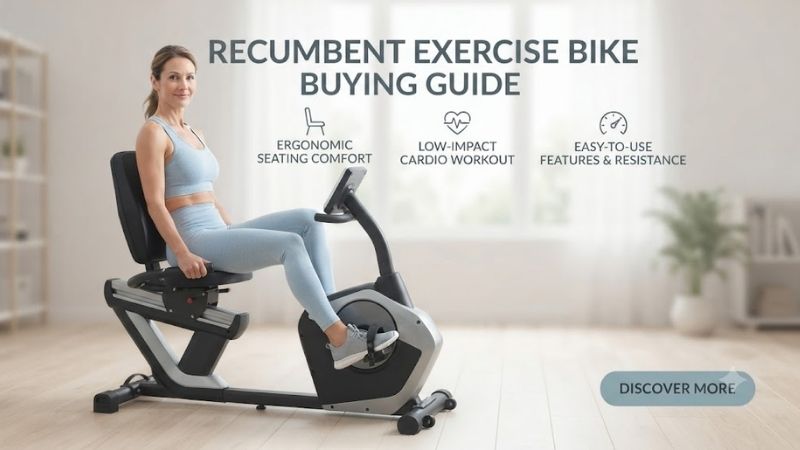
On a conventional upright exercise bike, the rider sits above the crank and places the feet generally below the body. On a recumbent bike, the rider sits farther behind the crank, with the legs extending forward toward the pedals and the torso supported by a backrest.
That change in geometry affects how weight is distributed across the body. Instead of supporting the upper body through a conventional cycling posture, the rider can lean against the seat. This may make recumbent cycling attractive to people who prefer a broad sitting surface and a more supported exercise position.
However, support does not mean that posture can be ignored. The pelvis should remain stable against the seat, and the legs must reach the pedals comfortably. If the seat is positioned too far from the crank, the rider may slide forward to complete each revolution. If it is too close, the knees may become uncomfortably compressed.
These problems can appear on inexpensive and premium machines alike. The presence of a backrest does not compensate for incorrect fit.
Why the Pedal Position Changes Exercise Feel
A recumbent bike’s forward pedal location creates a movement pattern that differs from both upright cycling and walking. The rider presses against the pedals while supported by the seat and backrest.
Some people find this position easier to maintain during steady workouts because it requires less effort to hold the torso upright. Others may prefer an upright bike because the posture resembles conventional cycling more closely.
Neither position is universally better. They provide different equipment experiences and may suit different exercise preferences.
The practical purchasing question is whether the recumbent layout allows you to maintain comfortable pedaling without repeatedly adjusting your body position.
How to Evaluate Seat Comfort Properly
Seat Shape Is More Important Than Appearance
Seat comfort receives enormous attention in exercise-bike advertising, but product photos do not reveal how a seat distributes pressure during a twenty- or thirty-minute workout.
A wide cushion can appear supportive, yet its shape may not suit every rider. A seat with excessive depth could create pressure near the back of the thighs, while a seat that is too narrow may concentrate pressure over a smaller area.
Padding also matters, but more is not automatically better. Very soft foam can compress unevenly and cause the rider to shift position throughout a workout. Moderately firm cushioning may provide better stability for some users.
When possible, examine the actual seat width, depth, cushion material, and contour. If a manufacturer does not publish these details, customer comfort claims should be treated cautiously because body proportions and preferences vary.
How Backrest Design Influences Long Workouts
A backrest supports the torso during cycling, but the amount and location of support depend on its shape.
Some models use padded solid backrests. Others have ventilated surfaces that allow air to circulate behind the rider. Ventilation can improve comfort during longer indoor workouts, particularly in warm rooms, but it does not automatically provide better spinal support.
A well-fitting backrest should allow the rider to maintain stable contact while pedaling. If the seat is correctly positioned but the rider still needs to reach forward repeatedly or arch the torso to stay comfortable, the overall geometry may not suit that person.
Some recumbent bikes offer backrests that move together with the seat. Others include more limited adjustments. Buyers should examine how these mechanisms work before assuming a backrest can be independently positioned.
Is Lumbar Support Worth Paying For?
Some manufacturers advertise shaped backrests or lumbar support.
These features may help certain riders maintain a comfortable position, but the effectiveness depends on individual anatomy and the location of the support.
A prominent lumbar contour is not automatically better than a simpler backrest. If the contour presses against an uncomfortable area, it may reduce rather than improve comfort.
For most buyers, the ability to sit naturally against the backrest while reaching the pedals is more important than the presence of a specific marketing term.
A consumer exercise bike should also not be considered treatment for a back condition. Riders seeking rehabilitation or exercise advice for persistent symptoms should obtain individual professional guidance.
Seat Adjustment: The Most Important Technical Detail
Why Pedal Reach Determines Usability
Every complete pedal revolution moves the foot through a circular path. As the pedal travels away from the rider, the knee extends. As it returns, the knee bends.
A suitable seat position provides enough room for both movements without forcing the knee to lock completely or bend excessively.
A bike that looks comfortable in a showroom may feel very different after repeated revolutions if the seat distance is incorrect.
That is why a manufacturer’s supported rider-height or inseam range is more useful than a general statement that a bike fits most adults.
Sliding Seats and Adjustment Levers
Many conventional recumbent bikes use a seat that moves along a rail.
The mechanism may be controlled by a lever, knob, or other locking device.
A sliding system offers practical benefits because the rider can refine the position rather than choosing from only a few fixed settings.
It is especially valuable when multiple household members share the equipment. However, the adjustment must lock securely before exercise.
A convenient lever is not useful if the seat shifts under normal pedaling force.
How to Establish a Starting Position
Begin with the manufacturer’s recommended adjustment.
Sit fully against the backrest and place your feet on the pedals. Rotate them slowly and observe whether you can complete the movement while keeping the hips stable.
At the farthest pedal position, the knee should retain a comfortable degree of flexion rather than locking completely. At the closest position, the leg should not feel excessively compressed against the torso.
Make small adjustments as necessary.
If the rider repeatedly slides forward or cannot complete a smooth revolution, the seat position or overall frame geometry may be unsuitable.
Why Inseam Matters
Height is useful for basic screening, but inseam describes leg length more directly.
Two users of equal height may require different pedal reach.
This is particularly important at the extremes of the manufacturer’s supported range. A tall user with long legs may need more rearward seat adjustment, while a shorter rider may require a closer position.
If several people will use the bike, confirm that the adjustment range accommodates everyone rather than focusing only on the primary buyer.
Step-Through Design and Mounting Convenience
Recumbent exercise bikes often appeal to people who want a comfortable seated workout, yet the ease of entering and leaving the machine can differ considerably between models.
A step-through frame uses a relatively low central opening, reducing the need to lift the leg over a high tube. This may improve everyday convenience.
However, the entry arrangement must be evaluated in the context of the entire bike. The height of the seat, the position of the pedals, the width of the opening, and the side-clearance requirements all contribute.
A low opening offers limited value when the machine is positioned tightly beside a wall and the rider cannot approach it naturally.
Side handlebars may provide convenient grip positions once seated. They should not automatically be assumed suitable for supporting unrestricted body weight during transfers unless the manufacturer expressly approves such use.
For buyers who value accessibility, examine the seat height and entry path as carefully as resistance settings or workout programs.
Magnetic Resistance: What You Are Actually Paying For
How the System Works
Most residential recumbent exercise bikes use magnetic braking.
When the rider turns the pedals, the drivetrain moves a flywheel or other rotating component. Magnets create braking torque that resists rotation, requiring the rider to apply continued effort.
This system can provide controlled exercise resistance without relying on a friction pad continuously rubbing against the flywheel.
For home environments, relatively quiet braking is a significant advantage. However, the pedals, bearings, drive belt, and frame can still generate sound.
Manual Versus Electronic Resistance
Manual magnetic bikes usually provide a knob or dial. Turning the control changes the resistance position.
This arrangement is simple and well suited to recreational workouts in which the rider adjusts effort independently.
Electronically controlled bikes use console buttons or programmed controls. They may increase or decrease resistance automatically during structured workouts.
The second design can be more convenient for intervals or guided sessions, but it introduces additional electronics and often requires wall power.
Neither is automatically better. A beginner who prefers straightforward steady cycling may receive little benefit from paying more for elaborate electronic programming.
Why Resistance-Level Counts Can Mislead Buyers
It is tempting to treat sixteen resistance settings as superior to eight, or twenty-five as superior to sixteen.
However, the count describes available adjustment positions rather than a universal measure of mechanical work.
Different machines use different flywheels, braking systems, and drivetrain ratios. Their maximum resistance and adjustment curves can vary.
A bike with fewer settings might still provide a useful range for the intended rider.
The better question is whether the machine allows comfortable low-effort pedaling and enough progression for the workouts you plan to perform.
Flywheel, Belt, and Crank Design
What Makes Pedaling Feel Smooth?
A flywheel stores rotational energy as it turns. Its inertia helps maintain continuity between pedal strokes.
Flywheel weight influences this behavior, but mass alone does not determine smoothness. Bearing quality, gear ratio, resistance design, and mass distribution are also important.
That means buyers should be cautious about selecting a bike solely because it advertises a heavier flywheel.
A lighter system with good engineering may offer a pleasant recreational pedaling experience, while a poorly assembled heavier system could feel rough.
Belt-Driven Systems
Many residential recumbent bikes use belts to transfer pedal movement to the resistance assembly.
Belt drives can be relatively quiet and generally avoid the routine lubrication associated with some chain systems.
However, belts are not permanent. Wear, incorrect tension, or damage may eventually require service.
Before purchasing, check whether the manufacturer provides replacement components and how repairs are performed.
Pedals and Foot Straps
Recumbent bikes commonly use pedals with adjustable straps.
These help hold athletic shoes in position during the pedal cycle.
The straps should be secure without applying excessive pressure. The pedal should also support the foot comfortably rather than forcing an unnatural angle.
If the bike is shared, easy adjustment can improve convenience.
Replacement pedal compatibility matters as well. Not every stationary bike accepts identical aftermarket hardware.
How to Judge Frame Stability and Durability
A recumbent exercise bike should remain stable during ordinary seated cycling.
The frame transfers pedaling forces through the crank, seat support, and stabilizers. Unexpected rocking, shifting, or twisting may indicate an uneven floor, inadequate assembly, or mechanical damage.
Look beyond the frame material. Although steel is common in residential exercise equipment, structural quality depends on tubing geometry, joints, welds, stabilizer arrangement, and overall engineering.
The maximum user-weight rating is an essential purchasing constraint. Never exceed the manufacturer’s limit.
Some buyers assume that a higher rated capacity automatically establishes commercial quality, but these are different concepts. A residential bike may support a substantial rider weight without being approved for continuous commercial operation.
If the bike will be used by multiple people throughout the day, inspect its intended-use category and warranty conditions.
Workout Monitors: Which Features Deserve Your Money?
Basic Workout Information
Elapsed time, resistance setting, cadence, and session progress are useful metrics for ordinary home cycling.
A basic monitor that clearly displays this information can support a consistent exercise routine without sophisticated electronics.
Distance and speed readings are generally estimated on stationary bikes. They should not automatically be compared with outdoor cycling results or values from unrelated equipment.
Calorie figures are also estimates. They can help provide a broad reference point, but the displayed number should not be treated as exact energy expenditure.
Built-In Programs
Preset programs can introduce variation by changing resistance at scheduled intervals.
Some riders appreciate this because it reduces the need to plan every session. Others prefer to set a comfortable resistance and cycle independently.
If you rarely use structured programs, paying a substantial premium for more of them may provide little value.
Heart-Rate Tracking
Certain recumbent bikes have contact sensors in the side handlebars. Others can connect to compatible wireless monitors.
Contact sensors offer convenience, but readings can vary with hand placement and movement.
For someone who relies on heart-rate information to organize training, compatibility with a suitable chest strap may be worthwhile.
Confirm the supported protocol before purchasing accessories.
Connected Applications
Bluetooth connectivity may allow a bike to share workout information with supported applications.
However, it does not necessarily mean that those applications can change resistance automatically.
Some connected platforms also charge membership fees for guided workouts or additional features.
Consider what happens if you stop paying for the service. A practical home bike should still meet your essential training needs.
Buying for Different Exercise Goals
Beginners Seeking General Cardio
A beginner often benefits most from a comfortable seat, manageable resistance, and simple controls.
There is no need to purchase a large touchscreen or complex training ecosystem merely to begin regular cycling.
People Who Prefer Longer Seated Sessions
For longer workouts, seat firmness, backrest shape, ventilation, and correct pedal reach become especially important.
A supportive seating arrangement may make the workout more comfortable, but the rider should still vary effort and take breaks as appropriate.
Users Who Enjoy Intervals
Electronic resistance control and preset programs can simplify transitions between harder and easier periods.
However, a basic bike can also support intervals through manual adjustment.
Shared Households
A broad seat-adjustment range, accessible controls, and a suitable weight rating are more useful than specialized features intended for only one rider.
Budget-Conscious Buyers
Prioritize seat fit, resistance reliability, stable construction, and service support.
A simple bike with those strengths may provide greater value than a connected model that compromises on comfort.
Comparing Entry-Level, Midrange, and Premium Bikes
| Purchasing Tier | Typical Priorities | Potential Benefits | Watch For |
|---|---|---|---|
| Entry-level | Basic magnetic resistance, simple seating | Affordable recreational cardio | Limited seat adjustment |
| Midrange | Electronic controls, improved seat design | More programs and convenience | Features you may not use |
| Premium | Connected training, advanced consoles | Guided workouts and tracking | Higher cost and subscriptions |
| Commercial-oriented | Frequent-use construction | Serviceability and durability | Size, weight, and price |
These categories describe common design patterns rather than specifications guaranteed across every brand.
The smartest purchase depends on expected usage. A bike used for light exercise several times per week does not automatically need commercial construction. Conversely, an entry-level machine may be inappropriate for intensive shared use if its warranty and mechanical design do not support that workload.
Maintenance and Total Ownership Cost
A recumbent bike requires routine attention even when its resistance system is relatively simple.
Sweat should be cleaned from approved surfaces. Pedals, straps, seat-adjustment hardware, and frame connections should be inspected according to the manual.
If the drivetrain begins making unusual noises, investigate the cause rather than continuing to exercise until the issue becomes severe.
Electronic components may require additional care, including protecting connectors from moisture or following approved software update procedures.
Warranty coverage should be read carefully. The frame, mechanical parts, electronic components, and labor may each have different terms.
The total ownership cost may also include shipping, professional assembly, an equipment mat, replacement pedals, and connected subscriptions.
A slightly higher upfront price may be reasonable when the manufacturer provides better service support and compatible replacement parts.
Common Buying Mistakes
The most consequential mistake is buying a bike without checking seat-to-pedal fit. A soft seat and a large monitor cannot compensate for a cramped or overstretched riding position.
Another mistake is focusing on resistance-level counts without understanding the underlying system. More settings do not necessarily create a more demanding or smoother workout.
Buyers also sometimes confuse a semi-recumbent folding exercise bike with a conventional recumbent machine. Both may be useful, but their seating geometry and support can differ.
A fourth mistake is overlooking entry and exit clearance. Even a low step-through frame needs enough surrounding room to be convenient.
Finally, shoppers may underestimate the importance of spare parts. If a seat-adjustment mechanism or electronic console fails and cannot be replaced, a low purchase price becomes less attractive.
A Practical Purchasing Checklist
Before ordering, establish your available exercise area and verify the assembled dimensions. Then confirm the supported user-weight rating, seat-adjustment range, pedal reach, and seat height.
Examine the seat and backrest construction, especially if you expect to cycle for extended periods. Choose a resistance system aligned with your actual workouts and evaluate whether electronic programs offer meaningful convenience.
Check power requirements, connectivity, warranty coverage, replacement-part availability, and the manufacturer’s intended-use classification.
These factors provide a stronger basis for comparison than product rankings or advertised feature counts alone.
Frequently Asked Questions
Is a Recumbent Exercise Bike Better Than an Upright Bike?
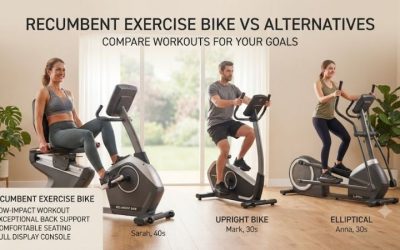
Neither is universally better. Recumbent bikes provide back-supported seating and forward-positioned pedals, while upright bikes offer a more conventional cycling posture. Comfort, space, and exercise preferences should determine the choice.
Are Recumbent Exercise Bikes Good for Beginners?
Yes. Adjustable resistance and supported seating can make them practical for beginners, provided the bike fits correctly and the user starts at an appropriate intensity.
How Many Resistance Levels Do I Need?
The number depends on the system’s actual range. Eight or sixteen well-designed settings can be sufficient for many recreational users.
Can Recumbent Bikes Help Improve Cardiovascular Fitness?
Regular cycling can support cardiovascular conditioning when workout intensity, duration, and consistency are appropriate.
Are Recumbent Exercise Bikes Quiet?
Magnetic models are generally relatively quiet, although drivetrain noise, pedal movement, and frame vibration remain possible.
Is a More Expensive Recumbent Bike More Comfortable?
Not necessarily. Comfort depends on seat fit, backrest geometry, adjustment, and individual preferences. Price alone does not guarantee a better fit.
Do Recumbent Bikes Require Electrical Outlets?
Manual magnetic models may not require an outlet for the resistance mechanism. Electronic models commonly need external power.
Can Several People Share One Recumbent Bike?
Yes, if its seat-adjustment range and user-weight rating accommodate everyone and the controls are easy to reposition.
Conclusion
This recumbent exercise bike buying guide highlights seat fit, backrest comfort, dependable resistance, and stable construction as the main purchasing priorities. Choose a machine that accommodates your legs naturally, supports your preferred workouts, and offers accessible maintenance and warranty support.
Write Your Review
No reviews yet. Be the first to share your experience!