
Key takeaways
What's inside
Best ab exercises on pull up bar form a ladder rather than a list. Hanging knee raises lead to straight-leg raises, then to knees-to-elbows and finally to toes-to-bar, and skipping a rung is why most people stall with swinging, half-range reps.
As an Amazon Associate we earn from qualifying purchases at no extra cost to you. Product prices and availability are accurate as of the date shown and are subject to change.
As an Amazon Associate we earn from qualifying purchases at no extra cost to you. Product prices and availability are accurate as of the date shown and are subject to change.


By Chris Parker
🛒 Best Price Today on Amazon
Prime members get fast, free shipping on everything above, plus member-only deals. New members get a 30-day free trial — cancel anytime.
Start 30-Day Prime Free Trial →See Today’s Amazon DealsThe Progression Order for the Best Ab Exercises on Pull Up Bar
The best ab exercises on pull up bar each add one demand: first control, then leg lever length, then range, then coordination. Working through them in order is what turns hip-flexor swinging into genuine abdominal work, and each rung has a specific sticking point.
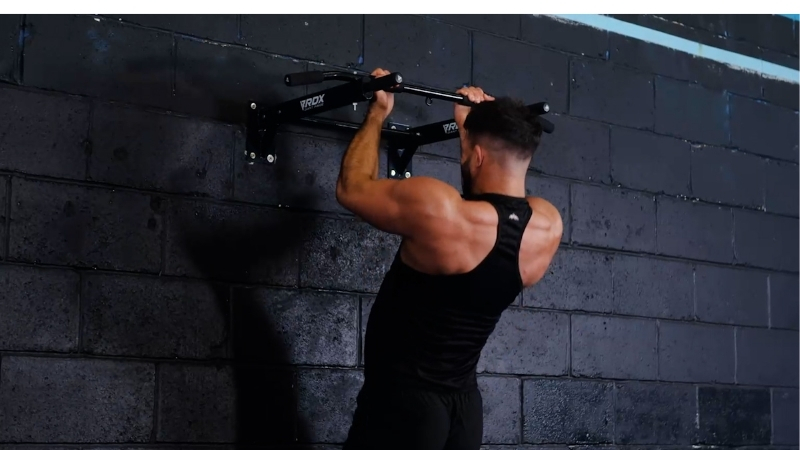
Stage One: Dead Hang and Scapular Control
Before any leg movement, a controlled hang with the shoulder blades pulled down establishes the position everything else works from. Thirty to sixty seconds of active hanging is the entry requirement, and most people are limited by grip rather than by shoulders.
The common fault is hanging passively with shoulders at the ears. Pulling the blades down without bending the elbows engages the lats and trunk, and it is the difference between a leg raise that works the abdominals and one that does not.
Stage Two: Knee Raises and Pelvic Tilt
Hanging knee raises are where the actual skill lives. Lifting the knees is easy; curling the pelvis toward the ribs at the top is not, and without that tilt the movement is a hip-flexor exercise with an abdominal isometric attached.
Reduce the range until the tilt happens on every rep. Ten controlled reps with a visible pelvic curl is a better result than twenty swinging reps to chest height, and it is the honest gate to the next stage.
Stage Three: Straight-Leg Raises and Lever Length
Straightening the legs lengthens the lever and roughly doubles the demand. Most people cannot go from bent to straight in one step, so the intermediate positions matter: legs at 45 degrees, then nearly straight, then fully extended.
Hamstring flexibility becomes a limiter here rather than strength, and forcing the position produces a rounded back and a swing. Ankle weights are the cleaner way to add difficulty at this stage than jumping to a longer lever prematurely.
Stage Four: Knees-to-Elbows and Toes-to-Bar
These add range beyond the horizontal, which requires both stronger abdominals and more shoulder mobility. Toes-to-bar in particular needs enough overhead space and enough lat engagement to pull the hips backward as the feet rise.
Rings or a taller bar help, because they give clearance the doorway bar cannot. Rushing to this stage is the most common cause of the kipping swing that undermines the whole point of the exercise.
Anti-Swing and Where the Ladder Breaks
Swing is the single fault that stalls most people, and it appears the moment a stage is attempted too early. A momentary pause at the bottom of every rep removes it, and a sharply lower rep count is the price of doing that honestly.
The other common break point is grip. If the hands fail before the abdominals on every attempt, the ladder stops progressing regardless of core strength, which is why straps and chalk sit alongside the best ab exercises on pull up bar rather than being optional extras.
Market Context for Bars and Progression Aids
Most equipment in this category still assumes a garage or a drillable wall, so renter-friendly options remain thin on the shelf and leverage-mounted doorway bars continue to dominate despite limiting the top two stages of this progression.
Below the mid tier the compromises are consistent: thinner tube walls that flex under heavier users, foam grips that flatten within months, and welded rather than bolted joints. The joint where the bar meets its mounting frame is what to inspect on arrival.
The genuinely useful development is cheap progression aids. Ankle weights, flat loop bands and ab straps now cost a fraction of a bar and each removes a specific sticking point, which makes them better value than upgrading the bar itself.
Gear for the Best Ab Exercises on Pull Up Bar
These seven cover the bar options plus one aid for each stage of the best ab exercises on pull up bar ladder. Each entry states which rung it helps with and where it falls short.
| Product | Type | Helps With | Spec | Note |
|---|---|---|---|---|
| Iron Gym Total Upper Body Bar | Doorway bar | Stages one and two | 24-32 in frames | Low mounting height |
| Yes4All Wall Mounted Bar | Wall bar | Stages three and four | Lag bolts to studs | Full clearance |
| Hanging Ab Straps | Accessory | Reaching core failure | Padded forearm loops | Removes grip work |
| Wood Gymnastic Rings | Rings | Stage four range | 1.25 in (32 mm) | Needs hang point |
| Adjustable Ankle Weights | Load | Stage two to three bridge | Incremental pouches | Adds lever load |
| Serious Steel Flat Bands | Bands | Assisted early stages | Graded widths | Frays at bar |
| Liquid Chalk | Grip | Longer hangs | Small bottle | Dries skin |
Iron Gym Total Upper Body Workout Bar
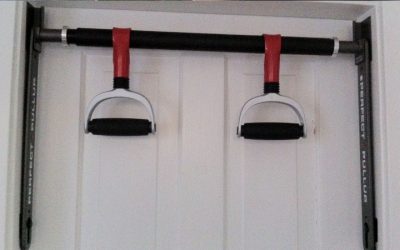
A leverage doorway bar is the cheapest way to start the ladder, and for stages one and two it is entirely sufficient. Multiple grip positions help, since a neutral grip is easier to hold through the longer hangs the early stages require.
It mounts low in a standard doorway, so taller users run out of leg clearance well before straight-leg raises. It also relies on the trim above the frame, which can dent on painted or soft woodwork.
Yes4All Wall Mounted Pull-Up Bar
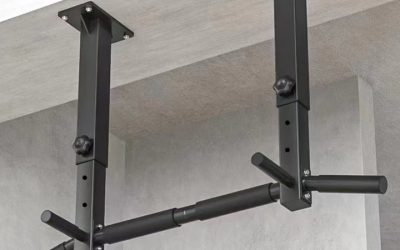
Mounted high enough, a wall bar gives the clearance that stages three and four require, and it projects far enough from the wall that the legs never make contact during a full toes-to-bar rep.
Installation is permanent, needs accurate stud location and lag bolts, and the height cannot be changed afterwards. Measure with your arm fully extended and add clearance for the leg swing before drilling.
Hanging Ab Straps
Padded forearm straps let a set run until the abdominals fail rather than the grip, which is the fastest way to find out how strong your core actually is at each stage of the ladder.
They remove grip training entirely, so they should not replace bare-handed work permanently. Cheaper straps also develop pressure points at the elbow, and the padding compresses noticeably within months of frequent use.
Wood Gymnastic Rings
Rings allow the wrists to rotate freely, which makes the top of a toes-to-bar rep considerably more comfortable than a fixed bar. They also hang from any beam, giving clearance a doorway bar cannot provide.
They add instability that beginners fight before they fight the muscle, so they suit stage four rather than stage one. Uneven strap length is instantly noticeable and needs care during setup.
Adjustable Ankle Weights
Ankle weights bridge the gap between bent-knee and straight-leg raises far more gradually than the leg position itself does. Adding small increments lets you build the strength for a longer lever before adopting one.
They shift the load to the very end of the lever, which increases lower-back demand, so form must stay strict. Cheaper pouches also leak filler material over time and the straps loosen mid-set.
Serious Steel Flat Bands
A flat band looped over the bar with a foot in the bottom unloads part of your bodyweight, which makes the early hanging stages accessible to anyone who cannot yet hold a dead hang for thirty seconds.
Bands fray where they cross the bar and degrade faster in sunlight or heat, so storage matters. They also change the movement slightly by supporting the bottom position more than the top.
Liquid Chalk
Grip determines how long the early stages last, and chalk buys a useful margin. The liquid form leaves no dust on carpet, which is what makes it practical for indoor training rather than garage-only use.
It dries the skin with frequent use and needs a minute before the first hang. It also needs reapplying during longer sessions, which interrupts the flow of a progression ladder worked through in one go.
Frequently Asked Questions
These questions come up whenever someone gets stuck partway up the ladder and cannot work out which rung they are actually on.
How do I know when to move up a stage?
Ten to twelve strict reps with a full pelvic tilt and no swing is the standard gate. Among the best ab exercises on pull up bar, moving up before that point is what produces the swinging half-reps most people plateau at.
Why do my hip flexors take over?
Because the pelvis stays neutral. The abdominals only shorten when the pelvis curls toward the ribs, so reducing the range until that tilt happens on every rep is the fix rather than adding volume.
Are toes-to-bar worth chasing?
Only after straight-leg raises are strict. Toes-to-bar demands shoulder mobility and lat engagement as much as core strength, and reaching for it early is the most common route into a kipping swing that trains coordination rather than abdominals.
How much space do I need for the later stages?
Roughly 8 ft (2.4 m) of ceiling measured with your arm extended, plus about 3 ft (0.9 m) clear in front and behind. Doorway bars usually run out of leg clearance before wall or beam-mounted bars do.
See More:
- Ankle weights best
- Best rated ankle weights
- Best home workout equipment budget
- Best resistance bands for men
Final Thoughts
The best ab exercises on pull up bar work as a progression: dead hang, knee raises with a pelvic tilt, straight-leg raises, then knees-to-elbows and toes-to-bar. Each rung has a specific gate, and ankle weights or bands bridge them more smoothly than jumping ahead. Measure your clearance with an arm extended before choosing a bar.


Write Your Review
No reviews yet. Be the first to share your experience!