
Key takeaways
What's inside
Best workouts with pull up bar stop being upper-body-only once you accept that the bar is an anchor point rather than a single exercise. With rings, a band and a dip station it supports a genuine three-day full body split, and here is how that looks.
As an Amazon Associate we earn from qualifying purchases at no extra cost to you. Product prices and availability are accurate as of the date shown and are subject to change.
As an Amazon Associate we earn from qualifying purchases at no extra cost to you. Product prices and availability are accurate as of the date shown and are subject to change.


By Chris Parker
🛒 Best Price Today on Amazon
Prime members get fast, free shipping on everything above, plus member-only deals. New members get a 30-day free trial — cancel anytime.
Start 30-Day Prime Free Trial →See Today’s Amazon DealsStructuring the Best Workouts With Pull Up Bar
The best workouts with pull up bar cover vertical pulling completely, horizontal pulling with rings, and core work through hanging movements. The gaps are pressing and legs, which is why the best workouts with pull up bar are built as a split rather than as a single session repeated.
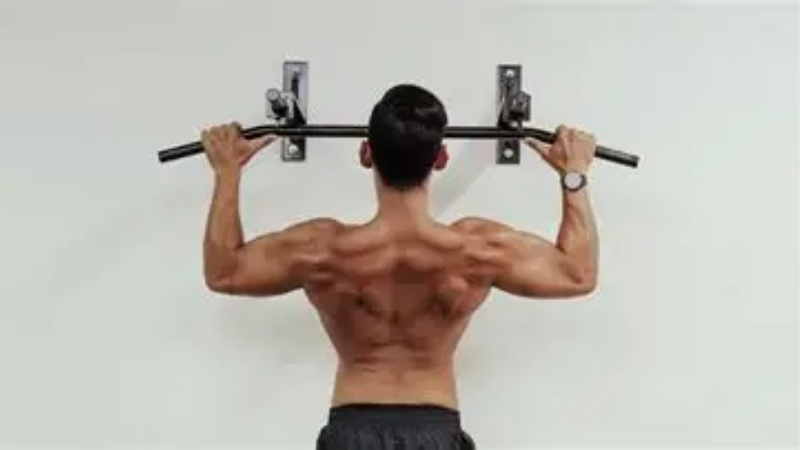
Day One: Vertical Pull and Core
Open with pull-ups or chin-ups for four working sets, since that is the movement everything else supports. Follow with hanging knee raises for three sets and finish with a dead hang for time, which builds the grip that every other session depends on.
Rest around ninety seconds between pull-up sets and sixty between core sets. If five strict pull-ups is not yet possible, run assisted reps with a flat band and treat the band width as the progression variable.
Day Two: Horizontal Pull and Press
Rings hung from the bar turn it into a rowing station. Inverted rows for four sets cover the horizontal pull, then dips or push-ups for four sets cover pressing, which is the one pattern a bar alone cannot supply.
Foot position is the load dial on rows: walking the feet forward increases difficulty an inch at a time, which is a finer progression than any weight increment. That makes it the easiest movement here to progress week to week.
Day Three: Legs, Loaded Carries and Grip
The bar contributes least here, which is exactly why the day exists. Split squats, single-leg hip hinges and step-ups cover the legs, and a weighted vest or a loaded backpack supplies resistance without any additional equipment.
Finish with grip work: a timed dead hang and a farmer’s carry. Grip is the limiting factor across the whole split, so training it directly on the lightest day pays off in every session that follows.
Footprint, Ceiling Height and Anchor Type
Allow roughly 8 ft (2.4 m) of ceiling measured with an arm extended, plus about 3 ft (0.9 m) clear in front and behind the bar. Rings need more: around 6 ft (1.8 m) of clear floor in front for inverted rows at a shallow angle.
A doorway bar limits ring height, so a wall or beam mount is the better anchor for this split. Measure the mounting height and the clear span together, since a bar that fits the doorway may not leave room for rings.
Weekly Schedule and Recovery
Run the three days on non-consecutive dates, typically Monday, Wednesday and Friday, so pulling volume never lands two days in a row. Grip and elbows recover more slowly than the larger muscles and they are what usually force an unplanned break.
Progress one variable per week rather than several. Adding a rep to the pull-up sets, walking the feet forward on rows, or dropping a band width all count as progress, and stacking two changes at once makes it impossible to tell which worked.
Market Context for Bars and Accessories
Most equipment here still assumes a garage or a drillable wall, so renter-friendly options remain thin and leverage-mounted doorway bars keep dominating despite limiting ring work and full-range leg raises.
Below the mid tier the compromises are predictable: thinner tube walls that flex, foam grips that flatten within months, and welded rather than bolted joints. The mounting joint is the point worth inspecting when a cheap bar arrives.
The genuinely useful development is cheap accessories. Rings, bands and a dip belt together cost less than a mid-tier bar and each one adds a whole movement pattern, which makes them better value than upgrading the bar itself.
Gear for the Best Workouts With Pull Up Bar
These seven turn one anchor point into everything the best workouts with pull up bar require: the bar, the rings, the pressing station, the assistance and the added load. Each entry gives the honest weakness.
| Product | Type | Adds | Spec | Note |
|---|---|---|---|---|
| Yes4All Wall Mounted Bar | Wall bar | Solid high anchor | Lag bolts to studs | Permanent fixing |
| Wood Gymnastic Rings | Rings | Horizontal pulling | 1.25 in (32 mm) | Needs clearance |
| Parallettes | Push station | Pressing and dips | Low or mid height | Wrist demand |
| Serious Steel Flat Bands | Bands | Assisted pull-ups | Graded widths | Frays at bar |
| Adjustable Weighted Vest | Load | Leg day and pull-ups | Incremental plates | Warm to wear |
| Dark Iron Dip Belt | Load | Weighted pulls and dips | Chain and belt | Needs plates |
| Liquid Chalk | Grip | Longer hangs | Small bottle | Dries skin |
Yes4All Wall Mounted Pull-Up Bar
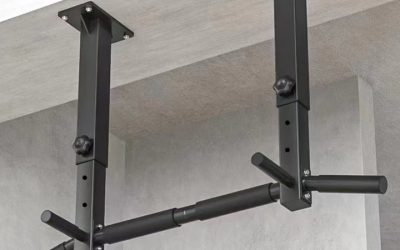
A wall bar bolted into studs is the right anchor for a full split, because it can be mounted high enough for rings to hang beneath it and it projects far enough from the wall that your body never makes contact.
Installation is permanent, requires accurate stud location and lag bolts, and the height cannot be adjusted afterwards. Measure with an arm extended and add clearance for both hanging and ring work before drilling.
Wood Gymnastic Rings With Straps
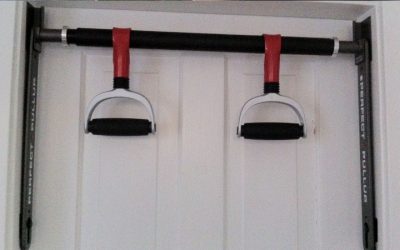
Rings are the single most valuable addition to a bar, because they supply the horizontal pull that no bar exercise covers. Foot position adjusts the load an inch at a time, giving finer progression than any weight increment.
They need a hang point with real clearance and they punish uneven strap length. Beginners also fight the instability before they fight the muscle, so the first sessions feel like coordination practice rather than strength work.
Parallettes
Pressing is the pattern a bar cannot provide, and parallettes cover it with dips, deep push-ups and L-sits. Low parallettes also keep the wrists neutral, which matters over the high push-up volume this split involves.
They demand more wrist and shoulder stability than floor push-ups, so they suit someone past the beginner stage. Cheaper plastic models flex under heavier users and can slide on smooth flooring.
Serious Steel Flat Bands
A flat band looped over the bar with a foot in the bottom makes pull-ups accessible before the first strict rep exists, and dropping a band width is the clearest progression path available to a beginner.
Bands fray where they cross the bar and degrade faster in sunlight or heat. They also support the bottom of the rep more than the top, so the transition to unassisted pull-ups still feels like a jump.
Adjustable Weighted Vest
A vest adds load to pull-ups, dips and every leg movement without needing a rack, which is what makes leg day viable in this split. Incremental plates let you add a few pounds at a time rather than doubling the difficulty.
Vests are warm to train in and the weight sits high, which changes balance during single-leg work. Cheaper models also have plate pockets that shift during dynamic movements and need retightening.
Dark Iron Fitness Dip Belt
Once ten strict pull-ups are comfortable, a dip belt is the cleanest way to keep progressing. Hanging plates below the body keeps the load line vertical, which a vest cannot do, and it suits low-rep strength work better.
It requires plates or kettlebells you already own, so it is only cheap if you have them. The chain also needs setting to the right length or the load swings during the rep.
Liquid Chalk
Grip limits the whole split, and chalk buys a useful margin on hanging and carrying work. The liquid form leaves no dust on carpet, which makes it usable in a spare room rather than only in a garage.
It dries the skin with frequent use and needs a minute before the first set. On a three-day split that adds up, so keeping hands moisturised on rest days becomes part of the routine.
Frequently Asked Questions
These questions come up once someone tries to build a whole training week around a bar rather than treating it as an accessory.
Can a pull-up bar really train the whole body?
Not on its own. The best workouts with pull up bar cover vertical pulling and core completely, but pressing needs parallettes or the floor and legs need a vest or a loaded pack. The bar is the anchor, not the entire gym.
How long does each session take?
Around forty to fifty minutes including warm-up. Day three is usually the shortest since leg work with bodyweight and a vest needs less rest between sets than heavy pulling does.
What if I cannot do a single pull-up yet?
Run the split with band-assisted reps and negative repetitions, lowering slowly from the top. Most people reach a first strict pull-up within eight to twelve weeks of consistent work on this structure.
Do I need rings, or will a doorway bar do?
A doorway bar covers day one entirely. Rings become necessary for day two, because inverted rows need a hang point low enough to get underneath, which most doorway installations cannot provide.
See More:
- Ankle weights best
- Best rated ankle weights
- Best home workout equipment budget
- Best resistance bands for men
Final Thoughts
The best workouts with pull up bar treat the bar as an anchor for a three-day split: vertical pulling and core, then horizontal pulling and pressing, then legs and grip. Rings, a band and a vest close the gaps for less than the cost of the bar. Measure the mounting height with an arm extended before you fix anything.




Write Your Review
No reviews yet. Be the first to share your experience!