
Key takeaways
What's inside
Best exercises pull up bar lists usually mix everything together. Grouping them by muscle instead shows what a bar genuinely covers, what it covers partially, and the two patterns it cannot supply at all without an accessory.
As an Amazon Associate we earn from qualifying purchases at no extra cost to you. Product prices and availability are accurate as of the date shown and are subject to change.
As an Amazon Associate we earn from qualifying purchases at no extra cost to you. Product prices and availability are accurate as of the date shown and are subject to change.


By Chris Parker
🛒 Best Price Today on Amazon
Prime members get fast, free shipping on everything above, plus member-only deals. New members get a 30-day free trial — cancel anytime.
Start 30-Day Prime Free Trial →See Today’s Amazon DealsThe Best Exercises Pull Up Bar Movements by Muscle Group
The best exercises pull up bar family covers vertical pulling completely and core work well. It covers arms indirectly, chest barely, and legs not at all. Sorting the best exercises pull up bar options this way makes the gaps obvious rather than hiding them among twenty movement names.

Back and Lats
This is what the bar does best. Wide-grip pull-ups bias the upper lats, close-grip chin-ups shift emphasis toward the lower lats and biceps, and neutral-grip pull-ups sit between the two while sparing the wrists and elbows.
Scapular pull-ups are the movement most people skip and the one that unlocks the rest. Pulling the shoulder blades down without bending the elbows trains the position every other bar exercise starts from, and five slow reps belong in every warm-up.
Arms and Forearms
Chin-ups load the biceps with full bodyweight, which is more than most people curl, and that makes them the strongest arm exercise available on a bar. Adding a slow three-second lowering phase increases the stimulus without adding load.
Forearms and grip train automatically through hanging, and directly through timed dead hangs and towel hangs. Thick-grip sleeves increase the demand further, though they reduce the reps you can complete on any pulling movement.
Core and Trunk
Hanging knee raises, straight-leg raises, knees-to-elbows and toes-to-bar form a clear ladder. The gate at every stage is the pelvic tilt: if the pelvis stays neutral, the movement trains hip flexors with an abdominal isometric attached rather than the abdominals themselves.
Windshield wipers and hanging oblique raises add rotation, which the vertical movements miss. Both belong late in the progression, since they demand the strength built by strict leg raises before they produce anything useful.
What the Bar Cannot Cover
Pressing and legs are the two gaps. Chest and triceps need parallettes, dips or floor push-ups, and legs need a weighted vest, a loaded pack or free weights. No grip variation on a bar changes either of these facts.
Rings close the horizontal pulling gap by allowing inverted rows underneath, which is the pattern a bar alone genuinely misses in the pulling family. That single accessory covers more new ground than any additional bar exercise.
How Many Variations Are Worth Keeping
Movement collecting is the trap in this category. Four or five exercises drilled consistently produce more than twenty rotated at random, because progression needs a stable comparison point from week to week.
A workable core set is one pull-up variation, one chin-up variation, one rung of the core ladder and one timed hang. Everything else on any list of the best exercises pull up bar options is a substitution rather than an addition.
Market Context for Bars and Accessories
Most products in this category still assume a garage or a drillable wall, so genuinely renter-friendly options stay thin on the shelf and leverage-mounted doorway bars continue to dominate despite limiting range on several movements.
Below the mid tier the compromises are consistent: thinner tube walls that flex under heavier users, foam grips that compress flat within months, and welded rather than bolted joints. The mounting joint is what to inspect when a budget bar arrives.
The better value now sits in accessories rather than bars. Rings, bands, a dip belt and thick-grip sleeves together cost less than a mid-tier bar and each one opens a movement family, which is a better return than a heavier frame.
Gear for the Best Exercises Pull Up Bar Programme
These seven cover the bar itself and one accessory for each gap the bar leaves. Every entry states the movement family it unlocks and its honest weakness.
| Product | Type | Unlocks | Spec | Note |
|---|---|---|---|---|
| ProsourceFit Multi-Grip Bar | Doorway bar | All grip variations | 24-36 in frames | Low clearance |
| Yes4All Wall Mounted Bar | Wall bar | Full-range core work | Lag bolts to studs | Permanent |
| Wood Gymnastic Rings | Rings | Horizontal pulling | 1.25 in (32 mm) | Instability at first |
| Fat Gripz | Grip sleeves | Forearm overload | About 2.25 in (57 mm) | Cuts rep count |
| Serious Steel Flat Bands | Bands | Assisted progressions | Graded widths | Frays at bar |
| Hanging Ab Straps | Accessory | Core to failure | Padded loops | Removes grip work |
| Dark Iron Dip Belt | Load | Weighted pulling | Chain and belt | Needs plates |
ProsourceFit Multi-Grip Chin-Up Bar
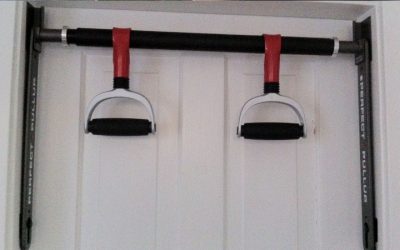
Multiple grip positions matter more for this article than for any other, because grip width and hand orientation are what separate one bar exercise from the next. Wide, close and neutral positions on one bar covers the whole back and arm list.
It mounts low in a standard doorway, so full-range leg raises are limited for taller users, and leverage mounting can dent painted trim. It also cannot support ring work at a useful height.
Yes4All Wall Mounted Pull-Up Bar
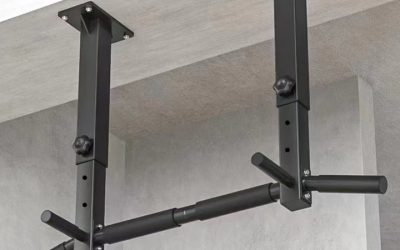
Mounted high, a wall bar gives the clearance that the top of the core ladder requires. Toes-to-bar and windshield wipers both need room the doorway simply does not have, and this is the cheapest way to get it.
Installation is permanent, requires accurate stud location and lag bolts, and the mounting height is fixed once drilled. Measure with your arm extended and allow for the leg swing before committing.
Wood Gymnastic Rings With Straps
Rings close the one genuine gap in the pulling family by allowing inverted rows underneath, and they let the wrists rotate freely, which suits anyone whose elbows dislike a fixed bar during chin-ups.
They need a hang point with clearance and careful strap matching. The instability is a real barrier at first, so they suit someone who already has a few strict pull-ups rather than a complete beginner.
Fat Gripz
Clamping onto the bar takes the diameter to roughly 2.25 in (57 mm), which turns any pulling movement into forearm and grip training. It is the cheapest way to add a whole new stimulus to exercises you already do.
Reps drop sharply because grip fails first, so it works against back and arm development if used on every set. Treat it as a finisher rather than the basis of the session.
Serious Steel Flat Bands
Bands make the early stages of every movement family accessible, from assisted pull-ups to supported hanging work. Dropping a band width is the clearest progression signal a beginner gets on a bar.
They fray where they cross the bar and degrade in heat or sunlight, so storage matters. They also support the bottom of a rep more than the top, which leaves a gap at the point most people fail.
Hanging Ab Straps
Straps let core sets run until the abdominals fail rather than the hands, which is the only way to find out how strong your trunk actually is on the harder rungs of the ladder.
They remove grip training entirely, so bare-handed sessions still belong in the week. Cheaper straps develop pressure points at the elbow and the padding flattens with regular use.
Dark Iron Fitness Dip Belt
Past ten strict pull-ups, added load is the only meaningful progression left. A dip belt keeps the weight hanging vertically below the body, which suits low-rep strength work better than a vest does.
It needs plates or kettlebells you already own, and the chain length has to be set correctly or the load swings mid-rep. It also cannot be used on movements where the legs need to move freely.
Frequently Asked Questions
These are the questions that follow once someone sees the muscle-group breakdown above and realises exactly what is missing from a setup built around a bar alone.
How many bar exercises do I actually need?
Four or five. A vertical pull, a chin-up variation, one core movement from the ladder and a timed hang cover the useful ground between them. Collecting twenty variations produces novelty rather than progress, because none of them gets repeated often enough to show a trend.
Does grip width change which muscles work?
Somewhat, but less than commonly claimed. Wider grips slightly favour the upper lats and narrower supinated grips involve the biceps more, though all versions train largely the same muscles. Rotate grips for joint comfort rather than for targeting.
Can I train chest on a pull-up bar?
Not directly. Among the best exercises pull up bar options there is no pressing pattern at all, so push-ups, parallettes or dips are required to cover the chest and triceps. That gap, together with legs, is the main reason a bar alone is not a complete setup no matter how many grip variations you rotate through.
How do I keep progressing once pull-ups are easy?
Add load with a dip belt or vest, slow the lowering phase to three or four seconds, or move to harder variations such as archer pull-ups. Adding reps beyond about fifteen turns the movement into endurance work.
See More:
- Ankle weights best
- Best rated ankle weights
- Best home workout equipment budget
- Best resistance bands for men
Final Thoughts
The best exercises pull up bar options cover back, arms, core and grip thoroughly, cover horizontal pulling only with rings, and cover pressing and legs not at all. Knowing which gaps exist is what turns a bar into a training plan rather than a collection of movements. Measure your clearance with an arm extended before choosing a mount.




Write Your Review
No reviews yet. Be the first to share your experience!