
Key takeaways
What's inside
Best pull-up bar for home gym use is a mounting decision rather than a product one. Doorway, wall, ceiling and rack bars each need something different from your building, and the wrong choice either damages a door frame or leaves you with a bar you cannot fit. Mounting comes before any product comparison.
As an Amazon Associate we earn from qualifying purchases at no extra cost to you. Product prices and availability are accurate as of the date shown and are subject to change.
As an Amazon Associate we earn from qualifying purchases at no extra cost to you. Product prices and availability are accurate as of the date shown and are subject to change.


By Chris Parker
🛒 Best Price Today on Amazon
Prime members get fast, free shipping on everything above, plus member-only deals. New members get a 30-day free trial — cancel anytime.
Start 30-Day Prime Free Trial →See Today’s Amazon DealsHow to Choose the Best Pull-Up Bar for Home Gym Use
Four mounting types cover the best pull-up bar for home gym category, and the right one depends on your walls, your ceiling and whether you can drill. Get that decision right and almost any bar works; get it wrong and no amount of build quality will fix the result. Your walls decide more than your budget does. Check what you can drill into.
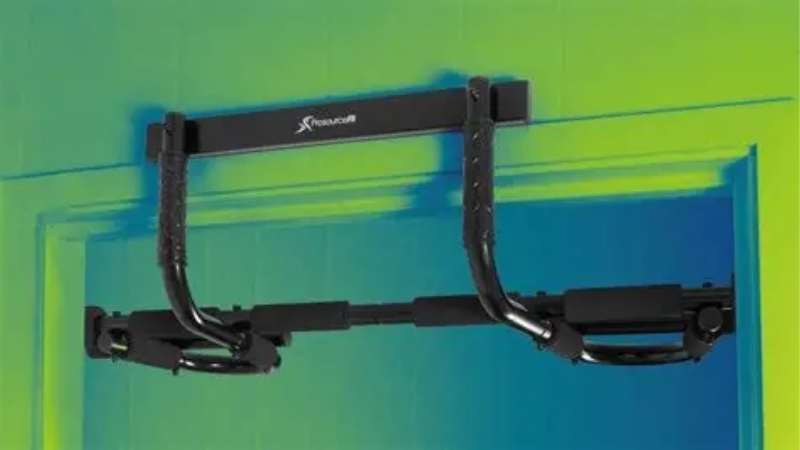
Doorway, Wall, Ceiling and Rack Mounting
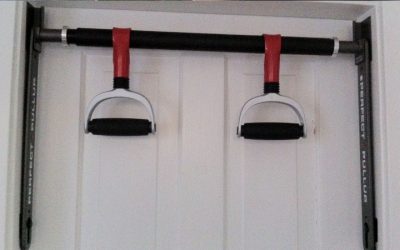
Leverage doorway bars need no fixings and rest against the frame, which makes them the best pull-up bar for home gym use in a rental. They mark paintwork, limit grip width to the door opening, and shift under anything dynamic. Rentals are where they earn their place. Nothing else needs no fixings at all.
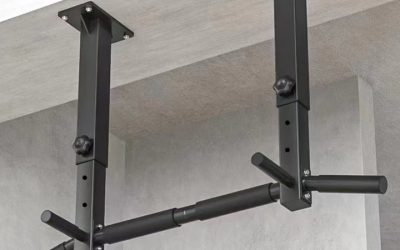
Wall and ceiling mounts need solid fixing points and give a much better bar: wider grips, more clearance and no wobble. Rack-mounted bars come free with a cage if you already own one. Each needs different clearance, so decide the mounting before comparing any products. Clearance differs with every mounting type.
Clearance, Grip Width and Bar Diameter
Allow at least 12 in (30 cm) above the bar for your head, and enough below it that your feet clear the floor with straight arms, which usually means a bar height around 7 ft (213 cm). Doorway bars are fixed by the frame height, so measure before buying. Foot clearance matters as much as head room. Doorway height is fixed for you.
Grip width changes what the movement trains. Doorway bars cap out at the door opening, typically 24 to 32 in (61 to 81 cm), while wall mounts commonly offer 40 in (102 cm) or more. Bar diameter around 1.25 in (32 mm) suits most hands comfortably. Wider grips need a wall mount to achieve. Bar diameter changes grip fatigue.
Fixings, Wall Type and What Gets Damaged
Wall mounts need masonry or timber studs, not plasterboard alone, and the fixings supplied are often the weak point rather than the bracket. Buy proper anchors rated for the load if you are unsure, and check what is behind the wall before drilling anything at all. Supplied fixings are often the weak point.
Doorway bars damage frames over time: the padding compresses, the paint marks and repeated loading loosens the architrave. That is the trade for not drilling. Use the supplied pads, check the seating before every set, and never leave a leverage bar loaded when unattended. Frame damage is the price of not drilling.
Top Picks: Bars by Mounting Type
The six below cover each mounting type plus the matting that goes underneath. Choose the mounting first and the product second, since a well-made bar fixed the wrong way is worse than a basic one fixed properly. Each entry names what it asks of your building. Fixing type shapes the best pull-up bar for home gym use.
| Bar | Mounting | Grip width | Best for |
|---|---|---|---|
| Iron Gym Total Upper Body | Doorway | Door width | Rentals |
| ProsourceFit Multi-Grip | Doorway | Door width | Grip options |
| Ultimate Body Press Wall | Wall | Wide | Solid walls |
| Titan Fitness Wall Mount | Wall | Wide | Heavier users |
| Fitness Reality 810XLT | Rack | Fixed | Barbell rooms |
| Rubber gym matting | Flooring | Not applicable | Under the bar |
Iron Gym Total Upper Body Workout Bar
The original leverage doorway bar remains the default for anyone who cannot drill. It hooks over the frame, takes seconds to fit and removes just as fast, and it doubles as a floor bar for push-ups and dips when it is not on the door. It removes and refits in seconds. That reversibility is the whole point of it.
It marks the frame, limits grip width to the door opening and shifts under dynamic movement. Check the frame depth against the stated requirements before buying, since older houses often have mouldings that prevent the bar seating properly against the wall above the door. Grip width is capped by the opening.
ProsourceFit Multi-Grip Doorway Bar
The multi-grip version adds neutral and angled hand positions to the same doorway concept, which matters more for shoulder comfort than for training variety. If straight-bar pull-ups aggravate your shoulders, a neutral grip is often the difference between training and stopping. All the doorway compromises still apply here.
All the doorway drawbacks still apply, and the extra grips make the bar bulkier to store. Padding compresses over time and needs checking. Confirm your door frame width and depth against the listing, since these bars fit a narrower range than the marketing suggests. Padding needs checking every few months.
Ultimate Body Press Wall Mounted Bar
A wall mount is a substantial upgrade over any doorway bar: wider grips, more clearance and no movement at all once fixed. If you own the property and have a masonry or timber-stud wall, this is the sensible long-term answer for a home setup. It is the best pull-up bar for home gym owners who can drill.
It requires drilling, correct anchors and a wall that can take the load, which rules out plasterboard alone. The fixings supplied are often worth upgrading. Check the projection from the wall as well, since your knees need to clear it during a full repetition. Plasterboard alone will not hold it. Upgrade the anchors before mounting anything.
Titan Fitness Wall Mount Pull-Up Bar
Titan’s wall mounts sit at the heavier end, which matters for larger users or anyone adding a weight belt. The steel is thicker and the brackets are deeper, giving more clearance from the wall than the lighter mounts provide during a full range repetition. Heavier users are the intended market. Deeper brackets give more knee clearance.
Heavier brackets need better fixings and a genuinely solid wall, and they cost more. Check the stated projection and capacity, and use anchors rated for the load rather than whatever ships in the box. Mounting height is fixed once drilled, so measure twice. Upgrade the anchors rather than trusting the box.
Fitness Reality 810XLT Power Cage
If a barbell is already in the room, the cage you would buy anyway includes a pull-up bar, which makes it the cheapest bar per pound spent. It also gives rack pulls and safe pressing, which no wall bar or doorway bar contributes to at all. The bar comes free with the cage. Grips are basic without neutral positions.
Cages need roughly 4 x 4 ft (1.2 x 1.2 m) of floor and 7 ft (2.1 m) of height plus clearance, and the bar itself is basic with no neutral grips. Measure to the lowest ceiling obstruction first, since a light fitting or pipe rules it out. Height is the constraint, not floor area. Measure to the lowest pipe or fitting.
Rubber Gym Matting
Whatever the mounting, the floor underneath takes the impact when you drop off the bar. A 3/4 in (19 mm) rubber mat protects laminate and tile, cuts the noise reaching the room below, and gives a consistent landing surface rather than a rug that slides. Every mounting type still needs a floor. Rugs slide where rubber does not.
Mats are heavy to carry alone and smell strongly for the first fortnight after unwrapping. Air them outside first, and measure the landing area before ordering, since cutting thick rubber flooring at home is slow work that rarely produces a straight edge. Measure the landing area before ordering. Air the mat before laying it down.
Frequently Asked Questions
These four questions come up whenever a bar is going into a room rather than a gym. They cover fixings, damage and clearance, since those decide whether the installation is permanent, reversible or a conversation with a landlord later on. Fixings answer most of them. Reversibility matters in a rented flat.
Will the best pull-up bar for home gym doorway option damage my frame?
Over time, yes. Padding compresses, paint marks and repeated loading can loosen the architrave. Use the supplied pads, check the seating before every set and avoid dynamic movements. If you can drill, a wall mount avoids the problem entirely and gives a better bar. Check the seating before every single set.
Can I mount a bar on plasterboard?
Not on plasterboard alone. You need masonry or timber studs behind it, and fixings rated for the load rather than the ones in the box. Check what is behind the wall before drilling, and get advice if you are not certain what you are fixing into. Anchors matter more than the bracket itself. Get advice if the wall is uncertain.
How much clearance do I need above the bar?
At least 12 in (30 cm) for your head at the top of a repetition, and enough below that your feet clear the floor with straight arms. That usually means a bar around 7 ft (213 cm) high, which is why low ceilings rule out some mounts. Measure both distances before ordering. Low ceilings favour a doorway bar.
Which grip width suits a home pull-up bar best?
Slightly wider than shoulder width for most people, with neutral grips available if straight-bar work bothers your shoulders. Doorway bars cap at the door opening; wall mounts commonly reach 40 in (102 cm) or more, which is where the wider variations become possible. Shoulder comfort should decide it, not fashion.
See More:
Final Thoughts
The best pull-up bar for home gym use is decided by what you can fix into: doorway if you cannot drill, wall or ceiling if you can, and the rack bar if a cage is already there. Measure clearance above and below the bar before ordering anything. Then fix it properly and train. Matting goes down underneath either way.





Write Your Review
No reviews yet. Be the first to share your experience!