
Key takeaways
What's inside
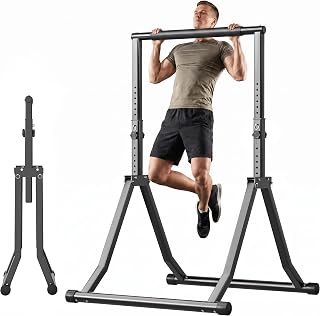
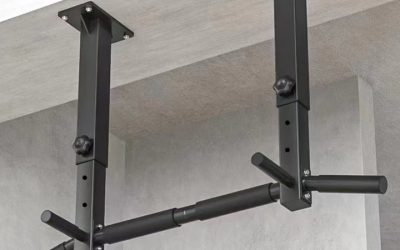
Best folding pull up bar designs bolt to a wall or ceiling and hinge flat when you are done, which is how you get a rigid bar without giving up the room. This guide covers stud spacing, projection, hinge design and floor clearance, then compares six mounted bars that are genuinely worth drilling holes for.
As an Amazon Associate we earn from qualifying purchases at no extra cost to you. Product prices and availability are accurate as of the date shown and are subject to change.
As an Amazon Associate we earn from qualifying purchases at no extra cost to you. Product prices and availability are accurate as of the date shown and are subject to change.


By Chris Parker
🛒 Best Price Today on Amazon
Prime members get fast, free shipping on everything above, plus member-only deals. New members get a 30-day free trial — cancel anytime.
Start 30-Day Prime Free Trial →See Today’s Amazon DealsHow to Choose a Folding Wall-Mounted Bar
The best folding pull up bar solves the one problem doorway bars never can, which is rigidity under load. Bolted into structure, it takes kipping, weighted work and muscle-ups without moving. The four criteria below decide whether the best folding pull up bar you choose will fit the wall you actually have.
Stud Spacing and What You Are Mounting Into
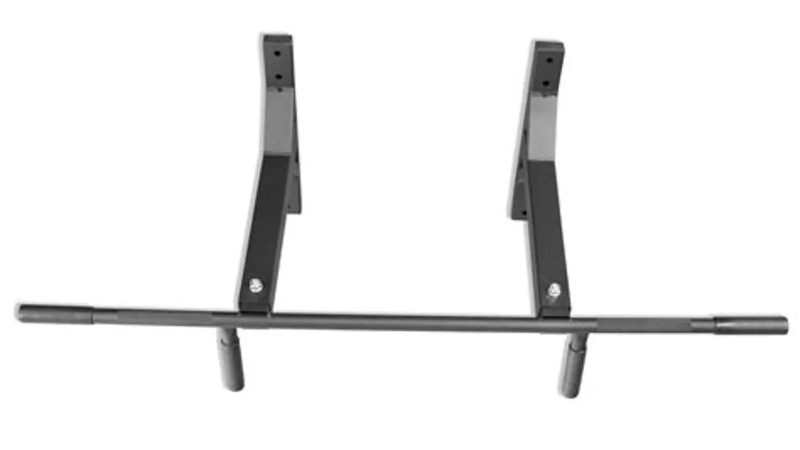
Most examples of the best folding pull up bar are drilled for studs at 16 in (41 cm) centres, the standard in timber-framed construction. Some brackets also allow 24 in (61 cm) spacing, and a few are designed for solid masonry with expansion anchors instead of lag bolts.
Find your studs before you buy anything at all, because a bar bolted into plasterboard alone will eventually fail and take a section of wall down with it. If the wall is masonry, check that the kit includes the right fixings rather than assuming the supplied lag bolts will work.
Projection and Head Clearance
Projection is how far the bar sits out from the wall, typically 20-25 in (51-64 cm) on the best folding pull up bar designs. That distance decides whether your knees clear the wall at the bottom of a rep and whether your head clears it at the top of one.
Anything under about 18 in of projection feels cramped for most adults. Above the bar you want 10-12 in (25-30 cm) of ceiling clearance, so measure from the floor to the ceiling first and mount the bar at a height that leaves that gap rather than as high as possible.
Hinge Design and How Flat It Folds
The hinge is what separates a good folding bar from a fixed one with a marketing claim. The best ones drop to 4-6 in (10-15 cm) of projection when folded, which is flat enough to walk past in a corridor without noticing it.
Check how the hinge locks in the open position. Pin-locked designs are the most secure and the ones to prefer for kipping or weighted work. Gravity-latched hinges are quicker to deploy but rely entirely on load direction, which is not ideal for any dynamic movement where that direction changes.
Footprint: Open, Folded and the Space You Need Below
Folded flat, a good bar claims almost nothing at all — roughly 40 x 5 in (102 x 13 cm) held against the wall. Open, it projects 20-25 in and needs a clear floor area of about 6 x 5 ft (1.8 x 1.5 m) so you can hang and swing without contacting furniture behind you.
Check what sits on the other side of that wall as well, since lag bolts into a shared partition transmit noise directly. Measure the wall height, the ceiling clearance and the clear floor area before drilling, because relocating a mounted bar leaves eight holes behind.
Top Picks: Best Folding Pull Up Bar Options
Every best folding pull up bar below mounts into structure and hinges flat against the wall when you are finished. The table lists the specs that decide the purchase, and each write-up names a real drawback so you can weigh capacity, projection and hinge quality against what your wall will support.
| Bar | Mount | Approx projection | Approx capacity | Price tier |
|---|---|---|---|---|
| Ultimate Body Press Wall Mount | Wall, folding | Around 20 in (51 cm) | Around 300 lb (136 kg) | Mid |
| ONETWOFIT Wall Mounted Bar | Wall, folding | Around 22 in (56 cm) | Around 440 lb (200 kg) | Mid |
| Sportsroyals Wall Mounted Bar | Wall, folding | Around 22 in (56 cm) | Around 440 lb (200 kg) | Mid |
| Titan Fitness Wall Mount | Wall, fixed or folding | Around 21 in (53 cm) | Around 500 lb (227 kg) | Mid |
| Yes4All Wall Mounted Bar | Wall, folding | Around 20 in (51 cm) | Around 440 lb (200 kg) | Budget |
| Stud Bar Ceiling or Wall | Ceiling or wall, fixed | Varies by mount | Around 600 lb (272 kg) | Premium |
Ultimate Body Press Wall Mounted Pull Up Bar
A straightforward folding design with multiple grip positions and a hinge that drops close to the wall. The bracket spacing suits standard 16 in studs, and the assembly is simple enough that one person can mount it in under an hour.
Projection at around 20 in is on the shorter side of the range, so taller users may find their knees closer to the wall than they would really like. The 300 lb rating is also the lowest here, which limits heavy weighted work.
ONETWOFIT Wall Mounted Pull Up Bar
Multi-grip layout with wide, neutral and close positions, plus a folding bracket and a higher rating than the entry options. For a home gym where this bar covers all pulling work, that grip variety earns its place.
The bracket is bulky when folded compared with slimmer designs, so it is less discreet in a shared room. Hardware quality is also inconsistent between units, and replacing the supplied lag bolts with better ones is a sensible precaution.
Sportsroyals Wall Mounted Pull Up Bar
Similar in concept to the ONETWOFIT with a slightly cleaner folding action and comparable capacity. The powder coating holds up well in an unheated garage, and the grip diameter suits most hands without needing chalk for ordinary sets.
Instructions are the weak point and the fixing positions are not always clearly marked, which makes stud alignment more fiddly than it should be. Mark and drill carefully, because a misplaced hole in a stud weakens the mount you are relying on.
Titan Fitness Wall Mounted Pull Up Bar
Heavier gauge steel than most of this group and the highest wall-mounted rating here, which makes it the pick if kipping or weighted pull-ups are part of your training rather than an occasional experiment.
Finish quality varies between individual units and minor blemishes or thin coverage on arrival are fairly common. It is also heavier to hold in position during installation, so mounting it genuinely benefits from a second person rather than a stack of books.
Yes4All Wall Mounted Pull Up Bar
The budget entry into mounted bars, with a folding bracket and a capacity well beyond bodyweight requirements. For someone who wants rigidity without premium spend, this delivers the core benefit of a mounted bar at a doorway bar price.
The supplied hardware is basic and worth upgrading before installation. Projection at around 20 in is also short for taller users, and the hinge has more play in the open position than the better designs in this group.
Stud Bar Ceiling or Wall Mounted Bar
Not a folding bar, but included because it is the answer when a folding hinge is the thing you do not want. Fixed mounting into ceiling joists or wall studs gives the highest rating here and zero movement under any load.
It stays permanently in place, which defeats the purpose if you needed the space back, and it costs considerably more than folding alternatives. Installation into ceiling joists is also a more involved job than a wall mount.
Frequently Asked Questions
These four questions cover what people want settled about the best folding pull up bar before drilling into a wall — locating studs, mounting into masonry, whether folding bars handle kipping and how high to mount.
How do I find the studs before mounting?
Use a stud detector and confirm with a small pilot hole rather than trusting the detector alone. Studs sit at 16 or 24 in centres in most timber-framed walls, and mounting into plasterboard alone will fail regardless of the anchors used.
Can I mount a folding bar on a brick wall?
Yes, with the correct expansion anchors rather than the lag bolts supplied for timber. Brick and concrete both hold well; hollow blockwork is less reliable and needs chemical anchors, which is worth checking before you commit to the location.
Is the best folding pull up bar strong enough for kipping?
A pin-locked hinge bolted into studs handles kipping fine. Gravity-latched hinges are the ones to avoid for dynamic work, since the load direction changes during the movement and a latch relying on downward force is not designed for that.
How high should I mount the bar?
Leave 10-12 in of clearance between the bar and the ceiling, and check you can reach it with a small jump or a step. Mounting as high as possible is a common mistake that leaves no head room at the top of the rep.
See More:
- Ankle weights best
- Best rated ankle weights
- Best home workout equipment budget
- Best resistance bands for men
Final Thoughts
The best folding pull up bar is one with a pin-locked hinge, at least 20 in of projection and brackets matching your stud spacing. Locate the studs and confirm them with a pilot hole before drilling, leave 10-12 in of ceiling clearance, and upgrade the supplied hardware if it looks light for the load you plan to hang on it.



Write Your Review
No reviews yet. Be the first to share your experience!