
Key takeaways
What's inside
Best pull-up bar diameter is a question about your hand size and your goal, not about which bar is better. A thicker bar trains grip harder and cuts your reps; a thinner one lets the back do the work. Here is where each one belongs.
As an Amazon Associate we earn from qualifying purchases at no extra cost to you. Product prices and availability are accurate as of the date shown and are subject to change.
As an Amazon Associate we earn from qualifying purchases at no extra cost to you. Product prices and availability are accurate as of the date shown and are subject to change.


By Chris Parker
🛒 Best Price Today on Amazon
Prime members get fast, free shipping on everything above, plus member-only deals. New members get a 30-day free trial — cancel anytime.
Start 30-Day Prime Free Trial →See Today’s Amazon DealsHow to Decide the Best Pull-Up Bar Diameter
Grip strength falls as the best pull-up bar diameter rises past your hand size, because the fingers can no longer wrap far enough to close the hand. That single relationship explains every recommendation below, and it is why the best pull-up bar diameter for back training is not the same as for forearm training.
The Three Standard Sizes
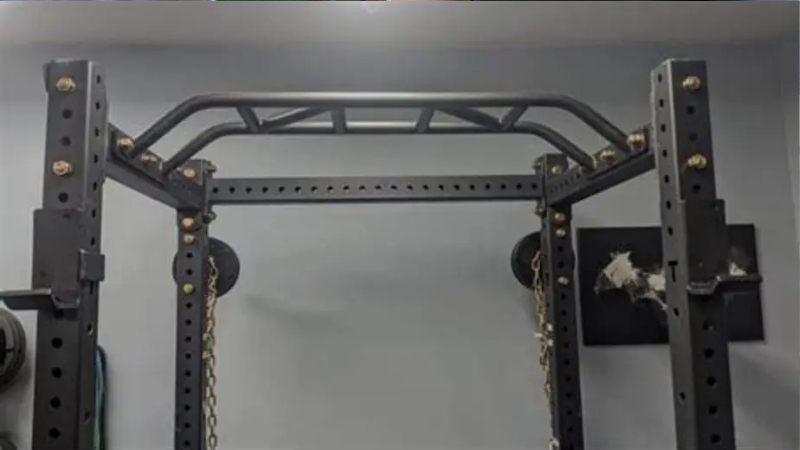
Around 1.25 in (32 mm) is the common size on doorway bars and gymnastic rings, and it suits most adult hands. Roughly 1.5 in (38 mm) appears on many wall bars and towers, which is noticeably harder to hold for smaller hands.
Anything near 2 in (50 mm) is a fat bar, and it is a grip training tool rather than a general-purpose bar. Expect rep counts to fall by half or more on your first session with one, regardless of how strong your back is.
Hand Size and Where the Grip Fails
The relevant measurement is how far your fingers overlap your thumb around the bar. If the fingertips barely reach, the hand is working as a hook rather than a closed grip, and endurance collapses well before the back is challenged.
Smaller hands are better served at the lower end near 1.25 in (32 mm), and larger hands can comfortably use 1.5 in (38 mm) as a daily bar. This is one specification where copying someone else’s setup rarely works.
What Thickness Actually Trains
A thicker bar increases forearm and grip demand substantially while reducing the volume the lats receive, because sets end earlier. For back development that is a poor trade; for grip development it is the point of the exercise.
The practical answer for most people is a standard bar plus removable thick-grip sleeves. That gives the back its volume on normal sets and a dedicated grip stimulus when you want it, rather than compromising every session.
Coatings, Tape and Effective Diameter
The bar’s stated diameter is not what your hand feels. Foam sleeves add a lot, grip tape adds twice its own thickness, and knurling changes the friction without changing the size. A 32 mm bar with 1.8 mm tape becomes roughly 35.6 mm.
That matters when a bar feels too thick already. Stripping the foam from a doorway bar and fitting thin polymer tape usually produces a better grip at a smaller effective diameter than leaving the foam in place.
Diameter and Elbow Comfort
Bar thickness changes wrist angle as well as grip demand. A thicker bar forces the wrist into slightly more extension, which some people feel at the elbow during high-volume chin-ups where the forearm is already supinated.
Rotating handles and rings sidestep the problem entirely by letting the wrist find its own path. If elbow discomfort appears when moving to a thicker bar, that is a stronger reason to change the best pull-up bar diameter for you than any grip argument.
Market Context for Bar Specifications
Diameter is rarely printed on consumer product pages, which is the practical problem with this whole question. Most doorway bars sit around 1.25 in (32 mm) and most towers a little thicker, but manufacturers often omit the figure entirely.
Below the mid tier the compromises show up as thin tube walls with thick foam over them, which feels bulky without being strong. The tube wall matters more than the outer diameter for anyone above average bodyweight.
The useful development is cheap removable sleeves and polymer tapes, which let a single bar serve both purposes. That has largely removed the need to choose a diameter permanently, and it is why fat bars remain a specialist purchase.
Gear Choices by Best Pull-Up Bar Diameter
These seven span the standard sizes, the thick-grip conversions and the tape that changes effective diameter. Each entry gives the size it delivers and its honest weakness.
| Product | Type | Effective Diameter | Trains | Note |
|---|---|---|---|---|
| ProsourceFit Multi-Grip Bar | Doorway bar | Around 1.25 in (32 mm) | Back volume | Foam adds bulk |
| Yes4All Wall Mounted Bar | Wall bar | Around 1.25-1.5 in | General training | Check before buying |
| Sportsroyals Power Tower | Free-standing | Often nearer 1.5 in | General training | Harder for small hands |
| Wood Gymnastic Rings | Rings | 1.25 in (32 mm) | Back and wrists | Rotating grip |
| Fat Gripz | Sleeves | About 2.25 in (57 mm) | Grip and forearms | Halves rep count |
| Fat Gripz Extreme | Sleeves | About 2.75 in (70 mm) | Maximal grip work | Very few reps |
| Lizard Skins DSP Tape | Grip tape | Adds twice its thickness | Grip security | Adhesive residue |
ProsourceFit Multi-Grip Chin-Up Bar
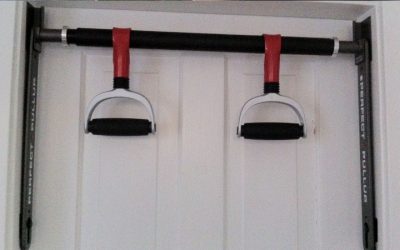
At roughly 1.25 in (32 mm) under the foam, this sits at the size that suits the widest range of hands. Multiple grip positions also let you rotate hand orientation, which matters more for elbow comfort than diameter does.
The foam sleeves add noticeable bulk and compress unevenly within months, so many users strip them and fit thin tape instead. It also mounts low in a standard doorway, limiting range on leg raises.
Yes4All Wall Mounted Pull-Up Bar
Wall bars typically run between 1.25 and 1.5 in (32-38 mm), and the exact figure is worth confirming before ordering because it is rarely stated. For a permanent installation you cannot easily change it afterwards.
Installation requires accurate stud location and lag bolts, and the mounting is permanent. If the diameter turns out to be at the thicker end and your hands are small, tape will not help since tape only makes it thicker.
Sportsroyals Power Tower
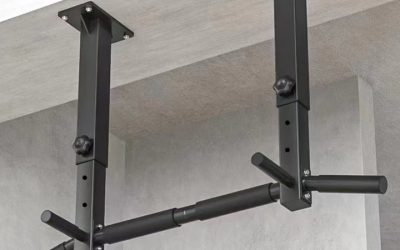
Towers commonly use slightly thicker tube than doorway bars, often closer to 1.5 in (38 mm), which suits larger hands well and gives a solid feel under load. The multiple stations also broaden what the frame can be used for.
For smaller hands that thickness reduces hanging endurance measurably, and the footprint of around 4 x 4 ft (1.2 x 1.2 m) is permanent. Check the bar thickness before ordering rather than after assembly.
Wood Gymnastic Rings
Standard wood rings are 1.25 in (32 mm) thick, which matches the comfortable range for most hands, and the rotating grip removes the fixed wrist position that irritates some elbows on a bar.
The instability means beginners fight balance before they fight the muscle. Rings also need a hang point with genuine clearance, and uneven strap lengths are immediately noticeable in the shoulders.
Fat Gripz
Clamping onto a standard bar takes the effective diameter to roughly 2.25 in (57 mm), which delivers fat-bar training without owning a fat bar. That is the practical answer for anyone who wants both stimuli from one setup.
Rep counts drop sharply because grip fails first, so using them on every set undermines back development. They also add bulk in a gym bag and can rotate slightly on smooth painted bars.
Fat Gripz Extreme
The larger version reaches around 2.75 in (70 mm), which is beyond most fat bars and is purely a grip training tool. A few reps at this diameter is a serious forearm session in itself.
Very few people can complete more than two or three pull-ups on these, so they suit hangs and holds rather than pulling volume. They are a specialist accessory rather than a general upgrade.
Lizard Skins DSP Grip Tape
Thin polymer tape at 0.5 mm adds only about 1 mm to the diameter while transforming how a painted bar holds when damp. That is usually a better fix than a thicker bar for anyone whose hands slip.
Every layer increases the effective diameter, so thicker versions work against small hands. The adhesive backing also leaves residue when removed, which matters on a bar you do not own.
Frequently Asked Questions
These questions about the best pull-up bar diameter come up whenever someone finds one bar much harder to hang from than another.
What diameter should I buy for general training?
Around 1.25 in (32 mm) suits the widest range of hands and lets the back receive full training volume. The best pull-up bar diameter for building back strength is the one where grip is not the reason your set ends.
Is a thicker bar better for building grip?
Yes, but at the cost of pulling volume. Removable thick-grip sleeves on a standard bar deliver the same grip stimulus while leaving your normal sets unaffected, which is why they are usually the better purchase.
How do I measure my current bar?
Wrap a strip of paper around it, mark the overlap and divide that length by 3.14. Do this over the foam if you train on the foam, since the effective diameter is what your hand actually experiences.
Does grip tape make a bar too thick?
Only in the thicker grades. Tape adds twice its own thickness to the diameter, so 0.5 mm tape adds about 1 mm overall while 1.8 mm tape adds nearly 4 mm. Choose the thin grades if the bar already feels large.
See More:
- Ankle weights best
- Best rated ankle weights
- Best home workout equipment budget
- Best resistance bands for men
Final Thoughts
The best pull-up bar diameter for most people is around 1.25 in (32 mm), because it lets the back rather than the grip set the limit. Larger hands manage 1.5 in comfortably, and fat-bar work is better added with removable sleeves than built into the bar. Measure your existing bar with a paper strip before deciding anything.







Write Your Review
No reviews yet. Be the first to share your experience!