
Key takeaways
What's inside
Best workout with pull up bar for someone who cannot yet do a pull-up is not a workout at all until the first rep exists. This four-week plan builds toward that rep using band assistance and slow negatives, three sessions a week.
As an Amazon Associate we earn from qualifying purchases at no extra cost to you. Product prices and availability are accurate as of the date shown and are subject to change.
As an Amazon Associate we earn from qualifying purchases at no extra cost to you. Product prices and availability are accurate as of the date shown and are subject to change.


By Chris Parker
🛒 Best Price Today on Amazon
Prime members get fast, free shipping on everything above, plus member-only deals. New members get a 30-day free trial — cancel anytime.
Start 30-Day Prime Free Trial →See Today’s Amazon DealsThe Four-Week Plan: Best Workout With Pull Up Bar for Beginners
The best workout with pull up bar plan below runs three non-consecutive days a week and progresses one variable at a time. The best workout with pull up bar at this stage is short, frequent and boring by design, because the limiting factor is connective tissue and grip rather than motivation.
Week One and Two: Hangs and Negatives
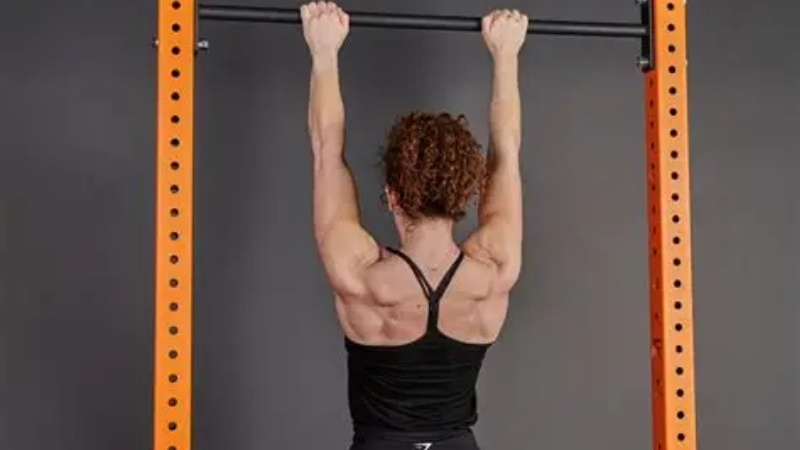
Each session opens with three dead hangs of twenty to thirty seconds, then five scapular pulls, then three sets of slow negatives. Step or jump to the top position and lower over four to five seconds, aiming for three to five reps per set.
Negatives are the fastest route to a first pull-up because the lowering phase is where most strength is built. Stop the set when the descent becomes a drop rather than a lower, which is usually sooner than expected in week one.
Week Three: Adding Band-Assisted Reps
Keep the hangs and negatives, then add three sets of band-assisted pull-ups. Choose a band that lets you complete five to eight reps with a clear pause at the top, rather than one that makes fifteen reps easy.
Band width is the progression variable from here on. Dropping to a thinner band once eight strict assisted reps are comfortable is the clearest signal of progress a beginner gets, and it is more reliable than chasing rep counts.
Week Four: Testing and Consolidating
Attempt one unassisted rep at the start of the first session, when you are freshest, then continue the week as normal. Whether or not the rep happens, the volume from the previous three weeks continues to build the strength needed.
If the first rep arrives, replace one assisted set with singles and keep everything else the same. If it does not, repeat weeks three and four with a thinner band rather than adding more sessions.
Space, Bar Height and Safety Checks
Allow roughly 8 ft (2.4 m) of ceiling measured with your arm extended, plus about 3 ft (0.9 m) clear behind you. For negatives you need to step or jump to the top position, so a step or low box within reach matters more than it does later.
Check a leverage-mounted doorway bar before every session in the first weeks, because the mounting can shift as trim settles. Confirm the bar is seated squarely and that nothing has loosened before putting bodyweight on it.
What to Do After Week Four
The plan is a first block rather than a finished programme. Once a strict rep exists, the next step is accumulating singles across several sets rather than chasing a set of five, since the first few reps are where the pattern gets ingrained.
If the rep has not arrived, repeat the block with a thinner band and add one extra negative set. The best workout with pull up bar at this stage improves by staying the same for longer, not by being redesigned every month.
Market Context for Beginner Equipment
Most equipment in this category assumes a garage or a drillable wall, so renter-friendly options remain the thinnest part of the shelf. That is why leverage-mounted doorway bars still dominate the beginner market despite their limitations.
Below the mid tier the compromises show up quickly: thinner tube walls that flex under heavier users, foam grips that compress flat within months, and welded rather than bolted joints. The joint where the bar meets the frame is what to check on arrival.
The good news for beginners is that the accessories that matter most are the cheapest ones. A set of graded flat bands costs a fraction of the bar and does more for a first pull-up than any upgrade to the bar itself would.
Gear for the Best Workout With Pull Up Bar
Seven items cover the plan: the bar, the assistance, the timing and the grip. Each entry notes what it contributes at this stage and its honest limitation.
| Product | Type | Role in Plan | Spec | Note |
|---|---|---|---|---|
| Iron Gym Total Upper Body Bar | Doorway bar | Main station | 24-32 in frames | Check seating often |
| Serious Steel Flat Bands | Bands | Assisted reps | Graded widths | Buy two widths |
| Yes4All Wall Mounted Bar | Wall bar | Upgrade path | Lag bolts to studs | Permanent |
| Hanging Ab Straps | Accessory | Core work later | Padded loops | Not needed week one |
| GymNext Flex Timer | Interval timer | Hang and rest timing | App controlled | Needs power |
| BalanceFrom Puzzle Mat | Flooring | Landing and floor work | 1/2 in (12.7 mm) | Dents under weight |
| Liquid Chalk | Grip | Longer hangs | Small bottle | Dries skin |
Iron Gym Total Upper Body Workout Bar
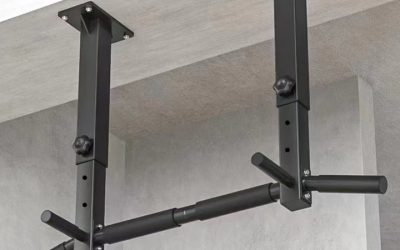
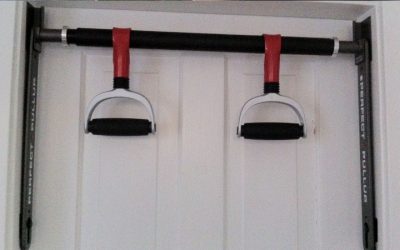
A leverage doorway bar is the right starting point because it needs no drilling and can be removed between sessions, which suits someone still deciding whether the plan will stick. Multiple grips help, since chin-ups are easier than pull-ups in week one.
It sits low in a standard doorway, so taller users bend their knees during hangs, and it relies on the trim above the frame. Check that the trim is solid and never mount one on a hollow architrave.
Serious Steel Flat Bands
These are the most important purchase in the plan. A band looped over the bar with one foot or knee in the bottom removes enough bodyweight to make strict reps possible, and the width becomes the progression dial for weeks three and four.
Buy two widths rather than one, since the step between bands is what drives progress. Bands fray where they cross the bar and degrade in heat or sunlight, so store them rolled in a drawer rather than left on the bar.
Yes4All Wall Mounted Pull-Up Bar
This is the upgrade path rather than the starting point. Once the plan sticks and the first rep arrives, a wall bar gives clearance a doorway cannot, which matters for the core work that follows the first pull-up.
Installation is permanent, needs accurate stud location and lag bolts, and the height is fixed once drilled. It is a purchase for month two or three rather than week one.
Hanging Ab Straps
Straps become useful once hanging core work enters the programme, letting sets run until the abdominals fail rather than the hands. In the first four weeks they are unnecessary, since grip is exactly what needs developing.
They remove grip training entirely, which is the wrong trade at this stage. Add them later once bare-handed hangs of forty-five seconds are comfortable rather than buying them alongside the bar.
GymNext Flex Interval Timer
Timed hangs are a core part of weeks one and two, and counting in your head while hanging is unreliable. An audible interval display keeps the hangs honest and the rest periods consistent between sessions.
It is single-purpose and needs power nearby. A phone app does the same job, so this is a convenience rather than a requirement, particularly for a four-week plan.
BalanceFrom Puzzle Exercise Mat
Negatives involve stepping or jumping down, and a mat softens that repeated landing while protecting the floor. It also gives a surface for the floor-based core work that follows the plan.
Half-inch foam takes permanent dents under anything heavy left in one place, so it suits bodyweight work rather than loaded equipment. The tiles stack flat behind a door between sessions.
Liquid Chalk
Grip is the first thing to fail in weeks one and two, and chalk buys a useful margin on the timed hangs. The liquid form leaves no dust indoors, which is what makes it practical in a hallway or spare room.
It dries the skin, which matters when hands are already adapting to hanging. Moisturising on rest days prevents the cracking that otherwise interrupts a four-week block.
Frequently Asked Questions
These questions come up during the first four weeks of the best workout with pull up bar plan, when progress is real but not yet visible as a full repetition.
How long until my first pull-up?
Most people reach it within eight to twelve weeks of consistent work, and the four-week plan is the first block of that. Starting bodyweight, prior training and grip strength all shift the timeline considerably.
Chin-ups or pull-ups first?
Chin-ups, with palms facing you. The supinated grip recruits the biceps more and is typically achievable earlier, which makes it the better first target. Pull-ups follow once chin-ups are strict.
Can I train every day?
No. Three non-consecutive sessions a week is the right frequency here, because tendons and grip adapt more slowly than muscle. Daily hanging is the fastest route to elbow irritation at this stage.
What if I feel it in my elbows?
Reduce the volume and switch to a neutral grip, which loads the elbow differently. Persistent joint pain is a matter for a doctor or certified physiotherapist rather than something to train through with more reps.
See More:
- Ankle weights best
- Best rated ankle weights
- Best home workout equipment budget
- Best resistance bands for men
Final Thoughts
The best workout with pull up bar for a beginner is a four-week block of hangs, slow negatives and band-assisted reps, run three times a week. A bar and two band widths is the entire equipment requirement. Check that the doorway trim is solid before you hang from it the first time.



Write Your Review
No reviews yet. Be the first to share your experience!