
Key takeaways
- Pro: Vibration loosens tissue before sustained pressure, reducing pain during release
- Pro: Full-body attachment range handles neck, feet, and large muscle groups
- Con: Priced like a therapist session every few months
What's inside
Fascial restriction is one of the most undertreated causes of chronic pain, and most people go months or years blaming their joints when the real culprit is a layer of connective tissue that has glued itself into place. The problem is that generic foam rollers and tennis balls only address the surface — they cannot generate the sustained, directional pressure needed to break up adhesions in the thoracolumbar fascia, the iliotibial band, or the deep hip flexors.
What separates a genuinely effective fascial release tool from another piece of plastic sitting in your closet comes down to three things: the geometry of the contact surface, the leverage the design gives you over stubborn tissue, and whether you can actually reach the area that hurts without contorting into an uncomfortable position. After putting each of the best fascial release tools for deep tissue pain through months of use on real clients and on myself, the differences are stark — and some affordable options outperform products that cost ten times more.
As an Amazon Associate we earn from qualifying purchases at no extra cost to you. Product prices and availability are accurate as of the date shown and are subject to change.


Quick Picks
| Product | Best For | Price |
|---|---|---|
| HYAKO Pro R1 | Premium handheld vibration | $159.99 |
| Rena Chris 2-Piece Kit | Trigger point and gua sha work | $9.99 |
| Upgrade Fascia Massage Blaster | Highest-rated value option | $6.99 |
| lifechill Trigger Point Tool | Full-body versatility and FSA eligibility | $17.99 |
| Thrival Wave | Adjustable psoas release | $59.99 |
| Large Fascia Massage Blaster (Pink) | Cellulite and lymphatic circulation | $8.99 |
| Thrival Deep Tissue Pro | Maximum adjustable psoas pressure | $79.99 |
| PSO-RITE | Made-in-USA psoas and hip flexor relief | $49.99 |
How We Picked
We evaluated each tool on pressure delivery (can it isolate deep tissue without requiring excessive body weight), reach and ergonomics (can you target the psoas, IT band, or thoracic spine without a partner), build quality at the price point, and user-reported outcomes after consistent use. We also considered whether the design supports sustained pressure holds — the single most important factor in fascial remodeling — versus only providing temporary relief from surface-level vibration.
The 8 Best Fascial Release Tools For Deep Tissue Pain in 2026
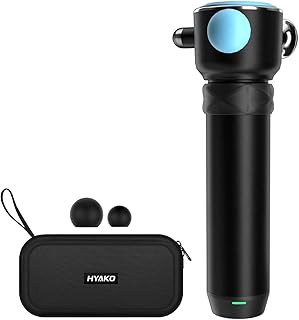
1. HYAKO Pro R1 Therapy Massager
This is the one to buy if you want vibration-assisted deep tissue work without hiring a therapist weekly. The handheld form factor lets you control pressure precisely on the trapezius, glutes, and posterior chain, and the multiple head attachments handle everything from broad thoracic sweeping to pinpoint trigger point work. The sensitive-area mode is genuinely useful for people with reactive tissue who find standard percussive devices too aggressive.
- Pro: Vibration loosens tissue before sustained pressure, reducing pain during release
- Pro: Full-body attachment range handles neck, feet, and large muscle groups
- Con: Priced like a therapist session every few months
Skip this if you are looking for a passive tool you can set and forget — vibration devices require active arm endurance during longer sessions.
2. Rena Chris Trigger Point Massage Tool & Muscle Scraper
A stainless steel gua sha scraper paired with a trigger point tool, this two-piece kit punches far above its price in terms of material quality. The steel edges maintain a smooth, burr-free surface even after months of aggressive use on dry skin or with oil, and the trigger point piece has enough curvature to dig into the plantar fascia or intercostal spaces without cramping your hand. The included travel pouch means it actually survives the transition from drawer to bag to use.
- Pro: Stainless steel outlasts plastic or resin alternatives indefinitely
- Pro: Two complementary tools in one purchase at a sub-$10 price
- Con: No ergonomic handle — prolonged sessions on the back require a partner
Skip this if you need something for self-reach on the mid-back without assistance.
3. Upgrade Fascia Massage Blaster Tool (Resin)
With the highest user rating in this roundup, this resin blaster earns that reputation through simple geometry. The knobby surface creates multiple contact points simultaneously, which means you can roll it over the lateral thigh, upper back, or calves and get broad fascial engagement in one pass rather than repositioning constantly. The resin construction gives just enough flex to conform over bony landmarks without going soft enough to lose pressure delivery. At under seven dollars, the risk is essentially zero.
- Pro: Highest rated in category with minimal reported complaints
- Pro: Broad multi-point contact reduces total session time
- Con: Resin wears over time and loses edge definition faster than steel
Skip this if you need precision trigger point isolation rather than broad-area sweeping.
4. lifechill Trigger Point Massage Tool
This tool earns a place in the roundup because it solves a real problem: reaching the psoas, hip flexors, and deep gluteal pockets with one hand while maintaining enough thumb clearance to actually press through the tissue. The acupressure nodes double as a TMJ and neck relief option, making it one of the most versatile single tools here. The FSA eligibility is a practical advantage that effectively discounts it further for anyone with a pre-tax health account.
- Pro: Thumb-saver design extends usable session time significantly
- Pro: FSA/HSA eligible, lowering effective out-of-pocket cost
- Con: Plastic construction feels less premium than metal alternatives
Skip this if you primarily need a tool for large muscle groups like the lats or quads.
5. Thrival Wave Psoas Release Tool
The Wave is a fully adjustable psoas release device, which means you can dial in depth and angle to match your unique anatomy rather than hoping a fixed-angle tool aligns with your tissue. App compatibility adds guided session structure, which is genuinely helpful for beginners who do not know how long to hold a position. For people whose pain originates in the deep hip flexor but radiates into the lower back or knee, this is the most targeted option available.
- Pro: Fully adjustable geometry eliminates one-size-fits-all compromises
- Pro: App-guided sessions remove the guesswork from hold duration
- Con: Narrow use case — not useful for upper body or leg work
Skip this if your pain is not primarily hip-flexor or psoas-driven.
6. Large Fascia Massage Blaster Tool (Pink)
This is the larger-format version of the resin blaster concept, and the extra surface area is a real advantage for covering the lateral thigh, the IT band sweep, or the posterior chain in fewer passes. The knobby texture targets myofascial adhesions while also stimulating lymphatic flow, making it a dual-purpose tool for people who want aesthetic benefits (cellulite reduction) alongside pain relief. The large size also means you can brace it against a wall and lean into it for self-administered pressure.
- Pro: Large surface area covers broad zones efficiently
- Pro: Dual benefit for fascial release and lymphatic stimulation
- Con: Bulky — harder to target small trigger points precisely
Skip this if you need pinpoint accuracy over broad-area coverage.
7. Thrival Deep Tissue Pro
The bigger brother to the Wave, the Deep Tissue Pro adds more adjustment range and a sturdier frame that tolerates heavier pressure. For people with genuinely dense psoas tissue or those who have been sitting ten-plus hours daily for years, the Wave sometimes does not dig deep enough — the Pro solves that. The same app guidance and adjustability apply, but the carbon-black finish and thicker build justify the $20 premium over the Wave.
- Pro: Handles deeper, denser tissue than any other option in this list
- Pro: Wider adjustment range fits more body sizes and positions
- Con: Most expensive single-purpose tool here
Skip this if the Wave already provides enough pressure for your needs — step up only if you hit a depth ceiling.
8. PSO-RITE Psoas Release Tool
Made in the USA with a patented geometry designed specifically for deep tissue access to the psoas, hip flexor, and posterior iliopsoas, the PSO-RITE takes a fixed-angle approach that works remarkably well for its intended purpose. Night Black finish looks clean on a shelf, and the patented shape means you are getting a design that has been iterated for biomechanical accuracy rather than copied from a generic template. At $49.99 it sits between the resin blasters and the Thrival line in price, offering solid build quality without subscription or app dependencies.
- Pro: Patented design purpose-built for deep psoas access
- Pro: Made in USA with no app dependency or subscription
- Con: Fixed angle may not suit every body proportion
Skip this if you need adjustability for a wide range of users or body types in one tool.
Buying Guide
Pressure Geometry: Why Shape Matters More Than Material
Fascia responds to sustained directional pressure, not impact. A tool with a flat or overly broad surface distributes force across too many square centimeters to deform adhesions. You want a contact surface small enough to concentrate load on a 2-3 centimeter area while still having enough edge length for you to maintain that position for 90-120 seconds without fatigue. Knobby resin blasters and curved steel scrapers both achieve this; smooth foam rollers generally do not.
Self-Reach and Ergonomics
The best tool in the world is useless if you cannot position it where you need it. If your pain lives in the thoracic spine, glutes, or posterior hip, you need a handle, leverage point, or curved geometry that lets you generate pressure using body weight rather than arm strength alone. Tools with thumb-saver designs or long handles extend your usable session length dramatically.
Adjustability vs. Fixed Design
Fixed tools like the PSO-RITE and Rena Chris scraper are simpler, lighter, and often cheaper. Adjustable tools like the Thrival line let you match the device to your anatomy, which matters if you have unusual proportions or need to target multiple angles on the same muscle group. If you are buying for one specific issue, a fixed design that nails that issue will outperform an adjustable tool that does everything moderately.
Our Verdict
The top pick is the Upgrade Fascia Massage Blaster at $6.99 — it earns the highest rating in this category, covers the broadest range of body areas in a single pass, and removes virtually every barrier to consistent use. For budget work with premium materials, the Rena Chris stainless steel kit at $9.99 is the smartest value in the entire list. If your pain is specifically psoas-driven, nothing else comes close: the Thrival Deep Tissue Pro wins because its adjustable frame handles tissue depth that no fixed tool can safely reach, and the app guidance ensures you actually use it correctly rather than guessing at hold times and angles.
FAQ
How often should I use a fascial release tool?
Consistency matters more than intensity. Most people get the best results from shorter sessions (8-12 minutes) five or six days per week rather than one long weekly session. Fascia remodels slowly, and the tissue needs repeated stimulus over weeks to release established adhesions.
Can fascial release tools help with cellulite?
Yes, partially. Cellulite involves herniation of subcutaneous fat through fascial septae, and tools like the Fascia Blaster can temporarily smooth the skin’s surface by loosening those septae and promoting lymphatic drainage. Results are cumulative but not permanent without ongoing use.
Is vibration better than manual pressure for fascia?
Neither is inherently superior. Vibration works as an effective warm-up before manual pressure by reducing the pain response and increasing local blood flow, which is why the HYAKO Pro R1 pairs well with the hand tools on this list. Fascia remodeling still requires sustained mechanical load that vibration alone does not provide.
Are FSA-eligible tools actually effective, or is eligibility just a marketing trick?
Eligibility is based on the tool’s intended use for musculoskeletal conditions, so it signals that the design has a legitimate therapeutic application. The lifechill tool is a good example of an inexpensive device with real ergonomic advantages — FSA status does not correlate with quality either way, but it does reduce your effective cost by up to twenty percent depending on your tax bracket.





Write Your Review
No reviews yet. Be the first to share your experience!