
Key takeaways
What's inside
Best double under jump rope crossfit discussions come down to two variables: cable diameter and handle bearing quality. Everything else is preference. Get those right and the rope stops being the reason a set breaks at rep eleven.
As an Amazon Associate we earn from qualifying purchases at no extra cost to you. Product prices and availability are accurate as of the date shown and are subject to change.
As an Amazon Associate we earn from qualifying purchases at no extra cost to you. Product prices and availability are accurate as of the date shown and are subject to change.


By Chris Parker
🛒 Best Price Today on Amazon
Prime members get fast, free shipping on everything above, plus member-only deals. New members get a 30-day free trial — cancel anytime.
Start 30-Day Prime Free Trial →See Today’s Amazon DealsHow to Pick the Best Double Under Jump Rope CrossFit Athletes Use
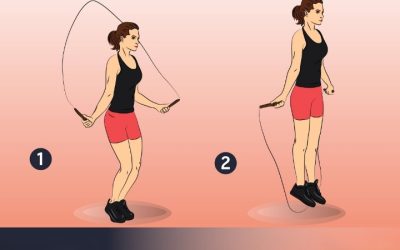
The best double under jump rope crossfit training demands has to complete two full rotations per jump, which demands both speed and enough feedback to know where the cable is. Those two requirements pull in opposite directions, and cable diameter is where the compromise gets made.
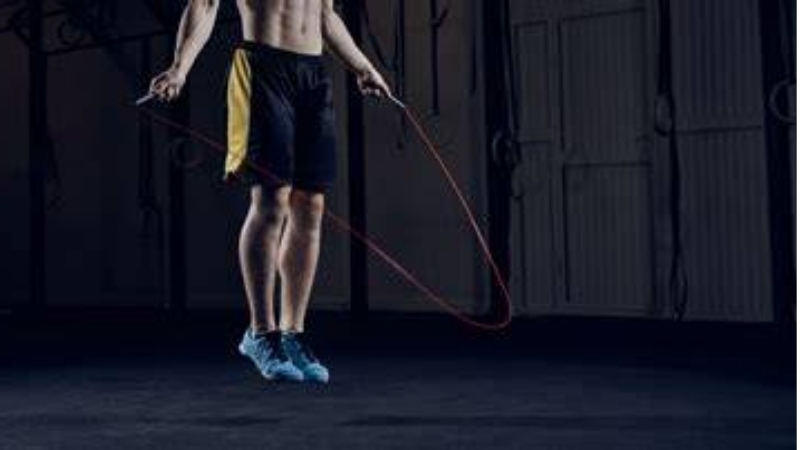
Cable Diameter and Weight
Speed cables run roughly 1.8-2.5 mm and rotate fastest, which suits athletes who already have the timing. Heavier drag cables around 3-4 mm rotate more slowly but give far more feedback, which is what beginners need to feel the rope position.
Most people learn faster on a heavier cable and then move down. Buying a rope that accepts interchangeable cables covers both stages in one purchase, and it is the single most useful feature in this category.
Handles and Bearings
The bearing determines whether the cable spins freely or binds under load. Sealed ball bearings hold up better than bushings over time, and binding at high speed is the most common cause of a rope that suddenly trips after months of good use.
Handle length affects control. Longer handles around 5-6 in (13-15 cm) suit larger hands and give more leverage, while short handles keep the wrists closer together for a tighter, faster turn once technique is established.
Sizing, Footprint and Ceiling Height
Size by standing on the middle of the cable with one foot: handles should reach roughly to the sternum for double unders, which is shorter than the armpit height used for single passes. A rope too long is the most common cause of trips.
Allow around 6 x 6 ft (1.8 x 1.8 m) of clear floor and about 9-10 ft (2.7-3 m) of ceiling, since the cable passes above your head twice per jump. Light fittings and low ceilings are the usual reason people move outdoors.
Surface, Noise and Cable Life
Cable life depends almost entirely on the surface. Rough concrete abrades a coated cable within weeks, while a rubber mat, a wooden floor or smooth tarmac extends it to months. The coating wears at the two points that strike the ground.
Noise matters indoors. A thin cable on a hard floor produces a sharp repetitive crack that carries through a building, so anyone training above neighbours should plan for a 1/2 in (12.7 mm) mat as part of the purchase.
When the Rope Is Not the Problem
Most missed double unders come from jumping higher rather than turning faster, or from the elbows drifting away from the ribs. Both change the effective rope length mid-set, and no cable diameter compensates for either.
Test it before spending: film a set from the side. If the jump height climbs as the set goes on, the fix is technique rather than the best double under jump rope crossfit gyms stock, and a new rope will change nothing.
Market Context for Speed Ropes
This is one of the few fitness categories where the mid tier genuinely resolves the problem, because bearings and interchangeable cables have both moved down from competition-only pricing into ordinary home budgets.
Below that tier the compromises are consistent: bushings instead of sealed bearings, cables that kink permanently and cannot be straightened, and handles that loosen at the cable clamp. The clamp is what to inspect after the first few sessions.
The genuinely useful development is cable packs sold separately, which let one set of handles serve as both a learning rope and a competition rope. That has largely removed the need to own two complete ropes.
Top Picks: Best Double Under Jump Rope CrossFit Setups
These seven span learning ropes, competition cables and the interchangeable systems that cover both. Each entry gives the cable range and the honest weakness.
| Rope | Cable Options | Bearing | Best For | Note |
|---|---|---|---|---|
| RPM Speed Rope | Multiple diameters | Sealed bearing | Competition speed | Premium price |
| RX Smart Gear Evo | Weighted options | Sealed bearing | Custom sizing | Sized to order |
| WOD Nation Speed Rope | Standard cable | Ball bearing | Budget entry | Best value |
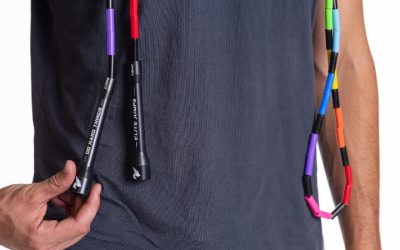
| Elite SRS Fit Rope | Interchangeable | Ball bearing | Learning to competing | Cable packs sold separately |
| Beast Gear APEX | Standard cable | Ball bearing | General conditioning | Simple adjustment |
| JumpNrope R1 Speed Rope | Multiple diameters | Sealed bearing | Durability | Heavier handles |
| Heavy Drag Cable Set | 3 to 4 mm | Not applicable | Learning the timing | Slows rotation |
RPM Speed Rope
The competition benchmark. Sealed bearings keep the cable spinning freely at the speeds double unders demand, and the handle geometry keeps the wrists in a position that stays comfortable through long sets.
It sits at the premium end of the category and the advantage over a good mid-tier rope only shows once your technique is consistent. For someone still tripping at rep five, the rope is not the limiting factor.
RX Smart Gear Evo
Sized to the user rather than adjusted by the user, which removes the most common source of trips. Weighted cable options also cover the learning stage, so one purchase serves both the beginner and the athlete they become.
Custom sizing means it cannot easily be shared between users of different heights, and getting the sizing wrong at order time is harder to correct. It also costs more than adjustable alternatives.
WOD Nation Speed Rope
The value pick and a common answer to the best double under jump rope crossfit question for anyone not competing. Ball bearings, a straightforward length adjustment and a durable cable cover everything most people need.
Bearings are not sealed, so grit eventually works in and the spin degrades, particularly with outdoor use. The cable clamp also benefits from a check after the first few sessions, since it can work loose.
Elite SRS Fit Rope
Interchangeable cables are the feature that matters most here, letting one set of handles run a heavy learning cable and a thin competition cable. That covers the entire progression without buying a second rope.
Cable packs are sold separately, so the full system costs more than the headline price suggests. Changing cables also takes a few minutes rather than seconds, which makes mid-session switching impractical.
Beast Gear APEX
Simple, adjustable and inexpensive, with a length mechanism that is easier to use than most in this price range. For general conditioning where double unders are one movement among many, it does the job without complication.
The cable is a fixed diameter, so there is no option to move between learning and speed configurations. Handle bearings are adequate rather than exceptional and will slow before the cable wears out.
JumpNrope R1 Speed Rope
Built for durability, with a solid handle and sealed bearing that survive heavy gym use better than lighter designs. Multiple cable diameters are available, so it adapts across the learning curve.
The handles are heavier than competition ropes, which some athletes find slows their turnover slightly. That same weight is what makes them more forgiving during longer conditioning sets.
Heavy Drag Cable Set
A 3-4 mm drag cable fitted to handles you already own is the cheapest way to learn double unders, because the extra weight tells you exactly where the rope is at every point in the rotation.
It is slower and more tiring, so it is a learning tool rather than a competition setup. It also wears faster on rough surfaces because there is more material contacting the ground on each pass.
Frequently Asked Questions
These questions come up whenever someone blames their rope for missed double unders, which is sometimes fair and often not.
Should I learn on a light or heavy cable?
Heavy. A 3-4 mm drag cable gives the feedback needed to feel where the rope is, which is exactly what beginners lack. Move to a thinner cable once you can string ten unbroken reps together.
How short should the rope be?
Standing on the middle with one foot, the handles should reach roughly your sternum. A rope sized to armpit height is too long for double unders and is the most common cause of trips at speed, because the extra cable has to be cleared twice on every jump rather than once.
Is an expensive rope worth it?
Only once technique is consistent. The best double under jump rope crossfit athletes use will not fix a timing problem, so a mid-tier rope with good bearings is the sensible purchase until you are stringing sets reliably.
Why did my rope get slower over time?
Usually grit in an unsealed bearing, or a kink in the cable that will not straighten. Rinsing and drying the handles after outdoor use helps, and a permanently kinked cable should be replaced rather than persevered with, since a kink changes the effective length on every rotation and produces trips that look like a timing fault.
See More:
- Ankle weights best
- Best rated ankle weights
- Best home workout equipment budget
- Best resistance bands for men
Final Thoughts
The best double under jump rope crossfit training needs is a sealed-bearing handle with a cable you can change: heavy at 3-4 mm while learning, thin at 1.8-2.5 mm once the timing is reliable. Size it to sternum height rather than armpit height, and train on a mat rather than rough concrete to keep the cable alive.


Write Your Review
No reviews yet. Be the first to share your experience!