
Key takeaways
What's inside
Best speed jump rope for double unders is all about top-end RPM: the thinnest sensible cable, the freest bearing and the lightest handle you can control. When those combine, the rope spins fast enough to clear your head twice per jump on a tight arc, letting you string long, unbroken sets without the rope stalling or dragging between reps.
As an Amazon Associate we earn from qualifying purchases at no extra cost to you. Product prices and availability are accurate as of the date shown and are subject to change.
By Chris Parker
🛒 Best Price Today on Amazon
Prime members get fast, free shipping on everything above, plus member-only deals. New members get a 30-day free trial — cancel anytime.
Start 30-Day Prime Free Trial →See Today’s Amazon DealsHow to Choose the Right Best Speed Jump Rope for Double Unders
Speed is a product of cable, bearing and handle, in that order. The best speed jump rope for double unders minimises cable weight and bearing friction while keeping a handle light and secure enough to sustain a high cadence.
Cable Speed: Thickness and Coating
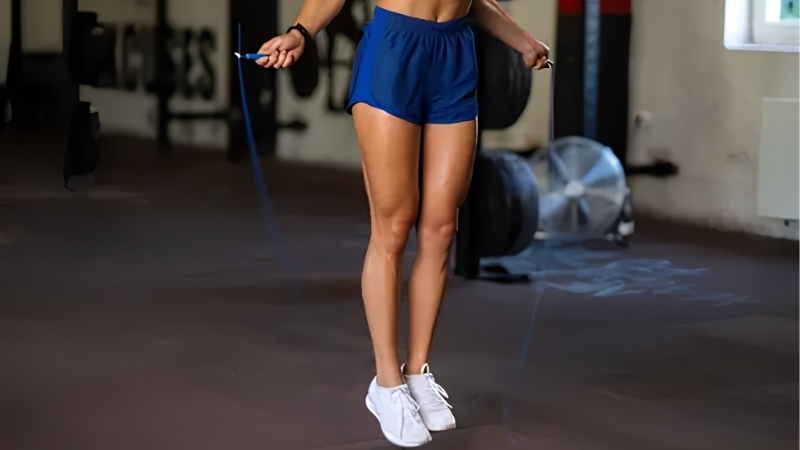
Thinner is faster. A 2 to 2.5 mm coated cable is the versatile speed standard, while advanced jumpers drop to 1.1 to 1.5 mm for the highest RPM, accepting a sharper sting on misses. The coating protects the steel and reduces tangle, but thinner coatings wear sooner.
There is a limit to thin. Ultra-light cables spin blazingly but punish any timing error and fray fast on rough floors. For most people chasing double unders, a 2.4 mm coated speed cable is the fastest rope they can actually keep unbroken.
Bearing Systems and RPM
The swivel is where speed lives. A ball-bearing system — often two bearings per handle — lets the cable rotate with almost no friction, holding a consistent arc at 180-plus RPM. A basic grommet or bushing simply cannot sustain that spin for long sets.
Better bearings also stay smooth as they age and resist grit. If you want the fastest, most consistent spin, prioritise the bearing quality over almost everything else, because a fast cable on a rough bearing still stalls mid-set.
Bearing count and upkeep matter too. Dual-bearing handles generally spin freer and longer than single-bearing designs, and premium ropes let you replace a worn bearing rather than the whole handle. Keep grit out — wiping the handles down and storing the rope coiled rather than crushed in a bag preserves that free spin, which is what separates a rope that feels fast for months from one that gums up after a few weeks.
Handle Weight and Grip
Light handles raise your ceiling. Aluminium handles around 2.8 oz (79 g) spin fast and cut wrist fatigue on long sets, and machined 1 oz (28 g) handles go faster still. A knurled or tapered grip keeps the handle secure when your hands sweat at speed.
Handle diameter matters for fast wrist flicks: around 1.1 in (28 mm) suits most hands, and larger hands may add grip tape. Too heavy a handle stabilises the rope but caps your cadence, which is the opposite of what a speed rope is for.
Footprint, Surface and Budget
A speed rope needs only a body-width of floor and clear ceiling, but the thin cable frays on concrete, so jump on a smooth surface or mat. Measure your actual space and ceiling height before ordering to avoid clipping a light at speed.
On the market, speed ropes are cheap for the performance, and a value model spins fast enough for most. Pay up only for premium bearings, machined handles or swappable weighted cables. A speed rope is efficient, high-calorie conditioning that helps you hit the WHO’s 150 weekly active minutes, but double unders are high-impact, so ramp up gradually and check with a doctor first if you have joint concerns.
Top Picks for the Best Speed Jump Rope for Double Unders
These seven rank the best speed jump rope for double unders by pure spin, from a $15 value rope to premium machined handles. Match the cable and bearing to your cadence and the length to your height. All are widely available on Amazon.
| Rope | Cable | Bearing | Best for |
|---|---|---|---|
| RX Smart Gear EVO | Multi-weight thin | Refined | Top-end speed |
| Rogue SR-2 | 2.4 mm coated | Free swivel | Fast + control |
| EliteSRS Surge | 2.4 mm swappable | Dual ball | Speed + progression |
| WOD Nation Speed Rope | 2.5 mm coated | Four ball | Best value speed |
| DEGOL Speed Rope | ~2.5 mm coated | Ball bearing | Budget speed |
| Survival and Cross | Coated + spares | Ball bearing | Cheap + backups |
| Crossrope Get Lean | Weighted (contrast) | Clip swivel | Endurance, not speed |
RX Smart Gear EVO
The fastest, most refined pick: a premium bearing and interchangeable thin cables cut to your height, delivering a quiet, consistent spin that holds a high RPM through long sets. The handle and swivel are the smoothest on this list.
It is the most expensive rope here and overkill for casual jumpers. For athletes chasing top-end cadence and unbroken sets, it earns the price. Best for serious speed.
Rogue SR-2
Knurled aluminium handles and a fast ball-bearing swivel drive a thin 2.4 mm coated cable that spins clean and stays controllable, so you get near-top speed without the twitchiness of an ultra-thin cable. The grip holds when sweaty.
It is premium-priced and often sold direct, so check availability. As a fast rope you can still control day to day, it is a top pick. Best for speed with control.
EliteSRS Surge
A competition speed rope with dual ball bearings and a 2.4 mm cable, plus swappable cable thicknesses so you can run a thin speed cable for max RPM and keep a thicker one for warm-ups or drills. Tool-free adjustment sizes it fast.
It costs more than budget ropes and the thinnest cable stings on misses. As a fast rope that also lets you progress, it is excellent. Best for jumpers who want speed plus options.
WOD Nation Speed Jump Rope
The value speed champion: a 2.5 mm coated cable, four ball bearings and light aluminium handles around 2.8 oz (79 g) that spin at 180-plus RPM for unbroken double unders, all near $15 to $20 with a spare cable and case.
The cable frays on concrete and some versions need a wrench to tighten the handles, with no resistance for the shoulders. As fast, cheap and durable, it is unbeatable value. Best value speed rope.
DEGOL Speed Rope
A budget ball-bearing rope with a roughly 2.5 mm coated cable and foam handles, DEGOL spins fast enough for double unders at a very low price, an easy way to try speed work without much spend.
The bearing and coating wear faster and the foam handles are bulkier, so the top-end spin trails premium ropes. For budget speed, it is fine. Best for cheap speed practice.
Survival and Cross Speed Jump Rope
A cheap adjustable speed rope with ball bearings and spare cables, it delivers a decent fast spin and a backup cable for when the thin one frays, covering speed work on a shoestring.
The bearing feels a step behind the WOD Nation, so the spin is slightly less consistent at top RPM. As a low-cost speed rope with extras, it is a fair pick. Best for cheap speed with backups.
Crossrope Get Lean Set
Included as a contrast: a weighted set that builds endurance rather than raw speed. The light weighted cables teach control and tax the shoulders, but they spin slower than a speed rope, so they are the wrong tool for maximum RPM.
It costs more and is largely sold direct. If your goal is speed, skip it; if you want resistance, it excels. Best for endurance, not top-end double-under speed.
Frequently Asked Questions
Common questions when choosing the best speed jump rope for double unders.
What makes a jump rope fast?
Three things: a thin, light cable, a free-spinning ball-bearing swivel and a light handle. Together they let the cable hold a high RPM on a tight arc. The bearing is the biggest factor, since a fast cable on a rough swivel still stalls, which is why two ropes with the same cable can feel completely different in the hand.
How thin should a speed cable be?
A 2 to 2.5 mm coated cable is the versatile speed standard. Advanced jumpers drop to 1.1 to 1.5 mm for the highest RPM, accepting a sharper sting and faster wear. Most people are fastest on a 2.4 mm cable they can keep unbroken.
Are lighter handles actually faster?
Yes, up to a point. Light aluminium or machined handles raise your cadence ceiling and cut wrist fatigue on long sets. Very heavy handles stabilise the rope but cap top-end speed, which defeats a speed rope’s purpose, so match handle weight to the control you can hold rather than chasing the lightest option available.
Will a speed rope survive outdoor use?
Not for long. Thin coated cables fray quickly on concrete and asphalt, exposing the steel. Jump on a smooth floor, a mat or a platform, and keep a spare cable on hand if you must train outdoors, since replacing a frayed cable is far cheaper than replacing the whole rope and takes only a minute.
See More:
- Best flooring for home gym over concrete
- Best collapsible exercise bike
- Best fold away exercise bike
- Best exercise bike folding
- Best home upright exercise bike
Final Thoughts
The best speed jump rope for double unders pairs a thin coated cable with a free bearing and a light, secure handle, sized to just clear your head. Prioritise the bearing, protect the cable from rough ground, and match handle weight to your control. With that dialed in, the best speed jump rope for double unders will push your cadence and your unbroken sets.
As an Amazon Associate we earn from qualifying purchases at no extra cost to you. Product prices and availability are accurate as of the date shown and are subject to change.





Write Your Review
No reviews yet. Be the first to share your experience!