
Key takeaways
What's inside
Best double dutch jump rope is chosen by length before anything else, because the rope has to clear two turners and reach the ground between them. Get that wrong and no amount of technique makes the rhythm work.
As an Amazon Associate we earn from qualifying purchases at no extra cost to you. Product prices and availability are accurate as of the date shown and are subject to change.
As an Amazon Associate we earn from qualifying purchases at no extra cost to you. Product prices and availability are accurate as of the date shown and are subject to change.




By Chris Parker
🛒 Best Price Today on Amazon
Prime members get fast, free shipping on everything above, plus member-only deals. New members get a 30-day free trial — cancel anytime.
Start 30-Day Prime Free Trial →See Today’s Amazon DealsHow to Choose the Best Double Dutch Jump Rope
Three specifications decide the best double dutch jump rope: length, material and weight. Length matches the number of jumpers and the turners’ arm span, material decides the sound and the rhBest Double Dutch Jump Rope: Length, Weight and Top Picksythm feedback, and weight determines how easily beginners can keep the arc consistent.
Length by Jumper Count and Space
A 12 ft (3.7 m) rope suits two turners and one jumper, and it is the usual starting length for children. A 14 ft (4.3 m) rope handles one or two jumpers comfortably, and 16 ft (4.9 m) is the standard for two jumpers or taller turners.
Longer ropes need more overhead clearance, not just floor space. A 16 ft rope arcs to roughly 8 ft (2.4 m) at its highest point, so outdoor use or a hall is realistic while a standard domestic ceiling is not.
Footprint and Turning Clearance
Allow a clear area of roughly 15 x 10 ft (4.6 x 3 m) for a 14 ft rope, measured to include the turners standing well back from the jumping zone. The rope sweeps wider than people expect on the downstroke.
Surface matters too. Beaded ropes are loud and wear fast on rough concrete, while smooth tarmac or a sprung wooden floor suits them better. Measure the clear span and check the surface before choosing a material.
Materials: Beads, Licorice and Cloth
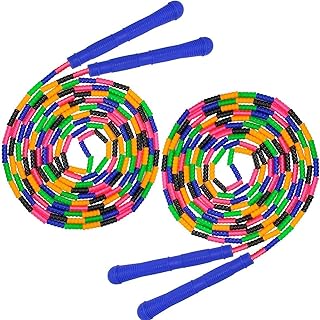
Segmented beaded ropes are the traditional choice because the beads make an audible click on each pass, which gives jumpers a rhythm cue without watching the rope. They also hold their arc well in wind, which matters outdoors.
Licorice PVC ropes are quieter and faster but harder to time, and cloth ropes are the slowest and safest option for young children. Beginners almost always learn faster on beads because the sound does half the work.
Repairability and Turner Comfort
Beaded ropes are the only type here that can be repaired: a snapped nylon core is rethreaded and the beads reused, which extends the life of the rope by years. Licorice ropes are replaced rather than repaired when they split.
Handles or handle sleeves matter more than they appear to, because turners hold position for long stretches. Bare rope ends blister hands during extended sessions, and simple foam or plastic turner grips solve it for very little money.
Turning Technique the Rope Has to Support
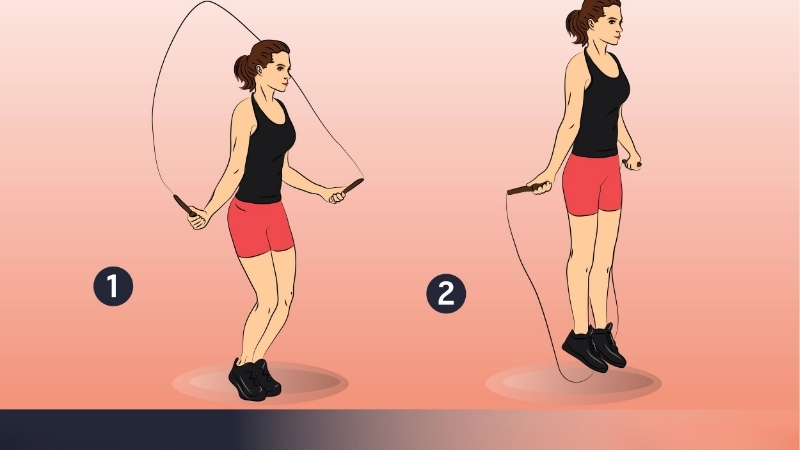
Turners drive the rope with the wrists rather than the whole arm, keeping the elbows close to the body and the arcs matched. A rope that is too light for the turners drifts out of that arc, which is why weight is a technique variable rather than a comfort one.
Alternating hands in opposite directions is what makes double dutch work, and the best double dutch jump rope makes that easier by holding a stable arc on both ropes. Mismatched rope weights between the two are a common and avoidable problem.
Market and Seasonal Context
This category is largely supplied through school and club sports channels rather than the fitness market, which is why specifications are given in feet and jumper counts rather than in the weight and cable diameter language used for speed ropes.
Below the mid tier the compromises are consistent: thinner nylon cores that fray at the end beads, beads that crack rather than flex on impact with concrete, and inconsistent bead spacing that disrupts the rhythm. The end beads are what fail first.
Demand rises as school terms start and outdoor play moves into the autumn, which is when the standard 14 and 16 ft lengths sell through fastest. Buying a spare core and a bag of beads alongside the rope is cheap insurance.
Top Picks: Best Double Dutch Jump Rope
These seven candidates for the best double dutch jump rope cover the standard lengths and all three materials, plus the repair and comfort accessories. Each entry states the length range it suits and its honest weakness.
| Product | Type | Lengths | Rhythm Cue | Note |
|---|---|---|---|---|
| Champion Sports Double Dutch Set | Beaded | 12, 14, 16 ft | Audible click | School standard |
| US Games Beaded Rope | Beaded | 14 and 16 ft | Audible click | Durable beads |
| Crown Sporting Goods Beaded | Beaded | Multiple | Audible click | Budget option |
| Cannon Sports Licorice Rope | PVC | 16 ft | Visual only | Fast and quiet |
| Cotton Cloth Rope | Cloth | 14 and 16 ft | Soft contact | Safest for children |
| Vinyl-Coated Cable Rope | Coated cable | 16 ft | Visual only | Heavy arc |
| Turner Handle Grips | Accessory | Universal | Not applicable | Prevents blisters |
Champion Sports Double Dutch Rope Set
Sold in the three standard lengths, this is the school and club default and the sensible starting point for anyone new to the discipline. The bead click gives jumpers the timing cue that makes learning double dutch possible without a coach counting.
Beads wear at the ends where they strike the ground, particularly on rough concrete, and the nylon core eventually frays at the last bead. Both are repairable, but expect that maintenance rather than treating it as a fault.
US Games Beaded Double Dutch Rope
Slightly heavier beads hold the arc more consistently, which helps inexperienced turners keep a steady rhythm. In 14 and 16 ft lengths it covers one or two jumpers, and the extra weight is noticeable in a breeze outdoors.
That weight makes it more tiring to turn over long sessions, so it suits adults or older children rather than young beginners. It is also noisier indoors, which matters in a shared hall.
Crown Sporting Goods Beaded Rope
The budget beaded option, and adequate for learning. The rhythm cue is the same regardless of price, so for a first rope the saving is real and the compromise sits mostly in how long the beads last.
Bead spacing is less consistent than on higher-tier ropes, which can produce a slightly uneven click. Beads also crack rather than flex when struck hard against concrete, so the surface matters more with this one.
Cannon Sports Licorice Rope
A smooth PVC rope at 16 ft (4.9 m) is faster and much quieter than beads, which suits experienced groups and indoor halls where noise is a problem. It also stores in a far smaller coil.
There is no audible rhythm cue, so timing has to come from watching the rope, which is significantly harder for beginners. It also tangles more readily and is affected by wind outdoors.
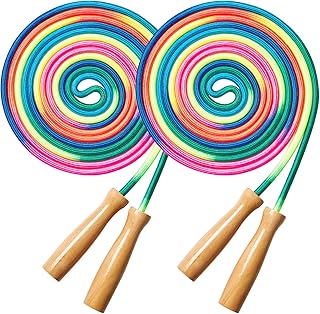
Cotton Cloth Double Dutch Rope
The safest option for young children, because contact with a cloth rope stings far less than beads or PVC. The slower arc also gives beginners more time to read the timing and step in.
It absorbs moisture, becomes heavy on damp ground and wears quickly on rough surfaces. The slow arc also caps the speed available, so groups outgrow it once the basics are established.
Vinyl-Coated Cable Rope
A heavier coated cable holds a very stable arc, which suits outdoor use in wind and makes turning easier to keep consistent over long sessions. Durability on tarmac is better than beads.
The weight tires turners faster and the rope stings noticeably on contact, so it is not a beginner or child option. There is no rhythm cue either, which limits its teaching value.
Turner Handle Grips
Simple foam or plastic sleeves over the rope ends stop the blistering that comes from turning for long stretches, and they cost almost nothing. For any group that turns for more than a few minutes at a time they pay for themselves immediately.
They add a little weight at the ends, which slightly changes the feel of the arc, and cheap foam compresses flat within a season. They also need sizing to the rope diameter to stay put.
Frequently Asked Questions
These questions come up whenever a group buys their first rope and discovers that length is doing more work than technique.
What length should I buy?
Fourteen feet for one or two jumpers with average-height turners, and sixteen for two jumpers or taller turners. The best double dutch jump rope for children learning alone is usually twelve feet, which is easier to keep turning consistently.
Beaded or licorice for beginners?
Beaded, without much doubt. The click on each ground contact supplies the timing cue that beginners otherwise have to work out visually, and that single feature shortens the learning curve considerably.
Can double dutch be done indoors?
Only in a hall. A 16 ft rope arcs to roughly 8 ft (2.4 m) overhead, which exceeds most domestic ceilings, and beaded ropes are loud on hard floors. Outdoor tarmac or a sports hall is the realistic setting.
How do I repair a beaded rope?
Untie the end, slide the beads off the frayed section, cut back the nylon core and rethread. Keeping a spare core and a handful of beads means a snapped rope is a ten-minute fix rather than a replacement purchase.
See More:
- Ankle weights best
- Best rated ankle weights
- Best home workout equipment budget
- Best resistance bands for men
Final Thoughts
The best double dutch jump rope is decided by length first, material second: fourteen feet for most groups, sixteen for two jumpers, and beads for anyone still learning the timing. Buy a spare core and beads at the same time, and measure the clear span and overhead height before your first session.


Write Your Review
No reviews yet. Be the first to share your experience!