
Key takeaways
What's inside
Best foam roller size is decided by two things people rarely consider together: which muscles you actually roll, and where the roller lives between sessions. A 36 in roller does more but fits nowhere, and that trade-off runs through the whole category.
As an Amazon Associate we earn from qualifying purchases at no extra cost to you. Product prices and availability are accurate as of the date shown and are subject to change.
As an Amazon Associate we earn from qualifying purchases at no extra cost to you. Product prices and availability are accurate as of the date shown and are subject to change.


By Chris Parker
🛒 Best Price Today on Amazon
Prime members get fast, free shipping on everything above, plus member-only deals. New members get a 30-day free trial — cancel anytime.
Start 30-Day Prime Free Trial →See Today’s Amazon DealsHow to Choose the Best Foam Roller Size
The best foam roller size is set by three variables: length determines which movements are possible, diameter determines how deep the pressure goes, and density determines how much it hurts. The best foam roller size for a shared living room is rarely the same as the one a physiotherapist would hand you.
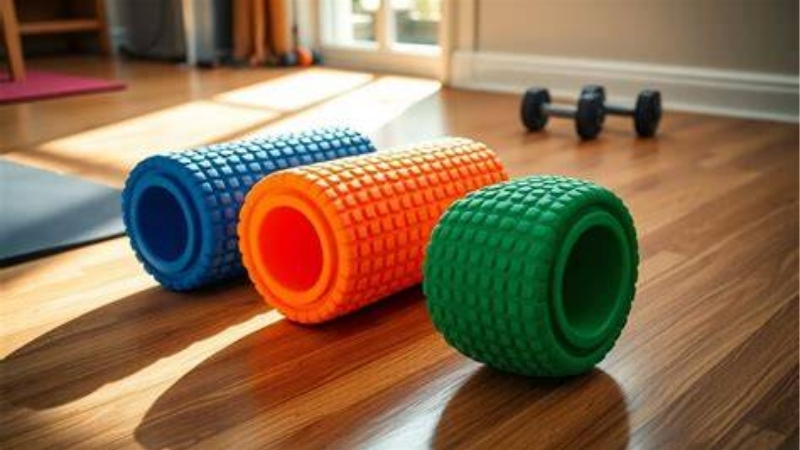
Length: 12, 18, 24 and 36 Inches
A 36 in (91 cm) roller is the only length that supports lying along your spine, which makes it the choice for thoracic extension and chest opening work. It also spans both legs at once, which halves the time spent on quads and hamstrings.
An 18 in (46 cm) roller covers every single-limb movement and fits in a wardrobe. A 12 in (30 cm) roller is a travel size that suits calves and forearms but is too short for anything requiring balance across both sides.
Diameter and Pressure Depth
Standard rollers are 6 in (15 cm) across, which gives a comfortable rolling height and enough clearance to move over. A 5 in (12.7 cm) roller concentrates pressure into a smaller contact patch, which feels considerably more intense on the same muscle.
Half-round rollers, flat on one side, sit at roughly 3 in (7.6 cm) tall and cannot roll. They suit balance work and calf stretching rather than release, and they are stable enough to stand on, which full rounds are not.
Density and Surface Texture
Density is the variable that determines tolerance. Softer EVA foam suits beginners and sensitive areas; high-density EPP holds its shape for years and applies noticeably more pressure. Very cheap rollers compress permanently within months and stop working.
Textured surfaces concentrate pressure into ridges rather than spreading it, which some people find effective and others find simply painful. A smooth high-density roller is the safer default, with texture as a later addition rather than a first purchase.
Storage Footprint and Practical Reality
A 36 in x 6 in roller occupies roughly the volume of a large bolster and does not fit in most cupboards, which is the single most common reason it ends up unused behind a sofa. An 18 in roller stores on a shelf.
Hollow-core rollers weigh far less than solid EVA and some accept storage inside the tube. Measure the storage spot before choosing a length, because the roller you actually use is the one you can reach without moving furniture.
Matching Length to the Muscles You Roll
Calves, forearms and feet need almost no length, so a 12 in (30 cm) roller covers them completely. Quads, hamstrings and the iliotibial band are single-limb targets, which is what makes 13-18 in (33-46 cm) the most generally useful range.
Only two applications genuinely require a 36 in (91 cm) roller: lying along the spine for thoracic extension, and rolling both legs at once. If neither is in your routine, the best foam roller size for you is a shorter one.
Market Context for Recovery Tools
The mid tier holds the widest choice and the clearest trade-offs, with high-density hollow-core rollers now standard at ordinary prices rather than being a physiotherapy purchase. That is the meaningful change in this category.
Below that tier the compromises are specific: open-cell foam that takes a permanent dent within months, surfaces that flake, and inconsistent density along the length of the tube. Pressing a thumb into the surface tells you most of what you need.
Demand for recovery equipment rises as training moves indoors through autumn, which is also when the 36 in lengths sell through first because they are the awkward size to stock. Buying the long one early in the season is sensible if that is the size you want.
Top Picks by Best Foam Roller Size
These seven span every length and density worth owning, plus the half-round for balance work. Each entry gives the dimensions and the honest weakness rather than repeating the listing.
| Roller | Length | Diameter | Density | Best For |
|---|---|---|---|---|
| TriggerPoint GRID | 13 in (33 cm) | 5.5 in (14 cm) | Firm, textured | Single-limb work |
| TriggerPoint GRID 2.0 | 26 in (66 cm) | 5.5 in (14 cm) | Firm, textured | Legs and back |
| LuxFit High Density | 36 in (91 cm) | 6 in (15 cm) | High density | Spinal work |
| Amazon Basics Round Roller | 12 to 36 in | 6 in (15 cm) | High density | Budget entry |
| OPTP PRO-Roller Soft | 36 in (91 cm) | 6 in (15 cm) | Softer EVA | Beginners |
| RumbleRoller | 22 or 31 in | About 6 in | Aggressive bumps | Experienced users |
| Half-Round Roller | 12 to 36 in | 3 in (7.6 cm) tall | High density | Balance and calves |
TriggerPoint GRID
At 13 in (33 cm) long and 5.5 in (14 cm) across, this is the size most people should own if they only own one. It covers calves, quads, hamstrings and glutes one limb at a time, and it fits in a gym bag.
It is too short for lying along the spine, which rules out thoracic extension work entirely. The textured surface also concentrates pressure, so it feels considerably more intense than a smooth roller of the same density.
TriggerPoint GRID 2.0
The 26 in (66 cm) version covers both legs simultaneously and is long enough for upper-back work across the shoulder blades. It is the compromise length for anyone who wants more than single-limb rolling without the storage problem of a 36 in roller.
It still falls short of the length needed to lie fully along the spine, and the hollow core makes it lighter but slightly less stable under heavier users. The texture remains an acquired taste.
LuxFit High Density Roller
A full 36 in (91 cm) at 6 in (15 cm) diameter is the size physiotherapists reach for, because it supports the whole spine for extension work and spans both legs at once. High-density EPP holds its shape for years.
Storage is the problem: it fits in almost no cupboard and usually ends up behind furniture. The firm density is also uncomfortable for anyone new to rolling, particularly on the iliotibial band.
Amazon Basics Round Foam Roller
Available across the full length range at a low price, which makes it the sensible way to find out which best foam roller size actually suits you before committing to a premium one. The high-density version holds up reasonably well.
Surface finish is less durable than premium rollers and can flake with heavy use. Density also varies slightly between production batches, so two rollers of the same model can feel different.
OPTP PRO-Roller Soft
The softer density makes 36 in (91 cm) rolling tolerable for beginners and for anyone with sensitive areas. Full length with less pressure is a genuinely useful combination that most manufacturers do not offer.
Softer foam compresses under heavier users, which reduces the pressure available and shortens the useful life. It is a starting roller rather than a long-term one for anyone who progresses to deeper work.
RumbleRoller
Aggressive raised bumps concentrate pressure far more than a grid texture, which suits experienced users who no longer feel much from a smooth roller. Two lengths cover single-limb and both-leg work.
It is genuinely uncomfortable and entirely inappropriate as a first roller. The bumps also make it unstable for any position requiring balance, and it is the worst choice for lying along the spine.
Half-Round Roller
Flat on one side and about 3 in (7.6 cm) tall, this cannot roll, which is the point. It stays put for calf stretching, balance drills and foot arch work, and it doubles as a stable platform to stand on.
It does not replace a round roller for release work, so it is an addition rather than an alternative. The short profile also limits the pressure available compared with a 5 in round roller.
Frequently Asked Questions
These questions come up whenever someone buys their first roller and discovers the length restricts what they can do with it.
If I can only own one, which size?
An 18 in (46 cm) or 13 in (33 cm) roller covers the most ground for the least storage. The best foam roller size for a single purchase is the one you can reach easily, because a 36 in roller behind the sofa gets used far less.
Is 5 or 6 inch diameter better?
Six inches is more comfortable and easier to move over, five inches applies more concentrated pressure into a smaller area. Beginners are better served by six; experienced users often prefer five for deeper work.
How firm should a first roller be?
Medium density. High-density rollers last longer but are uncomfortable enough that beginners often abandon them, and very soft rollers compress and stop applying useful pressure within months of regular use.
Does rolling replace stretching or treatment?
No. Rolling is a general mobility tool rather than treatment, and persistent pain in a specific area is a reason to see a doctor or certified physiotherapist rather than to roll harder or longer.
See More:
- Ankle weights best
- Best rated ankle weights
- Best home workout equipment budget
- Best resistance bands for men
Final Thoughts
The best foam roller size is 36 in for spinal work, 18 in for general use and 12 in for travel, with 6 in diameter for comfort and 5 in for depth. Storage decides this more than specifications do, so measure the cupboard before choosing the length you think you want.


Write Your Review
No reviews yet. Be the first to share your experience!