
Our Top Picks
 Amazon Basics 1/2 Inch Extra Thick Exercise Yoga73.2 x 24.3 x 0.5 inches73.2 x 24.3 x 0.5 inches2.2 poundsCheck on Amazon
 Gaiam Essentials Thick Yoga Mat with Easy-Cinch Strap2/5" (10MM)72 x 24 x 0.4 inches2.8 poundsCheck on Amazon
Pros & cons
- 10mm NBR foam cushions knees, hips, and joints well
- Includes an adjustable strap for rolling and carrying
- Textured foam surface helps reduce slipping during dry workouts
- Foam may carry a mild odor that needs a day to air out
- Extra-thick cushioning can feel less stable for balance poses
Pros & cons
- 1-inch extra-thick padding eases pressure on joints and hands
- BPA-free material avoids phthalates and heavy metals
- Nylon strap makes rolling and carrying straightforward
- May release a mild odor that needs a day or two to air out
- Extra thickness can make balance poses feel less stable
The best thick yoga mats for extra cushioning are usually 8–12 mm TPE or NBR mats for knees and wrists, while a 6–8 mm natural-rubber or PVC mat is the better compromise when stability, grip, and balance poses matter more than plushness.
What “thick” should mean for yoga
Most standard yoga mats are about 3–5 mm thick. A thick mat starts around 6 mm, and extra-cushioned models generally measure 8–15 mm. More foam does not automatically make a mat better: it changes how your body connects with the floor.
Amazon Basics 1/2 Inch Extra Thick Exercise Yoga Mat with Carrying Strap for Home Workouts and Fitness, 74" x 24", Black
Chosen because it specifies 74" x 24" and Black.
View on AmazonGaiam Essentials Thick Yoga Mat with Easy-Cinch Strap (Green, 10mm)
Chosen because it specifies 10mm).
View on Amazon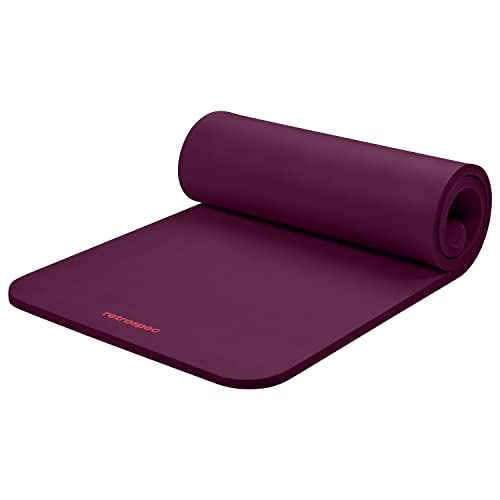
Retrospec Solana Yoga Mat Extra Thick 1" Exercise Mat, Fitness, with Strap
Chosen because it specifies Fitness and with Strap.
View on Amazon
CAP 1" Extra Thick Yoga Mat, Exercise & Workout Mat with Strap, Black
Chosen because it specifies Exercise & Workout Mat with Strap and Black.
View on AmazonA 10–15 mm mat can make kneeling, tabletop, lunges, and seated poses noticeably more comfortable. However, the same softness can make standing balances, transitions, and weight-bearing wrist positions feel less stable. The ideal thickness depends on your practice, flooring, and whether you need portability.
Best thick yoga mats by situation
| Situation | Best thickness | Preferred material | Why it works | Main compromise |
|---|---|---|---|---|
| Sensitive knees on hard floors | 10–15 mm | NBR or dense TPE | Maximum pressure relief and insulation | Less stable for balance poses |
| Mixed yoga, including standing poses | 6–8 mm | Natural rubber, PVC, or dense TPE | Good cushioning without excessive wobble | Not as soft during prolonged kneeling |
| Hot or sweaty practice | 4–6 mm | Textured natural rubber or rubber with a grippy top layer | Better floor connection and traction | Less cushioning; may need a knee pad |
| Travel and small storage space | 3–5 mm | Light PVC, TPE, or thin rubber | More portable and easier to roll | Limited protection on hard floors |
| Restorative or seated practice | 10–15 mm | Soft NBR or foam-backed TPE | Comfortable for hips, knees, and lying poses | Bulky and slower to flatten |
How thickness affects the features that matter
Stability and balance
A thick, soft mat compresses under one foot, so standing poses such as Tree, Warrior III, and Half Moon can feel less predictable. It may also make ankle and hip stabilizers work harder. If balance is a major part of your practice, choose a dense 6–8 mm mat rather than the softest 12–15 mm model.
Density matters as much as the number printed on the label. A firm 8 mm TPE mat may feel more stable than a low-density 10 mm foam mat. Press your thumb into the surface: it should cushion pressure without collapsing deeply or leaving a slow-forming depression.
Cushioning for knees and wrists
Extra thickness helps spread pressure when your kneecap, shin, or wrist is close to the floor. The benefit is most noticeable in tabletop, low lunge, kneeling twists, and long floor-based sessions. It is not a substitute for modifying a pose or getting professional guidance if you have persistent pain, numbness, or an existing injury.
For wrists, thickness alone is not enough. A very soft mat can allow the heel of the hand to sink while the fingers remain higher, changing wrist loading. A moderately thick, firm mat with a grippy surface is often more useful than a soft mattress-like mat for downward-facing dog and plank.
Grip and sweat management
Natural rubber and textured PVC often provide dependable traction, but the surface can become slick with heavy perspiration unless it has a moisture-managing top layer. TPE varies widely: some surfaces grip well when dry but lose traction when wet. NBR is usually chosen for softness rather than outstanding grip.
If you practice hot yoga or sweat heavily, prioritize surface texture and a towel-compatible finish over maximum thickness. A 5–6 mm grippy mat plus a washable yoga towel can be safer and more manageable than a slippery 12 mm mat.
Weight, odor, and materials
Thicker mats contain more material, so they are usually heavier and take longer to air out. A typical 183-by-61 cm mat may weigh approximately 1.5–3 kg at 6–8 mm and 2–4.5 kg at 10–15 mm, depending on density and construction.
NBR foam is commonly lightweight for its thickness and feels soft, but it can retain a noticeable rubber or plastic odor when new. TPE is often lighter and less odorous than rubber, though quality varies. Natural rubber is dense and grippy, but it has a characteristic rubber smell and may not suit people with latex sensitivity. PVC can be durable and stable, but its environmental profile is less appealing to some buyers.
Rollability and storage
A 10–15 mm mat takes more space in a closet and forms a larger roll. It may also curl at the ends after storage. Roll the mat with the practice surface facing outward when the manufacturer recommends it, and keep it flat for several hours after unpacking. Do not force a thick mat into a narrow strap or closet gap, as repeated compression can create permanent creases.
Notable mat types and who should choose them
Dense 6–8 mm rubber or PVC mats
This is the strongest all-round category. Mats such as the 6 mm Manduka PRO are known for a firm, substantial feel, while natural-rubber options such as JadeYoga Harmony provide a grippy alternative. They suit regular practitioners who want cushioning for ordinary floor work without giving up too much stability. Expect a general market range of roughly $70–$150, depending on material, size, and construction.
8–10 mm TPE mats
These are a practical middle ground for home users who want more softness than a studio-style mat. They are often easier to carry than rubber mats and are available in extra-long or extra-wide sizes. Look for a closed-cell or moisture-resistant surface, a stated density or firm-support description, and edges that do not curl excessively.
10–15 mm foam mats
These are the best choice when kneeling and seated comfort dominate your decision. Many are made from NBR or thick TPE and cost approximately $30–$90. They work well for restorative yoga, stretching, Pilates-style floor work, and home exercise on tile or wood. They are less suitable as a single mat for frequent balance practice.
A simple decision matrix
| Your priority | Recommended choice | What to avoid |
|---|---|---|
| Beginner, occasional home practice | 8–10 mm TPE, about 1.5–2.5 kg | Very soft 15 mm foam if you are learning balance |
| Frequent mixed practice | 6–8 mm dense rubber, PVC, or firm TPE | Low-density foam that compresses under the feet |
| Small apartment | 6–8 mm mat under about 70 cm wide | Extra-wide, 15 mm mats with no storage plan |
| Daily kneeling or floor sequences | 10–12 mm dense foam, or a 6–8 mm mat with a separate knee pad | Thin travel mats on hard flooring |
| Long-term, high-frequency use | Firm rubber or high-density PVC/TPE with reinforced edges | Soft foam with no stated material or care instructions |
Size and weight: a useful calculation
A standard mat measuring 183 by 61 cm covers about 1.12 square metres. If you are taller than approximately 178 cm, an 200–215 cm mat can prevent your head or heels from extending onto the floor during savasana. A 200-by-66 cm mat covers 1.32 square metres—about 18% more floor area than the standard size—so it will also require more storage and usually weigh more.
For frequent home use, the extra floor coverage can be worth it. For commuting, however, every additional millimetre and centimetre increases the carrying burden. Check the listed rolled diameter and weight, not just thickness.
Ownership realities: cleaning and wear
Most mats last longer when wiped after sweaty sessions with a manufacturer-approved diluted cleaner, then dried fully before rolling. Avoid saturating foam, storing it damp, or leaving it in direct sunlight or a hot car. Oils, lotions, and fabric dyes can reduce traction or stain the surface.
The first signs of wear are usually a shiny or slippery area under the hands, compressed spots where the feet land, peeling at the edges, and lingering odor after cleaning. A mat used four times per week receives about 208 sessions per year. If a $100 mat remains grippy and intact for two years, its approximate cost is $100 ÷ 416 sessions, or $0.24 per use. Replacing a cheap mat repeatedly may cost more while producing more waste.
Bottom line
Choose a firm 6–8 mm mat if you want one mat for balance, standing poses, and moderate cushioning. Choose an 8–10 mm TPE mat for a comfortable home-practice compromise. Choose 10–15 mm foam when knee and floor comfort are the overriding priorities, and add a separate grippy surface or thinner mat if balance work becomes unstable. The best thick yoga mats are not necessarily the thickest; they are the ones whose density, traction, size, and storage demands match the way you practice.

Write Your Review
No reviews yet. Be the first to share your experience!