
Our Top Picks
Best Shiatsu Foot Massagers for Daily Recovery
The best shiatsu foot massager for daily recovery is a model that reaches both the sole and heel, lets you adjust kneading pressure, fits your feet without crowding, and has removable liners you can wash. For most people, prioritize coverage and a comfortable intensity range over extra heat or strong compression; choose a simpler open-top design if easy cleaning and quick access matter most.
Quick comparison: what to look for
Specifications vary by model and product revision. The figures below are practical buying ranges, not claims about a particular product. Check the current manufacturer listing for the exact unit’s dimensions, maximum foot length, weight, and settings before ordering.
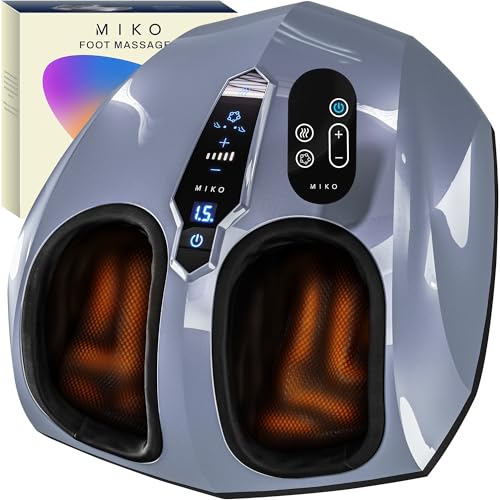
MIKO Shiatsu Foot Massager with Heat and Air Compression
Picked as a relevant option in this category.
View on Amazon![Nekteck Shiatsu Foot Massager with Heat [2026 Upgraded], 3 Modes Deep Kneading Therapy Air Compression, Feet Massage for Plantar Fasciitis, Relaxation Gifts for Men Women Mom Dad Birthday](https://m.media-amazon.com/images/I/41ikpLvuPeL._SL500_.jpg)
Nekteck Shiatsu Foot Massager with Heat [2026 Upgraded], 3 Modes Deep Kneading Therapy Air Compression, Feet Massage for Plantar Fasciitis, Relaxation Gifts for Men Women Mom Dad Birthday
Chosen because it specifies 3 Modes Deep Kneading Therapy Air Compression and Feet Massage for Plantar Fasciitis.
View on Amazon
Cloud Massage Shiatsu Foot Massager with Heat, Standard Size, White
Chosen because it specifies Standard Size and White.
View on Amazon
RENPHO Foot Massager with Heat, Birthday Gifts for Women, FSA Eligible HSA
Chosen because it specifies Birthday Gifts for Women and FSA Eligible HSA.
View on Amazon| Feature | Common range | Why it matters |
|---|---|---|
| Foot-length fit | About 10–13 in (25–33 cm) | A longer shell may fit larger feet, but interior width and toe clearance also affect comfort. |
| Session timer | About 15–30 minutes | An automatic shutoff limits the chance of losing track of a session. |
| Heat controls | Off/on, or 2–3 levels | Adjustable heat is more flexible than a single fixed setting; heat may take several minutes to build. |
| Massage coverage | Soles only, or soles plus heel and sides | Coverage varies more than the word “shiatsu” suggests. Look for a diagram showing where the rollers or nodes contact. |
| Compression | None, or adjustable air pressure | Airbags can add a squeezing sensation around the instep or sides, but may feel restrictive to some users. |
| Unit weight | Roughly 8–20 lb (3.6–9 kg) | Lighter units are easier to move and store; heavier shells can be awkward to carry between rooms. |
Do not treat maximum foot length as the whole fit test. If your feet are wide, have a high instep, or you plan to use the massager with socks, look for a roomy opening and a return policy that allows a fit check.
Choose by your recovery routine
| Your situation | Look for | Trade-off |
|---|---|---|
| First massager or lower budget | Basic sole rollers, a low setting, timer, and removable liners | May skip heel coverage, compression, and separate heat controls. |
| Frequent use after standing or walking | Adjustable kneading, broad sole-and-heel contact, and easy-to-clean liners | More features usually mean a larger, heavier unit. |
| Small apartment or shared room | Compact open-top design, simple controls, and a carry handle | Open designs may provide less coverage around the sides of the foot. |
| You like a snug, enclosing massage | Separate adjustable compression and kneading controls | More pressure is not automatically better; confirm you can switch compression off. |
| Large or wide feet | Published interior dimensions, generous toe room, and a clear fit policy | A stated length limit does not guarantee a comfortable width or instep fit. |
How the main designs compare
Enclosed shiatsu massagers: more coverage, more to clean
An enclosed foot massager can combine rotating nodes under the soles with rollers or pressure points near the heel and sides. Some add air compression around the top of the foot. This style suits people who want a more enveloping session and can leave the appliance set up in one place.
Its drawback is fit: a snug chamber can press too firmly on a high instep or wide foot. Check whether kneading, heat, and compression have independent controls. If the pressure cannot be reduced or disabled, the feature set may be less versatile than it appears.
Open-top designs: easier access and a simpler fit check
Open-top models are usually easier to step into, inspect, and wipe down. They are a practical choice if you want quick sessions or dislike having your feet enclosed. The trade-off is that massage coverage may concentrate on the sole rather than reaching the heel and sides.
Manual rollers: compact and low-maintenance
A manual roller has no motor, heat, or electrical parts. It is compact, quiet, and easy to clean, but you control the movement and pressure yourself. It is not a powered shiatsu equivalent; consider it when portability and simplicity matter more than automated kneading.
What matters most in daily use
- Node coverage: Check the contact map, not just the number of nodes. A model can have many rollers yet leave the heel or outer edge untouched.
- Kneading intensity: Multiple speeds or a gentle mode help you start cautiously and adjust. If possible, choose a model that lets you stop kneading without stopping heat.
- Heat: Treat warmth as a comfort feature, not a substitute for massage. Prefer an off option, especially if you do not want heat every session.
- Compression: Look for separately adjustable pressure. Compression can make an enclosed design feel more secure, but can also make it harder to remove your feet quickly.
- Noise: Motors and air pumps produce sound, and manufacturers rarely use consistent noise-measurement conditions. If you plan to use one while watching television or sharing a room, check for a return window and try it at your usual time of day.
- Controls: A clear remote or top-mounted panel is easier to operate than controls hidden near the floor. Confirm you can change settings without bending or removing your feet.
Cleaning and ownership: the details that prevent regret
For regular use, removable, washable liners are one of the most useful features. They help manage sweat and skin oils, which otherwise collect in a warm, enclosed chamber. Confirm whether the liners detach and whether the care instructions allow machine washing; some are hand-wash only. Let liners dry fully before reinstalling them.
Unplug the unit before cleaning. Wipe the shell and non-removable surfaces with a soft, slightly damp cloth, then dry them. Do not pour water into the foot chambers or use a spray that could run into the motor or controls. Avoid harsh cleaners unless the manufacturer specifically approves them.
In everyday ownership, fabric liners and the power cord are more exposed to wear than the massage mechanism. Keep the cord away from chair legs and walkways, and do not lift the unit by its cable. Store it somewhere dry, with the chambers clear of dust and debris. A washable liner does not make the whole appliance washable.
A practical first-session setup
- Check fit while seated. Place both feet in the chambers without forcing them. Stop if the opening presses painfully or your toes are cramped.
- Start with kneading low and compression off. This lets you judge the rollers before adding a squeezing sensation.
- Add heat only if you want it. Give it time to warm, and switch it off if it feels uncomfortable.
- Use the timer and reassess. Follow the manual’s session guidance rather than assuming that longer or stronger is better.
- Wipe down and air out the liners. Regular drying helps keep a frequently used unit fresher.
Stop using the massager if it causes pain, numbness, skin irritation, or unusual discomfort. People with reduced foot sensation, circulation concerns, skin conditions, or other health questions should check with a qualified healthcare professional before using heat or compression. A foot massager is a comfort appliance, not a treatment for a medical condition.
Bottom line
For daily use, favor an adjustable shiatsu model with clear sole-and-heel coverage, a gentle setting, removable liners, and a fit that leaves room for your feet. Add heat or compression only if you expect to use those controls. If your space is tight or cleanup is your priority, an open-top model may be the better buy—even if it offers fewer massage zones.
Write Your Review
No reviews yet. Be the first to share your experience!