
Our Top Picks
 Nitrofit Limber Pro Stretch Machine with Patented Adjustable50.5 x 22.4 x 38.5 inches56 PoundsCheck on Amazon
 IdealStretch Leg Stretcher Hamstring Stretcher Hip Stretcher PatentedSingleUnit16.5 x 8 x 7.4 Inches2.29 PoundsCheck on Amazon
The best stretching machines for better flexibility are adjustable seated stretchers for controlled hamstring and hip work, while a split machine is the better choice for regular front- or side-split training; choose based on adjustment range, padding, stability, body-size fit, storage space, and how much setup you will tolerate.
A machine can make positioning more repeatable, but it cannot make stretching risk-free. Use slow, non-bouncy movement and stop at strong tension rather than sharp pain, numbness, or joint pressure. If you are recovering from an injury, have a diagnosed joint condition, or are unsure whether a movement is appropriate, ask a qualified clinician or coach first.
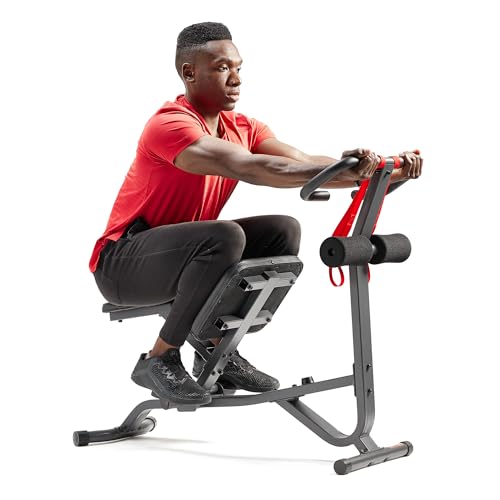
Sunny Health & Fitness Full Body Stretch Machine Back Stretcher Black
Picked as a relevant option in this category.
View on AmazonNitrofit Limber Pro Stretch Machine with Patented Adjustable Sliding Seat and Heavy, Stable Frame, Premium Full‑Body Stretch Trainer for Back, Hamstrings, Hips & Calves, Flexibility, Mobility & Rehab
Chosen because it specifies Stable Frame and Premium Full‑Body Stretch Trainer for Back.
View on AmazonIdealStretch Leg Stretcher Hamstring Stretcher Hip Stretcher Patented
Picked as a relevant option in this category.
View on Amazon
HXD-ERGO Stretching Machine, Full Body Back & Hamstring Stretcher
Chosen because it specifies Full Body Back & Hamstring Stretcher.
View on AmazonQuick picks by situation
| Situation | Best machine type | What to prioritize | Typical 2026 market range |
|---|---|---|---|
| First machine or limited budget | Compact seated hamstring stretcher | At least 90 degrees of leg-angle adjustment, padded seat, locking adjustment points | $100–$220 |
| Progressing toward front splits | Front-split machine with independent leg adjustment | Independent left/right controls, 180-degree or greater total range, wide base | $180–$450 |
| Side-split training | Multi-direction split machine | Hip-support padding, gradual center adjustment, anti-tip frame | $250–$650 |
| Frequent home use | Heavy-duty adjustable stretcher | Steel frame, replaceable pads, low play in hinges, user capacity of at least 300 pounds | $300–$800 |
| Small apartment or shared room | Folding seated unit | Folded depth below 18 inches, transport wheels or a carry handle, no permanent floor anchors | $120–$350 |
What separates the best stretching machines
Adjustment range that supports gradual progress
A wide advertised range is useful only if the machine moves in small, controllable increments. Look for a crank, wheel, or lever that changes the position gradually rather than a few widely spaced holes. A useful target is adjustment increments of roughly 2–5 degrees, or a threaded mechanism that allows continuous positioning. Independent leg adjustment is especially valuable because most people do not have identical left- and right-side flexibility.
For seated hamstring machines, a backrest angle from approximately 90 to 120 degrees gives a beginner several manageable positions. Split machines should provide enough range to begin well short of a split and continue beyond the user’s current limit. Avoid treating a claimed 180-degree opening as a training requirement; it is simply the upper limit of the mechanism.
Padding and contact-point design
Padding should support the pelvis, thighs, knees, and ankles without forcing the body into one position. About 1.5–2.5 inches of medium-firm foam is a practical range for most home machines. Very soft foam feels comfortable initially but can compress unevenly, making the pelvis shift as tension increases. Very thin padding can create pressure at the sit bones, knees, or inner thighs.
Inspect the shape as well as the thickness. A narrow roller may concentrate force behind the knee, while a broad, rounded support spreads contact over the thigh. Upholstery should be sealed or wipeable, with stitched seams that do not sit directly under a pressure point. Removable covers are useful because sweat and skin oils are among the first causes of odor and surface cracking.
Frame stability matters more than maximum range
A stable machine should remain planted when you turn the adjustment handle at the end of a range. Prefer a broad steel base, rubber feet, and a low center of gravity. For a split machine, a footprint around 30–40 inches wide and 40–55 inches long is common; smaller frames save space but can rock when the legs are extended.
Check the stated user capacity, but do not select a machine solely by the headline number. A 300-pound capacity can still feel unstable if the base is narrow or the central hinge flexes. Welded steel generally offers less movement than a lightweight aluminum frame, while steel tubing with powder coating is easier to maintain than unfinished metal. A small amount of normal handle movement is acceptable; side-to-side movement at the seat or leg supports is not.
Head-to-head: seated stretcher versus split machine
| Criterion | Seated hamstring stretcher | Front/side split machine |
|---|---|---|
| Main use | Hamstrings, calves, hips, and gentle trunk positioning | Progressive front-split or side-split range |
| Typical footprint | Approximately 24–32 by 30–42 inches | Approximately 30–40 by 40–55 inches |
| Typical weight | 18–35 pounds | 25–55 pounds |
| Adjustment complexity | Usually one backrest or leg adjustment | Often two or three independent adjustments |
| Best fit | Beginners, general mobility work, compact rooms | Users with a specific split goal and regular practice |
| Main drawback | Less useful for true split-specific positioning | More expensive, larger, and easier to overdo |
Choose the seated design if you want a machine that supports several lower-body stretches without dominating a room. Choose a split machine when its geometry matches your specific goal and you will use it at least two or three times per week. A machine with more levers is not automatically better: each extra hinge, rail, and locking point adds assembly work and another part that may develop play.
Fit, storage, and assembly checks before buying
- User height: verify the minimum and maximum seat-to-foot or seat-to-ankle adjustment, not just the advertised height range. A tall user may need longer rails, while a shorter user needs supports that do not force the knees into hyperextension.
- Body width: measure the seat and inner-thigh clearance. If the side supports press into the hips before the legs are stretched, the machine is poorly matched even if its weight capacity is adequate.
- Room clearance: add at least 12 inches around the operating sides so the handle, legs, or footplates can move freely. Measure the folded size if the machine will go into a closet.
- Assembly: expect 30–90 minutes for a simple seated unit and 60–150 minutes for a multi-axis split machine. Count the number of bolts and confirm that adjustment hardware is included.
- Floor protection: rubber feet help on hard floors, but a thin exercise mat can reduce sliding and protect wood or vinyl.
A simple ownership calculation
Frequency should influence how much you spend. Suppose a $240 machine is used three times per week for two years:
3 sessions × 52 weeks × 2 years = 312 uses. At the purchase price alone, that is about $0.77 per use. If replacement pads or a new handle assembly add $35 during that period, the cost rises to about $0.88 per use. By contrast, a $140 compact model used once weekly for the same two years costs about $1.35 per use before maintenance.
The cheaper machine is therefore not automatically the better value. Buy the heavier model when you will use it frequently, need a wider fit range, or expect multiple household users. For occasional stretching, a simpler machine with fewer parts is usually the more sensible choice.
How to set up and use a stretching machine safely
- Place the machine on a level, nonslip surface and tighten every frame bolt before the first session.
- Set the supports so your pelvis stays square and your knees remain comfortably aligned. Begin with the machine well inside your maximum range.
- Move into position over several seconds, using the crank or lever without bouncing or forcing the end stop.
- Hold a moderate stretch for roughly 15–30 seconds, breathe normally, and release slowly. Start with one or two rounds rather than chasing a larger angle.
- After several sessions without lingering soreness or joint discomfort, increase the range by a small adjustment. Do not increase range and holding time at the same session.
Durability and maintenance realities
Foam and vinyl usually wear before the steel frame. Wipe contact surfaces after use with mild soap and water, then dry them fully; avoid soaking foam or applying harsh solvents to vinyl. Inspect the adjustment screw, hinge bolts, welds, and foot caps every few weeks. Tighten loose fasteners, but do not overtighten pivots that are designed to move.
Keep threaded cranks clean and apply only the lubricant specified by the manufacturer. Dirt on a screw can make the handle feel rough and accelerate wear. Replace cracked pads, missing end caps, or bent locking pins rather than compensating with extra force. The most common avoidable mistake is using the machine as a lever to force a deeper position; this transfers load to hinges, upholstery, and joints instead of creating a controlled progression.
Final buying recommendation
For most people, the best stretching machine is a stable seated model with continuous or fine-grained adjustment, medium-firm washable padding, a user capacity of at least 250–300 pounds, and a footprint that can remain assembled. Choose a larger split machine only when split training is the clear objective and the frame provides independent, gradual adjustments. Whichever type you buy, prioritize a secure fit and repeatable positioning over the biggest range or the lowest price.
Write Your Review
No reviews yet. Be the first to share your experience!