
Key takeaways
What's inside
Best freestanding pull-up bar decisions come down to two numbers that rarely appear together in a listing: the floor area the frame occupies, and the ceiling height it needs once you are hanging from it. Both are larger than most people estimate before ordering. Both are fixed once the frame is built.
As an Amazon Associate we earn from qualifying purchases at no extra cost to you. Product prices and availability are accurate as of the date shown and are subject to change.
As an Amazon Associate we earn from qualifying purchases at no extra cost to you. Product prices and availability are accurate as of the date shown and are subject to change.



By Chris Parker
🛒 Best Price Today on Amazon
Prime members get fast, free shipping on everything above, plus member-only deals. New members get a 30-day free trial — cancel anytime.
Start 30-Day Prime Free Trial →See Today’s Amazon DealsHow to Choose the Best Freestanding Pull-Up Bar
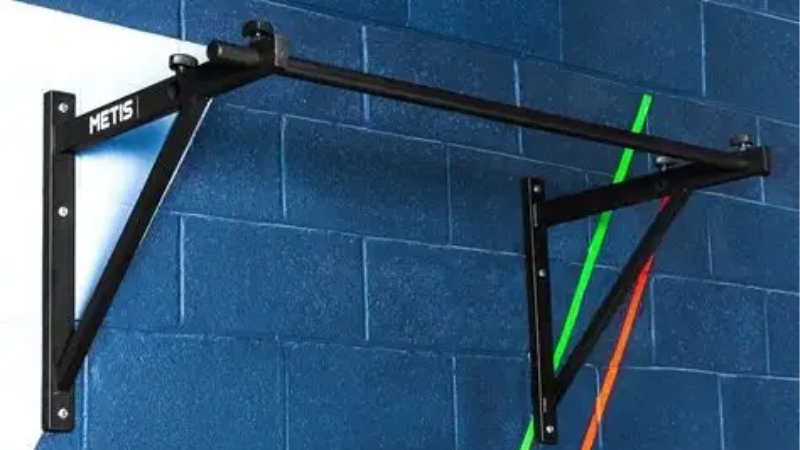
The best freestanding pull-up bar trades floor space for the freedom of not drilling into anything. That trade is worth making in a rented flat and pointless in a garage with solid walls. Footprint, height and stability under load are the three things to check before anything else. Drilling is the trade you are avoiding.
Footprint, Height and Ceiling Clearance
Power towers occupy roughly 4 x 4 ft (1.2 x 1.2 m) of floor, and you need about 2 ft (60 cm) of clearance around the frame to use it safely. Most stand 7 to 7.5 ft (213 to 229 cm) tall, which needs a ceiling of at least 8 ft (2.4 m). Measure to the lowest fixture rather than the plaster. Pipes end more purchases than ceilings.
Height clearance is the specification people get wrong. You need room for your head above the bar at the top of a repetition, which is roughly 12 in (30 cm) above the bar itself. In a room with an 8 ft ceiling, that rules out the taller frames entirely. Head clearance is the number people forget. Measure with your arms extended.
User Weight Limits and Frame Stability
Stated capacities usually run from 250 lb (113 kg) to 400 lb (181 kg), and the figure tracks how solid the frame feels rather than being a hard limit. Kipping, swinging and dynamic movements load the frame far more than a slow repetition does, which the rating rarely reflects. Treat the figure as a build-quality guide.
Base design matters more than steel gauge. A wide base with rear stabiliser feet resists the forward rocking that happens at the top of a pull-up, while a narrow footprint saves space and wobbles. Check whether the model has bolt-down holes even if you never use them. A wide base beats thicker steel here.
Grip Options, Dip Bars and What Else It Does
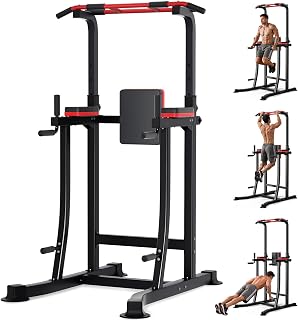
Most freestanding frames are power towers rather than bare bars, adding dip handles, a captain’s chair and push-up grips. That is genuine value if you use them, and wasted floor space if you do not. A bare pull-up frame takes less room and costs less to buy. Decide which stations you will genuinely use.
Grip spacing and bar diameter change how the bar feels. Diameters around 1.25 in (32 mm) suit most hands; thicker bars make grip the limiting factor sooner. Multi-grip bars add neutral and wide positions, which matters more for shoulder comfort than for training variety. Neutral grips help shoulders more than variety does.
Top Picks: Frames That Fit Real Rooms
These six run from a compact power tower to a full cage that happens to include a bar. Buy for the footprint and the ceiling first. Each entry names a real drawback, since every frame here trades stability against floor space in one direction or the other. Footprint decides the best freestanding pull-up bar for your room.
| Frame | Type | Extras | Best for |
|---|---|---|---|
| Sportsroyals Power Tower | Power tower | Dips, knee raise | All-round pick |
| Stamina 1690 | Power tower | Dips, push-ups | Compact rooms |
| Weider Power Tower | Power tower | Dips, knee raise | Budget |
| Fitness Reality 810XLT | Power cage | Rack pulls too | Barbell users |
| Ultimate Body Press | Dip station | Dips only | Adding dips |
| Rubber gym matting | Flooring | Not applicable | Under the frame |
Sportsroyals Power Tower
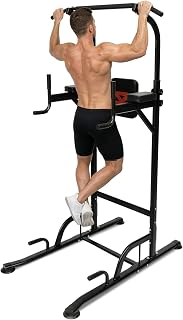
This is the default power tower: pull-up bar, dip handles, a padded back rest for knee raises and push-up grips at the base. For a single piece of equipment covering most bodyweight training, it does more per square foot of floor than anything else here. Four stations in one frame is the appeal. Floor space is what it costs you.
Assembly takes a couple of hours and the frame rocks slightly under dynamic movement, which is normal at this price. Check the stated height against your ceiling before ordering. The padded sections wear before the frame does, and replacements are not always available. Some movement under load is normal at this price.
Stamina 1690 Power Tower
Stamina’s tower is the one to look at when floor space is genuinely tight, since the base is narrower than most. It covers pull-ups, dips and push-ups without demanding the full 4 x 4 ft footprint that larger towers occupy in the middle of a room. It is the best freestanding pull-up bar for tight rooms.
A narrower base means more movement under load, so this is not the frame for kipping or dynamic work. The stated capacity is lower than the heavier towers as well. Buy it for the footprint, and accept that stability is what you have traded away for it. Controlled repetitions are what it suits. Kipping needs a wider base.
Weider Power Tower
The budget entry covers the same four stations at a lower price, which makes it a sensible way to find out whether a tower will actually be used before spending properly. Assembly is straightforward and the frame does the job for steady, controlled repetitions. Price is the main argument in its favour.
Steel gauge and padding quality are both a step down, the frame flexes more under load, and the finish marks easily. Check the capacity against your body weight with a sensible margin. Treat it as a two to three year purchase rather than a permanent fixture. Check the capacity with a sensible margin.
Fitness Reality 810XLT Power Cage
If a barbell is already in the room, a cage gives you a pull-up bar plus rack pulls and safe pressing for a similar footprint to a power tower. That makes it the better buy for anyone whose training is not purely bodyweight based. One frame then covers barbell work as well. Height is the constraint here rather than floor area.
Cages need more height than towers, usually about 7 ft (2.1 m) plus clearance, and assembly takes longer. The pull-up bar itself is basic with no neutral grips. Measure to the lowest ceiling obstruction before ordering, since a basement pipe will end the purchase entirely. Assembly takes longer than a tower does.
Ultimate Body Press Dip Station
If you already have a pull-up bar and only need dips, a standalone dip station takes far less room than a full tower and costs considerably less. It also moves out of the way between sessions, which a power tower never really does once assembled. It pairs with a doorway or wall bar. Dips alone need very little floor space.
It does not include a pull-up bar, so this is an addition rather than an alternative. Lighter dip stations can shift on smooth floors under a heavy user. Check the stated capacity and put matting underneath, particularly if you add weight to your dips. It is an addition rather than an alternative. Capacity matters if you add a belt.
Rubber Gym Matting
Matting under a freestanding frame is not decoration. It stops the feet marking or denting flooring, it reduces the slight movement that every tower shows under load, and it takes noise out of the floor below when you drop off the bar at the end of a set. It also steadies the frame noticeably. Landing noise drops as well.
Mats are heavy to carry alone and smell strongly for the first fortnight after unwrapping. Air them outside before laying them down, and measure the frame base plus clearance first, since cutting thick rubber at home is slow work that rarely gives a straight edge. Measure the base plus clearance first.
Frequently Asked Questions
Four questions cover most of what people ask before buying a frame. They are about space, stability and mounting, because those three decide whether a tower gets used daily or becomes the most expensive clothes rail in the spare room within a month. Space answers most of them. Footprint and ceiling decide the purchase.
How much space does the best freestanding pull-up bar need?
Roughly 4 x 4 ft (1.2 x 1.2 m) of floor plus about 2 ft (60 cm) of clearance around it, and a ceiling of at least 8 ft (2.4 m). Measure to the lowest obstruction, since light fittings and pipes matter more than the ceiling height itself. Clearance around the frame counts as well. Two feet on each side is sensible.
Do I need to bolt it to the floor?
Usually not for controlled repetitions, but dynamic movement is a different matter. Check the manual for your model, since some list bolting as a requirement for certain exercises. Matting and a wide base handle most of the movement that people find unnerving. Follow the manual rather than the forum.
Is the best freestanding pull-up bar better than a doorway one?
It is more stable, takes far more space and costs several times as much. A doorway bar is the right answer in a small flat with no room for a frame; a freestanding bar is the right answer when the space exists and dips matter too. Cost and footprint separate the two clearly. Neither is wrong for the right room.
What weight limit do I need?
Take your body weight and add a clear margin, particularly if you ever add a weight belt. Ratings between 250 lb (113 kg) and 400 lb (181 kg) are typical. Treat the figure as a guide to build quality rather than as a precise engineering limit. Add a margin for belts and dynamic work. Ratings track build quality more than physics.
See More:
Final Thoughts
The best freestanding pull-up bar is the one whose footprint and height suit your room, since neither can be fixed after delivery. Measure the floor, the ceiling and the lowest fixture first, buy a wider base if you train dynamically, and put rubber matting underneath it. Then use it rather than hanging clothes on it.





Write Your Review
No reviews yet. Be the first to share your experience!