
Key takeaways
What's inside
Best cordless jump rope shopping exists for one reason: ceilings. A standard rope needs about 12 in (30 cm) of clearance above your raised hands, and plenty of rooms simply do not have it. Ropeless handles remove the arc while keeping the rhythm and the footwork. Ceilings decide this category entirely.
As an Amazon Associate we earn from qualifying purchases at no extra cost to you. Product prices and availability are accurate as of the date shown and are subject to change.
As an Amazon Associate we earn from qualifying purchases at no extra cost to you. Product prices and availability are accurate as of the date shown and are subject to change.


By Chris Parker
🛒 Best Price Today on Amazon
Prime members get fast, free shipping on everything above, plus member-only deals. New members get a 30-day free trial — cancel anytime.
Start 30-Day Prime Free Trial →See Today’s Amazon DealsHow to Choose the Best Cordless Jump Rope
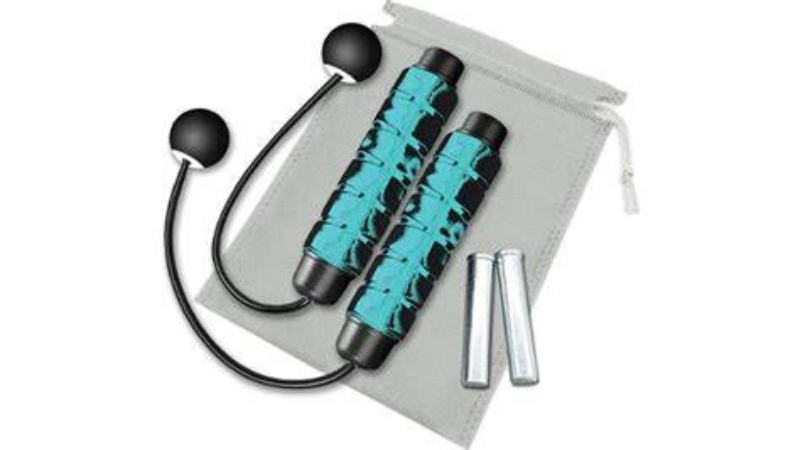
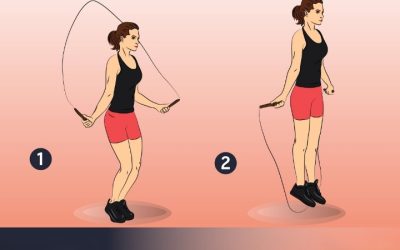
A ropeless rope is a pair of handles with weighted balls on short cords, spun by the wrists while you jump. It keeps the timing and the impact and loses the feedback a real cord gives when the arc collapses, which is the honest trade you are making. Feedback is what you give up. Timing and impact both survive the change.
Ball Weight, Cord Length and Feel
The weighted balls provide the momentum that would normally come from the cord, and heavier balls feel closer to a real rope. Short cords of 4 to 6 in (10 to 15 cm) are standard, and longer ones exaggerate the swing without adding anything useful to the movement. Ball weight drives the whole feel. Longer cords exaggerate without helping.
Handle weight matters as much as ball weight. Balanced handles let the wrists set a rhythm; light plastic ones make the motion feel disconnected from the jump. If a set includes both cordless balls and a normal cord, check the handles work properly with both. Balance matters more than materials. Convertible sets should work in both modes.
Counting, Sensors and What They Miss
Most cordless ropes count with a sensor in the handle rather than a real revolution, so the number is an estimate. It usually tracks well at steady pace and drifts during fast intervals or sloppy technique, which is worth knowing before building sessions around the count. Counts are estimates rather than measurements.
App-connected models add session history over Bluetooth. That is useful if you train by numbers, and irrelevant if you train by time. Check whether the handles work without the app at all, since some models lose the display entirely when the phone is not nearby. Check the offline behaviour first. Bluetooth adds history rather than accuracy.
Ceiling Height, Footprint and Flooring
Ceiling clearance is the whole reason the best cordless jump rope category exists. Ropeless handles need roughly 3 x 3 ft (0.9 x 0.9 m) of floor and no vertical arc at all, which makes them workable under a 7 ft (2.1 m) ceiling where a corded rope is not. That single fact drives the category. Ropeless handles need no vertical arc at all.
Impact does not disappear, though. You are still landing repeatedly on the same spot, so a 1/2 in (12 mm) rubber mat still matters for the floor and for the neighbours below. Measure the area and check the light fittings, since the balls swing wider than people expect. Landing impact does not disappear.
Top Picks: Ropeless and Convertible Options
The category is thin, so several picks below are convertible sets that ship with both cordless balls and a normal cord. That is usually the better buy, since most people want the arc outdoors and the ropeless mode indoors. Each entry names a genuine drawback. Convertible sets are usually the better buy.
| Product | Type | Counts? | Best for |
|---|---|---|---|
| Te-Rich | Convertible | Basic | Low ceilings |
| RENPHO Smart | Convertible | App | Tracking |
| Redify | Convertible | Basic | Weighted feel |
| Tangram Smart | Corded | LED | Counting jumps |
| Crossrope Get Lean | Corded | No | Real arc |
| Rubber matting | Flooring | No | Landing area |
Te-Rich Convertible Rope
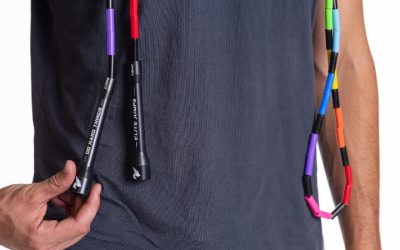
Te-Rich is the most common convertible set: a normal PVC cord plus short cordless balls and small handle weights. That combination covers a low-ceilinged room indoors and a normal rope session outdoors without buying two separate products at full price. It is the best cordless jump rope for most rooms.
The handle weights load the wrists rather than the cord, which feels less controlled than a rope-weighted design, and build quality is mid range. Check the listing carefully, since the exact contents differ between versions sold under very similar product names. Handle weights load the wrists instead.
RENPHO Smart Rope
The smart version adds Bluetooth counting and session history to the same convertible idea, which suits anyone training by numbers rather than by the clock. The app logging is the reason to choose it over a plain set at roughly half the price. Logging is the reason to pay more. Sensor counts drift when technique slips.
Sensor counting drifts during fast intervals, and the handles need charging. Check what the display does without the phone nearby, since some functions depend on the app. Treat the count as a good estimate rather than an exact figure for interval programming. Charging the handles becomes routine. Treat the number as an estimate.
Redify Convertible Rope
Redify sits at the heavier end of this category, with a weightier cord and handle options that make the corded mode feel closer to proper skipping. For someone rebuilding rhythm after a break, the extra weight helps the timing more than the counting does. Weighted cords suit a rebuild well. Timing returns before speed does.
It is not a rope for double unders, and the cord takes a permanent set if stored coiled tightly. Hang it on a hook instead. The cordless mode is a secondary feature here rather than the main event, so check the ball weight before ordering. Cordless is secondary on this model. Storage matters more than it sounds.
Tangram Smart Rope
If your ceiling actually allows a cord, the LED display in the arc counts jumps in mid-air, which no cordless sensor matches for accuracy. It is included here as the honest alternative: if you have the clearance, a real rope with real counting beats an estimate. Accuracy is where cords still lead. It only helps where the ceiling allows a cord.
It needs the full arc, so it solves nothing in a low room. The handles need charging and it costs several times a plain rope. Measure your ceiling clearance before considering it, since it is only an option where a corded rope fits in the first place. Clearance decides whether it is an option. Measure before considering it at all.
Crossrope Get Lean Set
The other corded comparison: two swappable weighted cords at 1/4 lb (0.11 kg) and 1/2 lb (0.23 kg) on shared handles. It is the strongest argument against going cordless, provided the room has the height, because the weighted arc trains something a sensor cannot replicate. It is the argument against going cordless.
It is a premium purchase, the cords are sized by height rather than trimmed, and it needs the full vertical clearance. In a 7 ft (2.1 m) room it is unusable. Buy it only if your ceiling and your budget both allow for it. Low rooms rule it out completely. It is the strongest case against the best cordless jump rope format.
Rubber Gym Matting
Going cordless removes the arc but not the landing. A 1/2 in (12 mm) rubber mat protects laminate and tile from repeated impact and takes a useful amount of noise out of the floor below, which matters more in a flat than the rope choice itself does. Impact is unchanged by removing the cord. Neighbours hear landings rather than arcs.
Mats are heavy to carry alone and smell strongly for the first fortnight after unwrapping. Air them outside before laying them down, and measure the landing area first, since cutting thick rubber at home is slow work that rarely gives a straight edge. Measure the landing area first. Air the mat outside before laying it.
Frequently Asked Questions
These four questions cover most of what people ask before going ropeless. They are about what the format does and does not replicate, since the honest answer is that it solves a ceiling problem rather than being a better rope in general. Ceilings answer most of them. The format solves height, not technique.
Is the best cordless jump rope as good as a real one?
For conditioning and timing, close. For technique, no, because a cord gives feedback when the arc collapses and a ropeless handle does not. Most people who use both keep the cordless mode for low rooms and the cord for everywhere else. Both modes have a place at home. Convertible sets cover both without compromise.
What ceiling height do I need?
Very little, which is the point. Ropeless handles need no vertical arc, so a 7 ft (2.1 m) ceiling works where a corded rope needs roughly 12 in (30 cm) above your raised hands. Watch the light fittings, since the balls swing wider than expected. Light fittings still matter here. Balls swing wider than a cord suggests.
Are the jump counts accurate?
They are estimates from a handle sensor rather than counted revolutions. Accuracy is decent at steady pace and drifts during fast intervals or when technique slips. If exact counts matter for your programming, an LED corded rope is the more reliable option. Steady pace tracks better than intervals. Handle sensors estimate rather than count.
Do I still need a mat?
Yes. The arc disappears but the landing does not, and repeated impact on the same spot marks flooring and carries through a slab. A 1/2 in (12 mm) rubber mat handles both problems and costs less than most of the ropes on this list. Neighbours notice the landing, not the arc. Matting is cheaper than any rope here.
See More:
Final Thoughts
The best cordless jump rope is a solution to a ceiling problem rather than an upgrade over a cord. Buy a convertible set so you have both modes, treat the counting as an estimate, and put a mat down, because the landing is unchanged either way. Then train under any ceiling. That is what the best cordless jump rope is for.



Write Your Review
No reviews yet. Be the first to share your experience!