
Key takeaways
What's inside
Best home gym set ups are built around the room rather than around a wish list. A corner of a bedroom, a spare room and a single-car garage impose completely different limits on ceiling height, floor loading and noise, and equipment that works well in one of them is frequently unusable in the next one.
As an Amazon Associate we earn from qualifying purchases at no extra cost to you. Product prices and availability are accurate as of the date shown and are subject to change.




As an Amazon Associate we earn from qualifying purchases at no extra cost to you. Product prices and availability are accurate as of the date shown and are subject to change.
By Chris Parker
🛒 Best Price Today on Amazon
Prime members get fast, free shipping on everything above, plus member-only deals. New members get a 30-day free trial — cancel anytime.
How to Plan the Best Home Gym Set Ups for Your Space
The best home gym set ups all share one thing: nothing in them was bought before the room was measured. Four constraints do the eliminating, in this order — floor area, ceiling height, what the floor can take, and how much noise can leave the room without causing a problem for someone else.
Start With the Room, Not the Equipment List
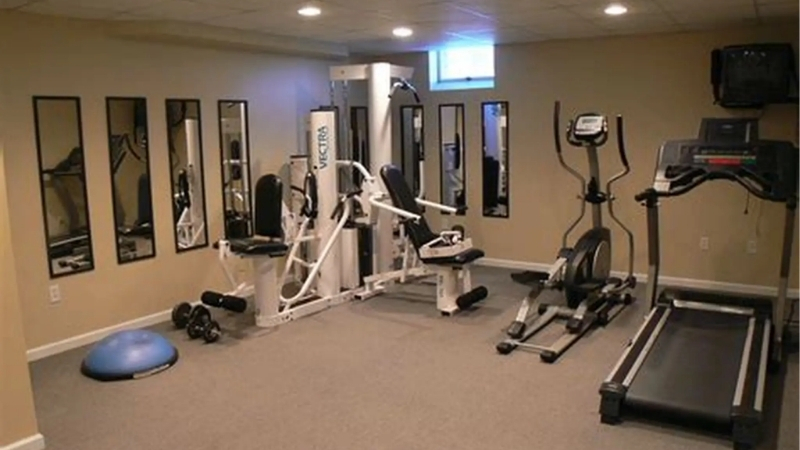
Write down what the space has to do besides training. A corner of a bedroom means everything must pack away, which rules out anything that cannot be lifted by one person. A spare room allows a permanent footprint and a bench left standing. A garage allows both, plus the noise tolerance that changes what you can safely drop.
That decision cascades through every later choice. Doorway and wall-mounted equipment suits rooms that have other jobs. Freestanding racks and benches suit dedicated space. Trying to force a garage build into a bedroom is the most common way a setup ends up half-used and resented within a few months.
Floor Area, Ceiling Height and Working Envelope
Working envelope in the best home gym set ups is bigger than equipment footprint, and this is where plans go wrong. A bench occupies roughly 4 x 1.5 ft (122 x 46 cm) but needs about 7 x 5 ft (213 x 152 cm) around it to press and rack safely. A rack needs clearance on all four sides, not just its own base.
Ceiling height decides more than any other single measurement in the room. Overhead pressing needs your standing height plus around 24 in (61 cm) for a bar at lockout, and pull-ups need roughly 12 in (30 cm) above your head at the top. Measure the real floor area and the ceiling height of the room before ordering anything.
Flooring and Noise Before Anything Else
Flooring is not a finishing touch, it is a prerequisite. EVA puzzle tiles at around 0.5 in (13 mm) handle bodyweight work, light dumbbells and general floor exercises perfectly well. They do not handle repeated contact with cast iron, which dents them permanently, and neither foam nor rubber makes a suspended timber floor quiet.
Structural noise is the constraint in flats. Low-frequency impact from a set-down kettlebell or a jump rope passes into the floor and reaches the flat below regardless of matting. That fact alone eliminates certain equipment from certain buildings, and it is better established before delivery than afterwards.
What Each Budget Tier Actually Buys
At the entry tier the best home gym set ups are built from tools that need no fixings and no floor: a doorway pull-up bar, a band set, one kettlebell, a mat. That is a genuinely complete beginner setup covering every major movement pattern, and it fits under a bed when it is not in use.
The mid tier adds load rather than variety. Adjustable dumbbells replace a rack of fixed ones, and an adjustable bench unlocks pressing, rows and hip work. This is where most home builds should stop, because the jump in capability per pound spent is larger here than anywhere above it.
Above that you are buying a rack, a barbell and plates, which need a dedicated room, a ceiling, and a floor that can take the load. The capability is real, and so is the commitment. Nothing at that tier belongs in a room that also has to be a bedroom or a living room.
Top Picks: 6 Pieces That Anchor Different Set Ups
These six are the items that appear across almost all the best home gym set ups, listed against the kind of space each one suits. The table gives the working footprint rather than the box dimensions, because that is the figure that decides whether a piece fits your room.
| Item | Suits Which Setup | Working Footprint | Unlocks | Hard Limit |
|---|---|---|---|---|
| Whatafit Resistance Bands | Any, including bedrooms | Approx. 6 x 6 ft (183 x 183 cm) | Push, row, curl, press | Light for legs |
| ProsourceFit Pull-Up Bar | Bedroom, hallway, rental | Doorway only | Vertical pull | Needs door trim |
| Amazon Basics Kettlebell | Any with a mat | Approx. 6 x 6 ft (183 x 183 cm) | Hinge, squat, carry | Fixed weight, loud |
| Bowflex SelectTech 552 | Spare room, garage | Cradles plus lifting space | Legs, press, row | Must not be dropped |
| Flybird Adjustable Bench | Spare room, garage | Approx. 7 x 5 ft (213 x 152 cm) | Bench, incline, rows | Needs permanent space |
| Titan Fitness T-3 Power Rack | Garage or dedicated room | Base plus clearance all sides | Squat, press, pull-up | Needs ceiling height |
Whatafit Resistance Bands Set
The highest capability per cubic inch of anything you can buy. Five stackable tube bands with handles, ankle straps and a door anchor cover chest press, rows, overhead press, curls and lateral work, and the entire set packs into a shoe box when the room has to be a bedroom again.
Combined resistance is typically quoted around 150 lb (68 kg) at full stretch, and the load in your working range is lower than that headline suggests. The plastic clips fail before the latex does, so inspect them regularly. Legs outgrow band tension within a few months of consistent training.
ProsourceFit Multi-Grip Lite Pull-Up Bar
The vertical pull is the pattern most home builds miss, and a doorway bar covers it for very little money and zero floor space. This one is listed at 300 lb (136 kg), fits openings of roughly 24-32 in (61-81 cm), and offers wide, neutral and close grips so hand position can vary.
It hooks over the door casing, so flush modern frames will not work and painted trim marks unless you pad the contact points. Foam grips compress within a season. Treat the rating as static: no kipping, no swinging, and no dropping off the bar onto a hard floor.
Amazon Basics Cast Iron Kettlebell
One kettlebell covers the hip hinge, which is the pattern that bands and dumbbells both handle badly. Single-piece cast iron with a wide handle is all that is required for swings, goblet squats, carries and get-ups, and one sensibly chosen weight stays useful for a long time.
It is fixed weight, so progression means buying another, and it is the loudest item on this list for anyone living below you. Handle finish varies between production runs and sometimes needs light sanding. Always set it down on a mat, and never let it drop from overhead.
Bowflex SelectTech 552
Fifteen weight settings from 5 to 52.5 lb (2.3 to 24 kg) per dumbbell in one pair of cradles, replacing roughly fifteen pairs of fixed dumbbells. Increments are 2.5 lb (1.1 kg) up to 25 lb (11 kg), which is fine enough for genuine progression on presses and rows rather than guessing.
The dial mechanism is the weak point and the reason the manual forbids dropping them: the plates disengage in the cradle, and impact damages the selector. They are also long at full weight, which makes tight positions awkward. Above 25 lb (11 kg) the steps widen to 5 lb (2.3 kg).
Flybird Adjustable Weight Bench
A bench is the piece that converts a pile of dumbbells into an actual training setup, unlocking flat and incline pressing, supported rows, step-ups and hip work. This one folds flat for storage, adjusts through several back angles, and is listed at around 700 lb (318 kg) combined capacity.
Folding benches flex more than fixed ones under heavy pressing, which is felt rather than dangerous at sensible loads. The pad is firm and narrow by commercial standards. It still needs a working envelope of roughly 7 x 5 ft (213 x 152 cm), which is more room than the folded size suggests.
Titan Fitness T-3 Power Rack
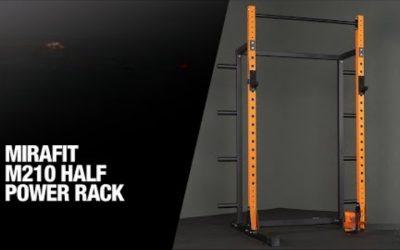
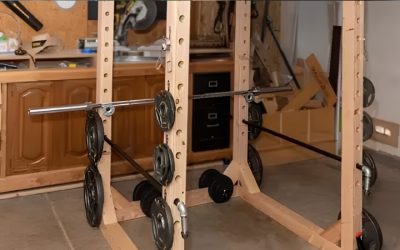
The dividing line between a home setup and a home gym. Eleven-gauge steel uprights with close hole spacing in the bench range let you squat, press and pull safely alone, and the rack becomes the anchor that everything else in a garage build arranges itself around.
It needs a dedicated room, a floor that can take concentrated point loads, and ceiling height of roughly 7 ft (213 cm) plus clearance for a bar overhead. Assembly is a two-person job. Nothing about it suits a bedroom, a rental, or an upstairs room with neighbours below.
Frequently Asked Questions
Most questions about the best home gym set ups are about space and sequencing rather than about brands. These four cover the minimum area that is genuinely workable, whether a bedroom build is realistic, the ceiling height a rack demands, and whether to buy everything at once.
How much space do I actually need?
For bodyweight, bands and a kettlebell, roughly 6 x 6 ft (183 x 183 cm) of clear floor is enough. Add a bench and dumbbells and you want around 8 x 8 ft (244 x 244 cm). A rack build needs a dedicated 10 x 10 ft (305 x 305 cm) or thereabouts once clearance is included.
Can I build a home gym in a bedroom?
Yes, provided everything packs away and nothing gets dropped. A doorway pull-up bar, a band set, a kettlebell and a mat cover every movement pattern and store under a bed. What does not work is iron on a suspended upstairs floor, which is a noise problem before it is a structural one.
What ceiling height do I need for a rack?
Around 7 ft (213 cm) for the rack itself, plus enough room to press a bar overhead, which means your standing height plus roughly 24 in (61 cm). Pull-ups inside the rack need about 12 in (30 cm) above your head. Basements and garages with pipework are the usual problem.
Should I buy everything at once?
No. Buy the pattern you currently cannot train, use it for a month, then buy the next. Most people already own bodyweight squats, lunges and push-ups, so the vertical pull is the honest first gap. Buying a full setup at once reliably produces at least one piece that never gets used.
See More:
- Best home pull-up bar
- Best at home pull up bar
- Best in house pull up bar
- Best rated ab roller
- Best yoga travel mat
Final Thoughts
The best home gym set ups are designed backwards from the room. In a bedroom everything must pack away: a doorway bar, bands, a kettlebell, a mat. In a spare room, adjustable dumbbells and a bench give the biggest jump per pound spent. A rack belongs only in a garage.

Write Your Review
No reviews yet. Be the first to share your experience!