
Key takeaways
What's inside
Best home gym equipment for beginners is not a machine – it is a small set of pieces chosen around two numbers: how finely the weight increases, and how much floor the setup occupies. Get those two right and the room keeps working for years. This guide covers both, then five specific picks that fit together.
As an Amazon Associate we earn from qualifying purchases at no extra cost to you. Product prices and availability are accurate as of the date shown and are subject to change.




As an Amazon Associate we earn from qualifying purchases at no extra cost to you. Product prices and availability are accurate as of the date shown and are subject to change.
By Chris Parker
🛒 Best Price Today on Amazon
Prime members get fast, free shipping on everything above, plus member-only deals. New members get a 30-day free trial — cancel anytime.
How to Choose the Best Home Gym Equipment for Beginners
Beginners overbuy machines and underbuy load. The two specifications that decide whether a setup keeps working are the weight jump between settings and the floor the gear occupies when set up. The four sections below cover both of them, plus noise, flooring and a staged buying budget. It is a small detail that quietly adds up.
Weight Increments Decide How Long the Gear Lasts
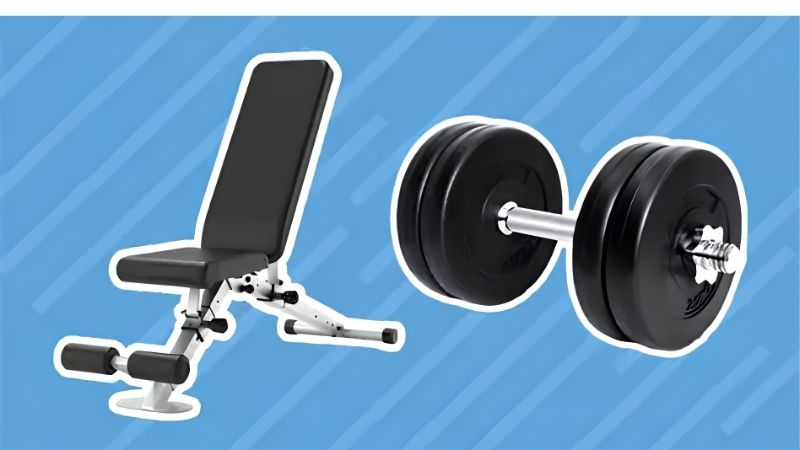
Progressive overload needs small, repeatable jumps. Adjustable dumbbells that move in 2.5 lb (1.1 kg) steps at the low end let a beginner add load weekly on presses and rows. Sets that jump 5 lb (2.3 kg) per hand force a 10 lb total increase, which stalls upper-body lifts long before leg work is challenged.
This is also where the price floor bites. Below the mid tier, adjustable sets switch from steel plates to plastic-shelled weights and from 2.5 lb to 5 lb increments, and the selector mechanism changes from a machined dial to a moulded pin. The mid tier is where the largest number of usable options sit.
Top-end load matters less than beginners expect. A pair reaching 50 lb (22.7 kg) per hand covers years of pressing and rowing progress for most people, and legs can be loaded with tempo, single-leg variations and higher reps rather than more iron. Buy for the increment first and the ceiling weight second.
Footprint: What a Beginner Setup Actually Occupies
A realistic starter kit needs less room than most people assume. A pair of adjustable dumbbells with cradles takes roughly 4 sq ft (0.37 sq m) against a wall. A folding bench stores upright in about 2 sq ft. The training area itself is the real demand: allow at least 6 x 6 ft (1.8 x 1.8 m) of clear floor.
Ceiling height sets the limits nobody checks. Standing overhead press with 50 lb dumbbells needs roughly 24 in (60 cm) above your extended reach, and a doorway pull-up bar requires clearance to hang without your knees hitting the floor. Measure the exact area and the ceiling above it before ordering anything.
This is also the current gap in the market. Most strength gear is still designed around a two-car garage, and genuinely compact equipment that folds or stores flat remains a smaller, thinner category than it should be. Beginners in flats end up paying a premium simply to get the same load in less space.
Noise, Flooring and Neighbours
Dropped weight is the fastest way to end a home training habit in a shared building. Most adjustable dumbbells explicitly cannot be dropped – the shells crack and the selector mechanism jams – so the ability to set weights down quietly is a hard design requirement rather than a simple courtesy to neighbours.
Hardwood and laminate mark under steel and cast iron within weeks. A 1/2 in (12 mm) EVA foam base under the working area absorbs impact and protects the floor; rubber tiles do the same job with more mass and less bounce. On upper floors, that layer also cuts the low-frequency thud that carries through ceilings.
Build the Best Home Gym Equipment for Beginners in Stages
The efficient order is load first, then support, then extras. Adjustable dumbbells cover pressing, rowing, squatting and carrying on their own. A bench roughly doubles the exercise list. Bands add pulling and rehab-style work at low cost, and flooring protects the surface sitting underneath all of it.
Buying the whole setup at once is not necessary and often wasteful, because preferences change once training starts. A staged approach also spreads the cost across months. What should not be deferred is the flooring, since floor damage is the one mistake in this whole category that cannot be undone later.
Top Picks: The Best Home Gym Equipment for Beginners
These four cover the best home gym equipment for beginners across pushing, pulling, hinging, squatting and carrying, which is the entire movement list. Each entry notes the specification that matters and the genuine limitation, because every compact solution trades something away against a full rack of fixed gym weights.
| Item | Key spec | Approx. footprint | Role in the setup |
|---|---|---|---|
| Bowflex SelectTech 552 | 5-52.5 lb, 2.5 lb steps | 4 sq ft with cradles | Primary load |
| Flybird FB149 bench | 7 back positions, folds | 2 sq ft stored | Press and row support |
| Perfect Fitness Multi-Gym | Fits 24-32 in doorways | Stores in a cupboard | Vertical pulling |
| BalanceFrom puzzle mat | 1/2 in EVA, 24 sq ft | Covers training area | Floor and noise control |
Bowflex SelectTech 552 Adjustable Dumbbells
Each dumbbell adjusts from 5 to 52.5 lb (2.3-23.8 kg), moving in 2.5 lb steps up to 25 lb before switching to 5 lb increments. That fine low-end resolution is precisely what a beginner needs, and the pair replaces roughly fifteen sets of fixed dumbbells in roughly 4 sq ft of usable floor space against a wall.
The limits are firm: no dropping, no cleans or snatches, and the plastic shell makes them roughly 16.9 in (43 cm) long at maximum weight, which restricts some pressing angles. Changing weight takes a few seconds, so drop sets are slower than with fixed dumbbells. Treat them as controlled-tempo tools.
Flybird FB149 Adjustable Bench
Seven back positions from decline through to upright, three seat settings, a stated capacity around 700 lb (317 kg) including user and load, and a frame that folds flat for storage in roughly 2 sq ft. For the money, it is the single piece that most expands what one pair of dumbbells can actually do.
Padding is firm and narrow compared with commercial benches, which some users find uncomfortable on longer pressing sessions, and the folding mechanism introduces slight flex under heavy loads. It is not a bench for maximal barbell work – but for dumbbell pressing at beginner loads, the stability is adequate.
Perfect Fitness Multi-Gym Doorway Pull-Up Bar
Fits standard door frames roughly 24-32 in (61-81 cm) wide with a leverage mount that requires no drilling, and supports around 300 lb (136 kg). It adds vertical pulling, which dumbbells on their own cover poorly, and it stores away in a cupboard between sessions rather than occupying any floor space.
Doorway bars need a frame with adequate moulding depth and can mark or dent trim over time, so a cloth pad at the contact points is worth adding. Taller users will find knees hitting the floor on standard door heights, forcing bent-leg hangs. Check the frame depth and moulding carefully before ordering.
BalanceFrom Puzzle Exercise Mat
Interlocking 1/2 in (12 mm) EVA foam tiles covering around 24 sq ft (2.2 sq m) per pack, which is enough for a dumbbell working area. It protects hardwood from set-down impact, cuts noise transmission on upper floors, and it marks out a clearly defined training zone inside a shared living room. Most buyers only notice this some weeks later.
EVA foam dents under concentrated point loads, so bench feet and heavy dumbbells will leave permanent impressions over time, and the tiles can separate if dragged. For heavier equipment, rubber tiles are the more durable choice. As a first flooring layer for beginner loads, this does the job cheaply.
Frequently Asked Questions
Most beginner questions come down to how much to buy up front and whether compact gear is a genuine substitute for a gym. These four cover the recurring questions about the best home gym equipment for beginners, including the space question that decides whether a home setup is realistic in the first place.
What is the minimum best home gym equipment for beginners?
A pair of adjustable dumbbells and a floor mat. That combination covers squats, presses, rows, hinges and carries – the entire foundation of a beginner program. A bench and a doorway pull-up bar are the next two additions, and both roughly double the number of exercises available to you at home. That gap tends to show up within a month.
How much space do I really need?
Around 6 x 6 ft (1.8 x 1.8 m) of clear floor for training, plus a small storage footprint against a wall. Ceiling height matters as much as floor area if you plan to press overhead, so measure the real space, including the ceiling above it, before you order any of the gear. It rarely appears anywhere on the spec sheet.
Are adjustable dumbbells durable enough for beginners?
Yes, with one condition: they must be set down rather than dropped. The selector mechanism is the failure point across the whole category, and it fails from impact, not from repetitions. Used as designed, a quality pair of adjustable dumbbells lasts for years of regular home training. The difference is obvious the moment it is used.
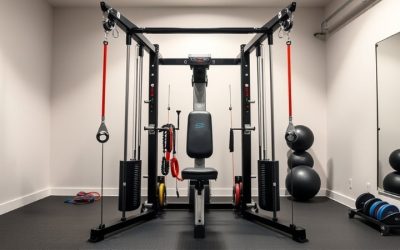
Should I buy a full multi-station machine instead?
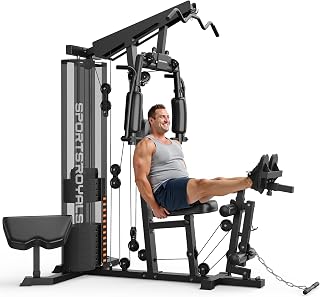
Rarely, as a first purchase. Machines take significantly more floor space, fix your movement path, and cost more than a dumbbell-and-bench setup that trains the same muscles with more variety. Machines make more sense later on, once you know which movements you actually want to load up heavily. None of that is visible in the product photographs.
See More:
Final Thoughts
The best home gym equipment for beginners is a short list bought in the right order: fine weight increments first, a bench and pulling option second, flooring underneath all of it. Measure your training area and ceiling before ordering, protect the floor from day one, and add pieces as your program grows.

Write Your Review
No reviews yet. Be the first to share your experience!