
Key takeaways
What's inside
Best treadmills for home gym decisions come down to two specifications and one measurement: motor rating, deck length, and the ceiling height above the machine. A treadmill that fits the floor can still be unusable because of the room. This guide covers all three, then five picks. The room rules out more machines than money does.
As an Amazon Associate we earn from qualifying purchases at no extra cost to you. Product prices and availability are accurate as of the date shown and are subject to change.


As an Amazon Associate we earn from qualifying purchases at no extra cost to you. Product prices and availability are accurate as of the date shown and are subject to change.
By Chris Parker
🛒 Best Price Today on Amazon
Prime members get fast, free shipping on everything above, plus member-only deals. New members get a 30-day free trial — cancel anytime.
How to Choose the Best Treadmills for Home Gym Use
Treadmills are the least forgiving home cardio purchase because they are large, heavy and loud. Picking the best treadmills for home gym use means matching motor rating to how you will actually use it, then confirming the deck, ceiling and clearances the room can provide.
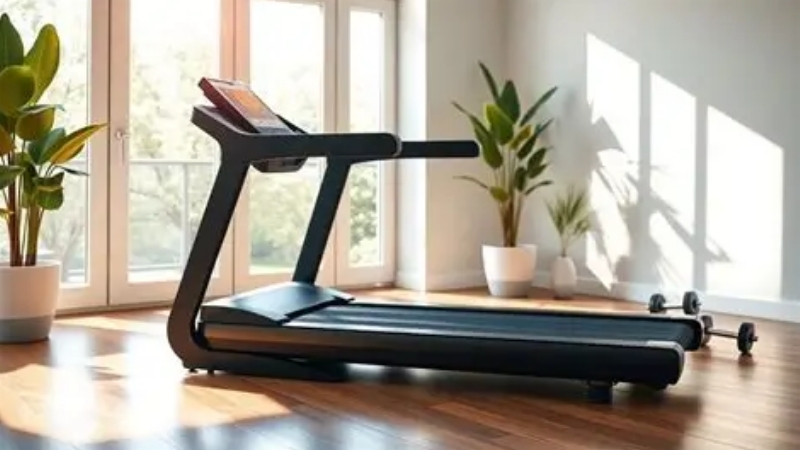
Motor Rating and What CHP Means
Continuous horsepower, or CHP, describes sustained output rather than peak. That distinction matters: a peak horsepower figure describes a burst the motor can survive, while CHP describes what it will hold for an hour without overheating, which is the number that predicts service life.
The working bands are reasonably settled. Around 2.5 CHP suits walking and jogging comfortably. Serious running at high volume calls for 3.0 CHP or more, which is genuinely difficult to find in a budget lineup and is the main reason cheap treadmills wear out early under runners.
Below the mid price band, the substitutions are consistent: a smaller motor, a shorter deck, manual rather than powered incline, and a warranty measured in months rather than years. None of those appear prominently, and all four are felt within the first season of use.
Deck Length, Belt Width and Cushioning
Belt width is fairly standard at around 20 in (51 cm). Deck length is where machines diverge, and it is the specification runners notice. A 55 in (140 cm) deck is around 5 in (13 cm) shorter than typically recommended for running, though it is ample for walking and jogging.
Taller runners need the longer deck because stride length grows with height, and a short deck forces a shortened, unnatural gait at speed. If the machine is for walking, a 45 to 55 in (114 to 140 cm) deck is fine and saves a considerable amount of floor.
Cushioning quality varies more than the marketing names suggest. Multi-zone systems that flex more at footstrike and firm up at toe-off feel noticeably different from a flat foam layer, and this is one area where independent testing tends to disagree with the specification sheet.
Footprint, Ceiling Height and Clearance
Footprint for the best treadmills for home gym use is bigger than the machine. A compact folding treadmill measures roughly 71 x 34 in (180 x 86 cm) deployed and about 46 x 34 in (117 x 86 cm) folded, and folded still stands roughly 61 in (155 cm) tall.
Ceiling height is the constraint people discover too late. Manufacturers advise adding about 12 in (30 cm) to the height of the tallest user, and at full incline the deck itself sits around 13 in (33 cm) off the floor. A 6 ft (183 cm) runner therefore needs roughly 7.5 ft (229 cm).
Clearance around the machine matters for safety, not just convenience. Typical guidance is about 2 ft (61 cm) at each side, 1 ft (30 cm) in front and 6.5 ft (198 cm) behind, which is far more than most people budget. Measure the room, ceiling and doorway before ordering.
Noise, Floors and Where It Can Live
Treadmills are the loudest home cardio machine and the hardest to place. Footfall repeats hundreds of times per session, producing structure-borne noise that travels straight into the room below, which effectively rules them out of many upper-floor flats regardless of the motor.
A dense rubber mat under the machine reduces vibration and protects the floor, but it does not solve impact transmission the way it does for a bike. A ground floor or a concrete slab is the realistic answer, and that constraint should shape the purchase rather than follow it.
Warranty, Wear and Maintenance
Warranty structure is the clearest signal of build quality here. Frame and motor cover ranging up to lifetime on established brands sits alongside much shorter parts and labour terms, and reading those three separately tells you more than any headline specification.
The consumables are the belt and the deck, both of which wear with use and need occasional lubrication depending on the model. Rollers and the drive belt follow. If you have any existing joint or cardiac concern, speak to a doctor before starting a new programme.
Top Picks: Best Treadmills for Home Gym Rooms
Five best treadmills for home gym picks below, spanning walking pads through to running-capable machines. Motor rating and deck length are the two figures that separate them, and the right choice depends far more on whether you walk or run than on any feature on the console.
| Treadmill | Motor | Deck | Incline |
|---|---|---|---|
| Horizon T101 | 2.5 CHP | 20 x 55 in (51 x 140 cm) | 0-10% powered |
| ProForm Carbon TLX | 3.0 CHP | Running length | 0-12% powered |
| Sunny Health SF-T7643 | Budget motor | Compact | Powered |
| Sunny Health SF-T4400 | Budget motor | Compact | 3 manual positions |
| UREVO 2-in-1 Under-Desk | Walking only | Short, low profile | None |
Horizon T101: Best Overall Budget Machine
A 2.5 CHP motor driving a 20 x 55 in (51 x 140 cm) deck with three-zone cushioning, 0 to 10 percent powered incline and a 10 mph (16 km/h) top speed, rated to 300 lb (136 kg). It weighs about 180 lb (82 kg), folds hydraulically, and carries a lifetime frame and motor warranty.
The 55 in deck is roughly 5 in (13 cm) shorter than ideal for running, and 2.5 CHP will not satisfy high-volume runners. The console is a simple three-window LED. Folded it still stands around 61 in (155 cm) tall, so storage is not trivial. Mid tier.
ProForm Carbon TLX: Best for Running
A 3.0 CHP motor with 0 to 12 percent incline and a 12 mph (19 km/h) top speed, rated to 300 lb (136 kg). That motor rating is the meaningful upgrade over budget machines, because it is the figure that predicts whether sustained running shortens the treadmill’s life.
Independent testers have found the cushioning less comfortable than competitors at the same price, which is a real trade against the stronger motor. The platform leans heavily on its subscription ecosystem, so check what functions unpaid. Warranty terms are shorter than some rivals. Mid tier.
Sunny Health SF-T7643: Best Folding Budget Option
A folding motorised treadmill with a shock-absorbing deck and hydraulic-assisted fold, aimed at spare rooms where the machine cannot stay deployed. It is one of the cheapest routes to a powered incline and a genuinely compact folded footprint.
Motor output limits it to walking and light jogging rather than sustained running. Belt width and deck length are shorter than the Horizon, which taller users notice at speed. Rated user weight is modest, so check it against your own. Budget tier.
Sunny Health SF-T4400: Cheapest Incline Option
A compact treadmill with three manual incline positions and a 9 mph (14.5 km/h) top speed, at roughly half the price of the Horizon T101. Manual incline means setting the angle before you start rather than changing it mid-session, which is a fair trade at this price.
Manual incline cannot be adjusted during a session, which removes any structure requiring changing gradient. The motor and deck suit walking rather than running. Console and cushioning are basic. Rated user weight is modest. Budget tier.
UREVO 2-in-1 Under-Desk Treadmill: Lowest Profile
A walking-focused machine with a low deck height that slides under a sofa or bed when not in use, with the handrail folding flat for desk walking. In a flat with no space for a full treadmill, it is the only format here that genuinely disappears.
It is a walking pad rather than a treadmill: no incline, low top speed, and a short deck that rules out running entirely. Motor output is sized for walking only. Deck cushioning is minimal, so it suits hard floors poorly without a mat. Budget tier.
Frequently Asked Questions
These questions cover what people ask when choosing the best treadmills for home gym rooms, mostly about motor, deck and space. Answers stay with equipment; for anything about joints, heart health or training structure, speak to a doctor or a certified coach.
How much motor do I need?
Around 2.5 CHP handles walking and jogging comfortably. Sustained running at volume calls for 3.0 CHP or more, which is uncommon in budget lineups. Peak horsepower figures describe a burst rather than sustained output, so compare continuous ratings only.
What ceiling height does a treadmill need?
Manufacturers advise adding about 12 in (30 cm) to the tallest user’s height, and at full incline the deck sits roughly 13 in (33 cm) off the floor. A 6 ft (183 cm) user therefore needs around 7.5 ft (229 cm), which rules out many basements.
How much clearance around the machine?
Typical guidance is about 2 ft (61 cm) at each side, 1 ft (30 cm) in front and 6.5 ft (198 cm) behind. The rear clearance is a safety requirement rather than a comfort one, and it is the figure most people fail to allow for.
Can I put one in an upstairs flat?
Usually not without complaints. Footfall repeats hundreds of times per session and transmits straight into the room below, which matting reduces but does not solve. A ground floor or concrete slab is the realistic placement for any motorised treadmill.
See More:
- Best beginner jump rope
- Best boxing jump rope
- Best boxer jump rope
- Best cheapest yoga mat
- Best workout exercise equipment
Final Thoughts
The best treadmills for home gym use are chosen on motor rating and deck length, then eliminated by the room. Take 2.5 CHP as the walking and jogging floor and 3.0 CHP for running, allow 7.5 ft of ceiling for a 6 ft user, and measure the rear clearance before ordering.

Write Your Review
No reviews yet. Be the first to share your experience!