
Key takeaways
What's inside
Best cheapest yoga mat hunting has one trap: thickness is easy to advertise and grip is not. A 12 mm foam mat looks generous and then slides under your hands in downward dog. This guide separates thickness from traction, covers material trade-offs and storage footprint, then lists six honest budget picks.
As an Amazon Associate we earn from qualifying purchases at no extra cost to you. Product prices and availability are accurate as of the date shown and are subject to change.


As an Amazon Associate we earn from qualifying purchases at no extra cost to you. Product prices and availability are accurate as of the date shown and are subject to change.
By Chris Parker
🛒 Best Price Today on Amazon
Prime members get fast, free shipping on everything above, plus member-only deals. New members get a 30-day free trial — cancel anytime.
How to Choose the Best Cheapest Yoga Mat
The best cheapest yoga mat options fail in predictable ways, which makes them easier to shop for than the marketing suggests. Four things decide whether a cheap mat lasts a year or two months: thickness relative to your practice, the foam or plastic it is made from, its actual dimensions, and how you store it.
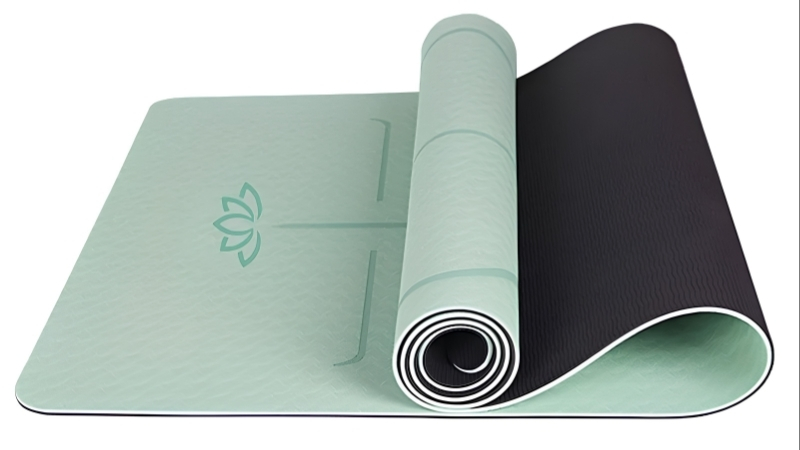
Thickness: 4 mm, 6 mm or 12 mm
Most yoga mats sit between 4 mm and 6 mm. At 4 mm you get a stable connection to the floor with modest joint padding, which suits standing sequences and balance work. At 6 mm you gain noticeable cushioning for kneeling and seated poses without losing much stability underfoot.
Anything at 1/2 in (12.7 mm) is an exercise mat rather than a yoga mat. That extra depth is welcome for floor work and stretching, but it makes single-leg balance poses genuinely harder because the surface compresses unevenly under your standing foot. Choose it knowingly, not by accident.
This is where the best cheapest yoga mat tier shows its shape. Under a certain price the market pivots to thick NBR foam, because foam is cheap to produce and thickness sells well in a product photo. The trade-off is grip and compression life, not comfort on day one.
Material: PVC, TPE and NBR Foam
PVC is the traditional sticky mat material. It is closed-cell, so sweat sits on the surface rather than soaking in, and it wipes clean easily. Denser PVC mats hold their shape for years. The downsides are weight, a plastic smell when new, and real environmental questions around disposal.
TPE is lighter and generally lower odour, usually reversible with a different texture on each face. It compresses faster than dense PVC under repeated kneeling. NBR foam is the thick, spongy budget option: comfortable, very light, and the quickest of the three to dent permanently and lose surface grip.
Mat Size, Rolled Footprint and Storage
Any best cheapest yoga mat shortlist runs 68 to 72 in (173 to 183 cm) long and 24 in (61 cm) wide. If you are over about 5 ft 10 in (178 cm), a 68 in mat leaves your hands or feet on bare floor in longer poses, which matters more on tile than on carpet.
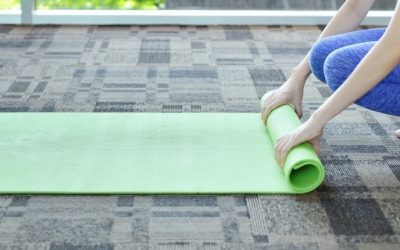
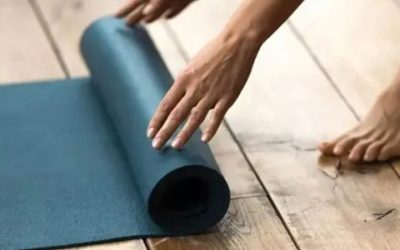
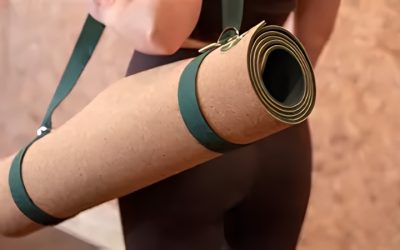
Rolled, a 6 mm mat is typically 5 to 6 in (13 to 15 cm) in diameter, while a 12 mm foam mat can reach 8 in (20 cm) or more. That difference decides whether it slides under a bed, stands behind a door, or ends up permanently unrolled in a room you use for other things.
Unrolled, you need the mat length plus roughly 12 in (30 cm) of clearance at each end and side for arm sweeps. Measure the actual floor area you plan to practise on before ordering, because a mat that does not fit the room does not get used regardless of price.
Grip, Wear and How Long a Cheap Mat Lasts
Dry grip and wet grip are separate properties. Many budget mats hold fine until your palms sweat, then become unpredictable. Closed-cell PVC keeps moisture on the surface, which is manageable with a towel. Open-cell foam absorbs it, which is harder to clean and eventually starts to smell.
Expect a budget mat to show permanent dents at the knees and elbows within months of regular use, and a new PVC mat to carry a plastic smell for one to two weeks if aired out. A mat lasting 12 to 18 months at a low price is better value than one flaking after a month.
Practically, cost is rarely the real barrier to a home practice. The WHO 2020 guidelines set 150 minutes of moderate activity per week plus two strength sessions as the adult target, and the CDC reports fewer than one in four US adults meet both. Speak to a doctor before starting a new programme.
Top Picks: Best Cheapest Yoga Mat Options Ranked
Six budget mats below, each judged on thickness, material, real dimensions and its specific weak point. Prices in this tier move constantly, so the ranking is built on construction rather than on a number that will be different next month.
| Mat | Thickness | Size | Material |
|---|---|---|---|
| BalanceFrom GoYoga All-Purpose | 1/2 in (12.7 mm) | 71 x 24 in (180 x 61 cm) | NBR foam |
| Gaiam Essentials Thick Mat | 6 mm | 72 x 24 in (183 x 61 cm) | NBR foam |
| Gaiam Premium Yoga Mat | 6 mm | 68 x 24 in (173 x 61 cm) | 6P-free PVC |
| Gaiam Performance TPE | 6 mm | 68 x 23.5 in (173 x 60 cm) | TPE |
| Amazon Basics Extra Thick | 1/2 in (12.7 mm) | 74 x 24 in (188 x 61 cm) | NBR foam |
| IUGA Eco Friendly Non Slip | 6 mm | 72 in (183 cm) long | TPE |
BalanceFrom GoYoga All-Purpose: Cheapest Usable Option
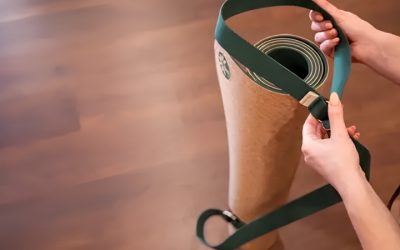
A 1/2 in (12.7 mm) NBR foam mat measuring 71 x 24 in (180 x 61 cm), supplied with a carry strap. The thickness is genuinely welcome for kneeling, seated stretching and floor-based recovery work, and at this weight it is trivial to move around a small flat.
It is too soft for balance poses: the standing foot sinks unevenly and tree pose becomes a fight with the mat. Foam dents permanently at knees and elbows within months. Best treated as a stretching mat. Budget tier.
Gaiam Essentials Thick Yoga Mat: Best Length for the Price
A 6 mm NBR foam mat at 72 x 24 in (183 x 61 cm) with a carry strap included. The full 72 in length suits taller practitioners who run out of mat on shorter options, and 6 mm is a sensible middle ground between joint padding and stability.
Foam construction means the same compression issue over time, with visible dents where you kneel most. The included strap is thin and tends to fail first. Budget tier.
Gaiam Premium Yoga Mat: Best Durability Under a Low Budget
A 6 mm 6P-free PVC mat at 68 x 24 in (173 x 61 cm) with a textured non-slip surface on both faces. Closed-cell PVC keeps sweat on the surface, wipes clean quickly and holds its shape far longer than foam does under repeated kneeling and standing work.
At 68 in it is short for anyone over roughly 5 ft 10 in (178 cm). Grip fades during genuinely sweaty sessions, so a towel becomes part of the kit. New mats carry a plastic smell for a week or two. Budget to mid tier.
Gaiam Performance TPE: Best Low-Odour Choice
A 6 mm TPE mat at 68 x 23.5 in (173 x 60 cm), reversible with a different texture on each side. TPE is lighter than PVC and has markedly less initial smell, which matters if you practise in a bedroom or a small flat with limited ventilation.
TPE compresses faster than dense PVC, so expect the padding to soften over a year of frequent use. The narrower 23.5 in width is noticeable in wide-legged poses. Budget to mid tier.
Amazon Basics Extra Thick Exercise Mat: Best for Floor Work
A 1/2 in (12.7 mm) NBR foam mat at 74 x 24 in (188 x 61 cm) with a strap. The extra length is unusual at this price and the depth makes it comfortable for supine work, foam rolling adjacent stretching and any sequence spent mostly on knees or back.
It is not a yoga mat in any meaningful sense for standing practice, since balance poses suffer badly on this much foam. Rolled diameter is bulky at around 8 in (20 cm). Budget tier.
IUGA Eco Friendly Non Slip: Best Grip in the Budget Tier
A 6 mm TPE mat around 72 in (183 cm) long with a double-sided texture designed for traction rather than appearance. Grip is the weak point of most cheap mats, and this one holds better than foam alternatives while staying light enough to carry easily.
TPE softens over time under repeated kneeling, and the textured surface traps dust more than a smooth PVC face does. Sizing varies by listing, so confirm dimensions before ordering. Budget to mid tier.
Frequently Asked Questions
These four questions cover what people get wrong most often when buying the best cheapest yoga mat, from thickness to smell. Answers stay with material behaviour and measurements rather than making claims about what any style of practice will achieve.
Is a thicker mat always better?
No. Thickness above 6 mm improves comfort for kneeling and floor work but compresses unevenly under a standing foot, which makes balance poses harder. For a mixed practice, 4 to 6 mm is the practical range. Reserve 1/2 in (12.7 mm) mats for stretching and recovery sessions.
Are cheap mats safe to practise on?
Generally yes, provided the surface actually grips. Slipping is the realistic risk, not the price. Look for at least 4 mm thickness, a textured top face and a grippy underside. If you have a latex sensitivity, check the listing, since materials vary between production runs.
How long does the new mat smell last?
PVC mats typically off-gas a plastic odour for one to two weeks if unrolled in a ventilated room. TPE and NBR foam usually clear faster. Airing the mat out flat rather than rolled speeds the process considerably. The smell fading is not a sign of the mat degrading.
How should I store a budget mat?
Roll it with the practice surface facing outward to reduce curling at the corners, and store it upright rather than under heavy objects. A 6 mm mat rolls to about 5 to 6 in (13 to 15 cm) diameter and fits behind most doors. Foam mats permanently deform if stored compressed.
See More:
Final Thoughts
The best cheapest yoga mat for a mixed practice is a 6 mm PVC or TPE mat sized to your height, not the thickest foam you can find. Save the 1/2 in mats for floor work. Check the mat length against your own, and measure your storage space before ordering.
Write Your Review
No reviews yet. Be the first to share your experience!