
Key takeaways
What's inside
Best beginner jump rope choices come down to cord speed, not brand names. A rope that spins faster than you can react makes you quit in week one. This guide sizes ropes by ceiling height, floor surface and adjustment range, then lists six picks with the drawbacks nobody mentions. Every pick lists what it cannot do.
As an Amazon Associate we earn from qualifying purchases at no extra cost to you. Product prices and availability are accurate as of the date shown and are subject to change.


As an Amazon Associate we earn from qualifying purchases at no extra cost to you. Product prices and availability are accurate as of the date shown and are subject to change.
By Chris Parker
🛒 Best Price Today on Amazon
Prime members get fast, free shipping on everything above, plus member-only deals. New members get a 30-day free trial — cancel anytime.
How to Choose the Best Beginner Jump Rope
The rope itself matters more than any workout plan in the first month. Four variables decide whether the best beginner jump rope for you feels learnable or humiliating: cord material, cord thickness, adjustment method, and the clear space you have around you. Get those four right and the technique tends to arrive on its own within a couple of sessions.
Cord Type Sets the Rotation Speed
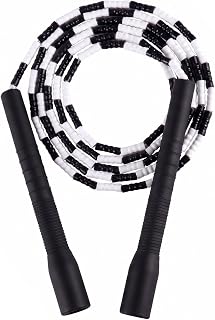
Beaded ropes use segmented plastic beads threaded onto a nylon or polycord core. They rotate slowly, land with an audible tick, and that sound is what most newcomers actually learn from. You hear the beat before you feel it, so the jump lands on rhythm rather than guesswork.
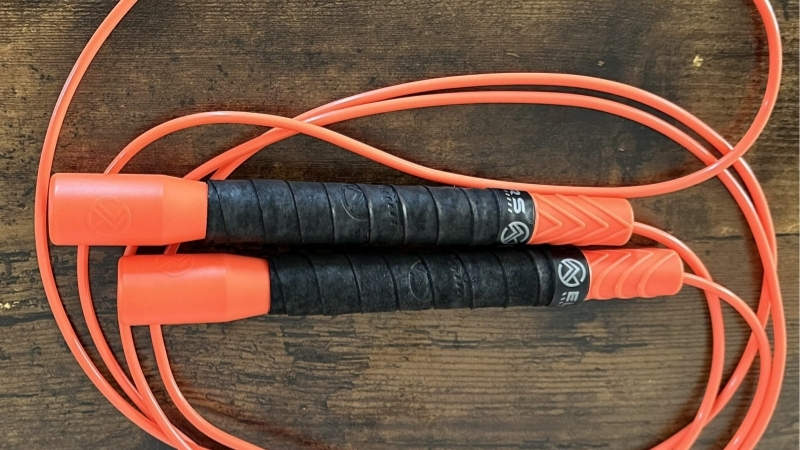
PVC cord around 5 mm sits one step faster. It cuts air better than beads but still gives the hands something to feel. Coated steel cable at 2.5 mm is the opposite end: near silent, quick, and unforgiving of a half-beat error. Cable belongs in your second rope.
The cheap end of this market is crowded with thin cable because cable is the least expensive cord to produce at volume. That is precisely why so many first-time buyers end up holding a rope engineered for double unders. Spending a few dollars more on beads or thick PVC buys feedback, not branding.
Rope Length and How to Size It in 30 Seconds
Stand on the middle of the cord with one foot and pull both handles straight up. For a beginner the handle tops should land somewhere between the armpit and the top of the shoulder. Shorter than sternum height and the arc clips your feet before you have the timing to correct it.
Most adult ropes ship at 10 ft (3.05 m) and adjust down from there. Screw clamps and pinch locks let you undo the change later. Cut-to-length cable is permanent, a poor fit while your preferred length is still moving.
Ceiling Height, Floor Footprint and Surface
Footprint is the filter most buyers skip when comparing the best beginner jump rope options. A jumper needs roughly a 4 by 6 ft (1.2 by 1.8 m) clear rectangle, plus enough overhead room for the cord to clear at the top of its arc. Your standing height plus about 12 in (30 cm) is the working minimum for ceiling clearance.
Surface matters as much as space. Beads survive concrete and asphalt; thin PVC frays on both within weeks. Hard tile transmits impact straight into the flat below, so a rubber mat is basic courtesy in a shared building. Measure the actual area you plan to use before you order anything.
Handles, Bearings and What Fails First
Handle length changes how much wrist you can use. Long handles near 5.5 in (14 cm) suit slower beaded and PVC work, while short handles favour speed cable. Bearings matter less at beginner tempo than the handle-to-cord junction, where most ropes eventually give up.
Plan on replacing PVC cord anywhere from a few months to a few years depending on surface, and expect it to snap outdoors below freezing. Beads and handles outlast the cord comfortably. Buy a brand that sells replacement cord and a cheap rope becomes a multi-year item.
There is a practical reason rope keeps appearing in home setups. The WHO 2020 activity guidelines set the adult target at 150 minutes of moderate aerobic work per week plus two strength sessions, and the CDC reports fewer than one in four US adults meet both. Speak to a doctor before starting any new programme.
Top Picks: Best Beginner Jump Rope Models Worth Buying
Each pick below is judged on the same four points: cord type, adjustment method, the surface it survives, and what it will not do. In practice the best beginner jump rope is usually the slowest one you can tolerate, because timing is the skill that unlocks every other rope you will ever own.
| Rope | Cord | Length | Best for |
|---|---|---|---|
| EliteSRS Overcomer Beaded | 1 in (25 mm) beads on polycord | 10 ft (3.05 m), shortened by removing beads | Learning timing by sound |
| Elite Jumps Boxer Rope | 5 mm PVC, string core | 10 ft (3.05 m), trim to fit | Second-month step up |
| DEGOL Skipping Rope | Steel wire in PVC sleeve | About 9 ft (2.7 m), screw clamp | Cheapest way to test the habit |
| Crossrope Get Lean Set | Coated weighted cords | Fixed length by height | Slow, controlled arcs |
| Redify Weighted Rope | 9 mm cotton plus 9 mm PVC | Adjustable, aluminium handles | Two cords in one purchase |
| WOD Nation Speed Rope | Coated steel cable | Wide adjustment range | Graduating to double unders |
EliteSRS Overcomer Beaded Rope: Best for Learning Timing
Thick-walled 1 in (25 mm) beads sit on a polycord core, 10 ft (3.05 m) out of the packet, shortened by unthreading the cord and pulling beads off. The tick on every pass is the entire point: it hands you an audible beat, so you jump to a sound rather than to a guess. Handles suit boxer-step work.
Adjustment is fiddly and effectively one-way, since removed beads are gone. The rope is loud on tile and hardwood, a genuine problem in a shared building without a mat underneath. It is slow by design, so it will never serve double-under work. Mid tier.
Elite Jumps Boxer Rope: Best PVC Step-Up
A 5 mm PVC cord with a string core running through it, 10 ft (3.05 m) long, roughly 5 oz (140 g) in total, on 5.5 in (14 cm) unbreakable plastic handles. The string core stops the cord stretching under spin force, keeping the arc consistent as pace climbs. Fits jumpers up to about 6 ft 4 in (193 cm).
It is quicker than a beaded rope, so it punishes sloppy timing harder. PVC wears on rough concrete and can snap outdoors below freezing. Sizing means trimming, so measure twice. Budget to mid tier.
DEGOL Skipping Rope: Best Budget Trial Rope
Braided steel wire inside a PVC sleeve, on memory foam handles, adjustable across roughly 9 ft (2.7 m) of usable cord. It is the cheapest sensible way to find out whether you enjoy jumping, and the padded grips outlast bare plastic for comfort.
The cable is fast, which is exactly the wrong quality in week one, and the coating scuffs badly on concrete. The screw clamp works loose unless tightened firmly. Budget tier.
Crossrope Get Lean Set: Best for Slow, Controlled Arcs
A clip-in handle system with two interchangeable coated cords at 1/4 lb (0.11 kg) and 1/2 lb (0.23 kg). The added mass slows the arc, which helps while learning, and cord lengths are picked by height rather than adjusted at home.
It is by some distance the most expensive option here, and the companion app pushes a subscription you do not need for the ropes to function. Fixed lengths mean no fine tuning later. Premium tier.
Redify Weighted Jump Rope: Best Two-Cord Set
Ships with a 9 mm braided cotton cord and a 9 mm solid PVC cord on aluminium handles with double ball bearings, around 1 lb (0.45 kg) all in. The cotton cord is slow and forgiving indoors; the PVC cord picks up pace once timing settles, so one purchase covers two stages.
Aluminium handles turn slippery once your hands sweat, and there is no meaningful grip texture to fall back on. The cotton cord frays quickly outdoors. At roughly 1 lb, shoulder fatigue arrives sooner than beginners expect. Budget to mid tier.
WOD Nation Speed Jump Rope: Best for Graduating to Speed
A coated steel cable rope with a wide adjustment range, aimed at people who already hold a steady single-under rhythm and want double unders. Bearings spin freely and the cable cuts air with almost no drag.
It is the wrong first rope: near silent, very quick, and a miss stings on bare legs. The cable coating chips on abrasive ground. Buy it as rope number two. Budget to mid tier.
Frequently Asked Questions
Four questions come up more than any others when people shop for the best beginner jump rope. The answers below stick to what the equipment does, not what any programme promises, and they assume you are training at home on a floor you share with neighbours or housemates.
What rope length should a beginner buy?
Stand on the cord mid-point and pull the handles up: they should reach between armpit and shoulder height. Most adults land near 9 ft (2.74 m) of usable cord. Buy a 10 ft (3.05 m) rope with adjustable handles rather than a fixed length, because your ideal size shortens as your form tightens up.
Are weighted ropes a bad idea for beginners?
Light weighted cords around 1/4 lb (0.11 kg) actually help, because the extra mass slows the arc and makes the rope easier to feel. Anything approaching 1 lb (0.45 kg) or more loads the shoulders quickly. Keep early weighted sessions to short intervals and stop when form degrades rather than pushing through.
Can I use a jump rope in a flat?
Often yes, with two conditions. You need standing height plus roughly 12 in (30 cm) of ceiling clearance, and you need a mat to cut impact noise into the floor below. Beaded ropes are the loudest option on hard surfaces. A 6 mm rubber mat over tile solves most of the complaints neighbours actually raise.
How long does a beginner rope last?
Handles and beads generally outlive several cords. PVC used indoors on a mat can run for years, while the same cord dragged over concrete may need replacing within a few months. Cold is the other killer, since PVC becomes brittle below freezing. Buy a brand that sells spare cord separately.
See More:
Final Thoughts
The best beginner jump rope is almost never the fastest one on the shelf. Start with beads or 5 mm PVC, size the cord to shoulder height, confirm your ceiling clearance and floor surface first, then keep the speed cable for month three. Measure your space before ordering and the rest is just practice.





Write Your Review
No reviews yet. Be the first to share your experience!