
Key takeaways
What's inside
Best workout equipment for glutes lists are dominated by hip bands, which cover only half the job. Abduction bands load the muscle in one plane at low resistance, while hip extension under real load needs something considerably heavier, and most home setups never get around to buying that second half at all.
As an Amazon Associate we earn from qualifying purchases at no extra cost to you. Product prices and availability are accurate as of the date shown and are subject to change.




As an Amazon Associate we earn from qualifying purchases at no extra cost to you. Product prices and availability are accurate as of the date shown and are subject to change.
By Chris Parker
🛒 Best Price Today on Amazon
Prime members get fast, free shipping on everything above, plus member-only deals. New members get a 30-day free trial — cancel anytime.
How to Choose the Best Workout Equipment for Glutes
Choosing the best workout equipment for glutes means covering two mechanically different jobs rather than buying more of one. Hip extension needs load that scales into the hundreds of pounds over time; hip abduction needs comparatively little. Equipment that does one well is usually poor at the other.
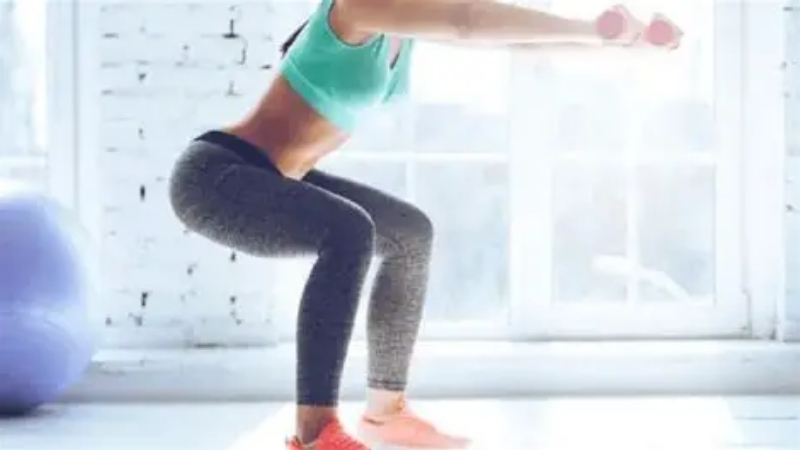
Hip Extension and Hip Abduction Are Different Jobs
Hip extension is the driving movement in a swing, a hip thrust, a deadlift and a step-up, and it is where the largest muscle in the body produces most of its force. It responds to load, which means the equipment has to be capable of holding meaningful weight rather than simply providing tension.
Abduction moves the leg away from the midline in lateral walks, clamshells and standing kickbacks. It genuinely benefits from bands, because the resistance required is modest and the band applies it in a useful direction. Confusing the two is why so many home setups plateau after a few months.
What Load Each Tool Can Actually Apply
The best workout equipment for glutes has to be judged on load. A fabric hip band applies a few pounds of effective resistance at the working range, which is appropriate for abduction and nowhere near enough for extension. Long loop bands reach higher tension but load unevenly, being lightest at the bottom of a hip thrust where you need resistance most.
A kettlebell applies its full weight throughout a swing and a goblet squat, so a single 35 lb (16 kg) bell is a real training stimulus. Adjustable dumbbells go further for hip thrusts and split squats, with the practical ceiling arriving at 52.5 lb (24 kg) per hand on most sets.
Ankle weights occupy a genuinely useful gap, applying load at the end of a long lever during standing kickbacks and hip extension. Bar-loaded designs progress in 0.5-1 lb (0.23-0.45 kg) steps up to 10 or 20 lb (4.5 or 9 kg) per ankle, which is a large effective moment at the hip.
Footprint and Setup Time
The best workout equipment for glutes needs a larger working envelope than people plan for. Lateral band walks need roughly 10 ft (305 cm) of clear length, and a hip thrust off a bench needs about 7 x 5 ft (213 x 152 cm) around it. Bands and ankle weights themselves store in a drawer.
Setup time quietly decides what gets trained. A band takes two seconds to put on; a loaded bar on a bench takes several minutes. If a movement is a hassle to set up it gets skipped on busy days. Measure the clear floor area of your room before ordering a bench.
Why Loaded Hip Extension Is Underserved at Home
Walk through the equipment marketed for this purpose and the imbalance is obvious. There are dozens of band sets and comparatively little aimed at loading hip extension in a domestic room, because doing that properly usually means a bench and either heavy dumbbells or a barbell and plates.
That gap is commercial rather than technical. Bands are cheap to produce, easy to ship and photograph well, whereas a bench plus meaningful load is bulky, expensive to deliver and needs floor space that a lot of buyers do not have. The result is a market that over-serves the easier half.
The practical response is to budget for the extension half deliberately rather than accumulating bands. One kettlebell and a bench will do more for hip strength over a year than five band sets, and the bands are then genuinely useful for what they are good at rather than being asked to do everything.
Top Picks: 5 Tools That Cover Both Halves of Hip Training
These five are chosen so that between them they load extension and abduction properly, which is what the best workout equipment for glutes has to do. The table lists the movement each one covers and the realistic load ceiling, since that is where most home setups stall.
| Item | Covers | Load Ceiling | Setup Time | Storage |
|---|---|---|---|---|
| Amazon Basics Kettlebell | Hinge, swing, goblet squat | Fixed at purchase weight | Seconds | Under a desk |
| Bowflex SelectTech 552 | Hip thrust, split squat, RDL | 52.5 lb (24 kg) per hand | Around 10 seconds | Approx. 2 x 1.5 ft |
| Flybird Adjustable Bench | Enables hip thrust and step-up | Approx. 700 lb (318 kg) listed | Under a minute | Folds flat |
| Peach Bands Hip Band Set | Abduction, lateral walks | Light, fixed steps | Two seconds | Drawer |
| All Pro Adjustable Ankle Weights | Standing kickback, extension | Up to 20 lb (9 kg) per ankle | Around 30 seconds | Drawer |
Amazon Basics Cast Iron Kettlebell
The most efficient way to load hip extension at home. A swing applies the full weight of the bell through the hips at speed, and goblet squats, carries and single-leg deadlifts all come from the same purchase. One sensibly chosen weight is a genuine stimulus for a long time before a second is needed.
Fixed weight means progression eventually stalls and the next step is buying another bell rather than adjusting this one. Cast iron is loud on a hard floor and unforgiving of a dropped rep, so rubber matting rather than foam is the correct surface, and it should never drop from overhead.
Bowflex SelectTech 552
Adjustable dumbbells are what make loaded hip thrusts, split squats and Romanian deadlifts possible in a room without a barbell. Fifteen settings from 5 to 52.5 lb (2.3 to 24 kg) per hand with 2.5 lb (1.1 kg) increments up to 25 lb (11 kg) allow genuine week-to-week progression rather than jumps you cannot absorb.
The ceiling arrives eventually, since 52.5 lb (24 kg) per hand is a modest hip thrust load for a trained lifter. The dial mechanism is why the manual forbids dropping them, they are long at full weight, and above 25 lb (11 kg) the increments widen to 5 lb (2.3 kg).
Flybird Adjustable Weight Bench
The piece that unlocks the single most useful hip extension movement at home. A hip thrust needs something to support the upper back at roughly knee height, and a bench provides it while also enabling step-ups, single-leg work and supported rows from the same footprint.
Folding frames flex more than fixed ones under load, which is noticeable rather than dangerous at sensible weights, and the pad is firm and narrow by commercial standards. The working envelope of roughly 7 x 5 ft (213 x 152 cm) is considerably larger than the folded size implies, so measure the room first.
Peach Bands Hip Band Set
The right tool for the abduction half, and the fabric construction solves the problem that makes latex mini loops frustrating. A woven band with an inner grip layer stays exactly where it is placed through lateral walks, squats and clamshells rather than migrating up or down the thigh mid-set.
Fabric cannot be stacked and does not stretch far, so tension comes in fixed steps with large jumps between them, and the top of the range is still light. It is strictly a hip and abduction tool. Buy it alongside something that loads extension rather than expecting it to cover both.
All Pro Adjustable Ankle Weights
The overlooked option, and the only one here that progresses in small steps. Steel bars slide in and out of the cuff so load moves in 0.5-1 lb (0.23-0.45 kg) increments up to 10 or 20 lb (4.5 or 9 kg) per ankle, applied at the end of a long lever during standing kickbacks and hip extension.
The cuffs are bulky compared with neoprene and cost several times a basic pair, and the bars need occasional re-seating so nothing rattles. Do not run in them, since added mass on a long lever changes gait and loading at the knee and hip. Walking, standing and floor work only.
Frequently Asked Questions
Most questions about the best workout equipment for glutes come from the gap between what bands do and what hip extension needs. These four cover whether bands alone are enough, what to buy first, whether a bench is necessary and how to progress once the equipment runs out of load.
Are resistance bands enough on their own?
For abduction, yes. For hip extension, no, because the resistance required climbs well beyond what a band applies and bands load unevenly, being lightest at the bottom of a hip thrust where you most need tension. Bands are the right tool for one half of the job and the wrong tool for the other.
What should I buy first?
A single kettlebell, because it loads hip extension immediately, covers swings, goblet squats and carries, and stores under a desk. A fabric hip band as a second purchase covers abduction for very little money. Those two together do more than any number of band sets bought in sequence.
Do I need a bench for hip thrusts?
You need something firm at roughly knee height that supports the upper back and does not slide. A bench is the obvious answer and adds several other movements. A sturdy sofa edge works to start with, though it usually sits too high and is not stable enough once you add real load.
How do I keep progressing once I hit the load ceiling?
Change the leverage before changing the weight. Single-leg variants, paused reps at the top, slower eccentrics and elevated foot positions all raise the demand without more load. Beyond that the honest answer is a barbell and plates, which needs a dedicated room and a floor that takes point loads.
See More:
- Best home pull-up bar
- Best at home pull up bar
- Best in house pull up bar
- Best rated ab roller
- Best yoga travel mat
Final Thoughts
The best workout equipment for glutes covers extension and abduction separately, because no single tool does both well. Start with a kettlebell for loaded hinging and a fabric hip band for abduction, then add a bench when hip thrusts become the priority. Measure the floor area first.





Write Your Review
No reviews yet. Be the first to share your experience!