
Key takeaways
What's inside
Best yoga travel mat choices are all compromises, because everything that makes a mat pack small also removes cushioning and stability. At 1.5-3 mm you are buying portability and paying for it in every kneeling position, so the real question is which of those trades you can live with once you unroll it at the other end.
As an Amazon Associate we earn from qualifying purchases at no extra cost to you. Product prices and availability are accurate as of the date shown and are subject to change.




As an Amazon Associate we earn from qualifying purchases at no extra cost to you. Product prices and availability are accurate as of the date shown and are subject to change.
By Chris Parker
🛒 Best Price Today on Amazon
Prime members get fast, free shipping on everything above, plus member-only deals. New members get a 30-day free trial — cancel anytime.
How to Choose the Best Yoga Travel Mat
The best yoga travel mat is chosen on three numbers and one mechanical question. Thickness and weight decide what you give up, packed size decides whether it fits your luggage, and whether the mat folds or rolls decides how it behaves when you unpack it at the other end.
Thickness, Weight and What You Give Up
Travel mats run 1.5-3 mm against 4-6 mm for a standard mat, and weigh 1.5-3.5 lb (0.7-1.6 kg) against 5-7.5 lb (2.3-3.4 kg). That is a genuine difference in a bag, and which is why the category exists at all rather than everyone simply carrying their usual mat around. The difference is felt at every airport.
What disappears is padding. At 1.6 mm there is essentially nothing between your kneecap and the floor, so low lunges, kneeling and any long hold become uncomfortable on hard surfaces. Standing balance work actually improves, because thin mats give the most direct floor feel of anything available.
Fold Versus Roll and Whether Creases Relax
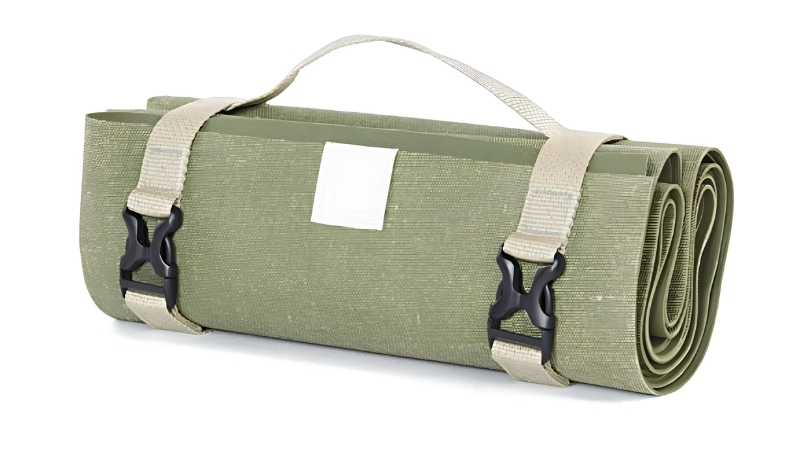
The best yoga travel mat designs fold rather than roll, which is the whole point: a folded mat becomes a flat rectangle that slides into a suitcase alongside clothes rather than a cylinder that dictates how everything else packs. Rolled mats of any thickness are far less efficient use of luggage space.
Folding leaves creases, and how quickly they relax varies by material. Natural rubber usually settles within a session or two, while TPE and foam hold a crease considerably longer and sometimes permanently. If the mat will spend months folded in a bag, that is worth weighing before you buy.
Packed Footprint and Luggage Space
Packed footprint is the number that decides which best yoga travel mat you end up with. A folded rubber travel mat forms a flat block roughly the size of a paperback stack, whereas even a thin rolled mat is a cylinder 3-4 in (8-10 cm) across and the full 24 in (61 cm) of the mat width.
Unrolled, travel mats keep standard dimensions of about 68-73 in by 24-27 in (173-185 x 61-68 cm), so the floor space needed is unchanged at roughly 12-13 sq ft (1.1-1.2 sq m). Measure the interior of the bag you actually travel with before ordering rather than assuming it will fit.
Why Travel Mats Are Still a Compromise
Nobody has solved grip at 1.5 mm. Thin mats have less material to conform around the hand and foot, and on a polished studio floor a very thin mat can slide as a whole even when the top surface itself grips well. That is a physical limit rather than a manufacturing shortfall.
The category has also stayed small, which means fewer options than the main market and prices that do not fall the way standard mats have. A travel mat from a studio brand frequently costs as much as a full-thickness budget mat while being thinner and shorter-lived.
The practical response is to treat a travel mat as a second mat rather than a replacement. Used on top of a studio mat it adds grip and hygiene without the padding penalty, and used alone on a carpeted hotel floor it works far better than it does on tile or timber.
Top Picks: 6 Travel Mats by Weight and Packed Size
These six span the practical range from a 1.6 mm folding rubber sheet to a 3 mm TPE mat. The best yoga travel mat among them depends on whether weight or comfort matters more, so the table below lists thickness and weight first and construction second. Every one of them is a compromise.
| Mat | Thickness | Weight | Packs By | Surface |
|---|---|---|---|---|
| Jade Voyager | 1.6 mm | About 1.5 lb (0.7 kg) | Folding | Open-cell rubber |
| Manduka eKO SuperLite | 1.5 mm | About 2 lb (0.9 kg) | Folding | Natural rubber |
| Yoga Design Lab Combo Travel | Around 1.5 mm | Light | Folding or rolling | Microfibre on rubber |
| Liforme Travel Mat | Around 2 mm | Heaviest here | Rolling | Polyurethane on rubber |
| Gaiam Foldable Yoga Mat | 2 mm | Light | Folding | PVC |
| Toplus Travel Yoga Mat | 3 mm | Light | Rolling | TPE |
Jade Voyager
The lightest and thinnest option here, at 1.6 mm and roughly 1.5 lb (0.7 kg), which is genuinely negligible in a carry-on. Open-cell natural rubber means it grips from the first session with no break-in, and it folds into a flat block that packs alongside clothes rather than dictating the bag.
There is essentially no cushioning, so kneeling on tile or timber is unpleasant and long holds are worse. It is a latex product, it smells for the first weeks, and rubber that thin wears faster than a full mat. Best used over a studio mat or on carpet rather than on bare floors.
Manduka eKO SuperLite
Almost as light at around 2 lb (0.9 kg) and 1.5 mm, with a slightly more durable feel than the very thinnest options and Manduka’s usual build consistency. It folds flat, the creases settle within a session or two, and the natural rubber surface grips reliably when dry.
The same caveats apply as to any rubber travel mat: no meaningful padding, a latex base, a noticeable smell for the first few weeks, and degradation in direct sunlight. It is best treated as a topper or a carpet mat rather than as your only surface on a hard studio floor.
Yoga Design Lab Combo Travel Mat
A bonded microfibre layer over a thin rubber base, which inverts the usual grip behaviour: it is mediocre when dry and excellent once damp. For a heated class in a hotel or a humid climate that is exactly the right characteristic, and the surface is machine washable.
In a cool room you will want to dampen it deliberately before starting, which is an odd habit to acquire. At around 1.5 mm there is no cushioning at all, and the towel surface needs washing far more often than a wipeable mat needs cleaning. It is a specialist rather than an all-rounder.
Liforme Travel Mat
The performance option, keeping the polyurethane top and alignment etching in a thinner package of around 2 mm. Grip is the best in this group in both dry and damp conditions, and the full-size dimensions mean you are not practising on something shorter than you are used to.
It is the heaviest mat here by a clear margin, which undermines the point for anyone counting grams, and it rolls rather than folds so it dictates how the bag packs. The polyurethane cleaning rules still apply: water and mild soap only, and never anything oil-based.
Gaiam Foldable Yoga Mat
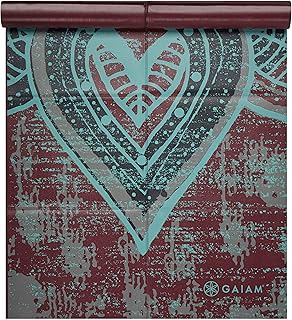
The budget folding option, at 2 mm of PVC that packs down to a small flat square and costs a fraction of the rubber mats above it. For occasional travel where the mat spends most of the year in a cupboard, spending studio money on it is genuinely hard to justify. It does the job for a week away.
PVC holds fold creases far longer than rubber does, sometimes permanently, so the mat may never lie completely flat again. It is also closed-cell, meaning grip falls away as soon as your hands are damp. Good value for dry practice and hotel carpet, poor for a heated class.
Toplus Travel Yoga Mat
At 3 mm this is the thickest mat here and the compromise choice, giving noticeably more padding than the 1.5 mm options while still weighing far less than a standard mat. TPE keeps the price low and the moulded texture holds grip better than embossed foam over a couple of years.
Three millimetres rolls rather than folds, so it is a cylinder in your luggage rather than a flat block. TPE is closed-cell, so wet grip is poor, and it holds creases if you fold it anyway. Keep it out of direct sunlight, which degrades the surface faster than use does.
Frequently Asked Questions
The practical questions about the best yoga travel mat are about how thin is usable, whether fold creases matter, and what fits in luggage. These four cover each of those plus the question of whether a travel mat can reasonably serve as your only mat at home.
How thin is too thin?
Below about 2 mm you have essentially no cushioning, which is fine for standing practice and uncomfortable for anything on the knees. On carpet a 1.5 mm mat is perfectly usable; on tile or timber it is not. Match the thickness to the floors you expect to find rather than to the bag.
Do fold creases go away?
On natural rubber, usually within a session or two. On PVC and TPE they last far longer and can become permanent if the mat has been folded tightly for months. If the mat lives folded in a bag between trips, a rubber one will recover its flatness better than anything else.
Can a travel mat be my only mat?
Only if you practise mainly standing sequences on carpet. For kneeling work, long holds or any hard floor, the lack of padding becomes the limiting factor quickly. Most people who own one use it as a second mat, either for trips or laid over a studio mat for grip and hygiene.
Will it fit in carry-on luggage?
A folding rubber mat forms a flat block that slides in alongside clothes and adds 1.5-2 lb (0.7-0.9 kg) to the bag. A rolled mat is a cylinder 3-4 in (8-10 cm) across and 24 in (61 cm) long, which most cabin bags will take but which dictates how everything else packs around it.
See More:
- Best home pull-up bar
- Best at home pull up bar
- Best in house pull up bar
- Best rated ab roller
- Best affordable yoga mat
Final Thoughts
The best yoga travel mat depends on where you will unroll it. On hotel carpet a 1.5 mm folding rubber mat is close to weightless and grips well. On hard floors, 2-3 mm is the sensible minimum. Choose folding over rolling, and treat it as a second mat rather than a replacement.
Write Your Review
No reviews yet. Be the first to share your experience!