
Key takeaways
What's inside
Best yoga mat eco friendly choices come down to three materials — natural rubber, cork and TPE — each with a different weight, grip and lifespan. This guide compares all three on thickness, wet traction, weight and durability, then covers six mats that avoid PVC entirely without giving up any real performance.
As an Amazon Associate we earn from qualifying purchases at no extra cost to you. Product prices and availability are accurate as of the date shown and are subject to change.
As an Amazon Associate we earn from qualifying purchases at no extra cost to you. Product prices and availability are accurate as of the date shown and are subject to change.


By Chris Parker
🛒 Best Price Today on Amazon
Prime members get fast, free shipping on everything above, plus member-only deals. New members get a 30-day free trial — cancel anytime.
Start 30-Day Prime Free Trial →See Today’s Amazon DealsHow to Choose an Eco Friendly Yoga Mat
Sustainable mats are not interchangeable. A natural rubber mat and a cork mat behave completely differently underfoot, and one of them will annoy you within a month. The four criteria below sort out which best yoga mat eco friendly material actually fits how and where you practise.
Material: Natural Rubber, Cork or TPE
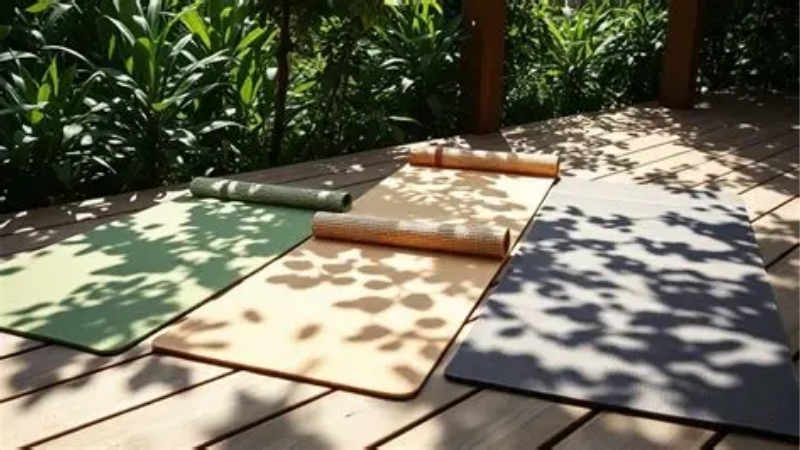
The best yoga mat eco friendly option in natural rubber comes from tapped trees, weighs the most at 5-7 lb (2.3-3.2 kg) in a 4-5 mm mat, and gives the best raw dry grip of the three materials. It is also the only one with a latex content, which matters if anyone in the household has a latex sensitivity.
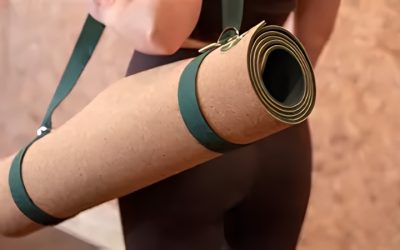
Cork mats pair a thin cork surface with a rubber or plant-based foam backing underneath. Cork grips better as it gets damp, which suits sweaty practice, and it is naturally antimicrobial. TPE is the lightest option at 2-3 lb (0.9-1.4 kg) and recyclable, but it is also the least durable of the three.
Thickness, Size and Joint Comfort
Four millimetres is the standard thickness for a mat you use daily, giving enough cushion for kneeling work without losing the floor feel that balance poses depend on. Six millimetres suits people who want more padding, at the cost of stability in standing sequences and more weight to carry.
Length matters more than most buyers expect. Standard mats run 68 in (173 cm) long, which leaves anyone much over about 5 ft 9 in with feet or hands hanging off the edge in a full stretch. Extra-long 74-78 in (188-198 cm) versions cost slightly more and solve the problem entirely.
Wet Grip, Open Cell and Cleaning
Open-cell surfaces absorb moisture, so grip on the best yoga mat eco friendly designs actually improves as you sweat, but they absorb everything else too and need proper cleaning. Closed-cell surfaces wipe clean in seconds and resist bacteria, though they turn slick once a real sweat starts.
Natural rubber is usually open-cell and needs a mild cleaner rather than alcohol, which degrades rubber over time. Cork sits in between, staying grippy when damp while cleaning easily. For a best yoga mat eco friendly purchase used in hot classes, that distinction decides everything.
Footprint, Weight and Storage Reality
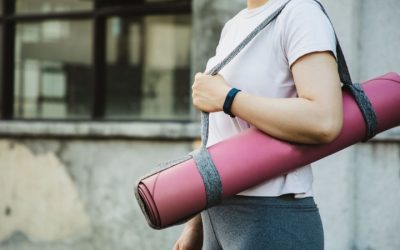
A rolled 5 mm natural rubber mat measures about 5-6 in (13-15 cm) across and roughly 26 in (66 cm) long, and at 7 lb it is genuinely heavy to carry any real distance on foot. TPE mats roll smaller and weigh a third as much, which is why they dominate travel and commuting use.
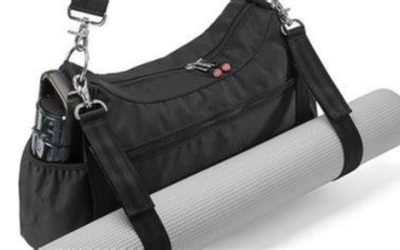
Stored flat under a bed, any of these needs roughly 26 x 6 in (66 x 15 cm) of clearance rolled, or the full 68-74 in laid out. Measure the storage spot and check whether your strap will cinch onto a thicker rubber mat before ordering one.
Top Picks: Best Yoga Mat Eco Friendly Options
The six best yoga mat eco friendly picks below cover all three sustainable materials across a range of prices, from budget cork through to premium natural rubber. The table lists the deciding specs, and each write-up names a real drawback so you can weigh grip against weight and cost honestly.
| Mat | Material | Thickness | Approx weight | Price tier |
|---|---|---|---|---|
| Manduka eKO | Natural tree rubber | 4-5 mm | 6-7 lb (2.7-3.2 kg) | Premium |
| Jade Harmony | Natural rubber | Around 5 mm | 5-6 lb (2.3-2.7 kg) | Mid to premium |
| Liforme Yoga Mat | Rubber and eco PU | Around 4.2 mm | Around 5.5 lb (2.5 kg) | Premium |
| Yoloha Native Cork | Cork and plant foam | 4-6 mm | Around 5 lb (2.3 kg) | Premium |
| Gaiam Cork Yoga Mat | Cork and TPE | Around 5 mm | Around 4 lb (1.8 kg) | Budget |
| Hugger Mugger Para Rubber | Natural rubber | Around 6 mm | Around 7 lb (3.2 kg) | Mid |
Manduka eKO
The reference natural rubber mat, and the one most studios end up recommending. Grip is excellent dry and holds up reasonably as you sweat, the closed-cell surface wipes clean quickly, and the rubber keeps its shape for years rather than flattening at the knees.
It is heavy. Seven pounds in the 5 mm version is a real consideration if you walk to class each week, and the 4 mm version trades away some cushion to fix that. New mats also carry a strong rubber smell for the first two or three weeks of use.
Jade Harmony Mat
Open-cell natural rubber, which means grip improves the sweatier you get — the single biggest advantage this mat has over closed-cell alternatives. It also comes in a 74 in length for taller practitioners without a large price jump.
Open cell cuts both ways. The mat absorbs sweat and needs regular cleaning to avoid odour, and it wears faster than closed-cell rubber under daily use. Alcohol-based cleaners degrade the surface, so a mild soap solution is the only sensible option.
Liforme Yoga Mat
Natural rubber base with a plant-derived polyurethane top layer, which gives the best wet grip of any mat here. The printed alignment markers are genuinely useful for anyone practising unsupervised at home rather than a marketing gimmick.
The price is the highest in this group by a clear margin. The PU top layer is also the wear point: it holds up well under normal practice but scuffs if you drag the mat across rough flooring, and the damage is permanent once it appears.
Yoloha Native Cork Yoga Mat
Cork over a plant-based foam base, and the best answer if you want grip that improves with moisture without the weight of solid rubber. Cork is naturally antimicrobial, so it needs less aggressive cleaning than an open-cell rubber mat after a hot class.
Cork surfaces feel noticeably firmer and less cushioned than rubber, which a fair number of people dislike during kneeling work. The cork layer also sheds fine particles in the first few sessions, which is normal but worth expecting rather than treating as a defect.
Gaiam Cork Yoga Mat
The budget route into cork, pairing a cork surface with a TPE base to keep both the weight and the price down. For a home practitioner who wants to move away from PVC without spending premium money, this is the most accessible option here.
The TPE base is the compromise and will compress permanently at the knees and elbows sooner than rubber would. The cork layer is also thinner than on premium cork mats, so expect a shorter useful life under daily practice.
Hugger Mugger Para Rubber Mat
Thicker than most at around 6 mm, which makes it the pick if joint comfort matters more than balance-pose stability. The natural rubber construction avoids PVC entirely and the extra cushion is noticeable during any kneeling or supine sequence.
Extra thickness means extra weight, and at roughly 7 lb this is not a mat to carry far. The additional height also makes standing balance poses harder, so it suits a mat that lives at home rather than one that travels to class.
Frequently Asked Questions
These four questions cover what most buyers want confirmed about the best yoga mat eco friendly options before switching away from PVC — what makes a mat genuinely sustainable, how long each material lasts, cleaning requirements and whether cork or rubber suits them better.
What makes a yoga mat genuinely eco friendly?
The material and the manufacturing, not the marketing. Natural rubber, cork, jute and TPE all avoid PVC and its plasticisers. Look for a clearly stated material rather than vague wording like natural or green, and check whether the brand publishes anything concrete about how and where the mat is actually made.
How long does an eco friendly mat last?
Natural rubber typically gives three to five years of regular practice, cork three to four, and TPE one to two before compression sets in permanently. Storage matters as much as use here, since heat and direct sunlight degrade rubber considerably faster than practice ever does, so keep the mat away from radiators and windows.
How should I clean a natural rubber mat?
Mild soap and water on a cloth, wiped down and air dried away from direct sunlight. Alcohol and vinegar-based cleaners break down natural rubber over time, and putting any of these mats in a washing machine will destroy the surface in one cycle.
Is cork or rubber the better choice?
Cork if you sweat heavily and want low-maintenance grip; rubber if you want maximum cushion and the longest lifespan. Both work well, and the decision usually comes down to whether you prefer a firmer surface or a softer one underfoot.
See More:
- Ankle weights best
- Best rated ankle weights
- Best home workout equipment budget
- Best resistance bands for men
Final Thoughts
The best yoga mat eco friendly option for most people is a 4-5 mm natural rubber mat if it lives at home, or cork if you sweat heavily and carry it to class. Check the length against your height, confirm the weight before committing to carry it, and measure your storage spot before ordering.
Write Your Review
No reviews yet. Be the first to share your experience!