
Key takeaways
What's inside
Best non toxic yoga mat matters because most standard mats are PVC, a plastic tied to phthalates and off-gassing. The clean alternatives are natural rubber, cork and TPE, but “eco” is an unregulated word, so material, certifications, grip and thickness are what this guide checks first, not vague eco labels.
As an Amazon Associate we earn from qualifying purchases at no extra cost to you. Product prices and availability are accurate as of the date shown and are subject to change.
By Chris Parker
🛒 Best Price Today on Amazon
Prime members get fast, free shipping on everything above, plus member-only deals. New members get a 30-day free trial — cancel anytime.
Start 30-Day Prime Free Trial →See Today’s Amazon DealsHow to Choose the Right Best Non Toxic Yoga Mat
Marketing loves the word “eco,” but it means nothing on its own, so a genuinely clean mat is judged on its stated material, its certifications, its grip and its thickness. The best non toxic yoga mat names what it is made of and backs it with independent testing.
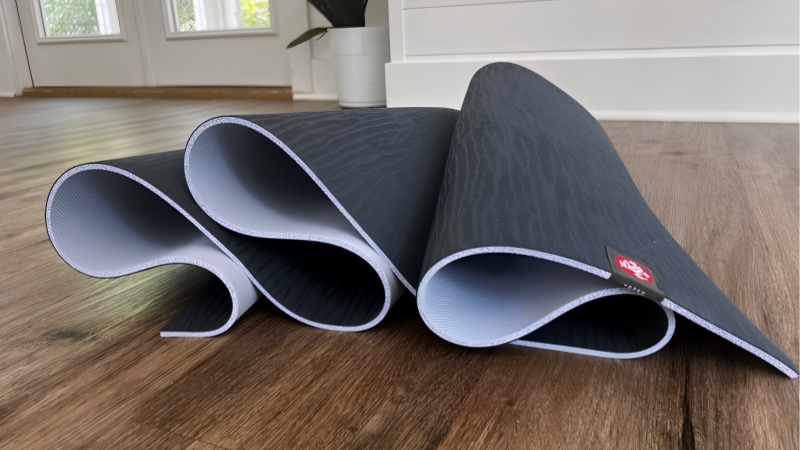
Material: Natural Rubber, Cork or TPE
Material is the whole decision. Natural tree rubber and cork are the cleanest performance surfaces, derived from renewable sources with no PVC or phthalates, though natural rubber can contain trace latex. TPE is PVC-free and recyclable but still a synthetic, petroleum-based material that can off-gas some VOCs when new.
Rank them by how clean you need. Natural rubber and cork are the top tier; TPE is a reasonable, cheaper compromise rather than a truly “safe” material. Avoid PVC entirely, since it is the main source of the phthalates and chemical smell that push people toward a non-toxic mat in the first place.
Jute and organic cotton appear on some mats too, usually as a woven top layer over a rubber base. They are clean materials but grip less and wear faster than rubber or cork, so treat them as a niche choice for gentle, low-sweat practice rather than a hot-yoga surface.
Certifications and Honest Labels
Certifications turn a claim into a fact. Look for OEKO-TEX, which means the finished mat has been independently tested for harmful substances, or MADE SAFE and GOTS on some mats. These matter far more than a vague “natural” or “eco” label with no material named.
Read the wording carefully. A mat “made with certified natural rubber” can still contain synthetic rubber, polyester or an undisclosed antimicrobial agent, since makers need not list a full formula. Brands that say “responsibly made” rather than “100 percent natural” are often being more honest about their dyes and bonding agents.
Independent testing has occasionally found trace compounds even in well-regarded natural mats, which is a reminder that no mat is guaranteed pure. A named material plus a recognised certification is still the best signal available, and it beats an unlabelled mat every time.
Grip, Thickness and Footprint
Non-toxic does not mean compromised. Natural rubber offers the best grip of any material, dry or wet, with open-cell surfaces (as on the Jade Harmony) absorbing moisture for traction and closed-cell surfaces (as on the Manduka eKO) repelling it for easier cleaning. Cork grips best when damp.
Thickness works as with any mat: 4 to 5 mm suits most practices, thicker for sensitive joints, thinner for travel and balance. Standard mats run 68 to 72 in (173 to 183 cm), so measure your height against the mat length and confirm your floor space before ordering, remembering rubber mats are heavier to carry.
Durability, Care and Value
Lifespan varies by material. A quality natural-rubber mat like the Manduka eKO can last 5 to 10 years with care; a Jade Harmony typically lasts 2 to 4 years; cork mats around 2 to 3 years before the surface wears. Natural materials need gentler care and can degrade in direct sun.
On value, natural rubber and cork cost more up front but last, while TPE is the budget entry to a PVC-free practice. A non-toxic surface is about avoiding chemical off-gassing, not a health treatment, so if you have a specific health concern or are pregnant, check with a doctor rather than relying on a mat’s claims.
Top Picks for the Best Non Toxic Yoga Mat
These six cover the best non toxic yoga mat range, from natural rubber and cork to PVC-free TPE. Match the material and certification to how clean you need and the grip to your practice. All are widely available on Amazon.
| Mat | Material | Certified | Best for |
|---|---|---|---|
| Manduka eKO | Natural rubber | OEKO-TEX | Everyday durability |
| Jade Harmony | Natural rubber | Brand-tested | Best grip |
| Liforme Classic | Natural rubber / PU | Tested | Alignment, premium |
| Gaiam TPE | TPE | PVC-free | Budget PVC-free |
| 42 Birds Cork | Cork / rubber | Natural | Cork, hot yoga |
| Manduka eKO SuperLite | Natural rubber | OEKO-TEX | Travel |
Manduka eKO Yoga Mat
Made from biodegradable natural tree rubber with chemical-free foaming agents and non-azo dyes, the eKO is OEKO-TEX certified with no PVC or harmful plasticizers. At about 5 mm it is one of the thicker eco mats, and its closed-cell surface repels sweat for easy, hygienic cleaning and a 5-to-10-year lifespan.
It needs a short break-in to soften and grip its best, and natural rubber has a mild scent and trace latex. During the break-in the closed-cell surface can feel slick, so a quick wipe and a few sessions get it to full grip. As the best everyday non-toxic mat, it leads. Best for daily practice and long-term durability.
Jade Harmony Yoga Mat
Jade invented the natural-rubber mat and still makes the Harmony from pure tree rubber with no PVC or EVA, planting a tree for every mat sold. Its open-cell surface delivers the best grip of any mat, especially when wet, at 3/16 in (about 4.7 mm) and 68 x 24 in (173 x 61 cm).
The open-cell surface absorbs sweat, so it needs more frequent cleaning and salt can degrade it over time, and it lasts 2 to 4 years rather than a decade. As the grip champion, it stands out. Best for sweaty, grip-critical practice.
Liforme Classic Yoga Mat
A premium natural-rubber and eco-PU mat with printed alignment markers and class-leading traction that improves when damp, widely rated the best non-toxic mat overall for combining clean materials with genuine performance and guidance.
It sits at the top of the price range and, as natural rubber, is heavier and not for those with a latex sensitivity. The eco-PU top can pick up oils from unwashed hands and needs regular cleaning to keep its grip, and the weight makes it a commitment to carry. As the premium alignment pick, it delivers. Best for alignment-focused yogis who want the cleanest performance.
Gaiam TPE Yoga Mat
A PVC-free, recyclable TPE mat that is lightweight and affordable, the budget route into a non-toxic practice for anyone who wants to avoid PVC without spending on natural rubber or cork.
TPE is still a synthetic, petroleum-based material that can off-gas some VOCs when new, so it is a “better” rather than a “safest” choice, and it wears sooner than rubber. As the budget PVC-free pick, it works. Best for a low-cost, PVC-free start.
42 Birds Cork Yoga Mat
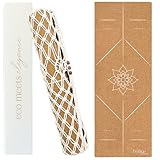
A cork mat on a natural-rubber base that is naturally antimicrobial and free of PVC and phthalates, with cork’s signature wet grip that suits hot yoga, offering clean materials at a friendlier price than the premium rubber mats.
Cork lasts around 2 to 3 years before the surface wears, and the rubber base adds weight. As the cork pick for a non-toxic practice, it stands out. Best for hot yoga with clean materials.
Manduka eKO SuperLite Travel Mat
A thin natural-rubber travel mat that is OEKO-TEX-aligned, super grippy and folds small enough to pack in a suitcase, giving genuinely non-toxic materials in a lightweight, portable form for practice on the road.
At its thin travel gauge it offers little joint cushion and can wrinkle on smooth floors, so it works best over a studio mat. As the travel pick, it delivers. Best for a clean mat you carry everywhere.
Frequently Asked Questions
Common questions when choosing the best non toxic yoga mat.
What makes a yoga mat non-toxic?
Being free of PVC, phthalates and heavy metals, and made from cleaner materials like natural rubber, cork or TPE. Look for an explicit statement of the material plus a certification such as OEKO-TEX, not just an unregulated “eco” or “natural” label.
Is a TPE mat truly non-toxic?
TPE is safer than PVC, being free of chlorine and phthalates, but it is still a synthetic, petroleum-based material that can off-gas some VOCs when new. It is a reasonable budget compromise; natural rubber or cork are the cleaner choices if you can afford them.
Are natural rubber mats safe for latex allergies?
Not necessarily. Natural rubber is derived from rubber trees and can contain trace latex, so anyone with a latex sensitivity should be cautious and check the listing. Cork mats with a synthetic base or a TPE mat may suit better in that case.
Do non-toxic mats grip as well as PVC?
Often better. Natural rubber offers excellent grip dry and wet, and cork grips harder when damp. The trade-off is weight and, for open-cell rubber, more frequent cleaning, but performance is not the reason to avoid a non-toxic mat.
See More:
- Best flooring for home gym over concrete
- Best collapsible exercise bike
- Best fold away exercise bike
- Best exercise bike folding
- Best home upright exercise bike
Final Thoughts
The best non toxic yoga mat names its material and proves it, so favour certified natural rubber or cork for the cleanest practice, TPE as a budget PVC-free step, and skip anything that only says “eco.” Check for OEKO-TEX, watch for trace latex, and the best non toxic yoga mat gives you a surface you can breathe over without a chemical smell.
As an Amazon Associate we earn from qualifying purchases at no extra cost to you. Product prices and availability are accurate as of the date shown and are subject to change.


Write Your Review
No reviews yet. Be the first to share your experience!