
Key takeaways
What's inside
Best yoga mat carrier choices come down to two measurements nobody checks before ordering: the diameter of your mat when rolled, and how much it weighs. A 6 mm mat rolls far thicker than a 3 mm one, and plenty of straps simply will not close around it. Measure the roll before ordering anything at all.
As an Amazon Associate we earn from qualifying purchases at no extra cost to you. Product prices and availability are accurate as of the date shown and are subject to change.
As an Amazon Associate we earn from qualifying purchases at no extra cost to you. Product prices and availability are accurate as of the date shown and are subject to change.


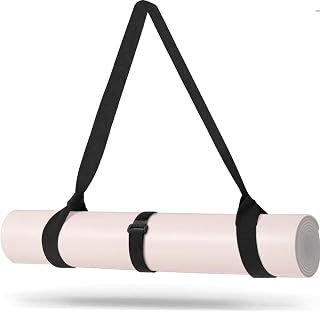


![A AZURELIFE [MAT NOT Included] Yoga Mat Sling, Yoga Mat Straps for Carrying, Easy-Cinch Yoga Mat Holder Strap](https://m.media-amazon.com/images/I/61o2FkDyzML._AC_UL320_.jpg)
![TECEUM Yoga Mat Strap – Extra Soft & Thick Cotton Carrier for All Mats | Adjustable Skin-friendly & Non-Slip Mat Holder Sling in 30+ Colors [Mat Not Included]](https://m.media-amazon.com/images/I/61PlWC+ipXL._AC_UL320_.jpg)

By Chris Parker
🛒 Best Price Today on Amazon
Prime members get fast, free shipping on everything above, plus member-only deals. New members get a 30-day free trial — cancel anytime.
Start 30-Day Prime Free Trial →See Today’s Amazon DealsHow to Choose the Best Yoga Mat Carrier
There are three formats, and they suit different journeys rather than different budgets. A strap is the lightest and least protective, a sling adds a shoulder pad and adjustability, and a full bag protects the mat but adds bulk. The distance you walk decides which of the three makes sense. Journey length beats budget here.
Rolled Diameter, Mat Weight and Fit
Roll your mat up and measure across it before you buy anything at all. Thin travel mats of 1.5 to 3 mm roll to roughly 4 in (10 cm), standard 5 to 6 mm mats reach about 5 to 6 in (13 to 15 cm), and anything thicker or wider defeats a fixed-size bag entirely. A tape measure settles the question in seconds.
Weight decides how much padding you need on the shoulder. A travel mat can weigh under 2.5 lb (1.1 kg), while a dense studio mat runs to 7 lb (3.2 kg) or more, and that difference is what turns a plain nylon strap from adequate into something that cuts into your shoulder. Padding matters once the mat passes 5 lb.
Straps, Slings and Bags Compared
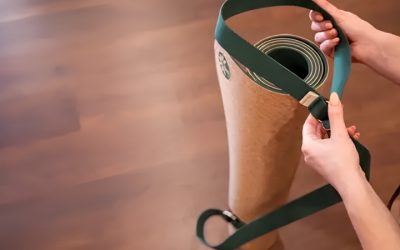
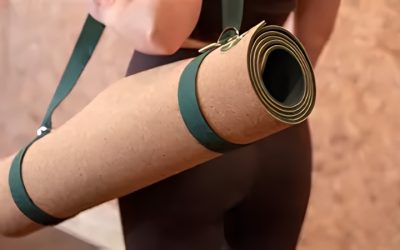
A strap is two loops of webbing that cinch around the rolled mat. It weighs almost nothing, costs very little and offers no protection at all, which is fine for carrying a mat from the car to a studio door and poor for anything longer or wetter than that. Rain is what an open strap handles worst of all.
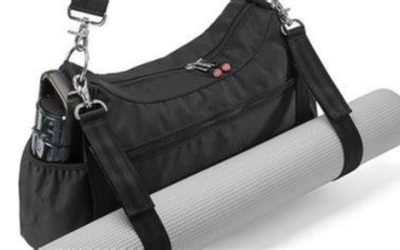
A sling adds an adjustable shoulder strap and usually a small pocket as well, which comfortably covers a walk to class or a short journey on public transport with the mat. A full bag encloses the mat, protects it from rain and holds a towel and blocks too, at the cost of bulk that has to live somewhere at home.
Footprint and Storage at Home
Storage is the quiet problem with the best yoga mat carrier decision. A strap lives in a pocket, a sling hangs on a hook, and a full bag takes up roughly the same space as the mat itself, which matters in a small flat where the mat already competes for a corner. Storage is the hidden cost of a full bag.
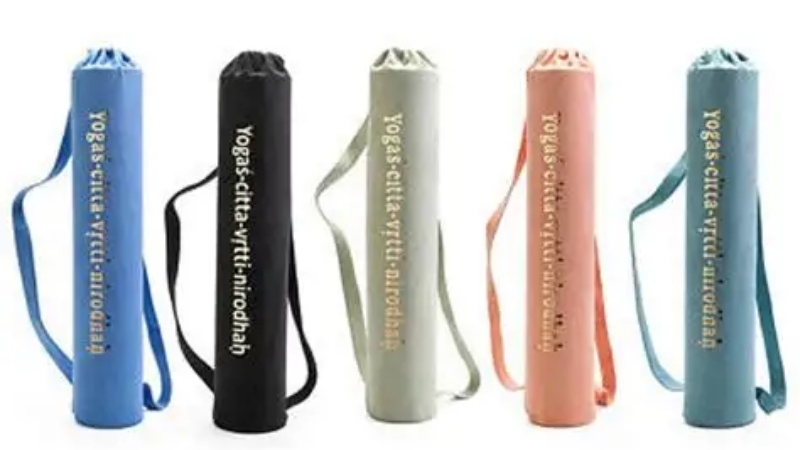
Consider how you get the mat out too. Bags with a full-length zip let you slide the mat in without wrestling it, while drawstring-only bags mean forcing a wide roll through a narrow opening. Measure both the mat and the bag opening before ordering rather than after it arrives. Zips beat drawstrings for a thick roll.
Top Picks: Carriers by Journey
These six run from a basic webbing strap through to a full zipped bag, and the right choice depends far more on the journey you make than on your budget. Each entry names a real drawback, because every format trades protection against weight. Buy the best yoga mat carrier for your journey, not your mat.
| Product | Format | Protection | Best for |
|---|---|---|---|
| Gaiam Easy-Cinch | Sling | Low | Short walks |
| Manduka Commuter | Strap | Low | Heavy mats |
| Hugger Mugger | Strap | None | Car to studio |
| Yogiii Strap | Strap | None | Lightest |
| Aurorae Bag | Bag | Full | Rain, transit |
| Gaiam Deluxe | Bag | Full | Mat and blocks |
Gaiam Easy-Cinch Yoga Sling
The Easy-Cinch is the most common sling for a reason: it cinches around almost any rolled mat, adjusts for height and costs very little. For a short walk to a class, it does everything a full bag does without adding a piece of luggage you then have to store at home. It is the default sling for good reason.
There is no padding to speak of, so a heavy studio mat becomes uncomfortable over a longer walk, and the mat itself is exposed to rain. The cinch can also slip with a very thick mat. Check your rolled diameter first, since the adjustment range is not unlimited. Rain remains a problem with any open sling.
Manduka Commuter Mat Carrier
Manduka’s commuter carrier is built around the reality that its own mats are heavy, so the strap is wider and the adjustment accounts for a thicker roll. If you own a dense 6 mm mat that most straps struggle to grip, this is the one designed for it. Wider webbing spreads the load noticeably over a longer walk.
It costs several times what a plain webbing strap does and offers no more protection at all, since it remains an open carrier rather than a bag. Buy it if your mat is genuinely heavy, and buy something cheaper if it is not. Travel mats do not need this much strap. Price is the main reason to look elsewhere.
Hugger Mugger Yoga Mat Strap
A simple two-loop strap is the honest answer for anyone who only carries a mat from a car to a studio door. Hugger Mugger’s version is well made, adjusts easily and weighs almost nothing, which means it lives in a bag pocket permanently rather than being forgotten at home. It is the simplest option on this list.
It offers no protection, no shoulder padding and no way to carry anything else. Over a longer walk, the webbing digs in with a heavy mat. That is the trade you are making, and for a very short journey it is entirely the right one to make. Nothing else weighs as little as a strap does. For fifty metres it is the right tool.
Yogiii Yoga Mat Strap
The Yogiii strap is the budget version of the same idea and does the job for a fraction of the price. For carrying a light mat over a short distance, there is very little that a costlier strap does differently, which makes it a sensible first purchase. Buckle quality is where the saving quietly shows up.
Webbing quality and buckle feel sit a clear step below the established brands here, and it will not cope with a thick or heavy mat at all comfortably. Treat it as a low-cost solution to a low-stakes problem rather than something that survives daily commuting for years on end. Buckles feel cheap first.
Aurorae Yoga Mat Bag
A full bag is what you want if the mat travels on public transport or in the rain. Aurorae’s bag encloses the mat completely, has room for a towel and small items, and keeps a damp mat away from everything else you are carrying at the time. Rain is where a full bag earns its place. Damp mats stay away from your clothes.
Bags are bulkier to store, heavier to carry and far slower to load than a strap is, and that is the trade you accept for the protection they give. Check the internal length and diameter against your own mat before ordering, since a wide 26 in mat rolls thicker than the sizes these bags are built around.
Gaiam Deluxe Yoga Mat Bag
The deluxe version adds space for blocks, a towel and a water bottle, which turns one carrier into the whole kit bag. If you practise away from home regularly and carry props as well as a mat, that saves juggling two bags on the way to a class. It is the best yoga mat carrier for carrying props too.
The extra capacity means extra bulk, and a full bag is noticeably heavier before you put anything at all inside it. It also needs its own storage space at home between sessions. Buy it if you genuinely carry props to class, and buy a sling instead if the mat travels alone. Props are what justify the extra bulk.
Frequently Asked Questions
These four questions come up whenever a mat starts leaving the house regularly. They are about fit, protection and storage, since those decide whether a carrier gets used every session or ends up in a drawer after two frustrating attempts to close it. Fit answers most of them. Measure before you order anything.
Will the best yoga mat carrier fit my mat?
Roll the mat and measure across it first. Thin mats roll to roughly 4 in (10 cm), standard 5 to 6 mm mats to about 5 to 6 in (13 to 15 cm), and extra-wide mats to more. Compare that against the stated capacity rather than assuming one size fits all, since extra-wide mats defeat most fixed-size bags.
Strap or bag: which should I buy?
Strap for short journeys where the mat is dry and light, and a full bag for transit, rain or carrying props with it. A sling sits between the two and covers most everyday routines. Distance decides it more than price does, rain shifts the answer towards a bag, and carrying props shifts it further again.
Can I wash the best yoga mat carrier I buy?
Most fabric slings and bags can be washed cold and air dried, while straps rarely need more than a wipe down. Check the label, because some bags have stiffening panels that do not survive a machine. Never put a damp mat into a closed bag and leave it there overnight, since odour sets in within days.
Do I need padding on the shoulder strap?
Only if the mat is heavy or the walk is long. A 2.5 lb (1.1 kg) travel mat needs nothing; a 7 lb (3.2 kg) studio mat over a fifteen-minute walk is a different matter entirely. Padding costs little and is the difference on a regular commute. Check the strap width as well as the padding. Narrow webbing digs in under load.
See More:
Final Thoughts
The best yoga mat carrier is decided by your rolled mat diameter and the length of your journey, rather than by the price on the label. Measure the roll first, buy a strap for short trips and a full bag for transit, and check the bag opening before ordering anything. Then carry it without thinking about it.

Write Your Review
No reviews yet. Be the first to share your experience!