
Key takeaways
What's inside
Best yoga mat brand comparisons are really comparisons of material philosophy. Manduka builds closed-cell PVC for longevity, Jade uses open-cell natural rubber for grip, Liforme and lululemon bond polyurethane over rubber for wet traction, and the budget names sell foam. The warranty tells you the rest.
As an Amazon Associate we earn from qualifying purchases at no extra cost to you. Product prices and availability are accurate as of the date shown and are subject to change.


As an Amazon Associate we earn from qualifying purchases at no extra cost to you. Product prices and availability are accurate as of the date shown and are subject to change.
By Chris Parker
🛒 Best Price Today on Amazon
Prime members get fast, free shipping on everything above, plus member-only deals. New members get a 30-day free trial — cancel anytime.
How to Compare the Best Yoga Mat Brand Options
Picking the best yoga mat brand is less about reputation than about which compromise each maker has decided to accept. Every brand here has chosen a material, and that choice determines grip, lifespan, cleaning rules and price simultaneously. Four checks reveal which one has chosen the compromise you can live with.
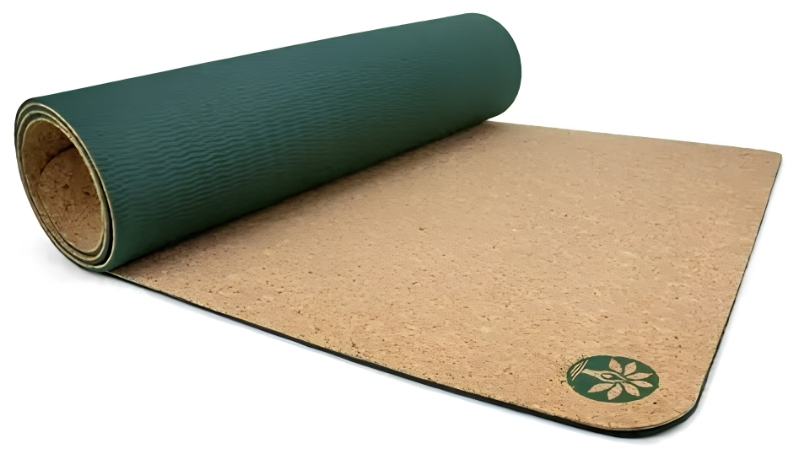
A Brand Is a Material Decision
Closed-cell surfaces such as PVC and TPE are sealed, so they wipe clean, resist odour and last for years, while sweat sits on top and makes them slippery. Open-cell surfaces such as natural rubber and polyurethane absorb moisture, which holds grip when damp and takes in body oils along with it.
Nothing gets both. A brand built around longevity will not give you wet grip, and a brand built around wet grip will wear through sooner and demand careful cleaning. Knowing which side a maker sits on tells you more about how the mat will behave than any description of its surface texture.
Warranty, Replacement and What It Signals
Warranty length is the most honest signal a brand gives about expected service life. A lifetime guarantee on a closed-cell PVC mat is a claim the maker can afford because the material genuinely lasts, and no natural rubber or polyurethane brand offers anything comparable, for exactly the same reason.
Read what the cover actually includes. Manufacturing defects are almost always covered; normal surface wear, compression under the knees and loss of grip from cleaning products are almost never. That distinction matters most on polyurethane mats, where an oil-based cleaner permanently dulls the surface and is not a defect.
Size Ranges, Thickness and Rolled Footprint
The best yoga mat brand options differ more on sizing than on almost anything else. Some offer a single 68 in (173 cm) length, others run 68, 71 and 74 in (173, 180 and 188 cm) plus an 85 in (216 cm) long version, and widths split between 24 in (61 cm) and 26 in (66 cm).
Thickness drives the rolled footprint. A 4-5 mm mat rolls to roughly 4-5 in (10-13 cm) across, while a 10-13 mm foam mat reaches 6-7 in (15-18 cm). Measure the clear floor area of your practice space and the spot the mat will live in before ordering a long or thick version.
What Each Brand Tier Actually Buys
At the budget end every best yoga mat brand is selling NBR or PER foam under its own name, and the differences between makers at that level are cosmetic. Foam is the cheapest material to produce at thickness, it dents permanently under the knees within a year of regular use, and no brand changes that.
The middle tier is where materials start to differ meaningfully. TPE and quality PVC appear here, thickness tolerance improves, and surface texture is moulded rather than embossed, so it survives wear. This is also the widest part of the market and where most practitioners should be looking.
The premium tier buys one of two things: a closed-cell mat engineered to last decades, or an open-cell surface that grips when wet. Those are different products at similar prices, and choosing between them by brand reputation rather than by which problem you have is the most common expensive mistake.
Top Picks: 6 Yoga Mat Brands and What Each Stands For
Each brand below is listed with the material decision behind it, because that is what the best yoga mat brand debate actually comes down to. The table gives the flagship mat, the surface type and the warranty position, since those three predict how the mat will behave and how long it will last.
| Brand | Flagship | Surface | Wet Grip | Warranty Position |
|---|---|---|---|---|
| Manduka | PRO, 6 mm | Closed-cell PVC | Poor | Lifetime guarantee on PRO |
| Jade Yoga | Harmony, 4.8 mm | Open-cell rubber | Good | Standard defect cover |
| Liforme | Yoga Mat, 4.2 mm | Polyurethane on rubber | Excellent | Standard defect cover |
| lululemon | The Mat, 5 mm | Polyurethane on rubber | Excellent | Standard defect cover |
| Gaiam | Range across tiers | PVC, TPE and NBR foam | Varies by model | Standard defect cover |
| BalanceFrom | GoYoga All-Purpose | High-density foam | Poor | Basic |
Manduka
The longevity brand. The PRO is closed-cell PVC at 6 mm in 71 in (180 cm) and 85 in (216 cm) lengths, carries a lifetime guarantee, and resists abrasion in a way no rubber or polyurethane mat manages. Density under the knees at that thickness is the best here by some margin.
It arrives slippery and stays that way for weeks until the surface is broken in through use or an overnight coarse salt scrub, and wet grip remains poor afterwards because the surface is sealed. At roughly 7.5 lb (3.4 kg) it is a mat that stays at home rather than travelling to classes.
Jade Yoga
The dry grip benchmark. Open-cell natural rubber at 4.8 mm gives a tacky feel from the first session with no break-in at all, and the Harmony comes in 68, 71 and 74 in (173, 180 and 188 cm) lengths so taller practitioners are properly served rather than treated as an afterthought.
Rubber is a latex product and unsuitable for anyone with that allergy. It smells strongly for the first weeks, degrades in direct sunlight, absorbs sweat and body oils so it needs proper periodic cleaning rather than a wipe, and it wears noticeably faster than PVC or polyurethane surfaces do.
Liforme
The alignment and wet grip brand. A polyurethane top bonded to natural rubber holds dry palms firmly and keeps holding as sweat arrives, and at 72.8 x 26.8 in (185 x 68 cm) and 4.2 mm it is generously sized. The etched alignment markers remain useful well past the novelty stage.
Polyurethane absorbs oils as readily as sweat, so hand cream, sun lotion and any oil-based cleaner will permanently dull the patches they touch, and there is no reversing it. It is the most expensive mat here, weighs around 5.5 lb (2.5 kg), and shows wear at hand positions first.
lululemon
The same polyurethane-over-rubber approach in a slightly thicker package. The Mat at 5 mm and 71 x 26 in (180 x 66 cm) is built around sweaty practice and performs best once moisture appears, which is the opposite behaviour to every closed-cell mat and exactly what a heated room needs.
Dry grip is good rather than exceptional, so the opening minutes of a cool session feel less certain than on rubber. The surface marks visibly, cleaning instructions are specific enough that ignoring them costs grip, and at around 5.24 lb (2.4 kg) it is heavy to carry to a studio regularly.
Gaiam
The range brand rather than a material brand, covering NBR foam at the bottom, PVC in the middle and TPE alongside it, in almost every thickness and print you could want. That breadth is genuinely useful, because it means one maker covers a beginner and a regular practitioner without either compromising.
It also means the name tells you very little on its own. A Gaiam foam mat and a Gaiam PVC mat behave completely differently and last different lengths of time, so you have to read the material rather than the badge. Quality within any single tier is competent rather than exceptional.
BalanceFrom
The budget benchmark, and honest about what it is. High-density foam in 1/4 in (6.4 mm) and 1/2 in (12.7 mm) at 71 x 24 in (180 x 61 cm), with a carry strap included and a price low enough that finding out whether yoga suits you costs almost nothing at all. Treat it as a one-year mat.
Foam compresses permanently under the knees within about a year of regular use, the cut edges lift at the corners, and grip falls away as soon as your palms are damp. Never rest dumbbells or a kettlebell on it, since a point load leaves a crater immediately and permanently.
Frequently Asked Questions
Most questions about the best yoga mat brand come down to whether the premium tier is justified and what the guarantees actually mean. These four cover value, sweaty practice, warranty scope and whether a beginner needs anything beyond the cheapest usable mat available.
Is an expensive brand actually worth it?
It depends on frequency. Below about two sessions a week, a mid-tier TPE or PVC mat replaced occasionally works out cheaper. Above three, the premium mats cost less per year because they hold their surface for far longer, and you spend less of that time practising on something flattened.
Which brand is best for sweaty practice?
Liforme or lululemon, because a polyurethane top is one of only two surfaces that grip better as moisture arrives. Jade is a reasonable third with open-cell rubber. Manduka, Gaiam PVC and every budget foam mat are sealed surfaces and will get slicker as you sweat, whatever the texture.
What does a lifetime guarantee actually cover?
Manufacturing defects, essentially. Delamination, splitting and faults present from new are covered; normal surface wear, compression under the knees and grip lost to an unsuitable cleaner are not. It is a strong signal about expected service life rather than a promise that the mat will be replaced when it wears out.
Are budget brands fine for a beginner?
Yes, entirely. A foam mat covers stretching, floor work and gentle classes perfectly well, and buying one costs less than a couple of studio drop-ins. Treat it as a one-year purchase, then upgrade to TPE or better once you know which style you practise and how much you sweat doing it.
See More:
- Best home pull-up bar
- Best at home pull up bar
- Best in house pull up bar
- Best rated ab roller
- Ankle weights best
Final Thoughts
The best yoga mat brand for you is decided by which compromise suits your practice. Manduka buys longevity and gives up wet grip; Jade buys dry grip and gives up lifespan; the polyurethane brands buy wet grip and demand careful cleaning. Read the material, not the badge.

Write Your Review
No reviews yet. Be the first to share your experience!