
What's inside
Best way to clean a yoga mat depends entirely on what the mat is made of, because the solution that revives natural rubber will strip a polyurethane surface. This guide separates cleaning by material, sets a realistic schedule, and compares six sprays and tools that will not destroy the traction you paid for.
As an Amazon Associate we earn from qualifying purchases at no extra cost to you. Product prices and availability are accurate as of the date shown and are subject to change.


As an Amazon Associate we earn from qualifying purchases at no extra cost to you. Product prices and availability are accurate as of the date shown and are subject to change.
By Chris Parker
🛒 Best Price Today on Amazon
Prime members get fast, free shipping on everything above, plus member-only deals. New members get a 30-day free trial — cancel anytime.
How to Clean a Yoga Mat Without Wrecking the Surface
Three variables decide the method: the top-surface material, how much sweat the mat absorbs, and where the mat can dry flat afterwards. Get those right and a mat lasts years. Get them wrong – alcohol on rubber, oils on polyurethane, or rolling the mat while damp – and grip disappears within a few months.
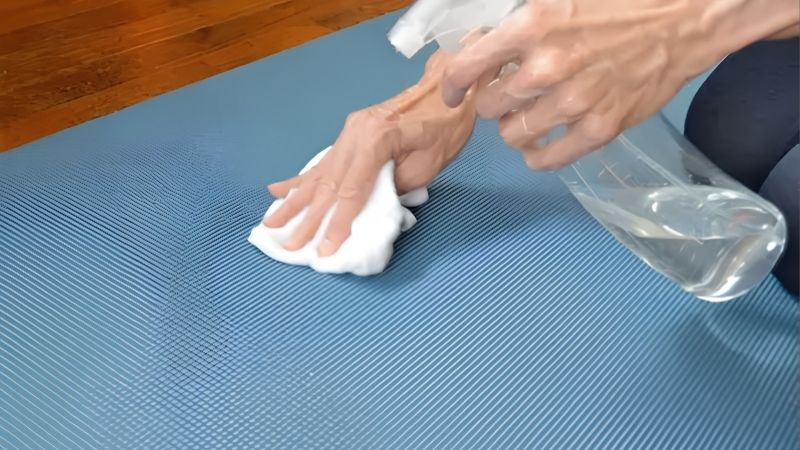
Match the Cleaner to the Mat Material
Open-cell natural rubber absorbs moisture, so it needs a genuine wash rather than a wipe, but it reacts badly to alcohol, oil-heavy sprays and direct sunlight, all of which dry the rubber and cause surface cracking. Manufacturers including Jade recommend mild soap and water and explicitly warn against oil-based products.
Closed-cell PVC and TPE seal moisture out, which makes them the easiest surfaces to maintain: a damp microfiber cloth with a drop of mild detergent handles almost everything. Polyurethane tops, such as the one on the Liforme, are the fussiest – the maker recommends water and a cloth, with strong solvents and alcohol avoided entirely.
Essential oil blends are the common trap. They smell like the best way to clean a yoga mat should smell, but tea tree and eucalyptus oils are lipids, and lipids sit on a mat surface and make it slick. If a spray lists oils high in its ingredient list, wipe the mat down with plain water immediately afterwards.
Build a Realistic Cleaning Schedule
A light wipe-down after every practice takes about 40 seconds and prevents almost all the problems people later try to fix with aggressive scrubbing. Sweat residue and skin oils are what actually cause slipperiness over time, and they are far easier to remove before they build up into a visible film.
A deeper clean makes sense every four to six weeks for daily practitioners, or quarterly for occasional use. That means a soapy wash with a soft cloth rather than a spray, worked in sections, then rinsed. High-heat practice or shared household use pushes that interval shorter, since bacteria thrive in warm, damp textures.
Drying Space: The Step Everyone Skips
A mat rolled while damp is how mildew starts, and it is the single most common cause of a permanent smell. After a wash, the mat needs to hang or lie flat until fully dry, which typically takes 2-6 hours depending on material and humidity – natural rubber takes the longest because it absorbs the most.
Plan around 6-7 ft (1.8-2.1 m) of rail, shower rod or clear floor for drying, out of direct sunlight, which degrades rubber and fades PVC. In small flats this is the real constraint. Measure the space you actually have before committing to a deep-clean routine that needs the bathroom out of action for an afternoon.
Top Picks: The Best Way to Clean a Yoga Mat, Product by Product
These six cover spray-and-wipe convenience, deeper washes, and the cloth that most people are missing. Formulas change and stock moves, so the notes below focus on what each product is designed for and where it falls short rather than on price, which shifts constantly across bottle sizes and bundles.
| Product | Type | Best for | Watch out for |
|---|---|---|---|
| Manduka Mat Renew | Daily spray | PVC and rubber mats | Scented – test a corner first |
| Asutra Natural Cleaner | Spray + towel | Post-class wipe-down | Essential oil content |
| Black Diamond Stoneworks | Spray, large bottle | Shared or studio mats | Overkill for one mat |
| Jade Yoga Mat Wash | Spray for rubber | Open-cell natural rubber | Rubber-specific formula |
| Yoga Design Lab Cleaner | Concentrate spray | Microfiber-topped mats | Needs dilution |
| Microfiber cloth set | Tool | Every material | Wash separately, no softener |
Manduka Mat Renew Spray
Manduka’s own plant-based daily spray, formulated alongside the mats it is meant to service, which matters because the brand’s closed-cell PVC surfaces respond badly to harsh degreasers. Spray, wipe with a dry cloth, and the mat is ready in under a minute – it is the low-friction option for a post-practice habit.
The scent is noticeable and not to everyone’s taste, and like most ready-mixed sprays it costs considerably more per use than diluting your own. It is also a maintenance product, not a rescue product: a mat that already smells needs a full wash before a daily spray like this becomes genuinely useful again.
Asutra Natural Yoga Mat Cleaner
Sold with a microfiber towel included, which removes the most common excuse for skipping cleaning. The formula is water-based with essential oils for scent, and it handles routine sweat residue on PVC and TPE mats without leaving a visible film, provided it is wiped properly rather than left to air dry.
The oil content is the caveat. On open-cell rubber and polyurethane surfaces, repeated use can leave a slight slickness, so wipe thoroughly and follow with a plain water pass occasionally. Anyone with a fragrance sensitivity should look at an unscented alternative instead of this particular formula entirely.
Black Diamond Stoneworks Yoga Mat Cleaner
A larger-volume spray aimed at people cleaning several mats – households with multiple practitioners, or anyone maintaining studio equipment. Coverage per bottle is the selling point, and it wipes off cleanly on hard closed-cell surfaces without needing a separate rinse pass afterwards to remove residue.
For a single home mat cleaned twice a week, the bottle size is more than most people will get through before losing interest in the routine. It is also formulated for general mat surfaces rather than tuned to any one material, so patch-test it on premium polyurethane before covering the whole mat surface.
Jade Yoga Mat Wash
Made by the company that produces open-cell natural rubber mats, which is the material most likely to be damaged by a generic cleaner. If your mat is Jade or a similar rubber build, this removes the guesswork about whether a given formula will dry out the surface over months and years of repeated use on the mat.
It is narrower in application than the alternatives – buying a rubber-specific wash for a PVC mat is unnecessary spending. Rubber also still needs a genuine soapy wash periodically, since a spray alone cannot pull absorbed sweat out of an open-cell surface. Treat this as maintenance, not deep cleaning.
Yoga Design Lab Mat Cleaner
Sold as a concentrate to be diluted, which lowers the cost per clean and lets you adjust strength for a light wipe or a heavier session. It is designed with the brand’s microfiber-topped combo mats in mind, where the surface is a textile rather than a polymer and therefore behaves far more like laundry.
Dilution is an extra step people skip, and using it neat can leave residue that dulls traction. Microfiber-topped mats also eventually need machine washing regardless of what spray you use, so this reduces wash frequency rather than replacing it entirely. Keep a spare bottle clearly labelled for guests.
Microfiber Cloth Set
The least glamorous item here and the one that changes results most. Microfiber lifts residue rather than smearing it, which is the difference between a mat that feels clean and one that feels faintly tacky. Two cloths – one damp, one dry – is the entire system needed for maintaining closed-cell mats week to week.
They need washing separately from cotton items and without fabric softener, which coats the fibres and destroys the pickup that makes them work. Cloths also wear out and should be replaced periodically. Terry towels are a poor substitute because they push moisture around rather than absorbing residue.
Frequently Asked Questions
Questions about the best way to clean a yoga mat usually arrive with a specific problem: a smell that will not leave, a surface gone slippery, or a mat that has started shedding. These four cover the situations that come up most often when people search for the best way to clean a yoga mat, and the mistakes behind them.
Can I put a yoga mat in the washing machine?
Only microfiber-topped and thin travel mats, and only on a cold, gentle cycle without softener. Standard PVC, TPE and rubber mats can delaminate or stretch permanently in a machine, and the spin cycle deforms foam. When in doubt, hand wash the mat in a bath and then lay it out flat to dry completely.
What is the best way to clean a yoga mat that smells?
A full soapy hand wash with mild detergent, worked in sections, then a thorough rinse and a long flat dry away from sunlight. Persistent odour usually means moisture was trapped inside an open-cell surface, so drying time matters far more in the end than whichever cleaner you happen to choose for the job.
Is vinegar safe on yoga mats?
Diluted white vinegar is generally safe on PVC and TPE and is a cheap deodoriser, but it is acidic and repeated use on natural rubber or polyurethane can degrade the surface. Mild soap and water remains the lower-risk default for the best way to clean a yoga mat, whatever the surface material happens to be.
How often should I deep clean?
Every four to six weeks with daily practice, quarterly with occasional use, and immediately after any session where the mat was visibly wet. Wiping after each practice is what actually keeps deep cleans rare, and skipping it is the reason mats ever reach the stage of needing a full rescue wash in the first place.
See More:
Final Thoughts
The best way to clean a yoga mat is the routine you will actually repeat: a 40-second wipe after every session, a proper soapy wash every month or so, and enough flat drying space that the mat never gets rolled while damp. Match the cleaner to your mat material, keep oils off grippy surfaces, and traction lasts as long as the mat does.
Write Your Review
No reviews yet. Be the first to share your experience!