
Our Top Picks
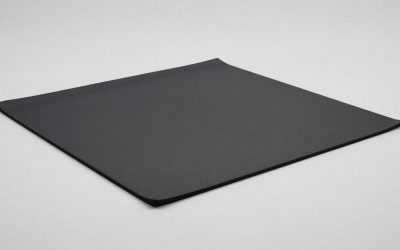
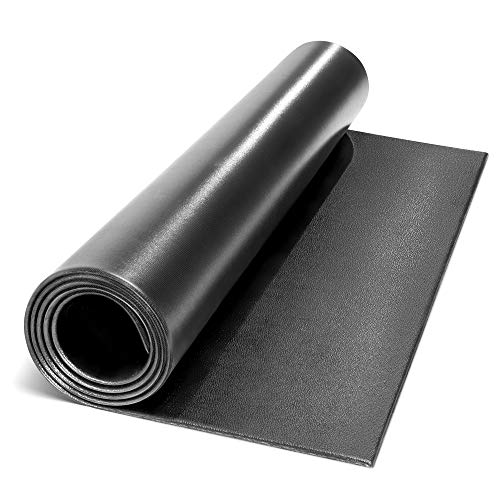 Marcy Fitness Equipment Mat and Floor Protector forMAT-366 (78" x 36" x 0.25")36 x 78 x 0.25 inches6.4 PoundsCheck on Amazon
 GymCope Treadmill Mat for Hardwood Floor Carpet 7'x3'/6'x3'/6'x2.5'/4'x2'36.8"L x 5.1"W x 5.1"Th72 x 36 x 0.25 inches6.6 poundsCheck on Amazon
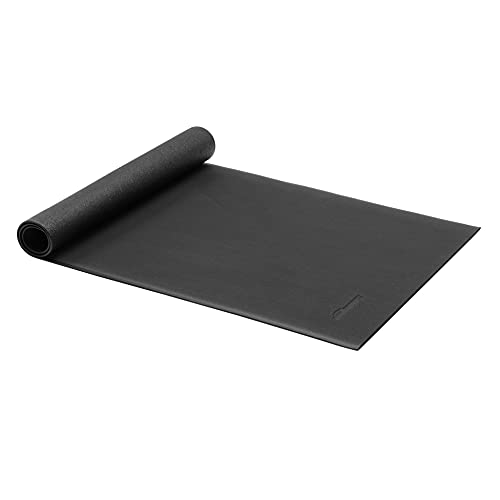 Amazon Basics Treadmill Mat and Exercise Equipment Floor72 x 30 x 0.3 Inches7.7 poundsCheck on Amazon
The best treadmill mats are dense, non-slip mats sized to extend at least 3–6 inches beyond every treadmill foot, with 6–12 mm thickness for most home machines and 12–20 mm for heavier treadmills, uneven floors, or noise-sensitive rooms.
Quick picks by treadmill and flooring situation
| Situation | Recommended mat specification | Why it fits |
|---|---|---|
| Compact walking pad on hard flooring | 3–6 mm PVC or dense rubber; approximately 24 × 48 inches | Protects against scuffs and minor vibration without adding unnecessary cost or height |
| Folding treadmill on hardwood or laminate | 6–10 mm rubber or high-density PVC; approximately 30 × 60–72 inches | Balances floor protection, traction, and manageable weight |
| Heavy commercial-style treadmill | 10–15 mm dense rubber; at least 36 × 78 inches | Resists compression beneath concentrated frame and roller loads |
| Treadmill in an upstairs room | 10–20 mm dense rubber, preferably with a textured underside | Provides more mass and cushioning for vibration and impact reduction |
| Treadmill on carpet | 6–12 mm firm PVC or rubber with ventilation channels or a textured underside | Limits carpet crushing and helps prevent the machine from shifting |
| Low odor or enclosed-room priority | Low-odor PVC or cured rubber labeled for indoor use | Reduces the chance of a strong manufacturing smell lingering in a bedroom or office |
How to choose the best treadmill mat
1. Match the dimensions to the machine’s footprint
Measure the treadmill’s actual floor-contact area, not only the running belt. Include the front motor housing, rear feet, side rails, and any stabilizer bars. The mat should extend beyond the machine by at least 3 inches on every side. For a treadmill that measures 30 × 72 inches at its widest and longest points, a practical minimum mat is about 36 × 78 inches.
Marcy Fitness Equipment Mat and Floor Protector for Treadmills, Exercise Bikes, and Accessories Mat-366 (78" x 36" x 0.25" Thickness) , Black
Chosen because it specifies Exercise Bikes and and Accessories Mat-366 (78" x 36" x 0.25" Thickness).
View on Amazon
Stepwaver Walking Pad Mat, Treadmill Mat for Carpet & Hardwood Floors
Chosen because it specifies Treadmill Mat for Carpet & Hardwood Floors.
View on AmazonGymCope Treadmill Mat for Hardwood Floor Carpet 7'x3'/6'x3'/6'x2.5'/4'x2'
Picked as a relevant option in this category.
View on AmazonAmazon Basics Treadmill Mat and Exercise Equipment Floor Protector, Non-Slip, Noise Reduction, 2.5 Feet x 6.0 Feet, Black
Chosen because it specifies Non-Slip and Noise Reduction.
View on AmazonExtra length is especially useful behind the treadmill, where sweat, lubricant, and dust can reach the floor. Leave enough surrounding clearance for folding mechanisms, power cables, and safe access. A mat that is technically large enough but obstructs a fold-up deck can become a daily nuisance.
2. Choose thickness for load, not just noise
Thickness helps, but density and compression resistance matter just as much. A soft 12 mm foam-like mat may compress more readily than a firm 6 mm rubber mat. Under a treadmill, look for a material that stays stable under repeated point loading from feet and frame supports.
- 3–6 mm: Suitable for light walking pads and smaller treadmills on smooth, hard floors.
- 6–10 mm: The most versatile range for ordinary home treadmills and hardwood, vinyl, or laminate floors.
- 10–15 mm: Better for heavy machines, upstairs rooms, thick carpet, and frequent running.
- 15–20 mm: Useful where vibration reduction is a priority, although it can raise the machine and affect stability or incline clearance.
Do not assume a thicker mat will eliminate structural noise. Footfall transmitted through walls, joists, and the treadmill frame may require machine leveling, lower impact, or building-level acoustic treatment. A mat mainly helps isolate vibration, protect the floor, and reduce sliding.
3. Compare rubber and PVC construction
Rubber is usually the stronger choice for heavier treadmills and frequent running. Dense rubber offers good traction, resists punctures from feet and casters, and generally remains stable under repeated compression. Its disadvantages are weight, a possible initial odor, and greater difficulty moving or rolling.
PVC is often lighter, less expensive, and easier to clean. It works well for walking pads, moderate-use treadmills, and users who need to move the equipment regularly. Lower-quality PVC can curl at the edges, become brittle in cold rooms, or dent permanently beneath narrow supports.
For either material, avoid very soft exercise mats designed for stretching or floor work. They can deform under the treadmill’s concentrated load and may allow the machine to rock.
4. Check traction and underside design
The top surface should resist sliding when the treadmill accelerates, while the underside should grip the floor without leaving a tacky residue. Raised textures can improve traction, but very aggressive ridges may collect dust and make cleaning harder.
On carpet, a textured underside or shallow channel pattern can help distribute pressure and reduce trapped moisture. On hardwood, stone, or laminate, check that the mat is marked as floor-safe and use a clean, dry surface underneath. Some rubber compounds can interact with sensitive finishes over long periods, particularly when moisture or heat is trapped between the mat and floor.
Floor compatibility matters more than the label
| Floor type | Best approach | Potential problem |
|---|---|---|
| Hardwood | Firm rubber or floor-safe PVC with a smooth, clean underside | Grit trapped under the mat can scratch the finish |
| Laminate | Moderately firm mat with good grip and no excessive thickness | Moisture and concentrated loads can stress floating joints |
| Vinyl | Non-staining, floor-compatible PVC or rubber | Some rubber compounds may discolor certain vinyl surfaces |
| Tile or concrete | Dense rubber with enough thickness to bridge minor irregularities | Thin mats may not prevent vibration or protect grout from concentrated loads |
| Carpet | Firm mat with underside texture and enough width for all supports | Soft carpet can reduce stability and retain moisture underneath |
Decision matrix: which mat makes sense?
| Your priority | Choose | Avoid |
|---|---|---|
| Lowest reasonable cost | 6 mm PVC sized to the full footprint | Oversized premium rubber that adds weight without solving a specific problem |
| Daily running | 10–15 mm dense rubber with high compression resistance | Thin foam or soft puzzle-style flooring |
| Small apartment | Firm, low-profile rubber with strong underside traction | Very thick, soft mats that make the treadmill unstable |
| Frequent relocation | Lightweight PVC, ideally with a rolled storage design | Very dense rubber that is difficult to lift safely |
| Maximum floor protection | Dense rubber extending at least 3–6 inches past each support | Mat sized only to the running belt |
Calculate the right coverage before buying
Use the widest and longest dimensions of the treadmill, then add your desired border twice. For example:
- Treadmill footprint: 31 × 73 inches
- Desired border: 4 inches on each side
- Minimum mat: (31 + 8) × (73 + 8) = 39 × 81 inches
A 36 × 78-inch mat would be undersized for this example even though it may look close in a product listing. If no exact size exists, choose the next larger option, provided it does not interfere with doors, folding clearance, or walking paths.
Setup steps that improve protection and noise control
- Vacuum and inspect the floor. Small grit can become an abrasive layer beneath the mat.
- Unroll the mat completely. Let curled edges relax according to the manufacturer’s instructions; do not place the treadmill on sharply raised corners.
- Center every foot and support. The mat should carry the frame, not merely sit beneath the belt.
- Level the treadmill. An uneven machine can rock, increasing vibration and accelerating wear on both mat and treadmill.
- Route the power cord safely. Keep it flat and away from moving parts, with no cord trapped under a frame foot.
- Test at walking speed first. Check for creeping, edge curl, rocking, and unusual movement before running.
Odor, cleaning, and durability realities
New rubber often has a stronger odor than PVC. Unroll the mat in a ventilated area before installation, then wipe it with mild soap and water if permitted by its care instructions. Avoid solvents, bleach, and excessive heat, which can damage the surface or increase brittleness. People who are particularly sensitive to odors should favor a low-odor indoor-rated material and ventilate the room during the initial airing period.
The parts most likely to wear first are the areas beneath narrow treadmill feet, the front section beneath the motor housing, and the edges where the mat is repeatedly rolled. Inspect these areas every few months. Permanent dents, splitting, edge curling, loss of traction, or a treadmill that begins to rock are signs that replacement may be more useful than adding another soft layer.
Keep the mat dry, lift it occasionally to inspect the floor, and remove dust from both surfaces. In humid rooms, periodic air circulation underneath the mat helps prevent trapped moisture and floor damage. A well-sized, firm mat will usually protect the floor more effectively than simply buying the thickest option available.
Bottom line
For most home treadmills, the best treadmill mats are 6–10 mm thick, firm enough to resist compression, and large enough to extend 3–6 inches beyond the complete machine footprint. Choose dense rubber for heavy, frequent, or upstairs use; choose PVC when low weight, easy cleaning, and lower cost matter more. Before buying, prioritize exact dimensions, floor compatibility, traction, and the mat’s ability to stay flat under load.

Write Your Review
No reviews yet. Be the first to share your experience!