
Key takeaways
What's inside
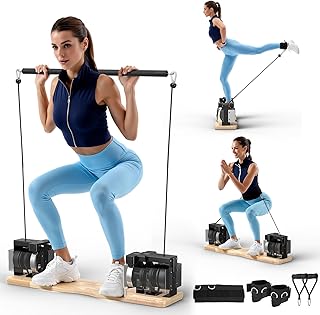
Best home gym compact claims usually quote a stored footprint and stay quiet about the deployed one. A machine that folds to six inches still needs a clear rectangle to use. This guide separates those two numbers, covers ceiling and wall constraints, then lists six setups. The stored figure is never the whole story.
As an Amazon Associate we earn from qualifying purchases at no extra cost to you. Product prices and availability are accurate as of the date shown and are subject to change.




As an Amazon Associate we earn from qualifying purchases at no extra cost to you. Product prices and availability are accurate as of the date shown and are subject to change.
By Chris Parker
🛒 Best Price Today on Amazon
Prime members get fast, free shipping on everything above, plus member-only deals. New members get a 30-day free trial — cancel anytime.
How to Choose the Best Home Gym Compact Option
Compact is a slippery word in this category. The best home gym compact setup for a flat is rarely the one with the smallest folded dimensions, because deployed area, ceiling height and whether you may drill into a wall usually eliminate options before the specification does.
Stored Footprint Versus Deployed Footprint
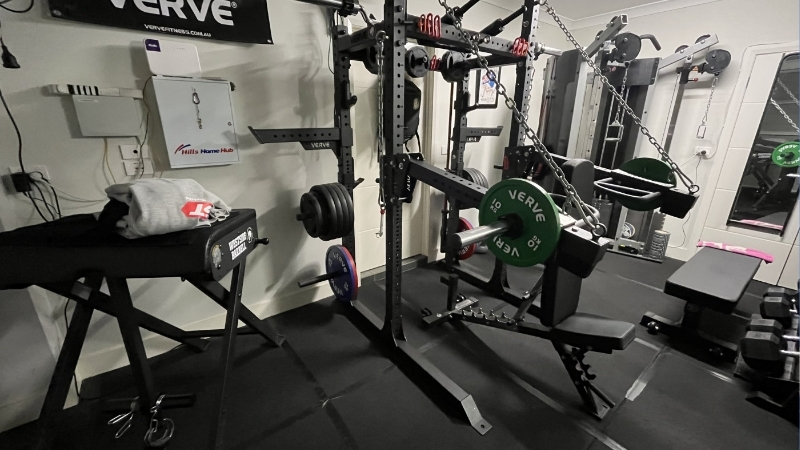
Every best home gym compact listing quotes the flattering number. A folding rack may sit 6 in (15 cm) from the wall when closed and still need a 4 x 6 ft (1.2 x 1.8 m) working area open, plus room to walk behind the bar. Both figures matter, and only one usually appears.
Free weights invert the comparison. A pair of adjustable dumbbells plus cradles claims roughly 3 sq ft (0.28 sq m) permanently and needs no deployment at all, while a stowable bench stands in about 1.5 sq ft (0.14 sq m). That combination is the most compact strength setup available.
Then add training clearance, which nothing removes. Dumbbell and machine work alike need roughly 6 x 6 ft (1.8 x 1.8 m) of clear floor. Measure the actual room, the doorway width and any hallway turn before ordering anything of this size.
All-in-One Machines Versus Free Weights
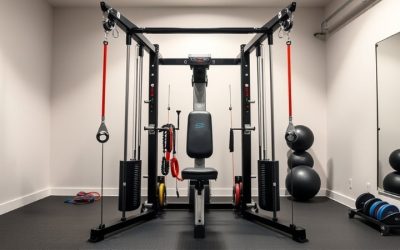
All-in-one machines trade footprint for guided movement. A single-stack home gym or a resistance-rod machine covers pulling, pressing and leg work from one frame, which suits people who want structure without learning barbell technique or buying a rack.
The costs are real. Machines fix your movement path, so they suit some body proportions better than others. Stacks and rod sets have ceilings that a rack and plates do not, and a machine that stops progressing is a large object to remove from a small room.
The gap in this market is worth naming: most strength equipment is still designed and photographed for wide garages. Genuinely compact, foldable options exist but remain thinner on the ground than the price range suggests, which is why free weights often win on space by default.
Ceiling Height, Wall Mounting and Rented Flats
Ceiling height rules out more equipment than budget does. Full-height racks stand roughly 80 to 92 in (203 to 234 cm) and need clearance above for pull-ups, so 8 ft (244 cm) is the practical minimum. Standing overhead work needs your height plus about 20 in (50 cm).
Folding racks mount to a wall, which means drilling into studs or masonry. In a rented flat that is frequently prohibited outright, and a folding rack that cannot be mounted is not a compact rack, it is an unusable one. Confirm this before anything ships.
Assembly, Moving It and What Wears
Compact rarely means light. Racks and machines ship in dense boxes that one person should not carry upstairs alone, and assembly commonly runs two to four hours with two people. Plan the route, including any hallway turn, before delivery day rather than after.
Wear points differ by type. On racks it is welds, pop-pin holes and the powder coat where the bar contacts steel. On cable machines the cable is the consumable and needs inspecting for fraying at the pulleys. Resistance rods lose tension slowly and are replaced as a set. For technique or an existing injury, work with a certified coach and your doctor.
Top Picks: Best Home Gym Compact Setups Compared
Six best home gym compact options below, spanning folding racks, all-in-one machines and the free-weight route. They are not interchangeable: the right one depends almost entirely on your ceiling height and whether you are allowed to put bolts into a wall.
| Option | Type | Stored | Needs |
|---|---|---|---|
| Titan T-3 Folding Rack | Wall-mounted rack | Folds close to the wall | Studs and 8 ft ceiling |
| Bowflex Xtreme 2 SE | Resistance rod machine | Folds partially | Clear deployed area |
| Total Gym APEX G5 | Glideboard machine | Folds flat | Floor length when open |
| Marcy MWM-990 | Single-stack home gym | Fixed footprint | Permanent floor space |
| PowerBlock Elite EXP | Adjustable dumbbells | About 3 sq ft (0.28 sq m) | Shelf or floor corner |
| Bowflex 5.1S Stowable Bench | Bench | Stands vertically | Wall space |
Titan T-3 Series Folding Rack: Smallest Stored Rack
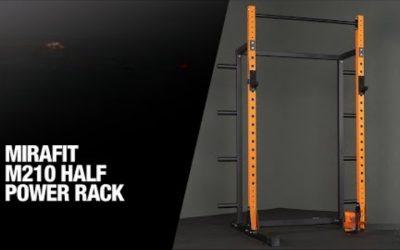
A wall-mounted rack that folds back against the wall when not in use, giving you barbell squatting and pressing in a room that also serves another purpose. Deployed, it needs the usual 4 x 6 ft (1.2 x 1.8 m) working area plus clearance behind the bar.
It must be bolted into studs or masonry, which rules it out in most rented properties. Pull-ups need 8 ft (244 cm) of ceiling. Folding and unfolding is a two-minute ritual before and after every session. Mid tier, and the best option if you own the wall.
Bowflex Xtreme 2 SE: All-in-One Without a Rack
A resistance-rod machine covering pressing, pulling and leg work from a single frame, with a large exercise library and no plates to store. It folds partially for storage and needs no ceiling clearance, which makes it viable where a rack is not.
Rod resistance feels different from free weight, with the load increasing through the range rather than staying constant. The ceiling is fixed by the rod set you own. Deployed footprint is larger than the folded figure suggests, and it is awkward to relocate. Mid tier.
Total Gym APEX G5: Flattest Storage
A glideboard machine using your own body weight at adjustable incline levels, folding flat enough to slide against a wall or under some beds. For very small flats it is one of the few full-body options that genuinely disappears between sessions.
Resistance is capped by your body weight and the incline range, so progression stops sooner than with external load. Deployed length is considerable despite the flat storage. The glide mechanism and cables are the wear points over years. Mid tier.
Marcy MWM-990 Home Gym: One Frame, Several Stations
A single-stack machine giving lat pulldown, low row, press and leg developer stations from one frame with a fixed weight stack. Everything is guided, nothing needs to be loaded, and it removes the storage problem of plates entirely.
The footprint is permanent and large, typically needing 5 x 7 ft (1.5 x 2.1 m) plus clearance, which stretches the definition of compact. The stack tops out well below a rack and barbell. Cables and pulleys need periodic inspection and eventual replacement. Mid tier.
PowerBlock Elite EXP: Most Training Per Square Foot
A selector-pin adjustable dumbbell running 5 to 50 lb (2.3 to 22.7 kg) per hand in a cube of roughly 12 x 6 x 6.25 in (30 x 15 x 16 cm), expandable to 70 or 90 lb (32 or 41 kg). Nothing folds because nothing needs to: the pair plus cradles claims about 3 sq ft (0.28 sq m).
It cannot be dropped, which constrains how you finish heavy sets. The rectangular shape takes getting used to against the forearm. It needs a bench to reach its full range of movements. Mid tier, and the most space-efficient strength purchase here.
Bowflex 5.1S Stowable Bench: The Other Half
A six-position bench running from a -30 degree decline to 85 degrees upright, rated to 600 lb (272 kg), stowing vertically against a wall. Paired with adjustable dumbbells it forms a complete strength setup that occupies almost nothing when not in use.
The 600 lb rating is fine for dumbbells and tighter for heavy barbell work. It costs roughly double a basic folding bench. Deployed, the deep decline adds length that a flat-to-incline bench would not. Mid tier, with a long frame warranty.
Frequently Asked Questions
These four questions cover what people ask when planning the best home gym compact setup, mostly about space and permissions. Answers stay with equipment requirements; for technique or an existing injury, work with a certified coach and your doctor.
What is the most space-efficient home gym?
Adjustable dumbbells plus a stowable bench. Together they claim roughly 4.5 sq ft (0.42 sq m) of storage, need no ceiling clearance and require no wall fixings, which no rack or machine can match. The trade-off is a lower ceiling weight than a barbell setup.
Can I use a folding rack in a rented flat?
Usually not. Folding racks bolt into studs or masonry, and most tenancy agreements prohibit that. Check your agreement before ordering, because a folding rack that cannot be mounted is not a compact rack. Freestanding options or free weights are the alternative.
How much ceiling height do I need?
Around 8 ft (244 cm) for a full-height rack with pull-ups, and your standing height plus about 20 in (50 cm) for overhead pressing. Machines and free weights used seated or lying need far less, which is often what makes them viable in a basement or attic room.
Are all-in-one machines worth it?
They suit people who want guided movement and no plates to store. The costs are a fixed movement path, a resistance ceiling you will eventually meet, and a large object to remove if you outgrow it. Free weights progress further in less permanent space.
See More:
- Best beginner jump rope
- Best boxing jump rope
- Best boxer jump rope
- Best cheapest yoga mat
- Best workout exercise equipment
Final Thoughts
The best home gym compact setup is decided by deployed area, ceiling height and whether you can drill a wall, not by the folded dimensions in the listing. If you rent or the ceiling is low, adjustable dumbbells and a stowable bench win. Measure the room and doorway before ordering.

Write Your Review
No reviews yet. Be the first to share your experience!