
Key takeaways
What's inside
Best cable machine for home gym shortlists collapse quickly once you convert stack weight into what actually arrives at the handle. Three specifications settle it: the pulley ratio, how far the cable travels, and how many pulley heights the machine offers. The rest is packaging, and comparing on anything else gives the wrong answer.
As an Amazon Associate we earn from qualifying purchases at no extra cost to you. Product prices and availability are accurate as of the date shown and are subject to change.


As an Amazon Associate we earn from qualifying purchases at no extra cost to you. Product prices and availability are accurate as of the date shown and are subject to change.
By Chris Parker
🛒 Best Price Today on Amazon
Prime members get fast, free shipping on everything above, plus member-only deals. New members get a 30-day free trial — cancel anytime.
How to Pick the Best Cable Machine for Home Gym Training
Choosing the best cable machine for home gym use is a process of converting marketing numbers into training numbers. Stack weight becomes effective resistance, tower height becomes ceiling requirement, and pulley count becomes the list of movements you can actually perform. Four checks do all of that.
Effective Resistance, Not Stack Weight
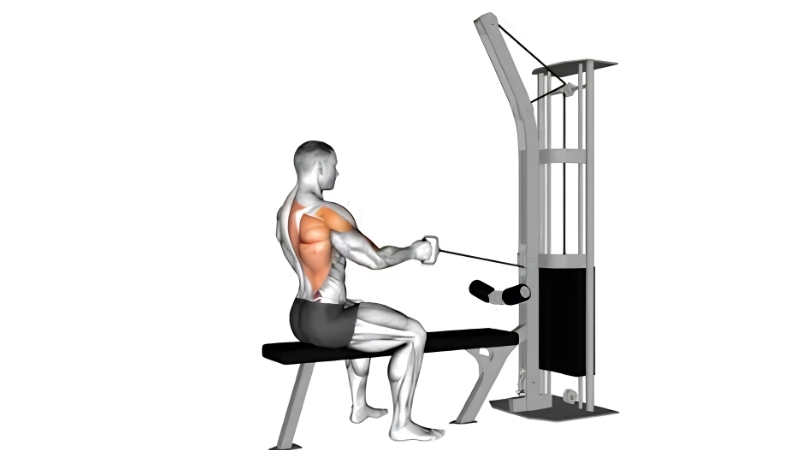
Nearly every functional trainer uses a 2:1 pulley, which halves the load at your hand and doubles the cable travel. A stack listed at 160 lb (73 kg) delivers around 80 lb (36 kg) at the handle, and that is the figure to compare against the dumbbells or bands you already own.
Work out where your current lifts sit before choosing a stack. If you row 100 lb (45 kg) per side now, a 2:1 machine with a 160 lb (73 kg) stack is already close to your ceiling on day one. Buying on headline weight rather than effective load is how people outgrow a machine in months.
Pulley Positions, Cable Travel and Attachments
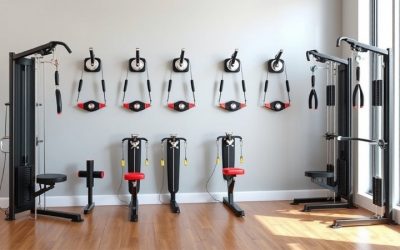
The number of pulley heights determines the movement list. A trainer with fifteen to twenty positions per column covers everything from low cable curls to high face pulls and overhead triceps work, while a machine with three fixed positions covers three families of movement and nothing between them.
Cable travel decides whether you run out of rope before you run out of range. This is where the 2:1 ratio earns its keep, since doubling travel is exactly what makes tall movements such as lat pulldowns and full-range chops possible on a machine that fits under a domestic ceiling.
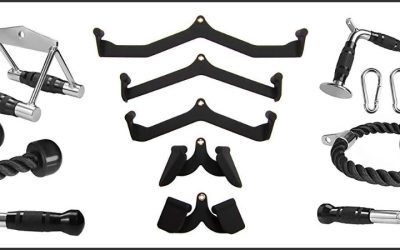
Attachments are the cheapest capability upgrade and the easiest thing to get wrong. Check the carabiner or snap-hook standard the machine uses before buying handles, ropes, straight bars and ankle cuffs, because a mismatch turns a simple purchase into a search for adapters that may not exist.
Footprint, Ceiling Height and Wall Fixings
The best cable machine for home gym use is usually a full-height trainer standing 80-85 in (203-216 cm) tall and claiming 4-6 ft (122-183 cm) of wall, plus 6 ft (183 cm) or more of clear floor in front for the actual movements. Wall-mounted single stacks project roughly 10-20 in (25-51 cm) and need lag bolts into studs rather than plasterboard.
The floor matters as much as the wall. Stack machines concentrate several hundred pounds into a small base, which is fine on a slab and worth thinking about on a suspended timber floor. Measure the ceiling height, the wall width and the clear floor depth of your room before ordering anything.
What Each Price Tier Buys
At the bottom of the market the best cable machine for home gym use means plate-loaded pulleys with no stack, either as a standalone tower or as an attachment bolted to a rack. That is the cheapest route to cable resistance and it works well, provided you already own plates and accept loading them by hand each time.
The middle tier brings a single weight stack and fixed stations. Weight changes become a pin rather than a plate, which speeds everything up, but the stations are set and there are no adjustable pulley heights, so the movement list is decided by the manufacturer rather than by you.
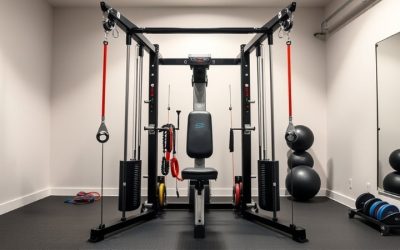
Dual-stack functional trainers sit above that and are the only architecture offering two independent adjustable columns. That is what unlocks single-arm and rotational work, and it is the reason the price step is real rather than cosmetic. It also demands the most ceiling height and the most floor.
Top Picks: 5 Cable Machines Compared on Effective Load
The five below are ordered from most capable to most space-efficient rather than by price, because the best cable machine for home gym use depends on your ceiling more than your budget. The table converts stack weight into effective resistance wherever the ratio is known.
| Machine | Stack Type | Effective Load | Pulley Heights | Best For |
|---|---|---|---|---|
| XMark Functional Trainer XM-7626 | Dual stack | About half the stack at 2:1 | Many, both columns | Strongest home lifters |
| Body-Solid Powerline PFT100 | Dual stack | About half the stack at 2:1 | Many, both columns | Value functional training |
| MAJOR LUTIE Rack with Crossover | Plate loaded | Roughly half the plate at 2:1 | Fixed high and low | Sharing space with a rack |
| Titan T-3 Rack with Lat Tower | Plate loaded | Roughly half the plate at 2:1 | High and low only | Adding cables to a rack |
| Marcy Home Gym MWM-988 | Single stack | Varies by station | Fixed stations | Lowest cost, guided movements |
XMark Functional Trainer XM-7626
The most capable machine here and the one that stays relevant longest. Two independent stacks with adjustable pulley heights on both columns cover single-arm rows, presses, chops, face pulls and everything in between, and the heavier stacks mean the effective load ceiling arrives years later than on entry trainers.
It is the largest and heaviest option, needs 80-85 in (203-216 cm) of ceiling and several hours of two-person assembly. Effective resistance is still roughly half the stack because of the 2:1 ratio. On a suspended floor, the concentrated base weight is worth checking before committing to a first-floor room.
Body-Solid Powerline PFT100
The same dual-column architecture at a lower price, which makes it the sensible default for most home gyms. Independent adjustable pulleys are what separate a functional trainer from a multi-station, and this is the cheapest route to that capability without moving to plate-loaded pulleys and hand loading.
Stack weight is modest, so at 2:1 the effective load runs out sooner than a stronger lifter expects, particularly on rows. Upgrading the stack later depends on whether a kit exists for your version. Height and clearance requirements are the same as the larger trainers, so it saves money rather than space.
MAJOR LUTIE Power Rack with Cable Crossover
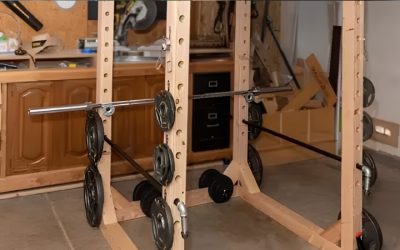
The space-efficient route for anyone buying a rack anyway. Pulleys mounted on the uprights share the rack footprint, which in a single-car garage is frequently the difference between having cable resistance and not having it. Load comes from your existing plates rather than a factory stack.
Sharing floor space means sharing it in time, so alternating between rack work and cable work in one session gets awkward. Pulley positions are fixed high and low rather than fully adjustable, the ratio is commonly 2:1, and assembly is a long job with a great deal of hardware.
Titan T-3 Power Rack with Lat Tower Attachment
The cheapest way to add cables to a rack you already own, covering lat pulldowns and low rows without buying a second machine. Plate loaded means the ceiling is set by how many plates you have rather than by a specification, which is a genuine advantage over a fixed stack.
You get two pulley positions rather than a full height range, so single-arm and rotational work is off the table. Loading plates by hand slows down any session with weight changes, and the attachment adds depth to the rack footprint, which matters in a room that was already tight.
Marcy Home Gym MWM-988
The lowest cost route to a weight stack rather than plates. Lat pulldown, seated row, chest press and leg work come from fixed stations with a pin-selected stack, which makes weight changes instant and the whole machine simple to use with no plates to store or handle.
Fixed stations mean no adjustable pulleys and no single-arm or rotational work at all. The stack ceiling is low enough that trained lifters outgrow the pulldown and row quickly. It occupies its floor permanently and cannot be reconfigured, so it suits general fitness rather than progressive strength training.
Frequently Asked Questions
The practical questions about the best cable machine for home gym use are about load, height and attachments. These four cover how to convert a stack figure into training weight, how much stack you need, whether plate-loaded is a downgrade, and what ceiling height to plan for.
How do I work out the real resistance?
Divide the stack by the pulley ratio. At 2:1, a 200 lb (91 kg) stack gives roughly 100 lb (45 kg) at the handle. If the listing does not state a ratio, assume 2:1 on any functional trainer and ask the seller, because the difference is a factor of two on every exercise you will do.
How much stack weight do I actually need?
Enough that the effective load comfortably exceeds your current strongest cable movement, usually a row or a pulldown. If you already row 100 lb (45 kg) per side, you want at least 200 lb (91 kg) of stack on a 2:1 machine just to match where you are today, with headroom on top.
Is plate-loaded worse than a weight stack?
Not worse, slower. Plate loading costs you time on every weight change and needs plate storage, but the load ceiling is limited only by the plates you own rather than by the factory. If you already have a plate collection, it is usually the better value route to cable resistance.
What ceiling height do I need?
Plan for 80-85 in (203-216 cm) for a full-height trainer, plus a few inches to fit it and to move the top pulley. Rack-mounted crossovers need the rack height plus clearance for a pull-up bar. Sloped ceilings, loft rooms and basement pipework are where these machines most often will not fit.
See More:
- Best home pull-up bar
- Best at home pull up bar
- Best in house pull up bar
- Best rated ab roller
- Ankle weights best
Final Thoughts
The best cable machine for home gym training is the one whose effective resistance matches where your lifts already are, not the one with the biggest headline stack. Convert the number using the pulley ratio, check the pulley heights, and measure ceiling height before ordering.

Write Your Review
No reviews yet. Be the first to share your experience!