
Key takeaways
What's inside
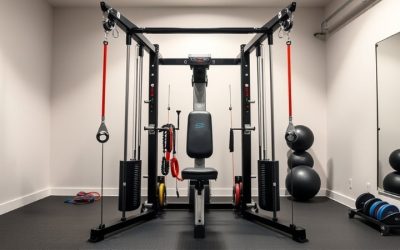
Best home gym setup guides talk about equipment and skip the room, which is backwards. Flooring, ceiling height, what the joists can take and how much noise escapes decide which equipment is even possible, and every one of those is cheaper to establish before delivery day than it is afterwards. Start with the building.
As an Amazon Associate we earn from qualifying purchases at no extra cost to you. Product prices and availability are accurate as of the date shown and are subject to change.




As an Amazon Associate we earn from qualifying purchases at no extra cost to you. Product prices and availability are accurate as of the date shown and are subject to change.
By Chris Parker
🛒 Best Price Today on Amazon
Prime members get fast, free shipping on everything above, plus member-only deals. New members get a 30-day free trial — cancel anytime.
How to Plan the Best Home Gym Setup Room by Room
Planning the best home gym setup means solving four problems about the building before choosing a single product. What the floor can take, how much headroom you have, whether the walls hold fixings, and how much sound reaches other people. Equipment selection is the easy part once those are answered.
Flooring: What Each Surface Can Take
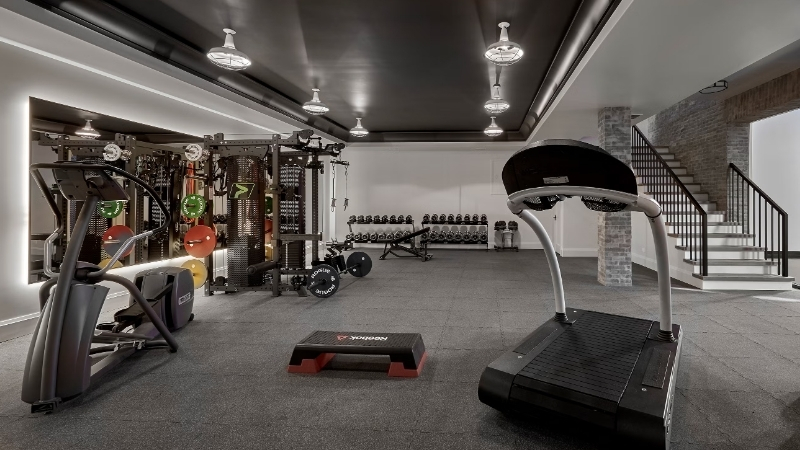
EVA puzzle tiles at around 0.5 in (13 mm) are the standard starting point for any best home gym setup, and they handle bodyweight work, light dumbbells and floor exercises without complaint. What they do not handle is repeated contact with cast iron, which leaves permanent craters, or the edge of a bench leg under load.
Rubber matting is the next step up, and it is the right answer anywhere that iron gets set down regularly. Bare timber marks and dents easily, tile can crack under a point load, and carpet hides everything until it does not. Neither material makes a suspended floor quieter, which is a separate problem entirely.
Ceiling Height, Wall Fixings and Working Envelope
Ceiling height is the constraint that eliminates equipment from a best home gym setup outright. Overhead pressing needs your standing height plus roughly 24 in (61 cm) for the bar at lockout, pull-ups need about 12 in (30 cm) above your head, and standing on a bike adds 10-12 in (25-30 cm) to your height.
Wall fixings only work into studs or joists, never into plasterboard alone, and an interior partition wall is not always suitable for shear load. Working envelope is bigger than footprint: a bench needs roughly 7 x 5 ft (213 x 152 cm) around it. Measure floor area, ceiling height and stud spacing before ordering.
Noise, Neighbours and Power
Two different kinds of noise leave a home gym, and only one of them is genuinely fixable. Mechanical noise from a belt-driven magnetic bike is minimal, and a felt pad or a chain is louder. Structural noise from a dropped kettlebell or a jump rope passes into a suspended floor and reaches the flat below regardless of matting.
Power is easy to forget until the layout is fixed. Treadmills need a mains socket and draw real current, most ellipticals need at least a console supply, and bikes and rowers generally do not. Plan the socket position before the equipment position, because extension leads across a training floor are a hazard.
Why Most Gear Still Assumes a Garage
Walk through any equipment catalogue and the design assumption is obvious: a garage, a basement or a dedicated spare room with a concrete slab and open wall space. That is where the category grew, and it is why the default rack, bench and cardio machine all expect to stay where they were assembled.
The result is that flats and shared houses remain the underserved case. Genuinely compact and wall-folding options exist but are a small fraction of listings, and almost none of the marketing addresses impact noise through a timber floor, which is the single biggest constraint in a first-floor room.
Until that changes, the practical response is to design around the constraint rather than shop against it. Wall-mounted and doorway equipment, magnetic rather than friction cardio, and controlled set-downs rather than drops will let almost any room work. The alternative is buying a garage setup and finding it unusable.
Top Picks: 6 Items Rated by What They Ask of the Room
Each item below is assessed on its demands rather than its training merits, because in the best home gym setup the binding constraint is nearly always the building. The table lists floor requirement, noise, ceiling clearance and whether the piece needs fixings into structural timber.
| Item | Floor Demand | Noise Risk | Ceiling Needed | Fixings |
|---|---|---|---|---|
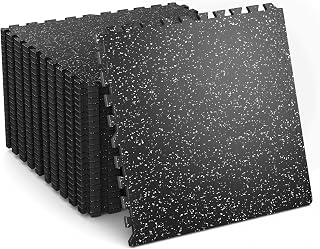
| ProsourceFit Puzzle Mat Tiles | None, it is the floor | Reduces impact | None | None |
| Titan Wall Mounted Pull Up Bar | None | Very low | Head plus 12 in (30 cm) | Lag bolts into studs |
| Sunny Health SF-B1805 bike | Mat advised | Low, magnetic belt | Standing adds 10-12 in | None |
| Flybird Adjustable Bench | Firm and level | Low | Seated press clearance | None |
| Bowflex SelectTech 552 | Mat essential | Moderate | Overhead press clearance | None |
| Amazon Basics Kettlebell | Rubber, not foam | Highest here | Overhead press clearance | None |
ProsourceFit Extra Thick Puzzle Exercise Mat
The foundation of almost every home build and the first thing to buy rather than the last. Interlocking EVA tiles around 0.5 in (13 mm) thick cover roughly 24 sq ft (2.2 sq m) per pack, protect the floor beneath, and take the sting out of floor work on tile or timber.
EVA is not rubber. Cast iron dents it permanently, bench legs mark it under load, and edges curl if tiles are lifted repeatedly. It reduces impact transmission but does not eliminate it, so a flat with neighbours below still needs controlled set-downs rather than relying on the mat to solve the problem.
Titan Fitness Wall Mounted Pull Up Bar
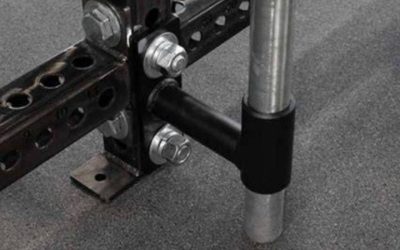
The lowest-impact way to add a vertical pull to a permanent setup. Bolted into studs it is listed at 500 lb (227 kg) and projects roughly 21.5 in (55 cm) from the wall, giving room for chest-to-bar work and a weighted vest without knees finding the plasterboard on every rep.
It is permanent and unforgiving of a bad install, needing a stud finder, correct lag bolts and confidence that the framing behind the plasterboard takes shear load. Mounting height is fixed once drilled, so simulate the position with a broom handle first. Interior partition walls are not always suitable.
Sunny Health and Fitness SF-B1805
The quietest cardio option for a shared building. Magnetic resistance with a 40 lb (18 kg) flywheel and a belt drive means nothing contacts the flywheel, so there is no pad to squeak as it wears and the noise level stays the same in year three as in week one.
It claims roughly 4 x 2 ft (122 x 61 cm) of floor permanently and is heavy enough that moving it is a two-person job. Standing on the pedals adds 10-12 in (25-30 cm) to your height, which sloped ceilings will not allow. On a timber upper floor, a dense rubber mat is close to essential.
Flybird Adjustable Weight Bench
Undemanding of the room in every way except floor area. It needs a firm level surface, makes almost no noise, requires no fixings and folds flat for storage, which makes it one of the few substantial pieces that suits a room with other jobs to do during the day.
The working envelope is the catch. Pressing safely needs roughly 7 x 5 ft (213 x 152 cm) around the bench, which is far more than the folded footprint implies. Folding frames also flex more than fixed ones under heavier loads, and the pad is firm and narrow by commercial standards.
Bowflex SelectTech 552
Fifteen settings from 5 to 52.5 lb (2.3 to 24 kg) per dumbbell in a pair of cradles, which is a compact way to hold a lot of load in a small corner. The 2.5 lb (1.1 kg) increments up to 25 lb (11 kg) allow genuine progression without buying a rack of fixed pairs.
The selector mechanism is the reason the manual forbids dropping them, so a mat is essential and controlled set-downs are non-negotiable. That also makes them a poor choice for anyone who trains to failure alone on a hard floor. Above 25 lb (11 kg) the increments widen to 5 lb (2.3 kg).
Amazon Basics Cast Iron Kettlebell
The most useful single piece of iron and the most demanding of the room. Swings, goblet squats, carries and get-ups all come from one weight, but cast iron on a hard floor is loud, and the low-frequency impact from setting it down travels through a suspended floor to whoever is underneath.
Rubber matting rather than EVA foam is the right surface for it, since foam craters permanently under a point load. Never let it drop from overhead, and if you live above someone, set it down deliberately rather than releasing it. That single habit solves most kettlebell noise complaints.
Frequently Asked Questions
Questions about the best home gym setup are almost always about the building rather than the equipment. These four cover flooring choices, whether a domestic floor can take the load, how to manage noise for neighbours, and the ceiling height different movements genuinely require.
What flooring do I need for a home gym?
EVA puzzle tiles at around 0.5 in (13 mm) are enough for bodyweight work, bands and light dumbbells. Move to rubber matting wherever cast iron gets set down, because foam craters permanently under point loads. On a concrete slab, matting is about comfort and floor finish rather than protection.
Will my floor take the weight?
A domestic suspended floor handles typical home gym loads spread across a room without difficulty, since the total is comparable to furniture and people. The risk is concentration, not total mass: a rack leg or a dropped weight concentrates load into a small area. Spread equipment out and use matting.
How do I keep the noise down for neighbours?
Control the impacts rather than trying to absorb them. Set weights down deliberately instead of dropping, choose magnetic belt-driven cardio over friction or air, keep jump rope off suspended floors, and put dense rubber under anything heavy. Matting reduces transmission but never eliminates low-frequency structural noise.
What ceiling height do I need?
For overhead pressing, your standing height plus roughly 24 in (61 cm) for the bar at lockout. For pull-ups, about 12 in (30 cm) above your head at the top. Standing on an exercise bike adds 10-12 in (25-30 cm). Sloped loft walls and basement pipework are the usual problems.
See More:
- Best home pull-up bar
- Best at home pull up bar
- Best in house pull up bar
- Best rated ab roller
- Best yoga travel mat
Final Thoughts
The best home gym setup starts with four measurements, not a shopping list: clear floor area, ceiling height, stud positions and what sits underneath the room. Get flooring right first, choose magnetic cardio in flats, and keep cast iron on rubber rather than foam.

Write Your Review
No reviews yet. Be the first to share your experience!