
Key takeaways
What's inside
Best weight equipment for home gym loading is a different question from which rack to buy. It comes down to bar specification, plate diameter, the smallest increment you can add, and where several hundred pounds of steel lives when nobody is training. This guide works through all four before anything is added to a basket.
As an Amazon Associate we earn from qualifying purchases at no extra cost to you. Product prices and availability are accurate as of the date shown and are subject to change.

#2 Pick

#3 Pick

#4 Pick

#5 Pick

#6 Pick

#7 Pick
As an Amazon Associate we earn from qualifying purchases at no extra cost to you. Product prices and availability are accurate as of the date shown and are subject to change.
By Chris Parker
🛒 Best Price Today on Amazon
Prime members get fast, free shipping on everything above, plus member-only deals. New members get a 30-day free trial — cancel anytime.
How to Choose the Best Weight Equipment for Home Gym Loading
The best weight equipment for home gym use is easy to get wrong because racks and benches get the attention, but the bar and plates decide how your training progresses and how much floor the setup really claims. The four criteria below are the ones that matter once the frame is already standing in the room.
Bar Specifications That Actually Matter
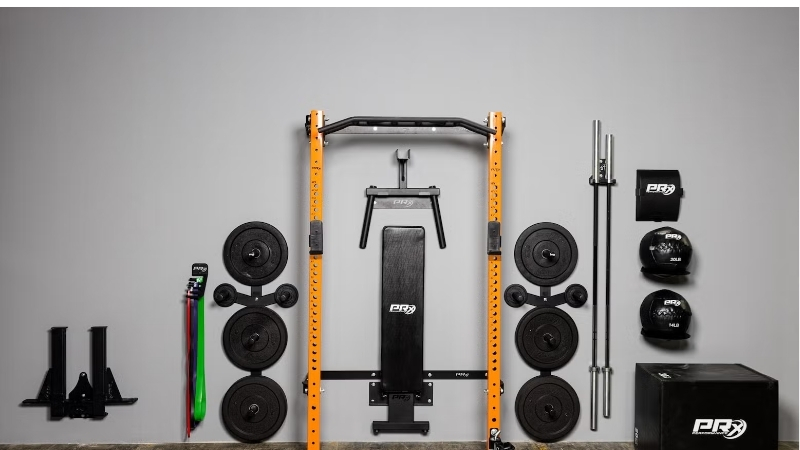
A standard men’s Olympic bar is 7 ft (213 cm) long, weighs 45 lb (20 kg) and has a 28 to 29 mm shaft with 2 in (50 mm) sleeves. The women’s version is 6.6 ft (201 cm), 35 lb (15 kg) and 25 mm, which suits smaller hands far better than a thinner grip on a full-size bar.
Sleeve rotation comes from bushings or bearings. Bushings are cheaper, quieter and entirely adequate for pressing, squatting and pulling. Bearings spin faster and matter only if you are doing cleans and snatches, where the bar has to rotate under a fast turnover.
Tensile strength ratings between roughly 150,000 and 190,000 PSI describe how much the shaft resists permanent bending. Centre knurling helps a bar sit on the back during squats, and a bar rated to 700 lb (318 kg) covers realistic home loading with room to spare.
Plate Type: Bumper, Cast Iron or Rubber Coated
Bumper plates share a standard 17.7 in (450 mm) diameter regardless of weight, so a 25 lb (11 kg) plate sets the bar at the same deadlift height as a 45 lb (20 kg) one. That consistency is the main reason to buy them, alongside surviving being lowered hard.
Cast iron is thinner per pound and cheaper, which means more total weight fits on the sleeve and less money leaves your account. Lighter cast plates are smaller in diameter, so pulling from the floor with 25 lb plates starts the bar too low unless you use blocks.
Rubber-coated cast plates sit between the two: quieter than bare iron, kinder to floors, and thicker than plain cast for the same weight. None of the three should be dropped from overhead onto a domestic floor without proper matting underneath.
Increment Size and Progression Headroom
The smallest plate pair you own sets your smallest jump. A pair of 2.5 lb (1.1 kg) plates gives a 5 lb bar increase, which is a very large step to add on an overhead press once the bar is already loaded close to your working limit.
Fractional plates from 0.25 to 1.25 lb (0.1 to 0.55 kg) fix that, allowing 0.5 to 2.5 lb total jumps. They are the cheapest item in this entire category and the one that keeps a linear progression running for months longer than it otherwise would.
The mid price tier is where the useful options cluster: bushing bars with real tensile ratings, accurate plate weights and calibrated increments. Below that band, expect loose sleeve fit, plates that vary from their stamped weight, and jumps that force you to stall or grind.
Storage Footprint and Floor Loading
Plates need a home that is not the floor. A vertical plate tree occupies roughly 2 sq ft and holds several hundred pounds; wall-mounted pegs use no floor at all but need studs or masonry. Loose plates stacked on carpet compress it permanently and are a trip hazard.
Floor loading is about concentration, not total weight. Spread across a rack footprint, 400 lb (181 kg) is unremarkable on a domestic floor. The same weight resting on two plate edges is a point load that dents laminate and cracks tile immediately.
Measure the actual dimensions of the space you intend to use before ordering, including the swing radius of a 7 ft bar in the rack and the clearance needed to walk past a loaded plate tree in the dark without catching a shin on it.
Top Picks: 5 Choices for the Best Weight Equipment for Home Gym Setups
These five picks for the best weight equipment for home gym cover bar, plates and increments rather than repeating the rack-and-bench discussion. The table pairs each item with the specification most likely to change your decision, before you get as far as the notes underneath.
| Item | Key specification | Storage | Best for |
|---|---|---|---|
| 7 ft Olympic barbell | 45 lb (20 kg), 28-29 mm shaft | Rack or wall hooks | Squat, press, deadlift |
| Bumper plate set | 17.7 in (450 mm) diameter | Vertical tree | Deadlifts, floor protection |
| Cast iron Olympic plates | Thinnest per pound | Tree or wall pegs | Maximum load per sleeve |
| NUOBELL 80 lb dumbbells | 5-80 lb (2.3-36.3 kg) per hand | Cradles | Accessory and unilateral work |
| Fractional plate set | 0.25-1.25 lb (0.1-0.55 kg) | A drawer | Keeping progression alive |
1. A 7 ft Olympic Barbell
The one piece of the best weight equipment for home gym that turns a rack into a training setup. At 45 lb (20 kg) it is the only practical way to load a squat, deadlift or bench press beyond dumbbell range, and a bushing bar rated around 700 lb (318 kg) covers any load a home lifter will reach.
It needs 7 ft (213 cm) of clearance to load and unload, which is more than the rack width, and knurling that suits deadlifts feels aggressive on high-rep bench work. Smaller lifters are usually better served by a 25 mm shaft than by a full-size bar.
2. A Bumper Plate Set
Constant 17.7 in (450 mm) diameter across every weight means the bar starts at the correct height whether you are pulling 95 lb or 315 lb. The rubber also absorbs impact, which protects both the plates and whatever happens to be under them.
They are thicker per pound than cast iron, so a 7 ft bar holds less total weight before running out of sleeve, and they cost noticeably more. Bumpers are still not designed for repeated overhead drops onto a domestic floor without proper matting.
3. Cast Iron Olympic Plates
The cheapest way to accumulate serious tonnage, and the thinnest per pound, which matters once you are loading four or more plates a side. Grip holes also make them far easier to carry and load than smooth bumpers of the same weight.
Bare iron is loud, marks floors and rusts where the coating chips. Lighter plates are smaller in diameter, so deadlifting 135 lb with 25 lb plates starts the bar lower than standard and changes the movement unless you pull from blocks.
4. NUOBELL 80 lb Adjustable Dumbbells
Barbell work covers the heavy patterns; dumbbells cover everything else. An 80 lb (36.3 kg) per hand ceiling handles rows, split squats and pressing, and the twist mechanism changes weight in a couple of seconds without leaving the bench.
The increment is a flat 5 lb (2.3 kg) across the range, which is coarse for lateral raises and other small-muscle work. Like every selectorised set, it must be returned to its cradle before adjusting, and it must never be dropped on the floor.
5. A Fractional Plate Set
The cheapest item here and the one that extends linear progress the longest. Pairs from 0.25 to 1.25 lb (0.1 to 0.55 kg) allow bar jumps of 0.5 to 2.5 lb, which keeps overhead pressing and benching moving when 5 lb steps have stopped working.
They are easy to lose, they add assembly time to every warm-up set, and cheaper sets vary from their stamped weight enough to matter at this scale. Buy machined steel rather than moulded plastic if you intend to trust the numbers.
Frequently Asked Questions
Most questions about the best weight equipment for home gym use are really about plate type, budget order and whether the floor will cope. The four answers below stay with measurable constraints such as diameter, increment and load rather than general advice.
Do I Need Bumper Plates or Will Cast Iron Do?
Cast iron is fine if you control every rep down and train on matting. Bumpers earn their price when you deadlift regularly, because the constant 17.7 in (450 mm) diameter keeps bar height correct at every load and the rubber absorbs impact the floor otherwise takes.
What Bar Length and Weight Should I Buy?
A 7 ft (213 cm), 45 lb (20 kg) bar with a 28 to 29 mm shaft fits standard racks and covers every lift. Choose the 6.6 ft (201 cm), 35 lb (15 kg), 25 mm version if hand size makes a thicker shaft hard to grip securely under a heavy load.
How Much of the Best Weight Equipment for Home Gym Do I Need First?
Four 45 lb, two 25 lb, two 10 lb, two 5 lb and two 2.5 lb plates gives 265 lb (120 kg) on the bar with usable increments throughout. Add a fractional set immediately rather than later, because it costs little and prevents early stalling.
Will a Domestic Floor Take the Load?
Spread across a rack footprint, several hundred pounds is unremarkable on most floors. Concentrated point loads from plate edges are the real risk, along with impact through joists in upstairs rooms. Rubber matting under the working area solves both cheaply.
See More:
- Best changeable dumbbells
- Best rated yoga mat
- Best mat yoga
- Best home gym equipmen
- Best fitness equipment for home gym
Final Thoughts
The best weight equipment for home gym training is a correctly specified bar, plates whose diameter suits how you lift, and increments small enough to keep progressing. Sort storage and floor protection before delivery, and measure the loading clearance rather than assuming it.

Write Your Review
No reviews yet. Be the first to share your experience!