
Key takeaways
What's inside
Best gym machines for home use split into four distinct types, and picking the wrong type costs far more than picking the wrong brand within a type. This guide sorts them by what each one actually loads, then compares six machines on footprint, ceiling clearance, progression headroom and parts availability.
As an Amazon Associate we earn from qualifying purchases at no extra cost to you. Product prices and availability are accurate as of the date shown and are subject to change.

#1 Pick

#2 Pick

#3 Pick

#4 Pick

#5 Pick

#6 Pick

#7 Pick
As an Amazon Associate we earn from qualifying purchases at no extra cost to you. Product prices and availability are accurate as of the date shown and are subject to change.
By Chris Parker
🛒 Best Price Today on Amazon
Prime members get fast, free shipping on everything above, plus member-only deals. New members get a 30-day free trial — cancel anytime.
How to Choose Between the Best Gym Machines for Home Training
Exercise counts printed on the best gym machines for home are close to meaningless, because they count grip variations as separate movements. What matters is which patterns the machine can load heavily, how much room it takes permanently, and how long before you outgrow it.
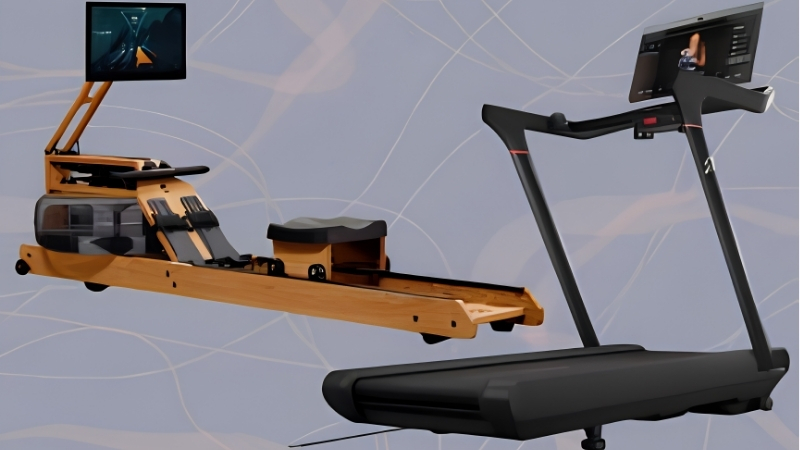
Start From the Goal, Not the Exercise Count
If the goal is general conditioning and consistency, a light foldable system is enough and the storage advantage is worth more than the load ceiling. If the goal is measurable strength progression, you need a machine that can still challenge you in two years.
Rehabilitation-style and low-impact training points toward incline body-weight systems, where load is set by angle and joint stress stays low. Physique-focused training points toward selectorised stacks, which allow high volume with fast weight changes.
Write the training goal down before you start shopping. Almost every regretted machine purchase comes from buying for the training someone intended to do rather than for the training they were already doing three times a week beforehand.
Machine Types and What Each One Loads
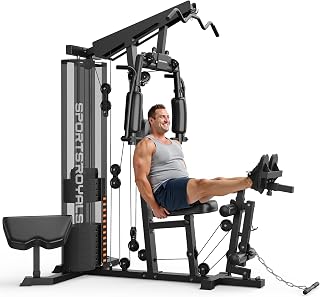
The best gym machines for home split first by format. Smith cages guide a barbell on rails and usually add cable pulleys. They allow heavy squats and presses without a spotter, but the fixed bar path removes stabiliser demand, and you supply the bar and plates yourself, which adds to the real cost.
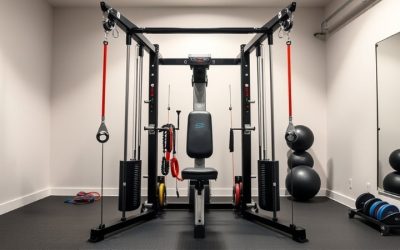
Functional trainers use two independent pulleys with adjustable height, which is the most versatile format for pressing, rowing, rotation and single-arm work. They are also the tallest and usually the most expensive option per square foot.
Selectorised multi-gyms combine a lat tower, chest station and leg developer around one stack, and rod-based or incline systems trade load ceiling for foldability. The last group is the only one that genuinely disappears between sessions.
Footprint, Ceiling Height and Working Clearance
Published footprint understates the real requirement every time. Add roughly a metre of walk-around clearance, space for a bench in front, and room to step back on cable work. A machine listed at 15 sq ft realistically claims 30 sq ft of usable room.
Height is the constraint that cancels orders after delivery. Lat towers and functional trainers commonly stand 80 to 90 in (203 to 229 cm) and need clearance above for the top pulley. Basements with 7 ft (213 cm) ceilings rule out most of them.
Measure the actual dimensions of the space you plan to use before ordering, ceiling included, along with doorway width and any staircase turns. These frames rarely disassemble easily once built, and returns on freight items are expensive.
Progression Headroom and Replaceable Parts
Look past the headline stack number on any of the best gym machines for home to what reaches the handle after the pulley ratio, and to whether extra plates or rods can be added later. A machine with no upgrade path becomes a plateau at exactly the point your training is working.
Cables, bushings and rod assemblies are the consumable parts. Confirm they are listed as orderable spares, because a discontinued cable ends an otherwise sound machine, and freight-only parts can cost a meaningful fraction of a replacement.
Most of this category is still designed around wide garages, which is why genuinely compact and folding machines remain a thin slice of the market. Anyone buying for a spare bedroom is choosing from a much shorter list than the total product count suggests.
Top Picks: 6 of the Best Gym Machines for Home Use by Type
One representative machine per type, chosen so the best gym machines for home here cover the full range from freight-delivered steel to something that folds under a bed. The table pairs each type with the footprint and the ceiling clearance it demands.
| Machine | Type | Resistance | Space needed | Best for |
|---|---|---|---|---|
| Marcy Pro SM-4903 | Smith cage | Plate loaded | ~15 sq ft, tall | Heavy squats without a spotter |
| Titan Functional Trainer | Dual pulley | Twin stacks | ~16 sq ft, very tall | Versatility and single-arm work |
| Body-Solid G1S | Selectorised multi-gym | 160 lb (73 kg) stack | ~14 sq ft, fixed | High-volume upper body |
| Bowflex PR1000 | Rod resistance | 210 lb (95 kg) rods | Folds after use | Small rooms, mixed training |
| Total Gym FIT | Incline body weight | Body weight by angle | Folds flat | Low-impact and shared use |
| Body-Solid Powerline BSG10X | Compact multi-gym | Selectorised stack | ~4 x 4 ft (1.2 x 1.2 m) | Spare bedrooms |
1. Marcy Pro Deluxe Smith Cage SM-4903
The choice when the goal is heavy barbell work alone in the house. A guided Smith bar plus cable pulleys and a pec station on one frame lets you load squats and presses well past dumbbell range with the safeties set at a sensible height.
The fixed bar path removes the balance demand that makes free-weight lifting valuable, and you supply the bar and plates. It is heavy, permanent once assembled, and needs a bench in front, which pushes the real space requirement well past the listed footprint.
2. Titan Fitness Functional Trainer
Two independent pulleys with adjustable height make this the most versatile format available at home, covering presses, rows, rotation, single-arm work and cable variations that no fixed multi-gym reproduces. Weight changes take about two seconds per side.
It is the tallest machine here and needs serious ceiling clearance for the top pulley position, which rules out most basements. Effective handle load is roughly half the stack figure on a 2:1 ratio, so read the ratio before comparing stack weights.
3. Body-Solid G1S Selectorized Home Gym
A conventional multi-gym built around a 160 lb (73 kg) stack with a lat tower, chest press and leg developer. It is the most efficient option here for high-volume upper-body work and for households where several people train at different weights.
The stack sets a hard ceiling with limited upgrade room, and cable travel on some stations is shorter than commercial equivalents, which taller users should confirm on the lat pulldown. It occupies its footprint permanently and does not fold.
4. Bowflex PR1000
Rod resistance up to 210 lb (95 kg) with an integrated rowing rail, in a frame that folds down after use. For a spare bedroom that has another job during the day, this is the most practical way to get machine-style training without surrendering the room.
Rod resistance builds through the rep instead of staying constant, so the numbers do not translate to free-weight loads, and rods soften over many years. The rowing rail is a useful addition rather than a substitute for a dedicated rower.
5. Total Gym FIT
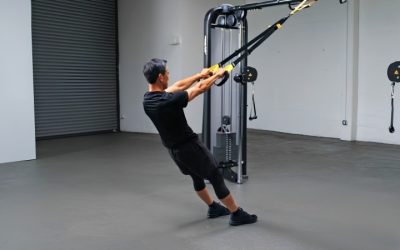
Load comes from a proportion of your body weight set by the incline of the rail, which keeps joint stress low and makes it easy to scale between household members. It folds flat for storage, which none of the steel options above can do.
The ceiling is your own body weight, so anyone already pressing or rowing heavy will outgrow it quickly, and the movement list is narrower than a cable stack. Glideboard rollers are the wear part on high-use units and should be inspected yearly.
6. Body-Solid Powerline BSG10X
The compact answer for a spare bedroom that still wants a selectorised stack. It packs a press station, lat pulldown and low pulley into a footprint nearer 4 x 4 ft (1.2 x 1.2 m) than the 14 sq ft a full multi-gym claims, with a two-second pin change.
The stack is modest and the upgrade path limited, so stronger lifters reach the top pin sooner than on a full-size frame. Cable travel is shorter than commercial equivalents, which taller users should check on the lat station before ordering.
Frequently Asked Questions
Type selection, space and service life account for most best gym machines for home questions. The four answers below deal with measurable constraints such as height, clearance and parts, rather than with whichever brand happens to be discounted in a given week.
Which Machine Type Suits a Beginner?
A selectorised multi-gym or a rod-based system, because both remove the need to balance a load while you learn movement patterns. Smith cages and functional trainers make more sense once you know which patterns you train regularly and want to load them heavily.
Do I Need More Than One Machine?
Usually not. A single machine plus adjustable dumbbells covers more ground than two machines, because dumbbells restore the stabiliser demand that guided paths remove. Adding a second machine tends to duplicate patterns rather than fill gaps.
How Long Do Home Machines Last?
Frames often outlast their owners’ interest, while cables, bushings, rollers and rods are consumable. Expect cable inspection every few months and eventual replacement, which is why parts availability matters more than warranty length on a decade-long horizon.
Can a Machine Fit in an Apartment?
A folding rod or incline system can. Smith cages and functional trainers generally cannot, because of height, permanent footprint and freight delivery through stairwells. Check ceiling height, doorway width and lift dimensions before ordering anything freight-delivered.
See More:
- Best changeable dumbbells
- Best rated yoga mat
- Best mat yoga
- Best home gym equipmen
- Best fitness equipment for home gym
Final Thoughts
Choosing between the best gym machines for home use starts with type, not brand: match the format to the training you already do, then check ceiling height and working clearance against real measurements. Confirm spare cables and rods are orderable before committing to any frame.

Write Your Review
No reviews yet. Be the first to share your experience!