
Key takeaways
What's inside
Best home gym weight plates depend on three things: the bar you own, the floor you train on, and the lifts you do. Bumper, iron, and rubber-coated plates each suit a different setup. This guide breaks down the types, the specs that matter, and six sets worth loading onto your bar, from budget iron to drop-ready bumpers.
As an Amazon Associate we earn from qualifying purchases at no extra cost to you. Product prices and availability are accurate as of the date shown and are subject to change.
By Chris Parker
As an Amazon Associate we earn from qualifying purchases at no extra cost to you. Product prices and availability are accurate as of the date shown and are subject to change.


🛒 Best Price Today on Amazon
Prime members get fast, free shipping on everything above, plus member-only deals. New members get a 30-day free trial — cancel anytime.
Start 30-Day Prime Free Trial →See Today’s Amazon DealsHow to Choose Weight Plates
The right plates protect your floor, fit your bar, and match how you lift. Plate type, hole size, increments, and storage footprint decide whether the best home gym weight plates serve you for years or frustrate you fast.
Get these right and your plates will serve every lift you throw at them.
Bumper, Iron, or Rubber-Coated
Bumper plates are rubber and can be dropped safely, iron plates are cheapest but loud and hard on floors, and rubber-coated iron is quieter and floor-friendlier without full drop tolerance. Match the type to your lifts.
If you do Olympic lifts or deadlift heavy, bumpers protect the floor and the plates. For slow, controlled lifts, coated iron is a quieter, cheaper option.
Mixing a pair of bumpers for drops with iron for fixed loads is a common, cost-smart setup.
Hole Size: Olympic or Standard
Olympic plates have a 2 in (50 mm) center hole for Olympic bars, while standard plates use a 1 in (25 mm) hole. Most serious home gyms run Olympic bars and plates for stability and future upgrades.
Confirm your bar’s sleeve diameter before ordering, since the two are not interchangeable. Buying the wrong hole size is the most common plate-shopping mistake.
When in doubt, measure the sleeve with a tape before adding anything to the cart.
Increments for Progress
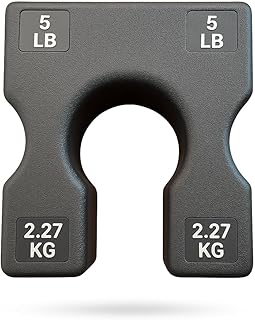
Small change plates of 1.25 to 5 lb (0.5 to 2.3 kg) let you add weight gradually and beat plateaus on smaller lifts. A set with fractional plates keeps progress smooth over months.
Buy a range rather than only big plates, so you can nudge the load up in small steps. Micro-loading is how steady strength gains happen.
A couple of 2.5 lb (1 kg) pairs are the cheapest way to keep progressing for months.
Storage Footprint: Trees, Racks, and Space
A full plate set plus a storage tree can occupy 4 to 9 sq ft (0.4 to 0.8 sq m) and hundreds of pounds, so plan the floor before buying. A vertical tree keeps plates off the ground and organized.
Measure the corner you can dedicate and the floor’s load capacity, especially upstairs. The best home gym weight plates still need a solid, planned place to live.
Top Picks: Six Plate Sets
These six span budget iron to premium bumpers. The table lines up type and standout trait, then the notes below add the honest trade-offs behind each set.
All load a standard Olympic bar; the differences are drop tolerance and price.
| Plates | Type | Hole | Best for |
|---|---|---|---|
| Rogue Echo Bumper | Bumper | Olympic | Drops and Olympic lifts |
| Rep Fitness Bumper | Bumper | Olympic | Value bumpers |
| Titan Economy Bumper | Bumper | Olympic | Budget drops |
| CAP Rubber-Coated | Coated iron | Olympic | Quiet lifting |
| Yes4All Cast Iron | Iron | Olympic | Cheapest per pound |
| Fringe Sport Change | Fractional | Olympic | Micro-loading |
Rogue Echo Bumper: Best for Drops
Rogue’s Echo bumpers handle repeated drops from Olympic lifts and deadlifts while protecting the floor, with a durable rubber build and a standard 17.7 in (450 mm) diameter. They are a home-gym staple.
They cost more than iron and bounce more than premium bumpers on hard drops. For dropping loads safely, they are among the best home gym weight plates available.
Pair them with rubber flooring and they will outlast years of heavy training.
Rep Fitness Bumper: Best Value Bumpers
Rep’s bumpers offer drop-tolerant performance at a friendlier price, with a low bounce and tight tolerances for balanced loading. They suit most home lifters well.
Their low bounce keeps the bar from wandering on heavy sets.
Stock can sell out and thicker budget bumpers take more bar space at heavy loads. For value drops, they are a smart pick.
Buy the pairs you use most first, then round out the set over time.
Titan Economy Bumper: Best Budget Drops
Titan’s economy bumpers bring drop tolerance to a tight budget, letting you lift and drop without wrecking the floor. They are a common entry into bumper plates.
Tolerances are looser and they can smell of rubber when new, so check weights if precision matters. For budget drops, they get the job done.
It is a fine entry point for a first bumper set.
Air new plates out for a day or two to let the rubber smell fade.
CAP Rubber-Coated: Best for Quiet Lifting
CAP’s rubber-coated iron plates are quieter and gentler on floors than bare iron, ideal for controlled presses, rows, and squats without dropping. They store neatly on a tree.
They are not built for overhead drops and the coating can smell at first. For quiet, floor-friendly lifting, they are a strong value.
They rank among the best home gym weight plates for quiet, floor-friendly training.
Yes4All Cast Iron: Cheapest Per Pound
Plain cast-iron Olympic plates deliver the most weight for the least money, suiting lifters who never drop the bar. They are simple, dense, and very affordable.
Bare iron is loud, can rust, and will damage floors if dropped, so use a platform or mat. For rock-bottom cost per pound, they are the benchmark.
Store them on a tree so the heavy plates never pile up on the floor.
Fringe Sport Change: Best for Micro-Loading
These fractional plates from 0.25 to 5 lb (0.1 to 2.3 kg) let you add tiny amounts to beat plateaus on smaller lifts. Every serious set benefits from a pair or two.
They are an add-on rather than a main set and are easy to misplace. For smooth progression, they are an essential complement.
Keep them in a small bin so the little plates do not wander off.
Frequently Asked Questions
A few questions come up whenever people shop for the best home gym weight plates. Here are short, practical answers before you buy.
Bumper or iron plates?
Choose bumpers if you drop the bar for Olympic lifts or heavy deadlifts, since they protect the floor. Iron or coated iron is cheaper for controlled lifting without drops.
Many home lifters run a hybrid set to balance cost and floor safety.
What hole size do I need?
Match your bar: Olympic bars use a 2 in (50 mm) hole and standard bars a 1 in (25 mm) hole. Most home gyms use Olympic for stability and upgrades.
Adapters exist but add slop, so matching the bar is always better.
Do I need change plates?
Yes, if you want smooth progress, since small 1.25 to 5 lb (0.5 to 2.3 kg) jumps beat plateaus. A couple of fractional pairs go a long way.
Fractional plates are cheap insurance against stalled lifts.
They also let two lifters share a bar with tailored loads.
Even one 1.25 lb (0.5 kg) pair unlocks smoother progress on presses.
How do I protect my floor?
Use rubber flooring or a lifting platform, and drop only with bumper plates. Coated and iron plates should be set down, not dropped, on any surface.
Even coated plates benefit from a mat underfoot for noise.
A dedicated platform is the safest base for the best home gym weight plates under heavy drops.
See More:
- best ab roller wheel
- best curl barbell
- best home gym rubber flooring
- best ankle straps for cable machine
- What is the best rowing machine
Final Thoughts
The best home gym weight plates match your bar, your floor, and your lifts. Rogue and Rep bumpers win for drops, CAP coated iron suits quiet lifting, Yes4All iron is cheapest per pound, and Fringe change plates keep progress smooth. Confirm your hole size, plan the storage footprint, and you will build a plate set that grows with your training for years.


Write Your Review
No reviews yet. Be the first to share your experience!