
Key takeaways
- Measuring the frame instead of the pad: The steel frame may be wider or longer than the usable upholstery, so record both measurements.
- Ignoring pad height: A thick pad can raise the top surface several inches and change foot contact, pressing position, and rack alignment.
- Buying by length alone: A long pad can still be too narrow for comfortable shoulder support or too wide for a particular frame.
- Forgetting the incline position: Adjustable benches become longer or taller as the backrest rises. Measure the highest setting, not only the flat position.
- Confusing bench width with rack width: A 12-inch bench pad may require 48 to 60 inches of floor width once the rack and bar are included.
- Leaving no loading clearance: You need space to lift plates, set down dumbbells, and exit the bench without striking furniture.
- Assuming every replacement pad is universal: Bolt spacing, bracket shape, and hinge location often differ between brands and models.
What's inside
The Short Answer
For most home workouts, a weight bench should be about 48 to 55 inches long, 10 to 12 inches wide, and 17 to 20 inches high from the floor to the top of the pad. A compact bench may be closer to 40 inches long, while a full-size Olympic-style bench can exceed 55 inches.
The pad itself is usually 40 to 48 inches long and 9 to 12 inches wide. A back pad should support your head, shoulders, and hips without forcing your elbows onto the frame. Padding commonly measures 2 to 4 inches thick. Thicker padding feels more comfortable, but excessive softness can make heavy pressing feel unstable.
As an Amazon Associate we earn from qualifying purchases at no extra cost to you. Product prices and availability are accurate as of the date shown and are subject to change.



Allow additional clearance around the bench. A practical minimum workout footprint is approximately 72 inches long by 48 inches wide. If you use a barbell rack, adjustable dumbbells, or weight plates, plan for at least 84 inches of length and 72 inches of width. Ceiling height matters too: allow enough room for the bench, your raised arms, and the bar path. A ceiling height of 90 inches or more is generally comfortable for most seated and lying exercises.
Standard Sizes
There is no single official weight bench size, but the following ranges cover the dimensions most buyers encounter. Measurements refer to the assembled bench unless noted otherwise.
| Bench or pad type | Typical length | Typical width | Typical height | Typical pad thickness |
|---|---|---|---|---|
| Compact flat bench | 40–48 in (102–122 cm) | 10–12 in (25–30 cm) | 16–18 in (41–46 cm) | 2–3 in (5–8 cm) |
| Standard flat bench | 48–52 in (122–132 cm) | 10–12 in (25–30 cm) | 17–20 in (43–51 cm) | 2–4 in (5–10 cm) |
| Adjustable bench | 48–55 in (122–140 cm) | 10–12 in (25–30 cm) | 17–21 in (43–53 cm) | 2–4 in (5–10 cm) |
| Olympic bench with rack | 55–65 in (140–165 cm) | 48–60 in (122–152 cm) | 45–55 in (114–140 cm) rack height | 2–4 in (5–10 cm) |
| Replacement back pad | 40–48 in (102–122 cm) | 9–12 in (23–30 cm) | Not applicable | 2.5–4 in (6–10 cm) |
| Small chest-press support pad | 9.3–13.8 in (24–35 cm) | 7.1 in (18 cm) | 3.2–3.3 in (8.1–8.4 cm) | Included in height |
The most important dimension is bench height, measured from the floor to the upper surface of the pad. For a flat bench press, 17 to 19 inches suits many adults because it lets your feet reach the floor while keeping your shoulder blades supported. A bench above 20 inches may leave shorter users with poor foot contact. A very low bench can make getting into position difficult and may reduce leg drive.
Pad width affects stability and shoulder movement. A 10- to 12-inch pad offers a useful balance for pressing, dumbbell work, and step-ups. Narrower pads can allow more shoulder freedom but may feel less secure. Wider pads may be comfortable for some users but can restrict the upper arm during a full range of motion.
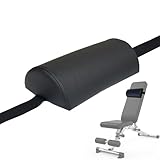
Replacement pads vary considerably. Small accessory pads marketed for chest presses or back support may measure around 9.3 by 7.1 inches or 13.8 by 7.1 inches, with thicknesses near 3.2 to 3.3 inches. These are not substitutes for a full-length bench pad. Comparable accessory products often sell for roughly $20 to $30, depending on size, upholstery, mounting hardware, and brand.
How to Measure Your Space
- Measure the floor area. Use a tape measure to mark the available length and width. Include doors, closets, baseboards, and the swing of nearby equipment.
- Add a workout buffer. Add at least 12 inches to each side of a flat bench so you can load dumbbells, stand up, and move safely. Add 24 inches or more on the barbell-loading sides.
- Measure ceiling height. Measure from the finished floor to the lowest obstruction, such as a beam, light fixture, or garage-door track. For overhead presses, account for your seated height plus your arm reach.
- Check the bench height. Sit on the bench with your feet flat. Your knees should be close to a right angle, and your feet should not dangle during pressing exercises.
- Check door and stair access. Compare the shipping box and assembled dimensions with the narrowest doorway. A bench that fits the room may not fit through a 28-inch doorway after assembly.
- Plan storage space. An adjustable bench may fold upright, but confirm its folded dimensions. Many benches still require 20 to 30 inches of wall or closet depth when stored.
- Mark the footprint. Place painter’s tape on the floor using the bench’s length and width. Lie within the outline and mimic pressing movements before buying.
By Room or Use Case
Small bedroom or apartment
Choose a compact flat bench measuring roughly 40 to 48 inches long and 10 to 11 inches wide. A 16- to 18-inch height is easier to use in a confined room, and a folding design can reduce storage length. Keep at least 24 inches of clear walking space on one side. Avoid an Olympic rack unless the room has at least 84 inches of usable length and 72 inches of width.
Garage gym
A garage can accommodate a 48- to 55-inch adjustable bench, but check the ceiling and garage-door hardware first. A 17- to 20-inch pad height works for general strength training. Leave room for plates, a barbell, and a rack: a complete setup may need about 8 feet of width and 10 feet of depth. Rubber flooring at least 8 to 12 millimeters thick can also help protect the concrete, although it does not replace a stable, level surface.
Home dumbbell training
For presses, rows, flyes, and step-ups, prioritize a pad around 10 to 12 inches wide and 44 to 52 inches long. An adjustable backrest is useful, but make sure the hinge does not create a large gap or uncomfortable ridge. If you use adjustable dumbbells, allow an extra 18 to 24 inches beside the bench for placing them safely.
Barbell bench press
A barbell setup needs more than the bench dimensions. The rack, uprights, bar, plates, and your arm position determine the real footprint. A bench with a 17- to 19-inch pad height is a common starting point. Select a pad long enough to support your head and shoulders, and check that the bench locks securely into the rack rather than sliding during setup.
Replacement or upgraded pad
Measure the original pad at its longest and widest points, then measure the bolt-hole spacing from center to center. Compare the pad’s length, width, thickness, corner shape, and mounting holes. A replacement measuring 13.8 by 7.1 inches will fit only a narrow support area; it will not replace a conventional 40- to 48-inch back pad.
Common Sizing Mistakes
- Measuring the frame instead of the pad: The steel frame may be wider or longer than the usable upholstery, so record both measurements.
- Ignoring pad height: A thick pad can raise the top surface several inches and change foot contact, pressing position, and rack alignment.
- Buying by length alone: A long pad can still be too narrow for comfortable shoulder support or too wide for a particular frame.
- Forgetting the incline position: Adjustable benches become longer or taller as the backrest rises. Measure the highest setting, not only the flat position.
- Confusing bench width with rack width: A 12-inch bench pad may require 48 to 60 inches of floor width once the rack and bar are included.
- Leaving no loading clearance: You need space to lift plates, set down dumbbells, and exit the bench without striking furniture.
- Assuming every replacement pad is universal: Bolt spacing, bracket shape, and hinge location often differ between brands and models.
FAQ
What is a good weight bench height for most people?
A top-of-pad height of 17 to 19 inches suits many adults for flat bench pressing. Taller users may prefer up to 20 inches, while shorter users often benefit from a lower bench that keeps both feet firmly planted.
How wide should a weight bench pad be?
Most home users should look for 10 to 12 inches. That range provides stable upper-back support without excessively restricting shoulder movement. Narrow specialty pads may be suitable for certain exercises, but they are less versatile.
How long should a weight bench pad be?
A full-length pad is commonly 40 to 48 inches long. It should support your head, upper back, and hips when you lie down. Measure from your head to your hips rather than relying only on overall body height.
How much room do I need around a weight bench?
For a basic bench, plan on at least 72 by 48 inches of clear floor area. For a bench with a barbell rack, allow roughly 84 by 72 inches or more, plus enough ceiling height for overhead movement. Recheck these measurements before purchasing in 2026 because foldable, rack-mounted, and adjustable designs can have very different footprints.


Write Your Review
No reviews yet. Be the first to share your experience!