
Key takeaways
What's inside
Best power barbell picks live or die on three specs: shaft diameter, tensile strength, and whip. This guide to the best power barbell options compares 20 kg (44 lb) Olympic bars for squats, presses, and deadlifts on knurl, sleeve rotation, and the roughly 7 ft (2.2 m) of clear width you need to load and lift one safely at home.
As an Amazon Associate we earn from qualifying purchases at no extra cost to you. Product prices and availability are accurate as of the date shown and are subject to change.
As an Amazon Associate we earn from qualifying purchases at no extra cost to you. Product prices and availability are accurate as of the date shown and are subject to change.





By Chris Parker
🛒 Best Price Today on Amazon
Prime members get fast, free shipping on everything above, plus member-only deals. New members get a 30-day free trial — cancel anytime.
Start 30-Day Prime Free Trial →See Today’s Amazon DealsHow to Choose the Best Power Barbell
The best power barbell is stiff, grippy, and rated well above what you will ever load. Because it is built for slow, heavy lifts rather than fast Olympic pulls, the specs that matter differ from a weightlifting bar. Four of them decide fit, feel, and lifespan.
Shaft Diameter and Tensile Strength
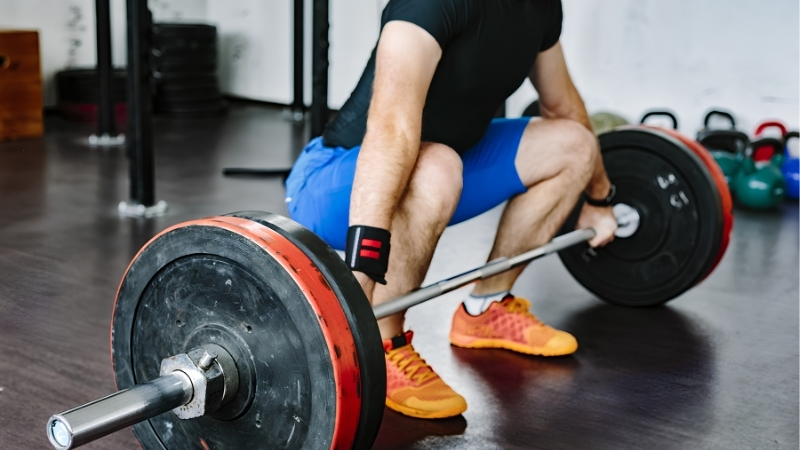
Power bars usually run a 29 mm shaft, thicker and stiffer than the 28 mm shaft on many Olympic bars. That stiffness keeps the bar steady under a heavy squat or deadlift, where whip works against you rather than for you.
Tensile strength, the force the steel resists before it bends, tells you how much bar you are buying. Quality power bars sit around 190,000-215,000 PSI, which supports load ratings roughly in the 1,000-1,500 lb (450-680 kg) range, far beyond most home lifters’ needs.
Knurl and Center Knurl
Knurl depth drives grip. Power bars tend toward a deeper, grippier knurl that holds through maximal squats and deadlifts without chalk. Too aggressive and it shreds hands on high reps; too shallow and heavy bars slip, so a firm medium is the sweet spot for most.
Many power bars add a center knurl to grip the shirt on back squats. It helps under the bar but can scrape the shins on deadlifts and cleans, so decide by which lift you prioritize. Dual knurl marks at power spacing help you set a consistent grip width.
Sleeve Rotation: Bushing vs Bearing
Power bars almost always use bushings, which give enough sleeve spin for slow lifts while staying durable and affordable. Needle bearings spin faster and suit fast Olympic lifts, but that speed is wasted on squats, presses, and pulls.
For a power setup, bushings are the right call, not a compromise. They pair with the stiffer shaft to deliver a stable, planted feel, and they hold up to years of loading and unloading without the price or fragility of a bearing bar.
Footprint, Length, and Ceiling
An Olympic power bar is about 7 ft 2 in (2.2 m) long, so you need roughly 8-9 ft (2.4-2.7 m) of clear width to load plates on both sleeves and lift without hitting walls or a rack. Confirm your rack’s inside width matches the bar’s usable shaft.
Overhead work needs headroom: pressing a bar to lockout adds a couple of feet above your standing reach, so low basement ceilings can rule out strict presses. Store the bar vertically in a holder to save floor space, and measure the room before ordering.
Top Picks for the Best Power Barbell
These six bars run from a value starter to a made-in-USA benchmark, all built for heavy, slow lifting. The table compares shaft, feel, and tier before the detailed notes.
| Model | Shaft | Center Knurl | Price Tier |
|---|---|---|---|
| Rogue Ohio Power Bar | 29 mm | Yes | Premium |
| Rep Fitness Power Bar EX | 29 mm | Yes | Mid |
| Titan Fitness Performance Power Bar | 29 mm | Yes | Budget |
| CAP Barbell The Beast (OB-86PK) | 28.5 mm | Yes | Budget |
| Fringe Sport Wonder Bar (Power) | 28.5 mm | Optional | Mid |
| Vulcan Absolute Power Bar | 29 mm | Yes | Mid |
Rogue Ohio Power Bar
The Ohio Power Bar is the benchmark power bar and the pick for lifters who want the best power barbell in the group. The 29 mm shaft, deep knurl, and center knurl deliver a planted feel under maximal squats and pulls, and the tensile strength, around 205,000 PSI, is well past home needs.
The trade-offs are price and, on bare-steel versions, upkeep, since raw steel needs oiling to fight rust. The center knurl can also scratch shins on deadlifts. For serious powerlifting it is worth every cent.
Rep Fitness Power Bar EX
Rep’s Power Bar EX brings a 29 mm shaft, firm knurl, and center knurl at a friendlier price than the benchmark. Sleeve rotation on bushings is smooth enough for slow lifts, and finish options let you balance rust resistance against cost for a garage gym.
It lacks the last few percent of knurl crispness a top-tier bar offers, and premium coatings add to the price. For most home powerlifters, though, it hits the value-to-performance sweet spot.
Titan Fitness Performance Power Bar
Titan’s Performance Power Bar delivers power-bar geometry, a 29 mm shaft and center knurl, at a budget price, making it a common first heavy bar. It handles progressive squat and deadlift loading well and pairs with any Olympic plate set.
Finish and knurl consistency vary between units, and the knurl leans milder than premium bars, so chalk helps on maximal pulls. As an entry into serious loading it is hard to beat on price.
CAP Barbell The Beast (OB-86PK)
The Beast is a long-running budget favorite with a 28.5 mm shaft and center knurl. It covers squats, presses, and deadlifts for lighter and intermediate lifters and is easy to find, making it a practical starter bar.
Its lower tensile rating means it is not the choice for the very heaviest loads or repeated abuse, and the finish needs care in humid rooms. Within its limits it is a dependable, affordable workhorse.
Fringe Sport Wonder Bar (Power)
Fringe Sport’s Wonder Bar in power spec offers a versatile 28.5 mm shaft with a firm knurl and durable coatings, and center knurl is available depending on version. It suits a mixed home gym that leans toward slow strength work but wants some flexibility.
It is not a specialist competition bar, so the very strongest lifters may want a stiffer, deeper-knurled option. For general strength training with heavy squats and pulls, it is a well-rounded mid-tier pick.
Vulcan Absolute Power Bar
The Vulcan Absolute pairs a 29 mm shaft with an aggressive knurl and center knurl aimed squarely at powerlifters. It feels stiff and secure under maximal loads, and its durable finish holds up to garage conditions.
The sharp knurl can feel harsh on higher-rep accessory work, and availability can be spottier than the biggest brands. For a dedicated strength setup, it is a strong value against pricier benchmarks.
Frequently Asked Questions
Here are the most common questions buyers ask before choosing a power bar.
What makes a power bar different from an Olympic bar?
A power bar is stiffer, usually with a 29 mm shaft, deeper knurl, a center knurl, and bushings, all tuned for slow, heavy squats, presses, and deadlifts. An Olympic weightlifting bar is thinner, whippier, and uses bearings for fast spin during cleans and snatches.
Do I need a center knurl?
A center knurl grips your shirt on back squats and helps the bar stay put, but it can scrape shins on deadlifts and cleans. If you squat heavy and rarely deadlift with a close setup, it helps; if deadlifts dominate, a smooth center may feel better.
What tensile strength does the best power barbell need?
For home use, anything around 190,000 PSI and up is ample, supporting roughly 1,000 lb (450 kg) or more. Higher tensile figures resist bending and add margin, but nearly all home lifters stay well within a quality bar’s rating, so it is more about durability than a limit you will reach.
Can I drop a power bar?
Power bars tolerate loaded drops best with bumper plates on a proper platform, not bare steel plates on a hard floor. Repeated crash-dropping like a CrossFit workout is hard on a stiff bushing bar, so check the maker’s guidance and lower heavy pulls under control when you can.
See More:
- best ab roller wheel
- best curl barbell
- best ankle straps for cable machine
- What is the best rowing machine
Final Thoughts
The best power barbell is stiff, grippy, and rated far above your working loads, with a 29 mm shaft and bushings tuned for slow, heavy lifting. A benchmark bar rewards serious powerlifters, while budget power bars open the door for everyone else. Confirm your rack width and ceiling height, decide whether you want a center knurl, and measure the space before ordering so your bar fits the lifts and the room.


Write Your Review
No reviews yet. Be the first to share your experience!