
Key takeaways
What's inside
Best figure 8 lifting straps exist for one job: holding a bar you cannot drop quickly. They lock the wrist to the bar far more securely than a lasso strap, which is exactly why they suit heavy deadlifts and shrugs and are entirely wrong for anything overhead. Security is the whole point of the design.
As an Amazon Associate we earn from qualifying purchases at no extra cost to you. Product prices and availability are accurate as of the date shown and are subject to change.
As an Amazon Associate we earn from qualifying purchases at no extra cost to you. Product prices and availability are accurate as of the date shown and are subject to change.


By Chris Parker
🛒 Best Price Today on Amazon
Prime members get fast, free shipping on everything above, plus member-only deals. New members get a 30-day free trial — cancel anytime.
Start 30-Day Prime Free Trial →See Today’s Amazon DealsHow to Choose the Best Figure 8 Lifting Straps
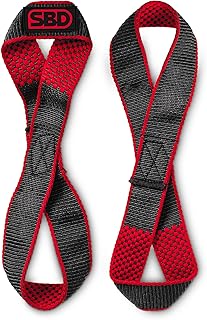
The best figure 8 lifting straps are a closed loop: your wrist goes through one half, the bar through the other, and the strap holds itself. There is nothing to wrap and nothing to tighten, which makes them faster than lasso straps and much harder to release under load. Nothing needs wrapping or tightening. Speed is the practical advantage.
Sizing: Wrist, Bar and Loop Length
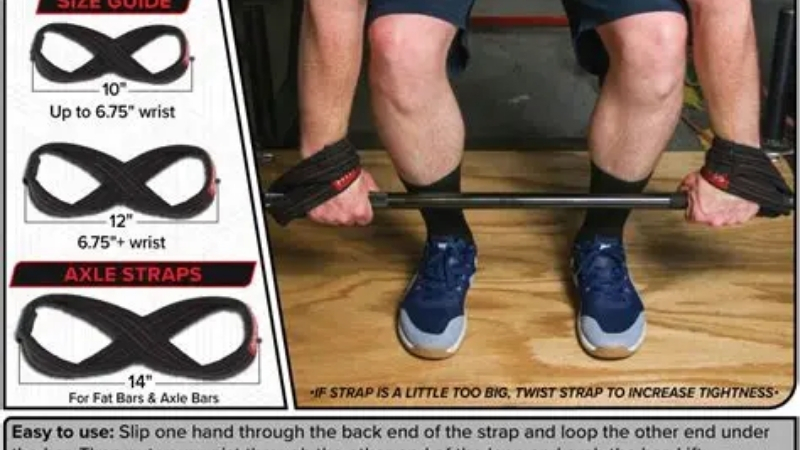
Sizing is the specification that decides whether they work at all. Straps come in small, medium and large, sized by loop length rather than by your build, and a strap that is too long leaves the bar sitting low in the hand where the grip feels loose. Sizing decides whether they work at all. Loop length is set by size, not build.
Match the size to both your wrist and the bar diameter you use. A 28 mm bar and a 50 mm dumbbell handle sit very differently in the same loop. If you are between sizes, the shorter one keeps the bar tighter to the wrist, which is usually better. Bar diameter changes the fit noticeably. Shorter loops keep the bar tight.
Material, Stitching and Padding
Cotton webbing is the standard on the best figure 8 lifting straps and grips well without stretching much; nylon lasts longer but slips slightly more. Thickness matters as much as material, since a thin strap digs into the wrist under load and a thick one fills the hand. Stitching is where failures start.
Stitching is the failure point rather than the webbing. Look for multiple bar tacks at the crossover rather than a single line, and inspect that area regularly. A figure 8 that fails mid-pull drops the bar unevenly, which is worse than a lasso strap slipping. Inspect the crossover stitching regularly.
What They Cannot Do
You cannot release a figure 8 quickly, which rules them out for anything overhead, any Olympic lift, and any movement where dropping the bar is the safety plan. That is not a flaw; it is the design working as intended, and it defines where they belong. That limitation is the best figure 8 lifting straps trade.
They also let grip strength stall if used on every set, which matters if grip is a training goal rather than an obstacle. Most lifters use them on top sets of deadlifts, shrugs and rows, and train the lighter sets bare-handed to keep grip developing. Top sets are where straps belong. Grip work continues on lighter sets.
Top Picks: Figure 8 Straps and the Alternatives
The six below cover figure 8 straps at several price points plus the two alternatives worth knowing: lasso straps and hooks. Buy by size first. Each entry names a genuine drawback, since every strap design trades security against how quickly you can let go. Size first, material second. Alternatives are worth knowing too.
| Strap | Type | Release | Best for |
|---|---|---|---|
| Gymreapers Figure 8 | Figure 8 | Slow | All-round pick |
| Iron Bull Figure 8 | Figure 8 | Slow | Heavier pulls |
| DMoose Figure 8 | Figure 8 | Slow | Budget |
| Harbinger Lasso | Lasso | Fast | Mixed training |
| Grip Power Pads Hooks | Hooks | Fast | Wrist issues |
| Liquid chalk | Grip aid | Not applicable | Bare-handed sets |
Gymreapers Figure 8 Straps
These are the default recommendation: heavy cotton webbing, reinforced stitching at the crossover and sizing that covers most lifters. For heavy deadlifts and shrugs they hold without any wrapping technique, which is the main advantage over lasso straps for a new user. No wrapping technique is required.
They are slow to remove between sets, and the padding is modest, so a very heavy pull is felt at the wrist. Check the size chart against both your wrist and your bar, since ordering the wrong loop length is by far the most common complaint raised about straps of this type. Removal between sets is slow.
Iron Bull Figure 8 Straps
Iron Bull sits at the heavier end with thicker webbing and more padding at the wrist, which matters once pulls get genuinely heavy and the strap starts cutting in. The extra material is the reason to choose it over the lighter options. Padding matters once pulls get heavy. Thicker webbing fills the hand more.
Thicker straps take up more space in the hand, which changes how the bar sits, and they cost more. If your pulls are moderate, that padding buys nothing. Buy them for heavy work rather than as a general-purpose upgrade over a standard pair. Moderate pulls will not notice the difference. Price reflects the extra material.
DMoose Figure 8 Straps
The budget option covers the same job with lighter webbing and simpler stitching. For someone trying figure 8 straps for the first time and unsure whether the format suits them, spending less to find out is entirely sensible before upgrading. Lighter webbing shows wear sooner. It suits a first pair rather than a last.
Stitching and webbing quality sit below the mid-range pairs, and heavy use shows at the crossover sooner. Inspect them regularly and replace at the first sign of fraying, since a strap failing under a loaded bar is not a minor inconvenience. Replace them at the first fraying. Inspect the crossover every few weeks.
Harbinger Lasso Straps
Lasso straps are the alternative worth owning alongside: you wrap them, so they release instantly, which makes them usable for rows, pulldowns and anything you might need to drop. They also cost less and take up almost no space in a bag. Instant release is their whole advantage. Wrapping technique takes practice.
They need practice to wrap properly and slip mid-set if wrapped badly, which figure 8 straps never do. They are also less secure on a maximal pull. Most lifters end up owning both and choosing by whether the bar needs to be released quickly. Most lifters end up owning both types. Maximal pulls favour the figure 8.
Grip Power Pads Lifting Hooks
Hooks take grip out of the equation entirely and release instantly, which suits anyone with a wrist or hand issue that makes wrapping uncomfortable. For high-repetition shrugs and rows they are the least fatiguing option of the three formats here. Wrist issues are where hooks make sense. High repetitions suit them well.
They feel less connected to the bar than a strap, the hook can shift on a thicker bar, and they are bulky to store. They also do nothing for grip development. Check the hook width against the bar diameter you actually use before ordering. They do nothing for grip development. Hook width should match your bar.
Liquid Chalk
Chalk is what you use on the sets where straps are not appropriate, which is most of them. It dries in seconds, leaves no dust in a domestic room, and one bottle lasts months, which makes it the cheapest grip upgrade available anywhere. Straps are for the sets chalk cannot cover. One bottle lasts several months.
It dries the skin with regular use and needs washing off properly rather than being left on. Some formulas leave residue on a bar’s knurling, so wipe the bar down after sessions rather than letting chalk build up over several weeks of training. Wipe the knurling down afterwards. Washing it off properly matters.
Frequently Asked Questions
Four questions cover most of what people ask before buying. They are about sizing, safety and when not to use them, since figure 8 straps are the most secure and least forgiving strap design available and that combination needs understanding first. Sizing answers most of them. Security and release pull against each other.
What size figure 8 straps do I need?
Sizes are set by loop length, so match them to your wrist and the bar you use. Between two sizes, take the shorter, since a long loop leaves the bar low in the hand and the grip feels loose. Check the manufacturer’s chart rather than guessing. It is the best figure 8 lifting straps starting point. Charts differ between manufacturers.
Are the best figure 8 lifting straps safe for all lifts?
No. They cannot be released quickly, so avoid them for anything overhead, Olympic lifts and any movement where dropping the bar is the safety plan. Use them for deadlifts, shrugs, rows and carries, and use lasso straps or hooks everywhere else. Dropping the bar must remain possible. Overhead work is the clearest exclusion.
Figure 8 lifting straps or lasso straps?
Figure 8 for maximum security on heavy pulls, lasso for anything you may need to drop. Lasso straps require practice to wrap; figure 8 straps need none. Many lifters own both and pick by whether a fast release matters for that exercise. Owning both covers every situation. Figure 8 straps need no technique at all.
Will figure 8 lifting straps weaken my grip?
Only if you use them on every set. Keep them for top sets and train the lighter ones bare-handed with chalk, which develops grip while still letting the back finish the heaviest work. That split is what most experienced lifters settle on. Grip work still belongs in the plan. Chalk covers the lighter working sets.
See More:
Final Thoughts
The best figure 8 lifting straps are the ones sized correctly for your wrist and your bar, used on heavy pulls and left off anything overhead. Check the size chart before ordering, inspect the crossover stitching regularly, and keep chalk for everything else. Then pull without the grip failing first.


Write Your Review
No reviews yet. Be the first to share your experience!