
Key takeaways
What's inside
Best crossfit weightlifting belt shopping comes down to three numbers: belt width, material thickness and how many seconds the buckle takes to release. This guide compares six widely stocked nylon and leather options on measured specs, sweat handling and the wall space a belt occupies between sessions.
As an Amazon Associate we earn from qualifying purchases at no extra cost to you. Product prices and availability are accurate as of the date shown and are subject to change.
As an Amazon Associate we earn from qualifying purchases at no extra cost to you. Product prices and availability are accurate as of the date shown and are subject to change.


By Chris Parker
🛒 Best Price Today on Amazon
Prime members get fast, free shipping on everything above, plus member-only deals. New members get a 30-day free trial — cancel anytime.
Start 30-Day Prime Free Trial →See Today’s Amazon DealsHow to Choose the Right CrossFit Weightlifting Belt
A metcon belt has a different job than a powerlifting belt. It has to brace hard for a heavy clean, then come off in seconds before the next round starts. The criteria below for picking the best crossfit weightlifting belt are ordered by how often each one changes what happens in your training, starting with the two numbers that decide fit.
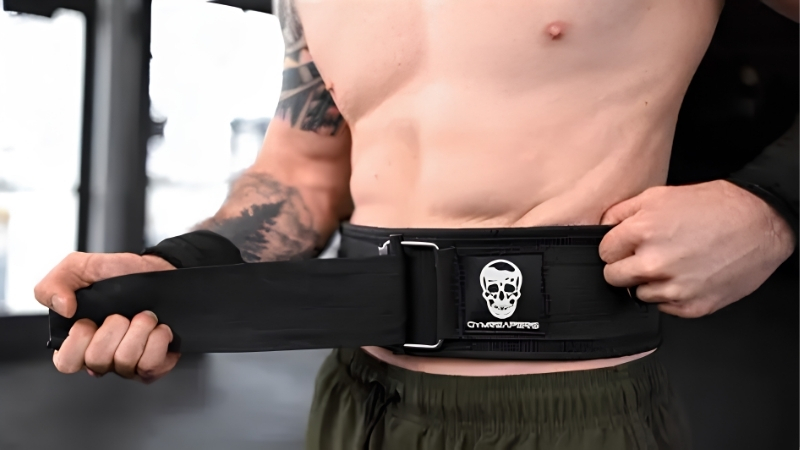
Width, Thickness and What Competition Standards Allow
Almost every belt in this category measures 4 inches (10 cm) across the back. That is the maximum width permitted under IPF and IWF rules, and it is also the practical ceiling before the top edge starts digging into the ribs at the bottom of a front squat, particularly for lifters with a short torso.
Thickness is where the category splits. Nylon belts run 4-6 mm and flex as you move; leather powerlifting belts run 10-13 mm and stay rigid under load. For mixed-modal training the best crossfit weightlifting belt sits at 5-6 mm — stiff enough to brace a heavy single, thin enough to hinge and pull without the edge folding over.
Buckle Type: Self-Locking, Roller or Lever
Self-locking nylon buckles cinch in one pull and release with a thumb flick, typically in under three seconds. On the best crossfit weightlifting belt, that speed matters more than it sounds when a workout puts a heavy barbell segment between rounds of burpees, and every second spent wrestling a prong is a second off the clock and out of your rest.
Roller buckles backed by velcro are the cheaper alternative and work well, but velcro loses grip after roughly a year of heavy chalk and sweat exposure. Lever belts release fastest of all, though the lever position is fixed until you unscrew and reposition it, which makes them a poor choice for a belt shared between two people.
Storage Footprint and Where the Belt Actually Lives
A rolled 4-inch nylon belt occupies roughly 7 x 7 x 4 in (18 x 18 x 10 cm) and weighs about 1 lb (0.45 kg), so it hangs on a single hook or drops into a gym bag without complaint. A stiff 13 mm leather belt will not roll tightly and needs a flat hanging spot with around 44 in (112 cm) of vertical clearance.
That sounds trivial until six accessories are competing for the same pegboard in a garage corner. Measure the wall you plan to use before ordering, and if your only storage is a bin under a bench, the best crossfit weightlifting belt for you is a nylon one, because it survives being folded flat. Check the real dimensions of that spot rather than estimating them.
Top Picks: Best CrossFit Weightlifting Belt Options Right Now
The best crossfit weightlifting belt shortlist below is sorted by the two specs that decide most purchases — material thickness and closure mechanism. All six measure 4 inches at the back, all are widely stocked, and each write-up names a genuine drawback alongside what the belt does well so you can match it to your own training.
| Belt | Material | Thickness | Closure | Price tier |
|---|---|---|---|---|
| Element 26 Self-Locking | Nylon | 5 mm | Self-locking buckle | Mid |
| Gymreapers Quick Locking | Nylon | 5 mm | Self-locking buckle | Mid |
| 2POOD Straight Belt | Nylon | 5 mm | Velcro + roller | Premium |
| Iron Bull Strength Nylon | Nylon | 6 mm | Dual velcro | Budget |
| Harbinger Foam Core | Nylon + foam | 6 mm | Velcro + roller | Budget |
| Dark Iron Fitness Leather | Suede leather | 5 mm | Prong buckle | Mid |
Element 26 Self-Locking Weightlifting Belt
This is the default answer for a lifter who wants one belt covering barbell strength work and conditioning. The 5 mm nylon body is stiff enough to brace a heavy front squat without collapsing, and the self-locking buckle tightens in a single pull and releases with a thumb flick, which is exactly what a mixed workout demands.
The drawback is that the buckle housing sits proud of the belt surface and can catch a barbell during high-bar squats if you wear the belt slightly high. It is also not on the IPF approved list, so a lifter who eventually competes in powerlifting will need a second, thicker belt rather than replacing this one.
Gymreapers Quick Locking Nylon Belt
Mechanically this sits very close to the Element 26 — 4 inches wide, 5 mm thick, and the same style of one-pull locking buckle that releases instantly. Where it differs is the tail strap, which runs noticeably longer and gives larger lifters more adjustment range before they run out of velcro landing zone.
That longer tail is also the complaint from smaller lifters, who end up with excess strap flapping unless they tuck it under. Measure your waist at the navel rather than using trouser size, because the two commonly differ by two inches and the sizing chart is built around the former.
2POOD Straight Weightlifting Belt
The straight-cut profile explains why this belt is so common in competitive settings. Because the belt is the same height front and back rather than tapered, it does not ride up into the ribs when you cycle a barbell through touch-and-go reps, and the printed graphics have become the brand’s signature.
You pay a clear premium for that design, and it closes with conventional velcro and a roller rather than a self-locking mechanism, so fastening takes a second or two longer. The velcro is strong out of the box but it is the first component to wear when chalk gets worked into it daily.
Iron Bull Strength 4-Inch Nylon Belt
This is the budget entry that does not feel like a compromise in the hand. At 6 mm it is the thickest nylon belt on the list, and the dual-velcro closure holds securely under moderate to heavy loads without the manufacturing cost of a machined self-locking buckle, which is where most of the saving comes from.
The extra millimetre of thickness makes it slightly stiffer to hinge into, which some lifters notice during deadlift setup. Velcro-only closure also means the belt can creep looser across a long set if you did not press the overlap down firmly, so it is worth a deliberate check before your heaviest attempt.
Harbinger 4-Inch Nylon Foam Core Belt
The foam core spreads pressure across the whole lower back rather than concentrating it along the top edge. That makes this the most comfortable belt here for longer sessions, and the easiest starting point for a lifter who has never braced against a belt and is still learning what the sensation should feel like.
That comfort is also the ceiling. Foam compresses under load, so the rigid feedback you want at near-maximal weights arrives softer than it would from solid nylon or leather. Treat it as a belt for training volume and conditioning rather than the one you reach for on a one-rep-max attempt.
Dark Iron Fitness Genuine Leather Belt
If you want leather without jumping straight to a 13 mm powerlifting slab, this suede-lined 5 mm belt is the sensible bridge. The suede face grips the shirt and refuses to slide during a clean, and leather holds its shape across years of use rather than gradually softening the way nylon does.
Leather needs two to four weeks of break-in before it moves with you, holds its shape for years rather than softening, and uses a prong buckle that is slower than every nylon closure here. Leather also absorbs sweat, so it needs to hang and dry between sessions rather than live in a closed gym bag — plan a dedicated hook for it before it arrives.
Frequently Asked Questions
These four questions come up most often once someone has narrowed the best crossfit weightlifting belt shortlist to two or three options but has not committed yet. They cover technique, sizing and the competition rules that surprise people after purchase rather than before it.
Should beginners wear a weightlifting belt at all?
Learn to brace without one first, then add a belt once your working sets get genuinely heavy. A belt gives the abdominal wall something to press against; it does not create the brace for you. Starting with one too early can mask a weak setup that will surface later under a load you cannot correct mid-rep.
How tight should the belt be?
Tight enough that you can still breathe fully into your stomach and push out against the belt, loose enough to slide a flat hand between belt and body before you brace. If a full inhale is impossible, it is one notch too tight and you are losing intra-abdominal pressure rather than building it.
Is a 4-inch belt legal in competition?
Four inches is the maximum width allowed under both IPF and IWF rules, so width itself is rarely the obstacle. Approval usually turns on thickness limits and whether that specific model appears on the federation’s current approved list, so check the list directly before buying a belt for a sanctioned meet.
Can I use the same belt for squats and metcons?
Yes, and that crossover is precisely what the best crossfit weightlifting belt in 5 mm nylon is designed to deliver. The belt that does not cross over is a 10-13 mm leather powerlifting belt — too rigid to move quickly in and too slow to strip off between rounds, which is why most people who train both end up owning two.
See More:
- Ankle weights best
- Best rated ankle weights
- Best home workout equipment budget
- Best resistance bands for men
Final Thoughts
The best crossfit weightlifting belt for most home lifters is a 4-inch, 5 mm nylon belt with a self-locking buckle, because it braces adequately for heavy barbell work and comes off in seconds when the clock is running. Choose leather only if near-maximal squats and pulls are your priority. Measure your waist at the navel and check the storage spot on your wall before ordering.


Write Your Review
No reviews yet. Be the first to share your experience!